Technary from Odesa develops reusable anti-Shahed interceptor with jet engine and shotgun
Technary CEO Hennadii Suldin spoke to Defender Media about the bureau’s latest development
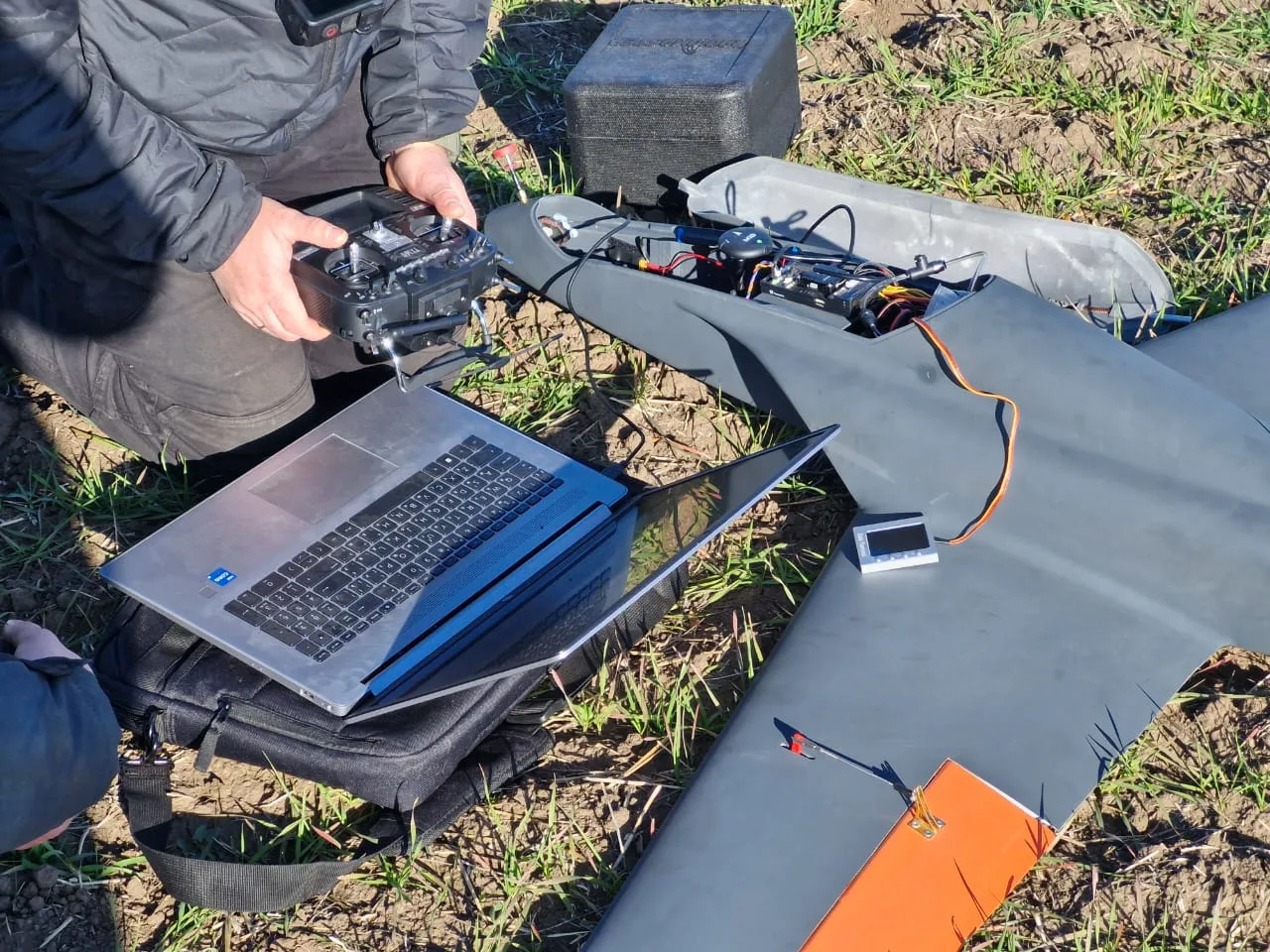
The Mongoose prototype undergoing testing / Photo provided by the company
The engineering bureau Technary from Odesa, which developed the mobile application ePPO and a number of hardware products for the Defence Forces, has presented its own drone interceptor to counter Shaheds. The new unmanned aerial vehicle complex was named Mongoose and, as a separate product, took part in the second batch of the Defence Builder accelerator.
Mongoose is a reusable drone with a jet engine and an automatic homing system. According to the developers, it will approach the Shaheds, fire a shotgun charge into the engine or propeller of the enemy drone, and then continue the mission or return for refuelling.
According to the Defender Media sources, Technary has already attracted investment for further development and scaling of Mongoose. CEO of Technary, Hennadii Suldin, refused to comment on the investment matter but agreed to discuss why this project has more potential than kamikaze interceptors and when the Mongooses will enter service with the Ukrainian Defence Forces.
Why Technary does not believe in kamikaze interceptors
“We are missile engineers, and we wouldn’t have entered the UAV segment if we had seen at least one effective solution to counter the Shahed,” says Hennadii Suldin. In addition to the popular mobile application ePPO, the Technary engineering bureau he leads has developed the Chaika and Chaika-M virtual simulators, Poloz laser-thermal imaging stations, and many other products for the military. Representatives of the anti-aircraft missile brigades, with whom Technary actively collaborates, asked the Odessa engineers to create a “flying machine” to shoot down the Shahed.
According to Suldin, almost all interceptor drones currently used to shoot down the Shahed, or those being developed for this purpose, will soon become obsolete. “The vast majority of them have a maximum speed of no more than 250 km per hour,” explains the CEO of Technary. “If the Russians begin equipping the Shaheds with more powerful internal combustion engines—let alone jet engines—the current drone interceptors will not be able to catch up.”
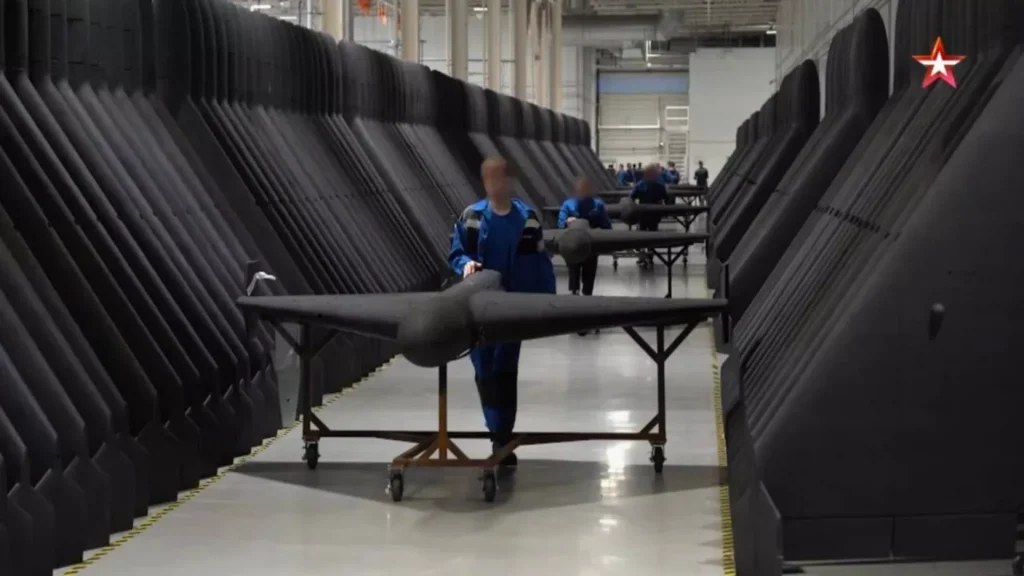
Another issue with such interceptors is the need to keep as many pilots and crews on standby as the number of Shaheds expected to be launched at a specific time, since a kamikaze can hit only one enemy drone per mission.
The third concern for Suldin is production capacity. Ukraine’s annual need for “anti-Shahed” drones is around 200,000 units, and no company in the market can produce this volume of required equipment in a short time. “And several companies won’t be able to either,” Suldin asserts.
In his view, these three issues can be addressed if the Shahed interceptors are reusable and capable of downing multiple enemy aircraft per mission. With this in mind, Technary developed the unmanned aviation complex Mongoose.
What the Mongoose can do
The jet engine of the Mongoose allows it to reach speeds of 300–310 km per hour—according to Suldin, this is sufficient to catch up with even future modifications of the Shaheds. The maximum flight altitude is 5,000 metres, and the combat radius is approximately 12 km.
Technary developed its own additional guidance system for the Mongoose, which targets the thermal radiation of the Shaheds. The interceptor can visually acquire the target from 800 metres, and the auto-guidance system is activated at a range of 150–200 metres. According to Suldin, once the target is locked at that distance, operator involvement is no longer required – further approach and engagement are carried out automatically.

The Mongoose will employ a multi-barrel shotgun to target the engine or propeller of an enemy drone. Suldin claims this is sufficient to disable a Russian-Iranian drone.
After a successful strike, the Mongoose can continue flying and pursue additional Shaheds, and then return to base to refuelling and reloading. Technary has calculated that the Mongoose will be capable of destroying 10–12 Shaheds over its lifecycle. The company does not disclose the cost of the interceptor, but Suldin maintains that with such performance, the Mangooses will be more cost-effective than kamikaze “anti-Shahed” drones.
When will the Mongooses enter service?
Technary has completed the formation of the first squadron of interceptor drones – the company is currently preparing to hand over the prototypes to the anti-aircraft missile brigades. “The deputy commander of one of the brigades calls almost every morning to ask how their ‘plane’ is doing and when we will finally send it,” he says.
Following combat trials, Technary is ready to begin serial production of the Mangust. According to Suldin, the company plans to use the production capacities of firms specialising in drone assembly. The potential production volume will depend on demand from the military, in particular, air defence units and ground forces. At least six units are currently known to have placed orders. The CEO of Technary is convinced that 5,000–7,000 reusable interceptor drones could replace 200,000 disposable kamikazes.
Reading now
1
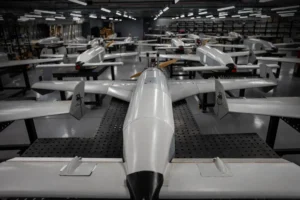
SkyFall officially unveils Thor Hammer mid-strike and announces 1,000+ km version
2
Pentagon to hold Drone Dominance trials for bomber drones, with UFORCE, Gurzuf Defence, Grim Tech and others taking part
3
British-Ukrainian Occam Industries raises €3.8m. The funds will go towards scaling drone autonomy software
4
Terra Drone acquires 50% of Ukrainian Kurin Technologies for $3.5 million
5

Frontline Robotics CBDO Mykyta Rozhkov: Ukraine and Norway are working on an autonomous system to protect maritime infrastructure
By submitting this form, you give Defender Media consent to the processing of personal data.
Надсилаючи цю форму, ви надаєте Defender Media згоду на обробку персональних даних.

Latest news
1
Ukraine’s Defence Forces hit a record number of Russian air defence systems and radars in September
2
Nataliia Mykolska to become VP of Growth and Affairs at Sine Engineering
3
Black Mirror #79: What’s inside Geran-4, unmanned tanks, balloon barrages and more of a new russian miltech
4

6,000 lives saved by replacing people with robots. “Makar” on the ground strike drone unit NC13 and its role in Operation Vivaldi
5