September 25, 2026
Defender Media Founding Editor puts defence tech security screening to the test
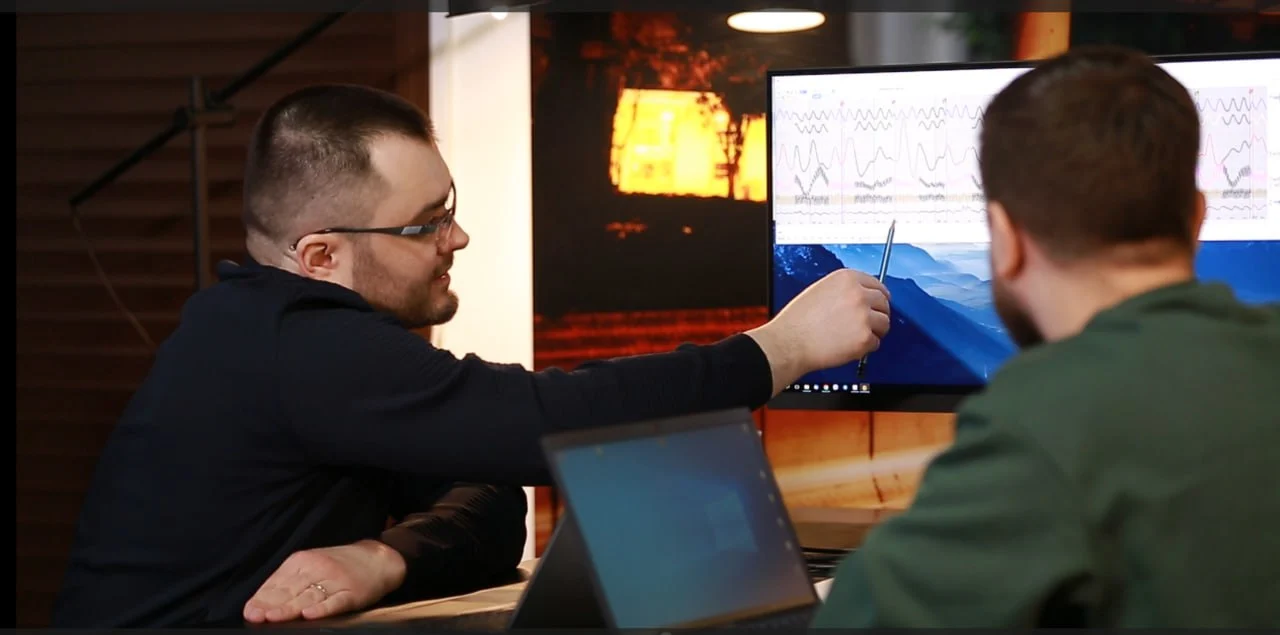
Working in Ukraine’s defence sector is attractive to many people today: competitive salaries, a meaningful mission and a growing job market. But the final stage of recruitment here differs from most other industries — a security screening that typically includes a polygraph test and psychodiagnostics.
There are plenty of myths and popular misconceptions surrounding these methods, most of which are far removed from reality. In a previous article in the Arming with Talents special project, CORE Team founder Anna Korol explained when and how defence companies conduct security screenings of potential employees. To understand what the process actually looks like, Defender Media Editor-in-Chief Roman Sudolsky went through the full screening process himself. Below are his observations and explanations from the experts.
The examination was conducted by the National Association of Polygraph Examiners of Ukraine (NAPU), CORE Team’s partner in this area. The examination was conducted by Ihor Ishchuk, a psychologist, polygraph examiner and founder of NAPU.
During the pre-test interview, the expert immediately pointed out one key detail: the candidate’s real goal was not to get a job, but to study the screening process itself. This matters because an accurate polygraph result depends on whether the respondent has genuine motivation to undergo the examination and understands the consequences of failing it. The logic is roughly as follows:
“I fail the screening → I won’t get the job → I’ll be left without income and a reservation from mobilisation.”
Without this internal chain of consequences, the body’s reactions are not informative and the examination loses its purpose. So instead of a full test, the conversation lasted about two hours and focused on explaining the methodology.
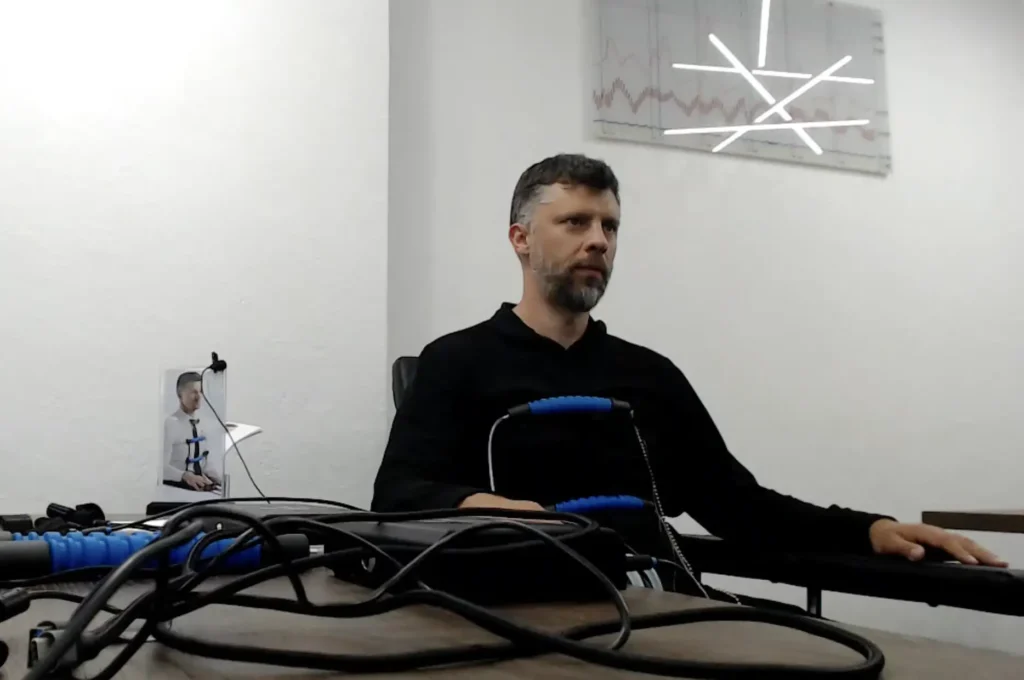
“Since I couldn’t fool the expert, we spent the next two hours talking about the specifics of polygraph examinations and also testing the machine on me,” says Roman Sudolsky.
The scale and reasons behind the demand
According to Ishchuk, the market for polygraph examinations has grown at least fivefold since the start of the full-scale war, with defence companies accounting for most of the demand. NAPU is currently the largest practical hub for polygraph examiners in Europe.
The examination consists of three stages:
This is followed by a post-test interview and preparation of the final report.
The topics covered vary depending on the client, but usually include three areas:
One notable effect of the methodology appears even before the actual examination. According to Ishchuk, when a group of candidates includes people who are undesirable for a company, some of them simply do not show up for the scheduled appointment for one reason or another.
What the machine records
During the demonstration, the candidate was connected to a standard set of sensors: two pneumatic tubes to record breathing, skin-conductance sensors attached to the fingers, two sensors measuring cardiovascular activity, a microphone to detect changes in the voice and a vibration sensor in the chair.
The demonstration question focused on the candidate’s name. The polygraph examiner successively called out different names, and the respondent had to answer “no” to each one, including their own. On the electrodermal activity scale, the reaction to the “wrong” names gradually faded — a natural process of adaptation. When the candidate’s real name was mentioned, the reaction on this scale was the most pronounced of all the questions.
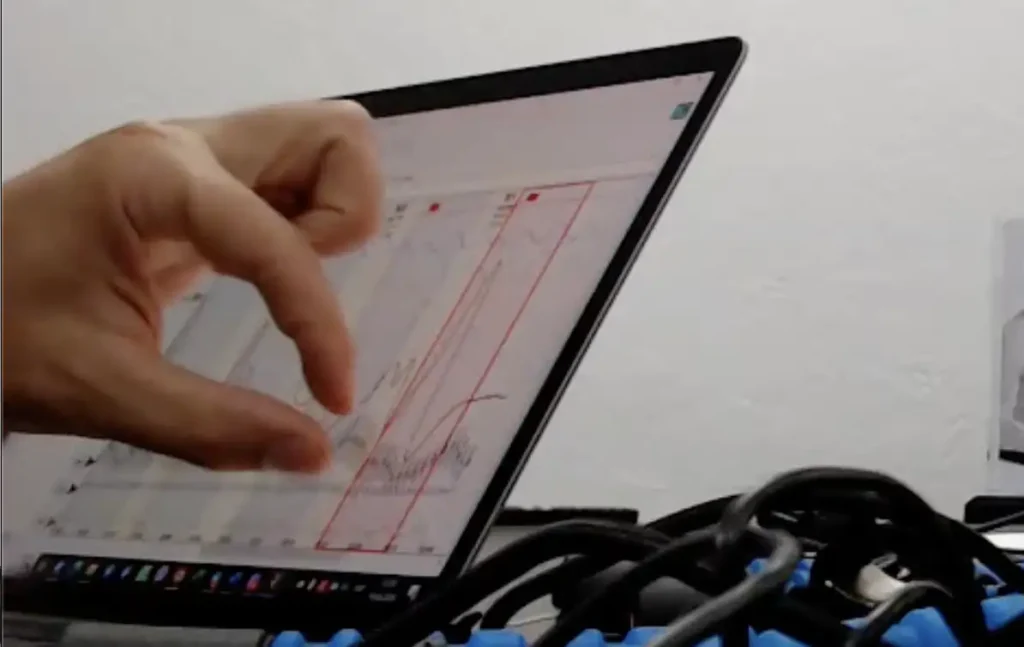
According to Ishchuk, this approach allows the polygraph examiner to assess not the content of the answer, but the physiological reaction of the body, which is much harder to consciously control.
“My answer and my body’s reaction to it showed the expert that I was trying to hide the truth from him,” Roman says.
The expert’s overall conclusion was: “A polygraph is a risk-minimisation tool. Even the worst polygraph examiner will filter out the riskiest candidates.”
The second part of the screening is psychodiagnostics — a set of tests designed to assess a candidate’s personality traits. The author of this article also went through this part of the process himself.
The main block is a comprehensive seven-part assessment that takes about two hours:
Separately, on another day, the candidate undergoes an assessment of personality accentuations across 11 psychological scales.
Results and accuracy
The psychodiagnostic assessment ultimately produced a fairly coherent profile: well-developed logical, abstract and spatial thinking, a tendency towards unconventional solutions and flexibility in dealing with tasks. At the same time, it identified areas for development, primarily the impact of emotions on concentration and the quality of decision-making in stressful situations. The conclusion was based on a combination of several psychodiagnostic methods rather than the results of a single test.
The final document prepared for the employer is a report several pages long covering:
According to the author, the level of detail in the conclusions was significantly more accurate than expected.
“At times, it felt as if the people interpreting the results had looked into my soul — and put into the report even things I was afraid to admit to myself. Including some traits that were not exactly flattering,” Roman Sudolskyi admits.
One important point to understand is that neither polygraph testing nor psychodiagnostics are scientific methods with 100% accuracy — unlike, for example, medical tests. In practice, however, the results of these examinations provide a fairly accurate picture of the person being assessed.
A few practical points for anyone preparing for a similar screening:
Security screenings in the defence industry are not just a formal bureaucratic procedure. They are a way to reduce risks for companies and the people who work with them. Understanding how the process works makes this stage of recruitment less mysterious and, consequently, less stressful.
Anna Korol, founder of CORE Team and an expert in security screening:
“We view polygraph testing and psychodiagnostics as tools, not verdicts. Neither provides a definitive answer to the question of whether someone should be hired — they give a company additional information to make a considered decision, alongside professional experience, references and impressions from the interview.
“The main value of these methods is that they reduce uncertainty in situations where the stakes are too high to rely on intuition alone. When access to sensitive information or defence infrastructure is involved, a company has the right to obtain as complete a picture as possible — just as a candidate has the right to understand why the screening is needed and what exactly it assesses.
“We deliberately work with polygraph examiners and psychologists who explain the logic of the screening to candidates rather than keeping it secret. Transparency reduces anxiety without making the process less effective — on the contrary, an honest candidate who understands what is happening will usually find the screening easier.”
By submitting this form, you give Defender Media consent to the processing of personal data.
Надсилаючи цю форму, ви надаєте Defender Media згоду на обробку персональних даних.