Black Mirror #71: 560 km/h interceptor, UGVs as counter-drone defence, and other Russian miltech developments
A review of new developments in the Russian defence industry during the first week of August
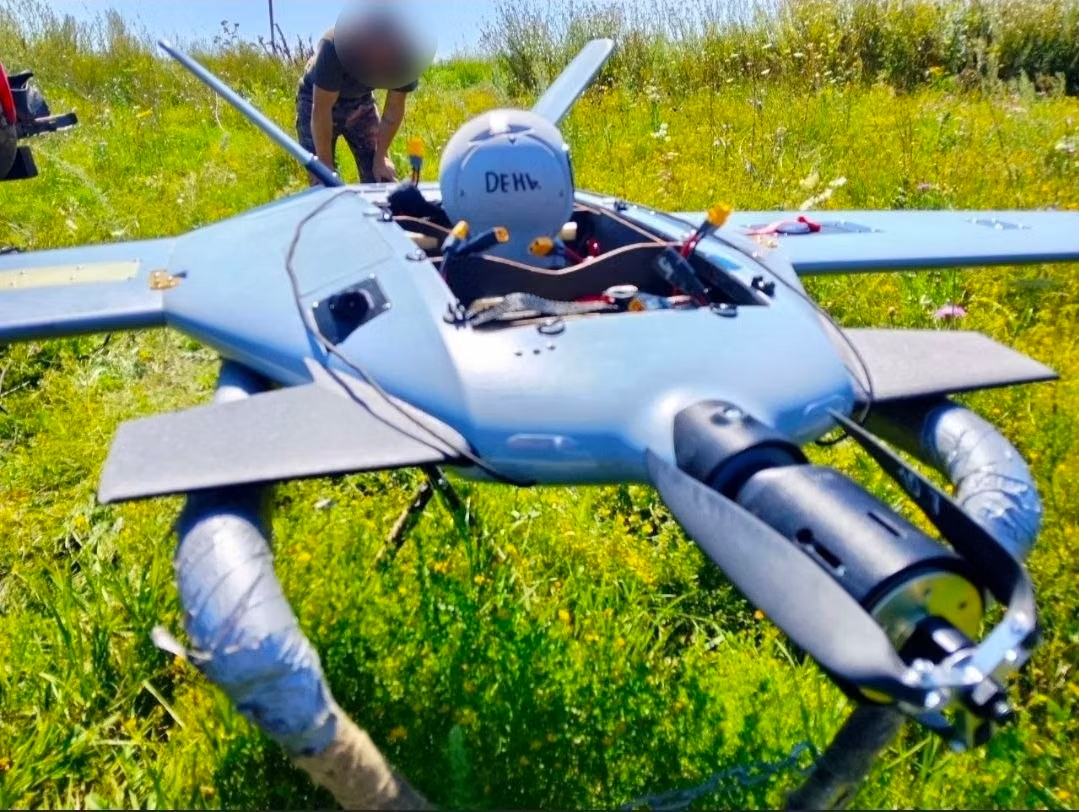
Russian SKAT reconnaissance UAV
Last week, Russian sources reported on an upgrade to the SKAT-220 reconnaissance drone, the development of the high-speed Astra-PVO interceptor, and the Zhmyil reusable interceptor-bomber. The Kalashnikov concern also unveiled the new KUB-10ME loitering munition with AI capabilities, while developers were granted access to a massive video archive of strike UAV operations. Read about these and other new developments in the Russian defence-industrial complex in Defender Media’s weekly Black Mirror review.
New version of the SKAT-220 reconnaissance UAV
The Kalashnikov concern has developed a new version of the SKAT-350 reconnaissance unmanned aerial vehicle — the SKAT-220 UAV. According to the concern’s CEO, Alan Lushnikov, the aircraft features increased speed and greater resilience against FPV air-defence interceptors.
The SKAT-220 has a wingspan of 2.2 m and a curb weight of around 12 kg. According to preliminary data, the drone can reach speeds of up to 160 km/h. By comparison, the baseline SKAT-350M version has a top speed in the range of 72–120 km/h.
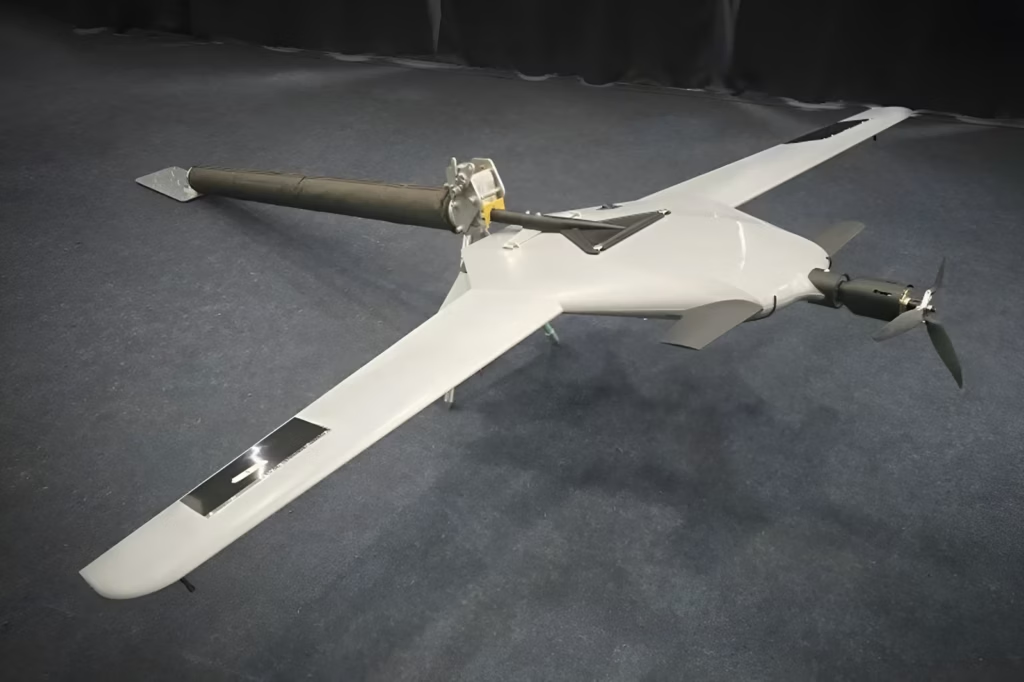
The drone is powered by an electric motor and can remain airborne for more than 150 minutes. It is catapult-launched and recovers via a parachute system.
Astra-PVO can reach speeds of up to 560 km/h
Russian military personnel from the 20th Combined Arms Army have developed the Astra-PVO interceptor drone. According to the developers, the aircraft reaches a top speed of 560 km/h.
The UAV is engineered to engage high-speed fixed-wing unmanned aircraft. It can neutralise aerial targets via direct kinetic impact or using an integrated warhead.
The Astra-PVO launches vertically and can subsequently operate in several camera modes: vertical, at a 45-degree angle, and in high-speed attack mode.
The developers state that integrating artificial intelligence systems could further expand the interceptor’s operational capabilities.
In addition to the counter-UAS interceptor version, the Astra-KZ variant has been developed to engage ground targets using a specialised munition.
The Zhmyil interceptor deployed against drones
Russian military personnel have begun deploying the Zhmyil interceptor drone to engage various types of UAVs. Following a successful sortie, the aircraft can return, land, and be reused for subsequent missions.
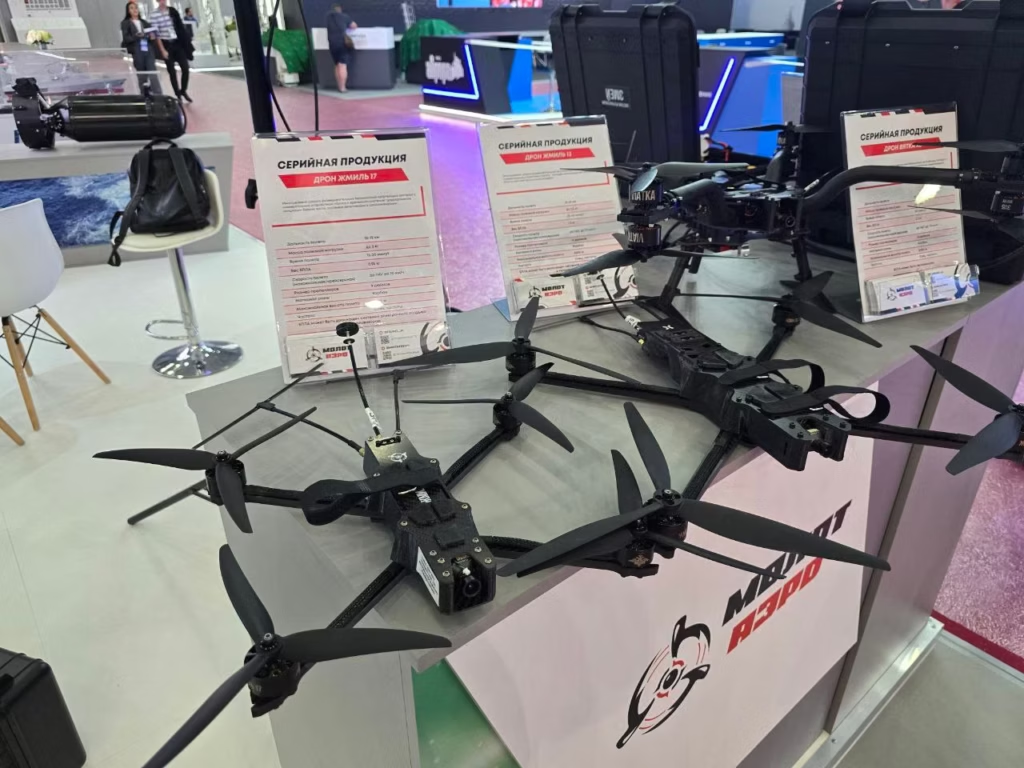
The Zhmyil is designed to intercept multiple classes of drones — from small reconnaissance quadcopters to heavy fixed-wing strike platforms. To engage its target, the drone is equipped with a high-explosive fragmentation (HE-FRAG) warhead that detonates near the aerial target before trajectory divergence.
The aircraft features vertical take-off capabilities, with a thermal-imaging variant available for night operations.
Russian Defence Ministry grants developers access to strike drone video archive
The Russian Defence Ministry has granted Russian developers access to a video archive of strike drone operations. The repository initially ingested data from the Knyaz Vandal Novgorodsky fibre-optic drone, but it now aggregates video streams from various frontline strike UAVs, encompassing both fibre-optic and radio-controlled platforms.
According to available information, the archive contains hundreds of terabytes of video data prepared for training neural networks across various operational tasks.
Enlarged version of the Gerbera
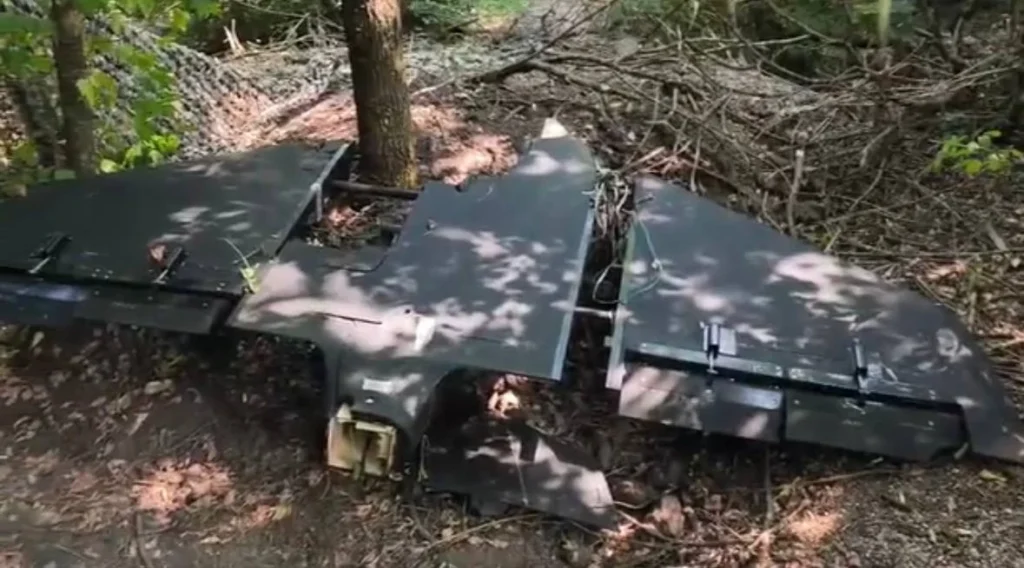
Russian forces have begun deploying an enlarged version of the Gerbera drone. According to Russian sources, the aircraft utilises half of a 275 cm³ displacement engine sourced from the Geran-2.
The upgraded power plant enables higher flight speeds and can accommodate either a warhead weighing up to 50 kg or an auxiliary fuel reservoir.
New UAV interceptor variant based on a civilian airframe
A new UAV interceptor variant based on the commercial ZOHD Talon model aeroplane platform, constructed from expanded polypropylene, has been showcased.
At least two configurations of the aircraft have been reported: one carrying an OFBC-0.8 high-explosive fragmentation warhead with proximity detonation, and a kinetic interception variant operating without an explosive payload.
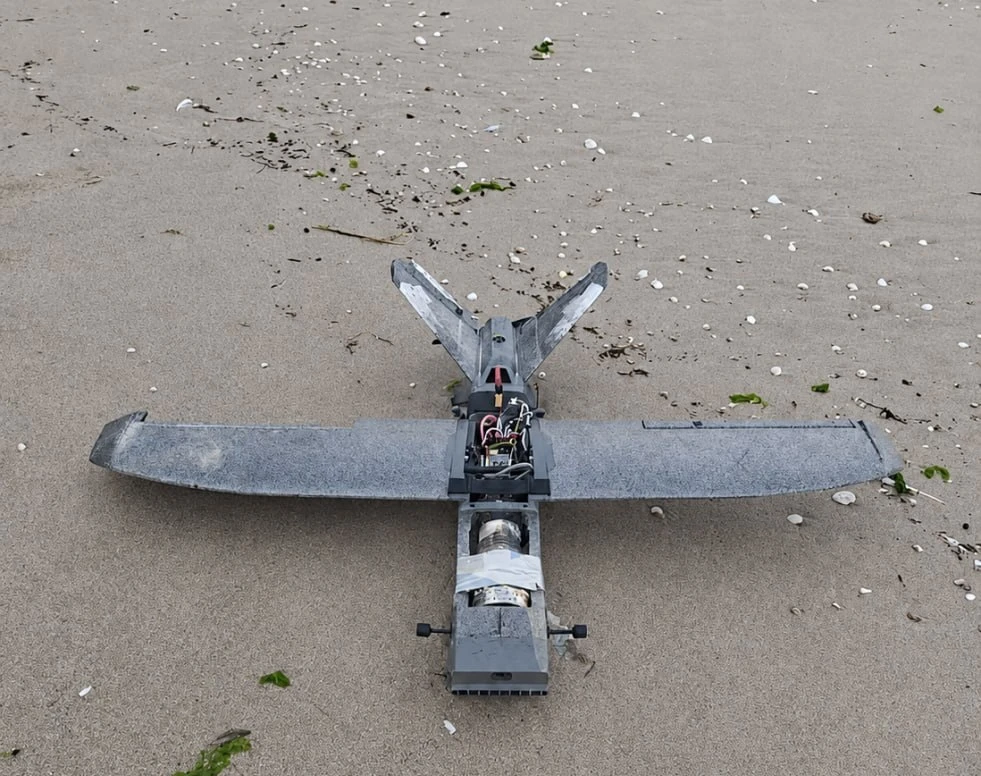
According to preliminary data, the interceptor can operate at flight ceilings of up to 5,000 m and reach a top speed of around 150 km/h. The platform’s primary advantages are its low unit cost and manufacturing scalability.
Kalashnikov launches serial production of the KUB-10ME with AI elements
The Kalashnikov concern has launched serial production of the KUB-10ME tactical loitering munition featuring artificial intelligence capabilities. Alan Lushnikov, the company’s head, stated that the system is already being delivered to frontline units.
The stated operational range of the KUB-10ME exceeds 100 km, with a warhead payload of 11 kg. The munition incorporates an AI-driven target acquisition system for tracking moving targets, as well as electronic counter-countermeasures (ECCM). A redesigned airframe allows the munition to cover greater distances.
The munition operates in tandem with the SKAT-350M reconnaissance relay UAV, which transmits target designation data in contested electronic warfare environments.
Russia presents counter-drone system based on dual UGVs
A Russian counter-UAS system has been developed utilising two unmanned ground vehicles — the Omich and the Kurier 2.0.
The Omich UGV is equipped with a radar station that provides a target detection range of 10–15 km; it detects targets and relays real-time data to the operator. Upon operator confirmation, the Kurier 2.0 engages targets using a 12.7 mm NSVT or Kord heavy machine gun paired with a 7.62 mm PKT machine gun.
The Kurier 2.0 fire control system incorporates an automated target acquisition unit and a ballistic computer.
Harpia receives onboard optical rangefinder
The Russian Harpia strike UAV has been fitted with an onboard rangefinder designed to measure target distance before triggering the remote warhead’s detonation.
The new sensor is mounted directly onboard the UAV, calculating the precise standoff distance to detonate the warhead relative to the target. Remote airburst detonation differs from impact fusing and expands the effective lethality radius.
The official technical specifications of the rangefinder, its operating principles, and the timeline for serial integration across production lines have not been disclosed.
The Harpia strike UAV was first publicly displayed at the Moscow parade on 9 May 2025. The munition was developed as an evolution of the Geran series, with a focus on penetrating modern electronic warfare systems. The aircraft features a more powerful warhead, an operational range exceeding 1,000 km, and an intelligent guidance architecture.
Reading now
1
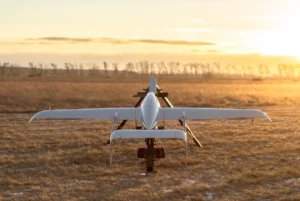
Ukrainian Skyeton secures $10.6M US army contract
2
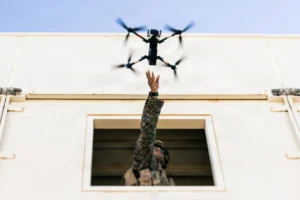
The Pentagon has announced the results of Drone Dominance Gauntlet II – announced Ukrainian companies did not make the top 5
3
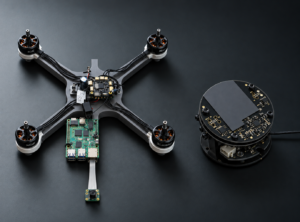
Korven Systems project: How Teletactica co-founder is building an autopilot for interceptor drones
4
Ukrainian SkyFall again among winners of US Drone Dominance Program
5
A drone group, not a swarm: How Pasika by Sine Engineering works
By submitting this form, you give Defender Media consent to the processing of personal data.
Надсилаючи цю форму, ви надаєте Defender Media згоду на обробку персональних даних.

Latest news
1

Ukraine’s DoD Solution raised $2.1m in a pre-seed round
2

8+ major defence tech events taking place in October
3
Vyriy Industries unveils new Slavic reconnaissance UAV
4
UGVs with grenade launchers and robotic APCs: 3rd Corps reveals new details of Operation Vivaldi
5