Ukrainians develop VR-controlled drone to destroy Shaheds
The Sting can reach speeds of over 160 km/h and climb to heights of up to 3 km

Image credits: The Telegraph
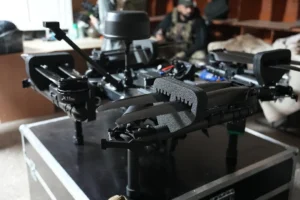
Ukraine is working on a Sting drone designed to intercept Iranian Shahed-136 kamikaze drones, which are actively used by russia in attacks. The British newspaper The Telegraph published the first photos and details of the new drone.
The Sting is a quadcopter with a dome-shaped structure in the centre, where the warhead and camera are located. The operator will control it from the ground using VR glasses that provide an accurate view of the flight path.
The developers of the drone, the Wild Hornets team, say that Sting can reach speeds of over 160 km/h and climb to an altitude of up to 3 km. Further modifications will include equipping the drone with an artificial intelligence system that will allow it to automatically aim at a target.
Similar drones are already being used to intercept russian reconnaissance UAVs, including Orlan and Zala, which are used to collect data for russian artillery and missile units. Videos of Ukrainian drones successfully shooting down these drones are gaining popularity on social media.
The Sting will be the first drone specifically designed to destroy Iranian Shaheds.
Russia reportedly produces more than 6,000 Shaheds a year at a plant in Tatarstan, producing 30-80 of these UAVs daily for attacks on Ukrainian cities. The scale of such attacks poses a serious challenge to Ukraine’s air defence system, which is forced to save expensive Western missiles.
Wild Hornet notes that the cost of the Sting is several times lower than the Shahed, which will help Ukraine preserve its air defence stockpile. This is especially important for a prolonged war of attrition.
Ukraine also implements a new strategy against russian drones, the method of which is to reduce the domination of russia in the air.
Reading now
1
SkyFall officially unveils Thor Hammer mid-strike and announces 1,000+ km version
2
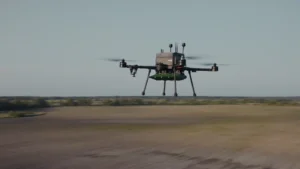
Pentagon to hold Drone Dominance trials for bomber drones, with UFORCE, Gurzuf Defence, Grim Tech and others taking part
3
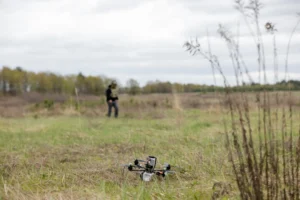
British-Ukrainian Occam Industries raises €3.8m. The funds will go towards scaling drone autonomy software
4
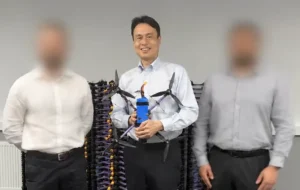
Terra Drone acquires 50% of Ukrainian Kurin Technologies for $3.5 million
5

Autonomous interceptor drones need radars to work. Why is there still a lack of them
By submitting this form, you give Defender Media consent to the processing of personal data.
Надсилаючи цю форму, ви надаєте Defender Media згоду на обробку персональних даних.

Latest news
1
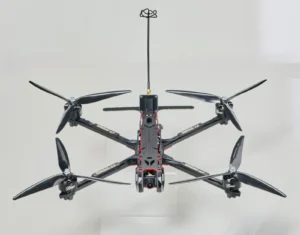
US Buys 1,320 more FPV drones from Ukraine’s F-Drones for $6.5M
2
Robotic systems carried out 94 assault and sabotage operations during Operation Vivaldi, says NC13 unit commander
3
NeoLens, an AI assistant for military vehicle repair, is now available as an Android app
4
Lithuania’s Unmanned Defense Systems sets up joint venture in Ukraine, led by Stepan Veselovskyi
5