Ganna Gvozdiar: Government plans to ease access to foreign capital for Ukrainian defence tech and simplify defence exports
A bill to ease currency controls and protect foreign investment is “already on the minister’s desk”
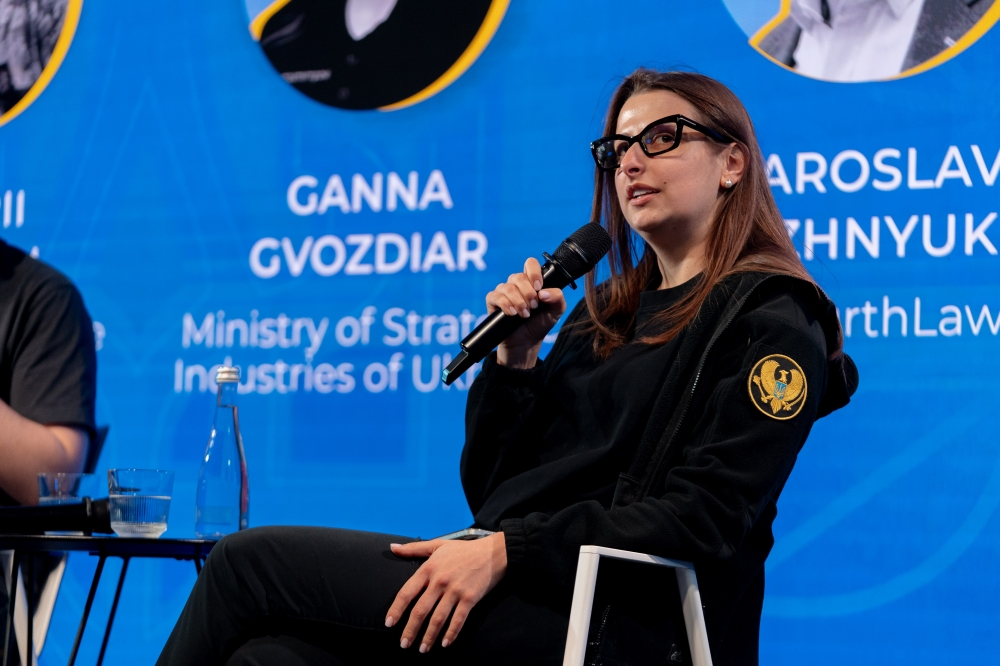
Photo provided by Invest in Bravery
Deputy Minister of Strategic Industries Ganna Gvozdiar and Deputy Minister of Defence Valerii Churkin recently took part in a panel discussion at the Invest in Bravery conference. Most audience questions focused on the opening up of Ukrainian defence exports. Ganna Gvozdiar noted that the authorities are closer than ever to resolving this issue — though securing the front remains the top priority. She also outlined other government initiatives aimed at stimulating growth in the sector. Defender summarises the key points.
Defence exports
Churkin and Gvozdiar stressed that, formally, the export of Ukrainian defence products remains permitted, but still requires licensing. The system, they said, must be simplified — although current restrictions are driven by concerns over technology leaks, particularly the risk of strategic solutions falling into enemy hands.
Another challenge to scaling up exports is the pressing demand from the front line. Export decisions are made in consultation with the Armed Forces of Ukraine, and in some cases, the military blocks foreign sales of systems deemed critical to ongoing operations.
Nevertheless, the government views expanding arms and defence tech exports as a key driver of economic growth. According to Gvozdiar, the Ministry of Strategic Industries is in ongoing dialogue with the military to strike a balance between domestic supply and foreign sales. Any new export policy must reflect the realities of wartime and the urgent needs of Ukraine’s defenders.
The Ministry also emphasises that export development is not just an economic priority, but a strategic one. Over the past three years, defence production has increased 35-fold. Ukraine can now offer not only hardware for export, but also services and cutting-edge technologies — many of them jointly developed by state and private manufacturers and tested in real combat.
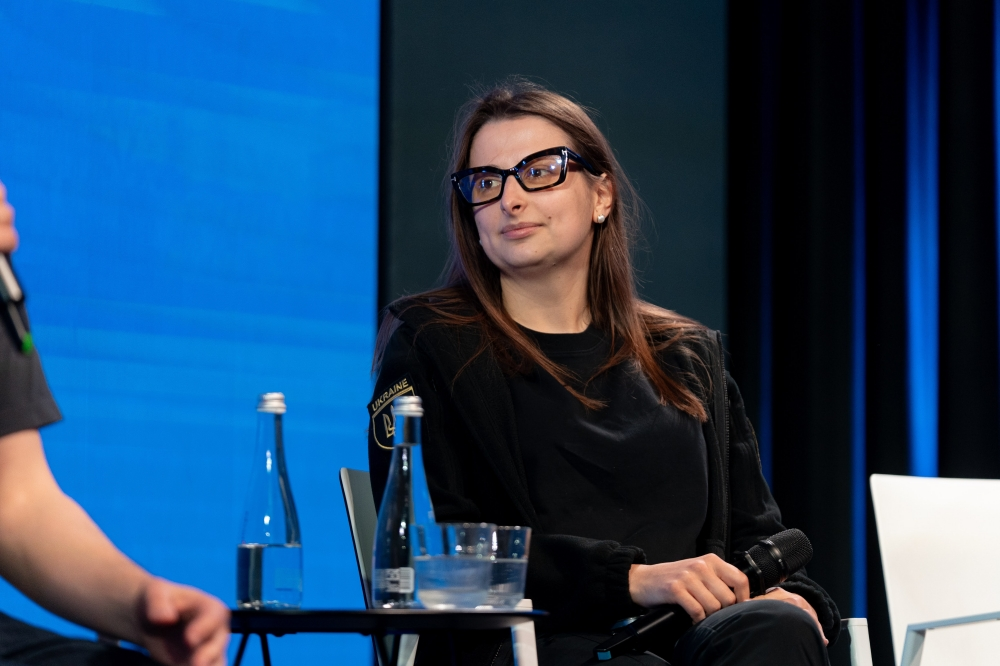
Gvozdiar added that while security considerations limit public communication on the issue, work is actively under way. Asked whether the market could see major export progress “within a month”, she replied that it could happen “both in a month and tomorrow”.
Ukraine is also developing a range of export support tools to promote its defence sector abroad. These include comprehensive product catalogues, tailored presentations for international partners, and participation in major global defence exhibitions. The aim is to demonstrate Ukraine’s capabilities not only as a recipient of international aid, but as an active contributor to global security. By showcasing innovative solutions tested in real combat, Ukraine seeks to strengthen its position as a credible and competitive supplier of defence technologies and services on the world stage.
Currency controls and investment protection
Gvozdiar was also asked whether the government plans to relax currency controls, which currently deter foreign investment in Ukrainian defence tech. She confirmed that a new draft law is in the works, intended to both ease access for foreign capital and guarantee the safe return of investments. According to her, the draft legislation is “already on the minister’s desk”.
Last week, it emerged that President Volodymyr Zelensky had approved a permit for arms exports. An official decision on resuming exports is expected in May, Forbes reports, citing unnamed sources.
According to the publication, Ukraine is evaluating several models for regulated arms exports. One approach would involve individual project approval — similar to the current system, where applications are processed on a case-by-case basis, often with negative outcomes.
Another proposal would allow manufacturers to export up to half the volume of Ukrainian contracts, with a share of profits allocated to defence procurement. A third scenario would create a special fund supported by additional export duties, potentially amounting to 20%.
Reading now
1
SkyFall officially unveils Thor Hammer mid-strike and announces 1,000+ km version
2
Pentagon to hold Drone Dominance trials for bomber drones, with UFORCE, Gurzuf Defence, Grim Tech and others taking part
3
British-Ukrainian Occam Industries raises €3.8m. The funds will go towards scaling drone autonomy software
4
Terra Drone acquires 50% of Ukrainian Kurin Technologies for $3.5 million
5

Frontline Robotics CBDO Mykyta Rozhkov: Ukraine and Norway are working on an autonomous system to protect maritime infrastructure
By submitting this form, you give Defender Media consent to the processing of personal data.
Надсилаючи цю форму, ви надаєте Defender Media згоду на обробку персональних даних.

Latest news
1
Ukraine’s Defence Forces hit a record number of Russian air defence systems and radars in September
2
Nataliia Mykolska to become VP of Growth and Affairs at Sine Engineering
3
Black Mirror #79: What’s inside Geran-4, unmanned tanks, balloon barrages and more of a new russian miltech
4
6,000 lives saved by replacing people with robots. “Makar” on the ground strike drone unit NC13 and its role in Operation Vivaldi
5