€10m investment in Ukraine, cooperation with Fire Point and a cruise missile interceptor. An interview with Alta Ares CEO Hadrien Canter
French company plans to triple its Ukraine team and launch several joint ventures this year
French defence tech startup Alta Ares develops software and hardware solutions for countering UAVs, including terminal guidance systems and its own interceptor drones. In June 2026, the company raised €50 million in funding.
In Ukraine, Alta Ares works with multiple local manufacturers and operates a software development office. The company also has one of its drone production facilities in the country.
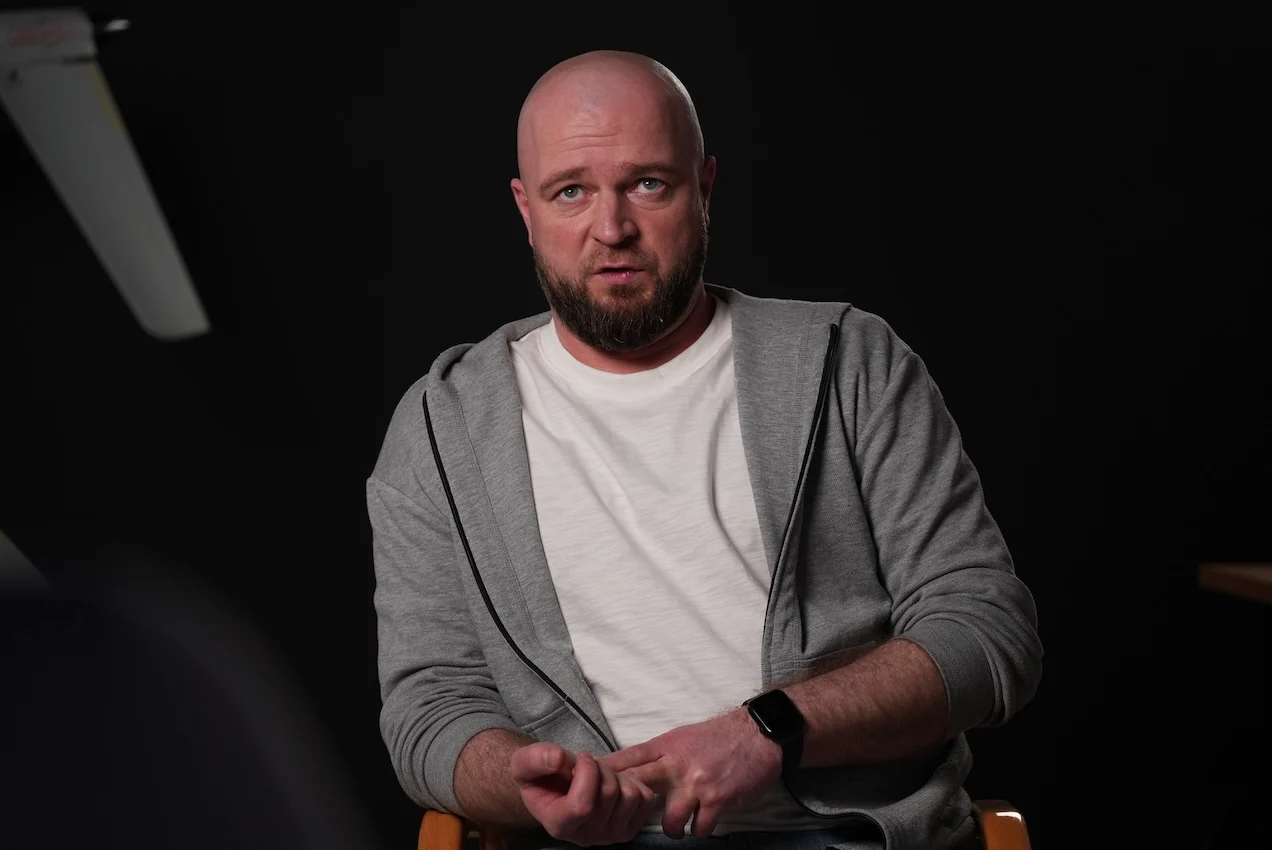
Co-founder and CEO Hadrien Canter says he spends around a third of his time in Ukraine, including visits to the front line. In his view, there is no other way to build a successful defence tech company: “Ukraine is now the world’s leader in defence technology.”
This year, Canter plans to invest €10 million in expanding the company’s operations in Ukraine, triple the number of Ukrainian engineers, launch a fixed-wing interceptor and position Alta Ares as a bridge between European prime contractors and the Ukrainian defence industry.
In an interview with Defender Media, the Alta Ares CEO also discusses the company’s product portfolio, cooperation with Fire Point and plans to develop an interceptor drone capable of engaging cruise missiles.
‘€10m from our €50m Series A we will invest in our operations in Ukraine’
We raised €50 million on a Series A round. Quite good for a two-year-old company.
We don’t share the valuation. I think it’s much less important than what we are planning to do with the money we raised.
We will invest one-fifth of this fundraising in Ukraine – €10 million. To increase operations, hire more people, and scale production.
Among all the big European companies that raise large rounds in Europe, we are one of those with the largest presence in Ukraine. We also have a long-term collaboration with different partners here.
Right now, we have 20 engineers in Ukraine. We expect to triple this amount by the end of the year.
“Our goal is to become the bridge between French primes and Ukraine”
Our goal is to engage more European primes in collaboration. We recently partnered with MBDA to co-develop a new system against cruise missiles. It will be very costly and will require a lot of testing, but that’s the only way.
From my point of view, many of the big European companies could have achieved greater success in Ukraine if they had more people on the ground. Our goal at Alta Ares is to serve as a bridge between French companies such as Airbus and MBDA and to engage in pioneering activities that advance the future of European security.
What Ukraine is offering right now is very unique. I think all these initiatives, like Brave1, are really giving this opportunity where, instead of spending years in the lab trying to see if the product works, you just go to Brave1 or any combat unit. They are always super keen to test things.
There is a strong incentive for us to be increasingly present in Ukraine. Ukrainian government has shown great responsiveness to attracting European companies to operate in Ukraine. I think that’s a good signal we can see and one we want to invest in.
You can’t build a leading European defenсe company if you are not present in Ukraine. Ukraine is the leading country in defenсe, so if you want to be a leading defence company, you have to be in Ukraine—otherwise, you are no one.
What Alta Ares is working on
Right now, one of our main products is Pixel Lock. It’s a software stack that does agnostic terminal guidance. We provide it to different UAV manufacturers in Ukraine. It handles detection, identification, and sends commands to the flight controller to go left, right, up, or down to intercept the target. That’s why we have so many software engineers in Ukraine.
Yes, many military units are still sceptical, saying stuff like, “Oh no, we don’t trust the AI.” And then our deployment engineers go into the fields, show the technology working, and the military guys change their minds.
It’s like when you buy a new car, and at first you’re sceptical about cruise control. At some point, you try it and see how it changes the way you drive long distances. It’s the same thing we’re doing with interceptor drones.
We are now working with around 10 Ukrainian interceptor manufacturers. Two of them are in the top ten of the Brave1 rankings. They are using our software stack in their interceptors.
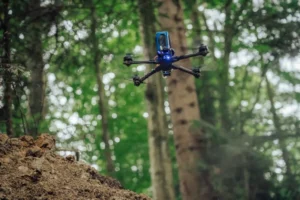
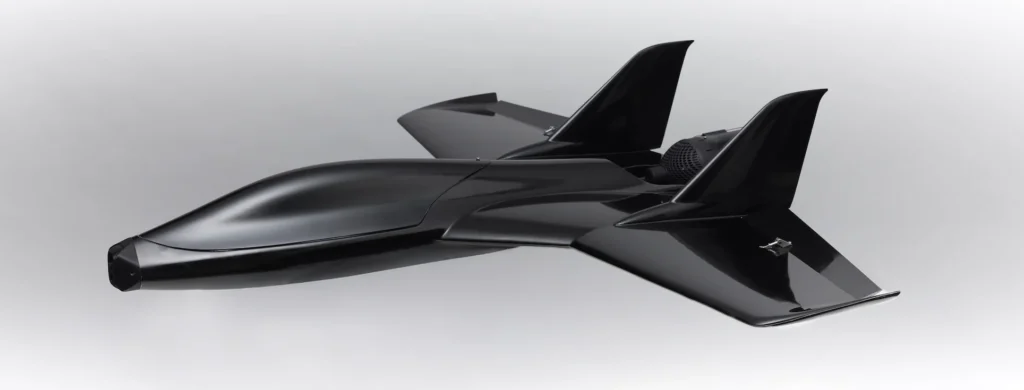
At the same time, we have more and more hardware engineers joining our team as we scale production of our hardware stack. We have two systems: the X-Lock, a quadcopter rocket-type interceptor, and the Black Bird, a fixed-wing interceptor that is still a prototype. We expect the product to be released by the end of the year.
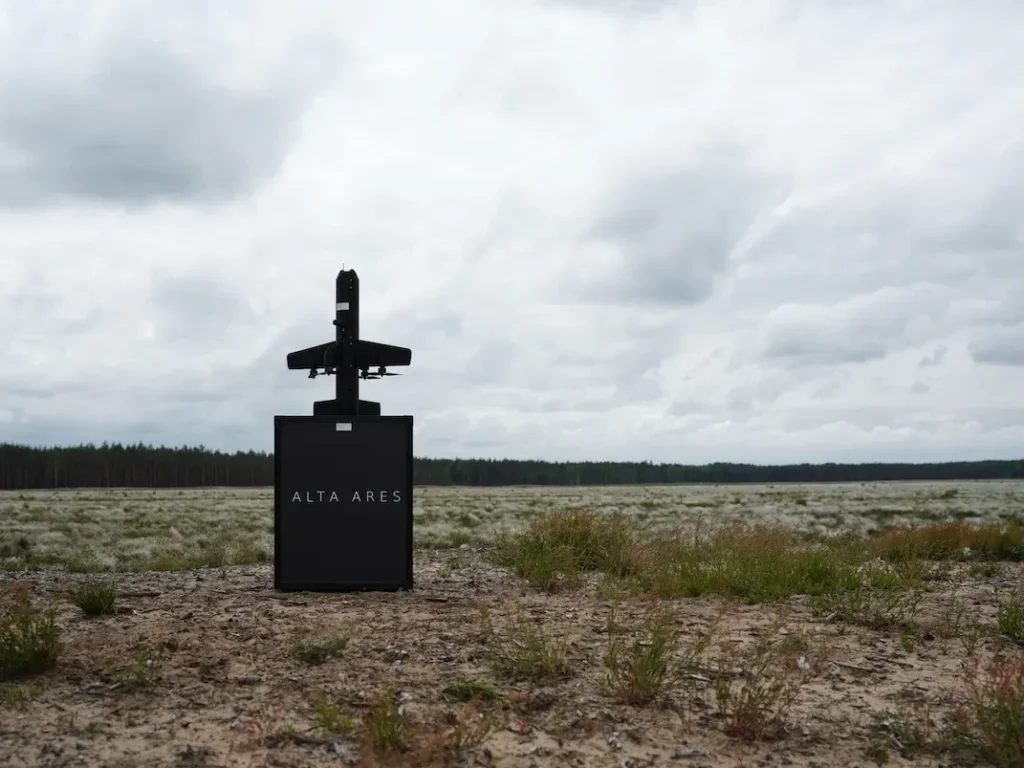
Alta Ares has one production facility in France, one in Ukraine, and one in the Middle East, and we will soon have one in a new European Union country.
We are not disclosing the amount we are producing, but it’s definitely not enough, by far. We plan to produce way more; we’re now trying to build a supply chain in the EU.
We have multiple clients in different countries testing it and buying it. We also realised that the system operating in Ukraine sometimes doesn’t work as well in the Middle East because of different weather conditions, software architectures, and types of jamming. So we are testing and trying to adapt.
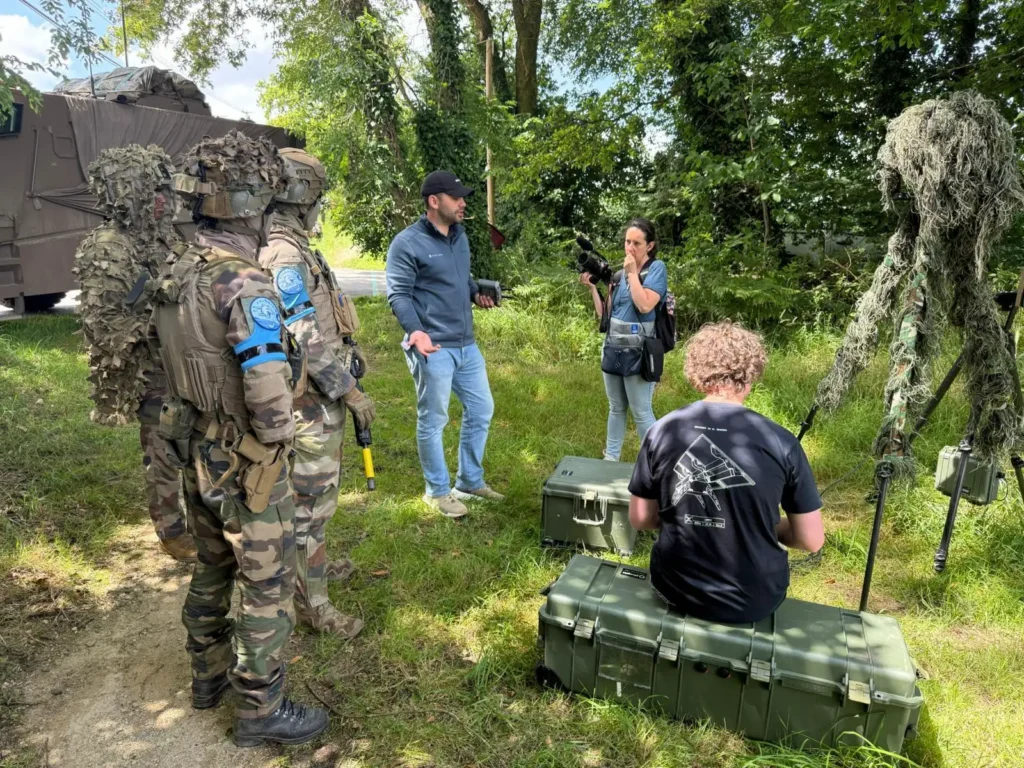
Right now, another challenge is coordinating deployment engineers across different war areas. The conflicts differ in intensity, but the logistics are always tricky. We don’t consider ourselves a drone company or an AI company. We provide the end-user with a capacity that spans training, integration with the radar, software, hardware, and maintenance. That’s what the client wants right now.
Alta Ares’ commitment to Ukraine
I spend almost 10 days per month in Ukraine, and I think it’s important. There are very few CEOs from other companies in Europe who spend as much time as I do in Ukraine and who have shown such commitment, especially since the full-scale invasion started.
We are here for the long run. What we tell the engineers when they ask, “Okay, if the war stops, what will we do?” is that we will stay. We know that if there is a ceasefire or something, Ukraine will still need to rearm.
We don’t see this as an opportunistic market; we see that Ukraine has this amazing engineering culture. I’ve seen some of the best engineers on my team, and they are in Ukraine right now.
There is a war on talent, which is a tricky thing. Everyone is trying to get those engineers, and the really good ones are already taken by really good companies. But sometimes it’s cool to work with these good companies together.
On the collaboration with Fire Point
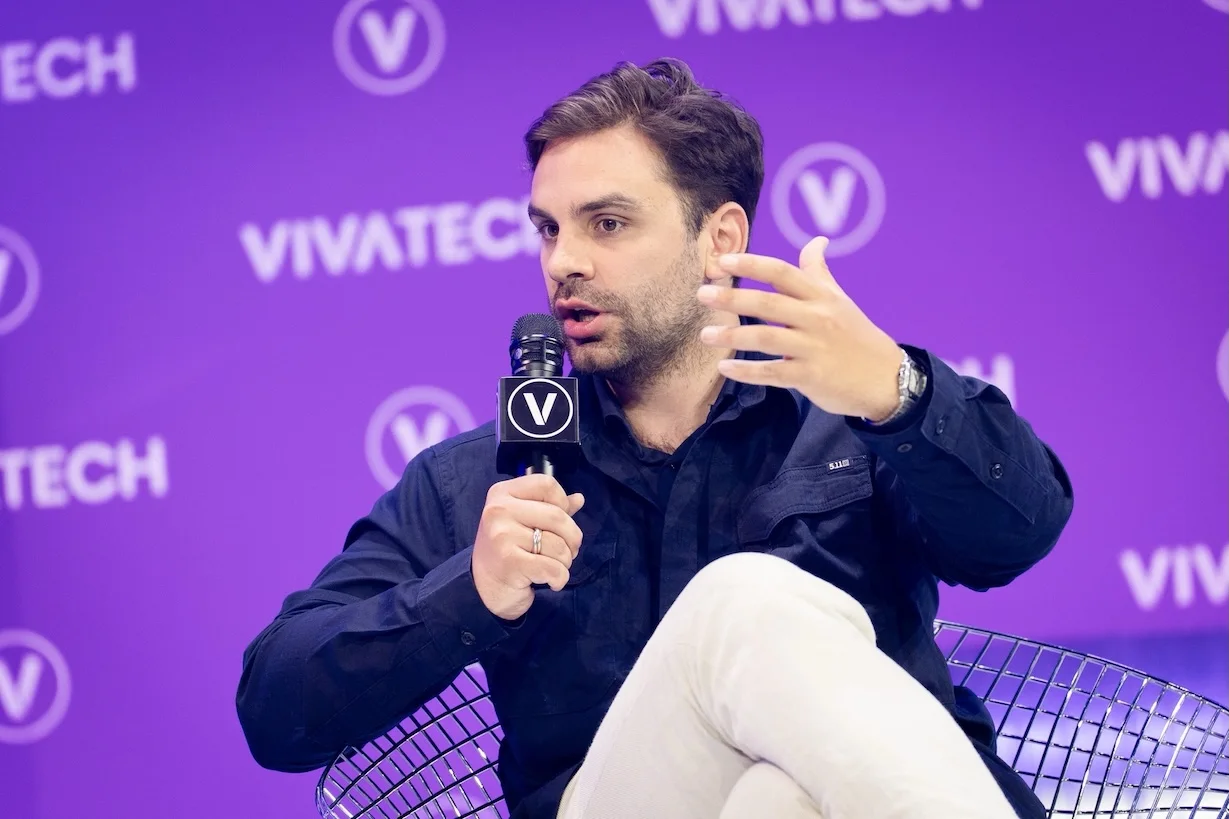
In June, there was a panel discussion at the VivaTech event in Paris with me and Iryna Terekh from Fire Point as speakers. I think it also sends a strong signal – Alta Ares and Fire Point on stage at the biggest European tech event, which is not even focused on defence.

As for Fire Point, we share the same vision, the same will to go fast, to iterate fast, and to support Ukraine in their fight. Our Ukrainian teams are working together on some projects, but they are highly confidential.
“We need to stay humble. The truth is in the field”
Our goal as a company focused on air defence is to bring greater autonomy to the battlefield. I think many needs are being clearly expressed, from defence to other projects like radar data fusion. There are many topics where having highly skilled engineers in both France and Ukraine can position our company as a strong stakeholder in the market.
At the same time, we have to stay very humble because the truth is in the field.
I was deployed to Zaporizhzhia with my team to support a combat unit. There were 45 Shaheds above us. We had three interceptors, and only one was working. I felt very, very stupid.
You can raise as much money as you want, but sometimes when you are in a situation like that, you just say, “Okay.” I went back, talked to my engineers, and that’s when I personally realised we have to scale. I never want to be in a position again where the crew only has three interceptors against 45 Shaheds.
The next morning, we were taking the highway from Zaporizhzhia to Kyiv, passing through Dnipro, and we saw these massive columns of smoke in the early morning. Again, you feel very stupid in these situations.
On competition
Right now, there are around 40 interceptor manufacturers in Ukraine. By the end of the year, we want to work with half of them.
Yes, to some extent, we are competing with them. But I’m very happy to have competitors because a few times I was in combat positions, and we saw interceptors from different vendors downing Shaheds. To some point, they saved my life.
I owe them a lot, so I am quite happy to see good competitors. If those systems had failed in our position, maybe I wouldn’t be here talking to you. When you feel that, you see competition differently. I encourage all the CEOs of these companies to go on combat missions. It gives you a different way of doing business afterwards.
I do this regularly. Sometimes, as a CEO, you get disconnected from reality. You have lunch with the President of France, you have lunch with ministers, you fly in fancy planes, you have a lot of work, and sometimes you forget the smell of smoke, or how cold it is at night in the Kharkiv area in February. That is how you understand.
I know why I do this, and I encourage all my team to do the same. It’s risky, but the people using our systems are risking their lives too. We should show them that we respect them equally.
On the fully autonomous interceptors
In theory, fully autonomous interception has been available for a long time.
To have a successful interception mission, there are three steps. First is detection, second is identification, and third is interception.
On the first step—detection, which is key to having autonomous interception—you basically send radar waypoints to the interceptor. This is already working; we’ve done it on our side for some time.
But the radar is not always very precise. You have to take that into consideration. You know that sometimes the radar covers only a 90-degree angle, or there are areas with no radar coverage.
Then the identification step is autonomous when you have a computer vision model like Pixel Lock.
And then, interception is also autonomous when you use a system like our Pixel Lock, because it sends commands.
But there is one part that is not autonomous: when you trigger the target. The human is still in the loop because there is almost never a proximity fuse, and most of the time it’s the human who triggers the warhead’s explosion.
So I believe that, yes, it’s possible, but it’s not in the interceptor company’s hands. It’s mostly dependent on having very good radars.
On a test field, you can have very good radars. But if you go to South Zaporizhzhia, your radar might have already been hit. That’s the reality.
About the future developments
One of our main priorities, which we will focus on through the end of this year, is the interceptor against cruise missiles. The general goal is to make interceptions from the front rather than from behind, as most interceptors do now. Frontal interception is quite tricky. It looks more like a missile than a drone, but that’s clearly what’s most needed right now for air defence. That’s what we will work on alongside really good engineers from MBDA.
Then, of course, we have a product called Gamma in development. It is an ISR-to-strike system. Basically, it detects the target and then sends its coordinates to a strike drone. That’s something we will increase operations on around this summer.
We also have some joint ventures planned with Ukrainian companies, but it’s too early to share the details.
Reading now
1
260+ vacancies in Ukrainian defence technology at BlueBird Tech, Sine Engineering, Buntar Aerospace and more
2
Forbes: Airlogix plans to raise $100m at a $2bn valuation
3
6,000 lives saved by replacing people with robots. “Makar” on the ground strike drone unit NC13 and its role in Operation Vivaldi
4
Black Mirror #79: What’s inside Geran-4, unmanned tanks, balloon barrages and more of a new russian miltech
5
US Buys 1,320 more FPV drones from Ukraine’s F-Drones for $6.5M
By submitting this form, you give Defender Media consent to the processing of personal data.
Надсилаючи цю форму, ви надаєте Defender Media згоду на обробку персональних даних.

Latest insights
1
TENCORE starts buying up other UGV manufacturers. CEO Maksym Vasylchenko explains the logic behind the deals
2
How to enter Norway’s defence market: an ultimate guide for Ukrainian companies
3
Everything about the RAM-2X mid-strike drone: interview with Ukrspecsystems deputy director Andrii Rymaruk
4

A demo is not demand: How to prove the value of a defence tech product. Column by Tekever Ukraine Director Kateryna Bezsudna
5