Black Mirror #60: relay drones for swarms, heavy UAVs, the upgraded KUB and other news of Russian miltech
A review of Russia’s military-industrial complex activities during the third week of May
This week, the Russian military showcased new heavy drones capable of carrying multiple munitions or EW equipment, while also focusing on extending UAV operating ranges by using relay platforms. In addition, satellite imagery emerged showing the expansion of launch areas for Geran strike drones, alongside footage of new protective structures for military aviation. These and other updates from Russia’s military-industrial complex are covered in Defender Media’s weekly Black Mirror review.
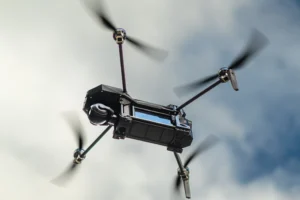
Heavy Muravey drone adapted for EW and combat roles
Russian company Laboratoriya Budushchego has upgraded the heavy multirotor UAV Muravey to serve as a carrier for munitions and electronic warfare systems.
The drone can carry a payload of up to 15 kg, attain speeds of up to 100 km/h, and operate over ranges of up to 13 km. Its maximum flight altitude is reportedly 1,000 metres.
The platform was originally engineered for aerial photography, cargo logistics and operations in emergency zones before being adapted for military deployment.
Thanks to its high payload capacity, the Muravey can carry high-explosive fragmentation (HE-FRAG) and shaped-charge munitions, EW equipment and illumination systems. A rotating electro-optical camera enables surveillance and targeting adjustments at any time of day.
Golub bomber drone
Russian design bureau Stratim has unveiled the Golub multirotor UAV, designed for munition delivery. The drone can carry up to 12 VOG grenade launcher rounds or one 82 mm mortar shell. The munitions are housed in a drum magazine module beneath the fuselage.
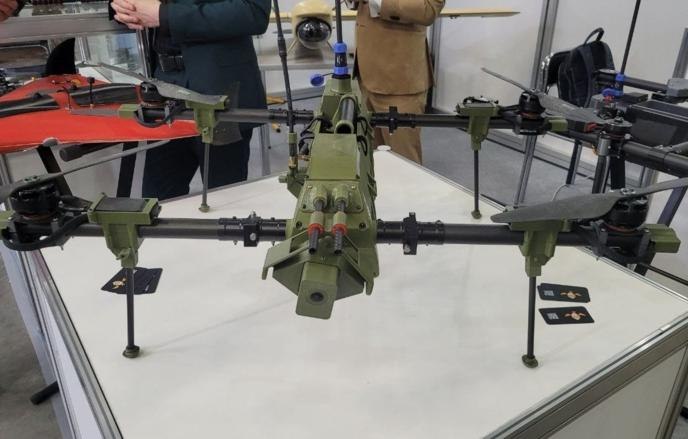
The system is reportedly capable of automatically recognising armed personnel in military uniforms utilising a neural network-based vision system. The UAV is equipped with a command-and-control communications suite operating within a frequency range resistant to electronic warfare interference.
The drone features a flight range of up to 10 km, an operational altitude of up to 500 metres and a payload capacity of up to 6 kg.
Sniper radar for automatic interceptor drone guidance
The Smolensk-based radio-electronic systems centre Zavant has developed a new automated radar station called Sniper, intended for guiding interceptor drones. According to company representatives, the system can launch an interceptor drone without operator involvement and automatically vector it towards a target.
The company also announced the development of a compact radar system featuring a fixed antenna. The system provides full 360-degree circular scanning and is capable of detecting aerial, ground and surface targets.
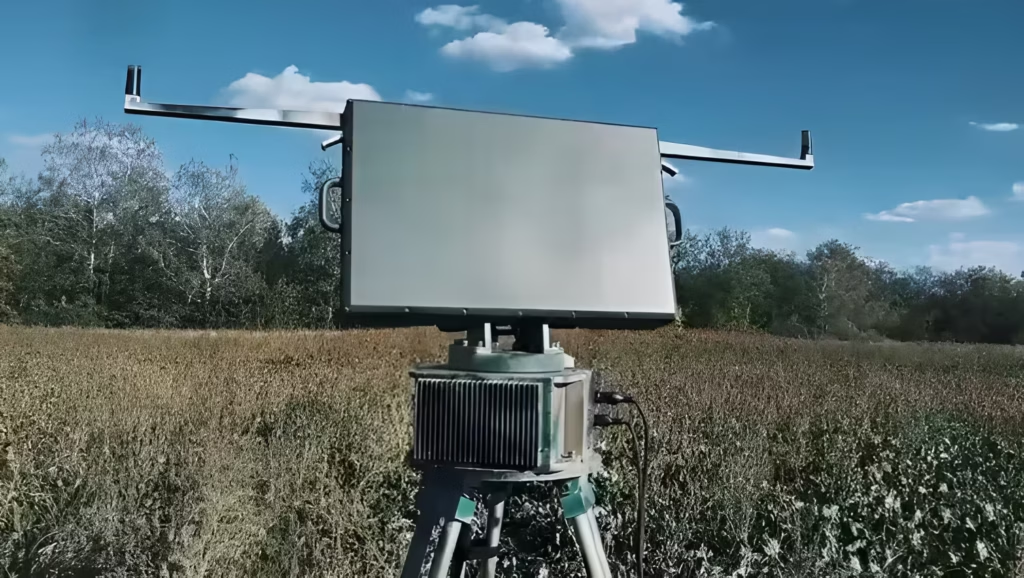
Zavant claims the new system is unique within the compact radar class because traditional phased-array systems either feature a limited field of view or rely on moving mechanical components.
Russia expands infrastructure for launching Geran-5 jet drones
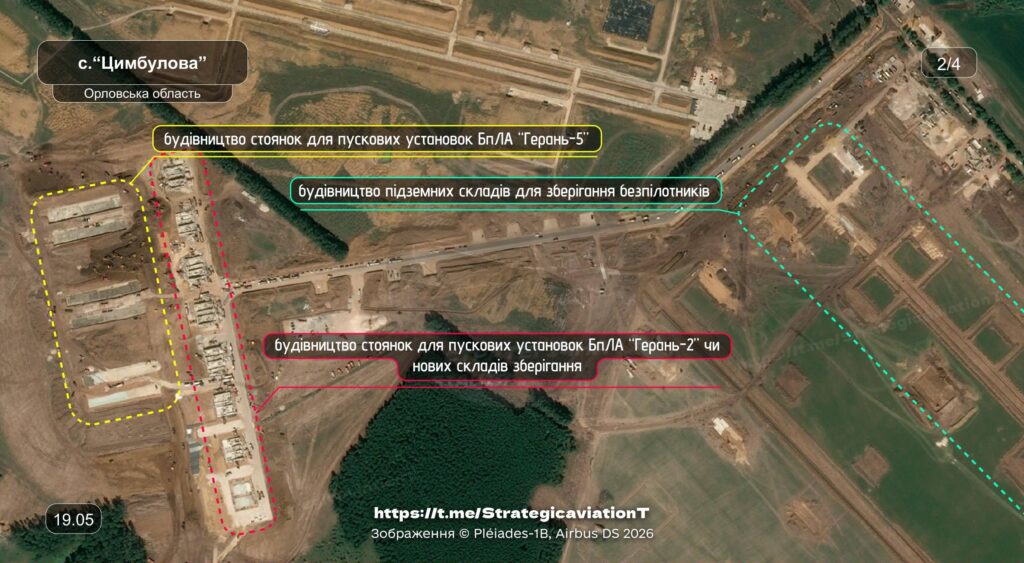
New satellite imagery has surfaced online showing the expansion of launch infrastructure at a drone facility in the village of Tsymbulova in Russia’s Oryol region, utilised for launching Geran-5 jet-powered strike drones.
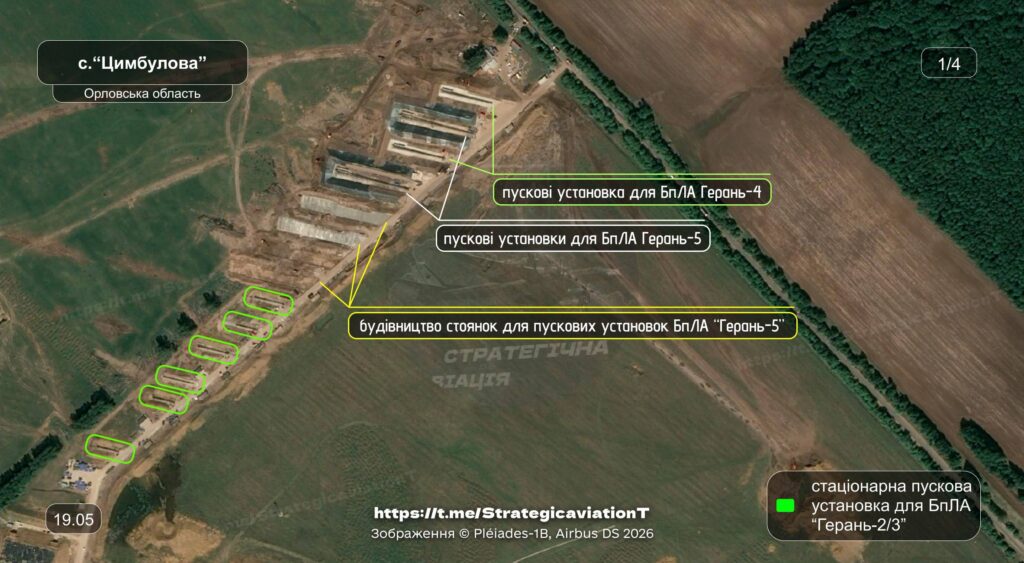
The images document the construction of ten additional launchers. Four supplementary sites for launcher systems are being erected adjacent to existing positions. In the southern section of the facility, construction is also underway on six more launcher positions and eight concrete structures likely intended for drone storage.
Construction of new shelters for strategic aviation spotted in Zhukovsky
The construction of new hangars or hardened aircraft shelters for Russian strategic aviation has reportedly commenced at the airfield of the Gromov Flight Research Institute in Zhukovsky. The structures were spotted in footage from the maiden flight test of the Su-57D. Several large buildings visible in the imagery resemble protected aircraft shelters.
According to preliminary assessments, these facilities may be intended for housing, servicing and preparing long-range aviation assets. There has been no official confirmation regarding their purpose.
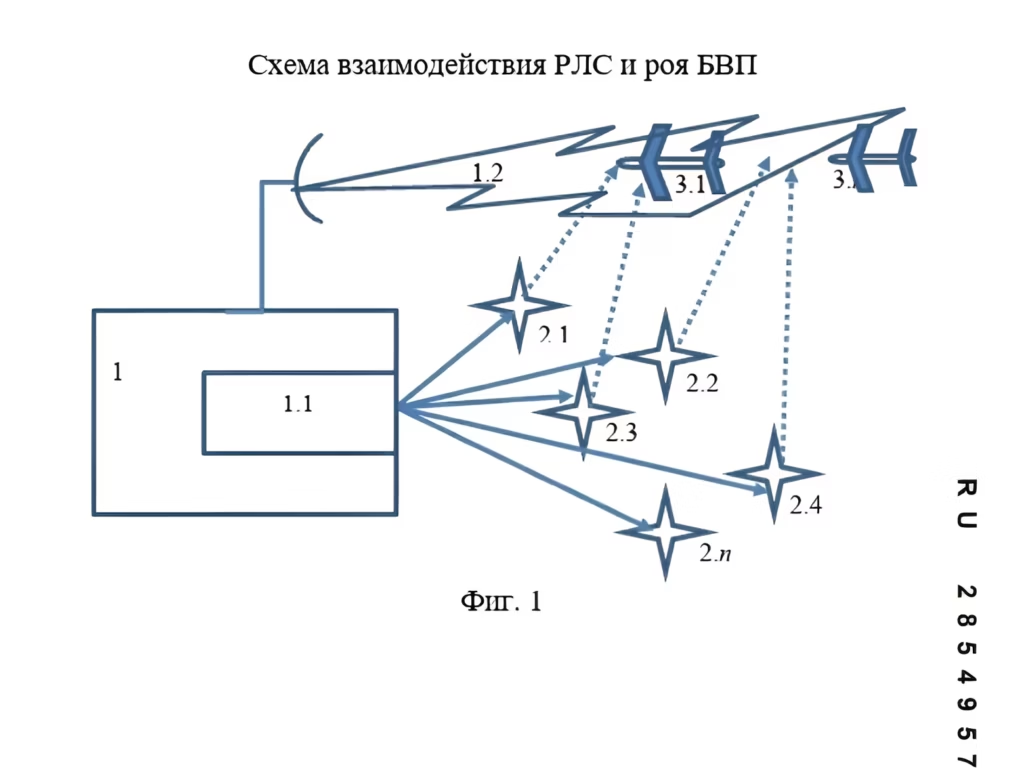
Patent filed for radar-guided drone swarm control system
A patent has been registered in Russia for a radar system capable of guiding interceptor drone swarms using radar data and artificial intelligence elements. The ground-based radar transmits data directly to the interceptor UAV. The drone receives target coordinates, velocity, movement parameters and telemetry from its onboard sensors, including the gyroscope and accelerometer.
The information is then processed by an integrated neural network. In real time, the algorithm predicts the target’s trajectory, assesses the probability of a successful interception and calculates the optimal interception manoeuvre.
Russians showcase concept for a ground robot convoy operating under drone cover
A Russian television report has demonstrated a tactical configuration for a convoy of robotic ground platforms intended to operate under continuous aerial surveillance. The concept relies on a sequence of specialised vehicles with distinct operational roles.
At the vanguard of the column is a robot configured for mine clearance and route opening. It is followed by a fire-support platform armed with grenade launchers. Next comes an electronic warfare support vehicle intended to suppress enemy drones, while the rear element deploys smoke screens for concealment and deception.
This configuration is presented as an adaptable tactical template rather than a rigid combat formation. The composition and order of the platforms may vary depending on terrain, threat levels and mission requirements.
Judging by the integrated modules, the concept aims to maintain mobility in areas monitored by reconnaissance drones and to improve the survivability of uncrewed ground systems through coordinated robot-to-robot interaction.
Merlin-VR reconnaissance drone claimed to be resistant to EW
The Merlin-VR reconnaissance UAV, developed by the Smolensk-based NII STT research institute, is reportedly capable of maintaining communications at ranges of up to 150 km and features enhanced resistance to electronic warfare systems.
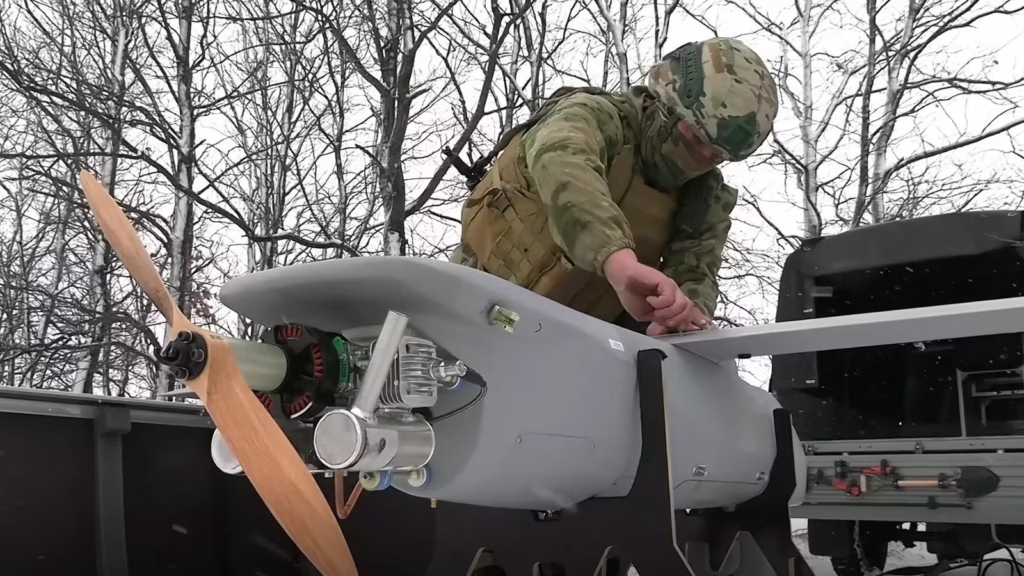
The aircraft is equipped with an onboard protection suite against attack drones, as well as an evasive manoeuvring system. It is claimed that Merlin can actively suppress the signals of interceptor drones. The UAV also features an optical payload with 90x optical zoom and 200x digital zoom. Operators can reportedly observe objects up to 30 km from the platform.
The UAV can operate in autonomous and semi-autonomous modes, executing missions day and night under diverse weather conditions. The aircraft features a payload capacity of up to 6.5 kg and a maximum flight altitude of up to 5 km. Launches are conducted via catapult, while transport is managed within a specialised metal container.
Russia tests wheeled Svarog robotic platforms powered by gas and diesel
The Russian research and production centre Svarog has presented the Svarog 1000 and Svarog 500 logistics robotic ground systems designed for transport and resupply tasks.
During testing, developers plan to assess the wheeled platform’s efficiency under off-road and rough-terrain conditions. A key feature of the project is the availability of both gas-powered and diesel-powered variants. Developers explain this choice by noting that most modern ground robotic systems rely on batteries, which can be challenging to recharge in the field.
The systems support autonomous route navigation via satellite positioning and communications over a mesh network, in which multiple nodes form a unified wireless data transmission system.
Laser anti-drone system
At the CIPR-2026 conference in Nizhny Novgorod, Russia, a laser system was presented, described as a fully domestically developed solution.
The system was demonstrated by the company Inferit Bezopasnost. Mounted on a pickup truck chassis, the complex is intended to detect, track, and engage drones within line of sight at distances of up to one kilometre.

The technical specifications and official designation of the system have not yet been disclosed.
Odyssey relay drone designed to extend strike UAV range
Design bureau Aviatekhnolab has developed the Odyssey relay drone, intended to extend the operational radius of strike UAVs. According to the developers, the utilisation of this relay platform enabled a strike drone to operate at distances of up to 70 km without experiencing command link degradation.
The technical specifications of the system remain undisclosed. At the same time, it is reported that the Odyssey functions as an airborne signal relay node, mitigating signal loss caused by terrain features, buildings or forested areas.
The company also announced that the system has successfully undergone evaluation trials and initial deliveries to military units have commenced.
Protective casing for remote mining systems on robotic platforms
A protective casing has been developed in Russia for transport-and-dispensing containers utilised on robotic remote minelaying systems.
According to the developers, spent shell casings frequently entered the containers during operation, jamming the mine feed mechanism. This could cause system failures and disrupt mission execution.
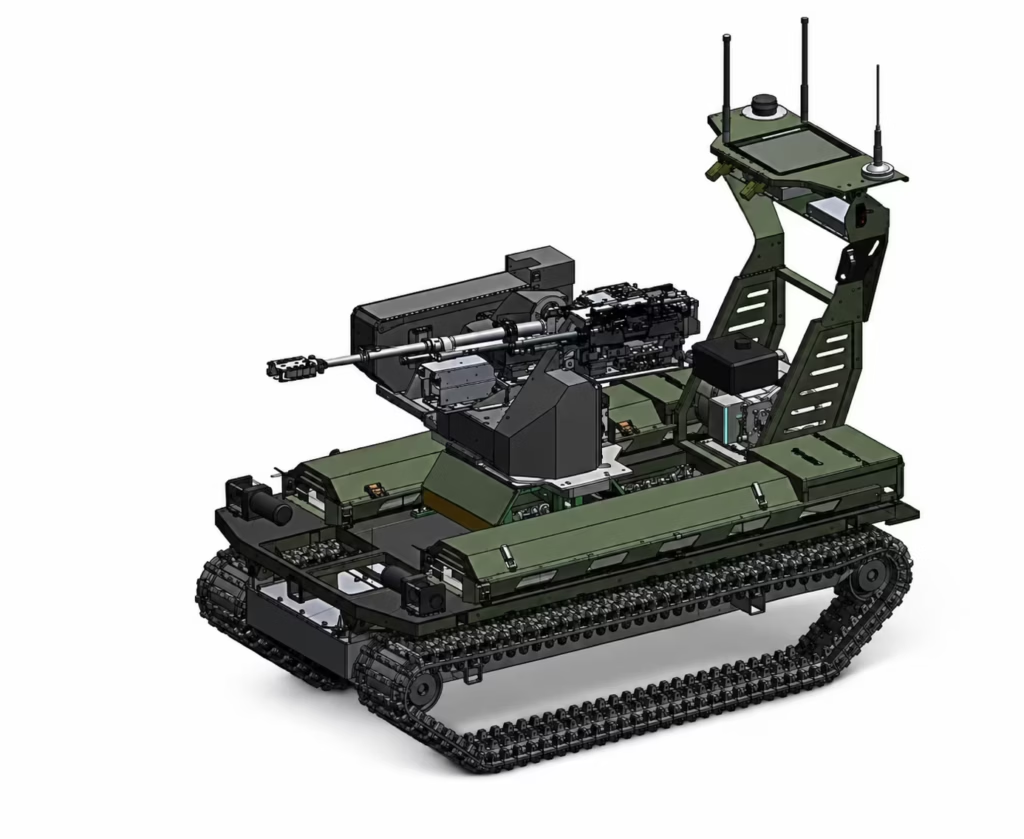
To resolve this issue, engineers designed a trapezoidal polycarbonate casing attached to the container using hinges and tension locks. During firing, spent casings are intended to slide off the structure’s surface onto the ground rather than fall into the internal mechanism.
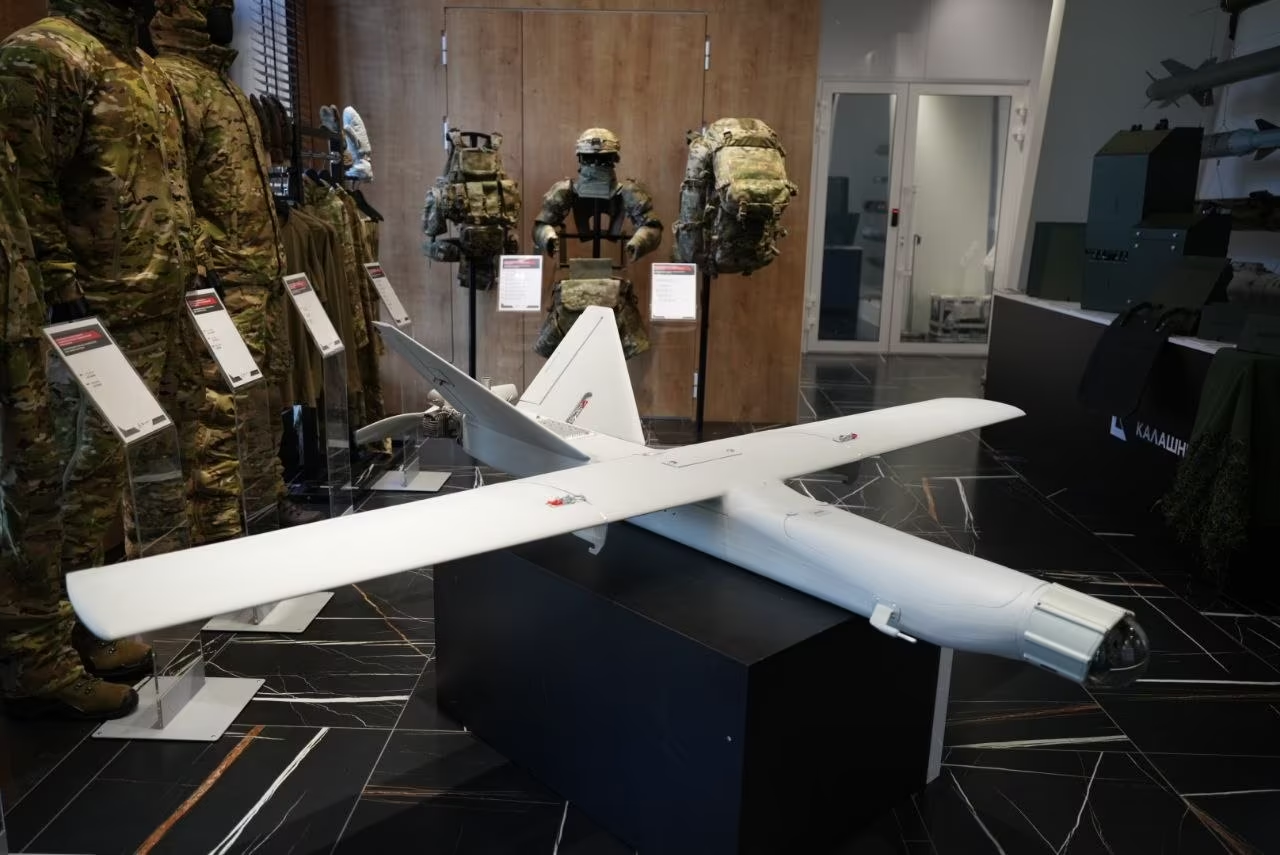
KUB-10ME loitering munition with a range exceeding 100 km
The Kalashnikov concern has showcased the KUB-10ME tactical loitering munition. The system’s primary feature is an electro-optical guidance suite capable of engaging both stationary and moving targets. Increased resistance to electronic warfare and air defence systems has also been claimed. The UAV is equipped with an aerial photo and video recording system featuring onboard data storage.
The system features an operational range exceeding 100 km. It can operate at altitudes from 80 to 1,800 metres with a cruising speed of approximately 120 km/h. The munition is reportedly capable of operating day and night under adverse weather conditions, at temperatures ranging from –30°C to +40°C and in wind gusts of up to 10 m/s.
Russian Yurka 1.2 drone detector tested in combat conditions
The Russian passive drone detector Yurka 1.2 has undergone evaluation under combat conditions.
The device is designed for passive drone detection, monitoring video signals from DJI commercial drones and FPV systems operating in the 1.2 GHz, 2.4 GHz and 5.8 GHz bands. The detection range in line-of-sight conditions is reportedly up to one kilometre. The system is also capable of intercepting analogue video feeds within the supported frequency bands.
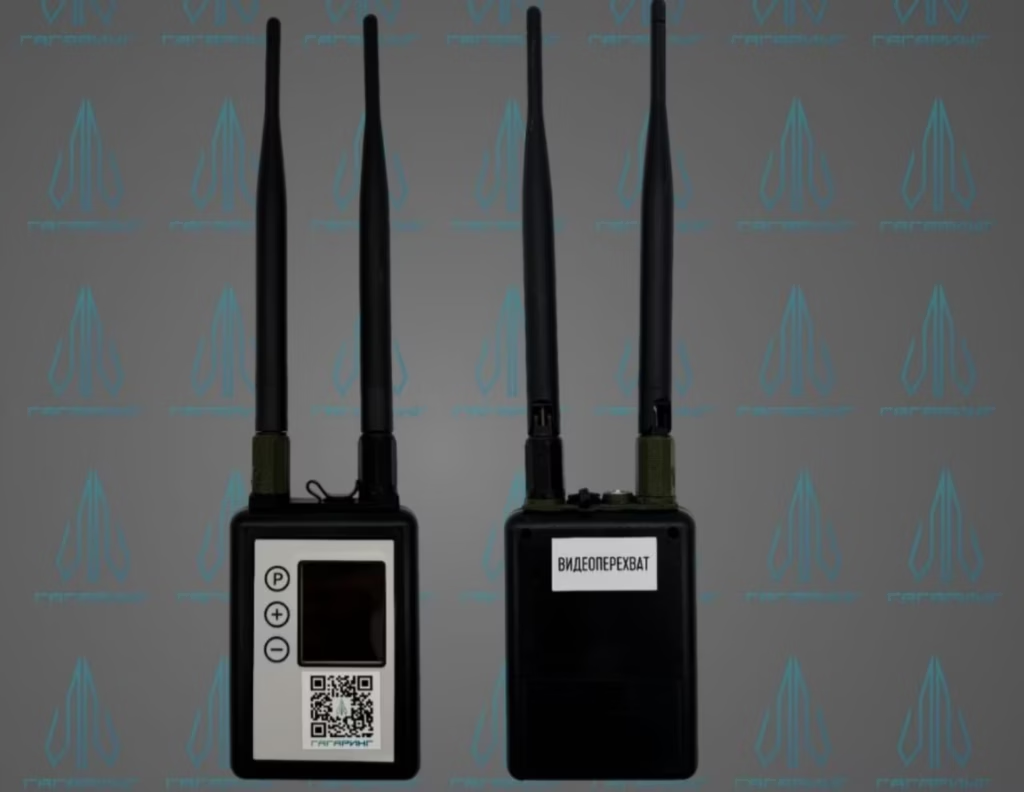
The “Yurka 1.2” can operate autonomously for up to eight hours and features a colour display, audio and vibration alerts, sensitivity adjustments and interference filtering. Support for directional antennas to enable more precise signal-source triangulation has also been announced.
Reading now
1
Ukrainian Skyeton secures $10.6M US army contract
2
The Pentagon has announced the results of Drone Dominance Gauntlet II – announced Ukrainian companies did not make the top 5
3
Korven Systems project: How Teletactica co-founder is building an autopilot for interceptor drones
4
Ukrainian SkyFall again among winners of US Drone Dominance Program
5

A drone group, not a swarm: How Pasika by Sine Engineering works
By submitting this form, you give Defender Media consent to the processing of personal data.
Надсилаючи цю форму, ви надаєте Defender Media згоду на обробку персональних даних.

Latest news
1

Ukraine’s DoD Solution raised $2.1m in a pre-seed round
2

8+ major defence tech events taking place in October
3
Vyriy Industries unveils new Slavic reconnaissance UAV
4
UGVs with grenade launchers and robotic APCs: 3rd Corps reveals new details of Operation Vivaldi
5