UAV Schools of Ukraine association and the Association of maritime drones: what they do and their plans for 2026
Comments from association leaders Artem Platonenko and Denys Kanin

Artem Platonenko, Executive Director of the Independent Association of UAV Schools of Ukraine, and Ihor Fedirko, CEO of the Ukrainian Council of Defence Industry
At the beginning of April, two associations joined the Ukrainian Council of Defence Industry: the Independent Association of UAV Schools of Ukraine and the Association of Maritime Drones. Representatives of both organisations will also join the council’s board.
“Maritime drones in Ukraine have grown into a distinct segment of the defence industry, with its own technological specifics, demand from the military, and international interest,” said the council’s CEO, Ihor Fedirko. “At the same time, training drone operators and developing unified training approaches has long become a separate and important part of the defence ecosystem.”
Defender Media spoke with the heads of both associations about their work and plans for this year.
Artem Platonenko, Executive Director of the Independent Association of UAV Schools of Ukraine — on the community and its challenges
There are currently many specialised projects in Ukraine; our association alone includes 28 schools. In total, around 70 schools have been certified under Resolution No. 1129, but unfortunately, not all of them are active. Most schools operate on donations, volunteer initiatives, or cooperation with equipment manufacturers. The state does not support civilian schools, even though the same resolution предусмотрювала vouchers for security forces to receive free training.
The main challenge for the industry is to continue delivering high-quality training despite financial difficulties and the devaluation of our work. Participation in trials and competitions is also important for promoting the association and its schools. We plan to continue operating as a self-regulatory organisation, certify instructors, and improve training programmes.
We also plan to revise the criteria for recognising schools as critical infrastructure and update requirements in line with current conditions.
We also plan to revise the criteria for recognising schools as critical infrastructure and update requirements in line with current conditions.
Another focus area is legalising the export of training services, including opening schools jointly with partner countries. There is demand from Poland and the Baltic states. Some schools have already launched courses there in cooperation with local organisations. However, there is a significant risk of falling under Article 333 of the Criminal Code related to the export of dual-use services. Together with colleagues from the Ukrainian Council of Defence Industry and leading schools, we have formed a working group to address these legal issues.
Denys Kanin, Director of the Association of Maritime Drones — on the development of the segment
Market size. The Association of Maritime Drones has conducted a full assessment of Ukraine’s maritime unmanned systems market. We estimate that there are around 27 teams. These include developers of complex systems such as Magura, Sargan, Sea Baby and others — maritime drones that act either as kamikaze systems or as carriers of various types of weapons. The list also includes manufacturers of riverine, logistics, and evacuation drones.
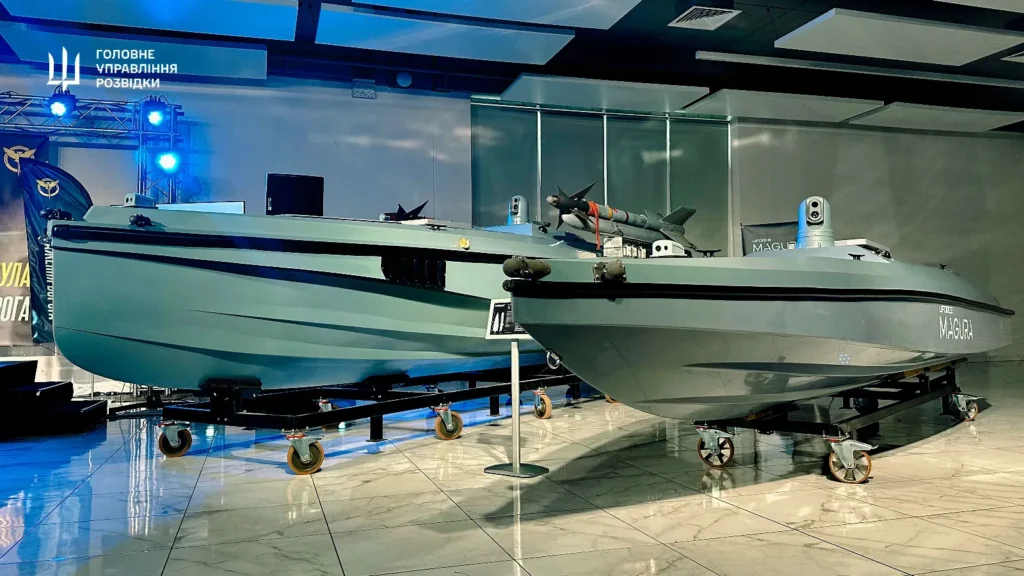
There is also a significant share of companies developing underwater systems. Most of these manufacturers are non-public and highly secretive due to the nature of their end users. We also выделяем a separate group — producers of supporting systems such as control and communication systems used by major players.
Evolution of maritime drones. The systems entering service are a response to battlefield challenges. The industry has gone through several stages of transformation.
Initially, it was about single kamikaze strikes. Then we moved to mass attacks using multiple systems against one or several targets. After that, the focus shifted beyond kamikaze roles toward capabilities to engage aerial targets — including helicopters and aircraft. Currently, efforts are focused on countering UAVs such as FPV multicopters and Lancet loitering munitions guided by Orlan drones with laser targeting.
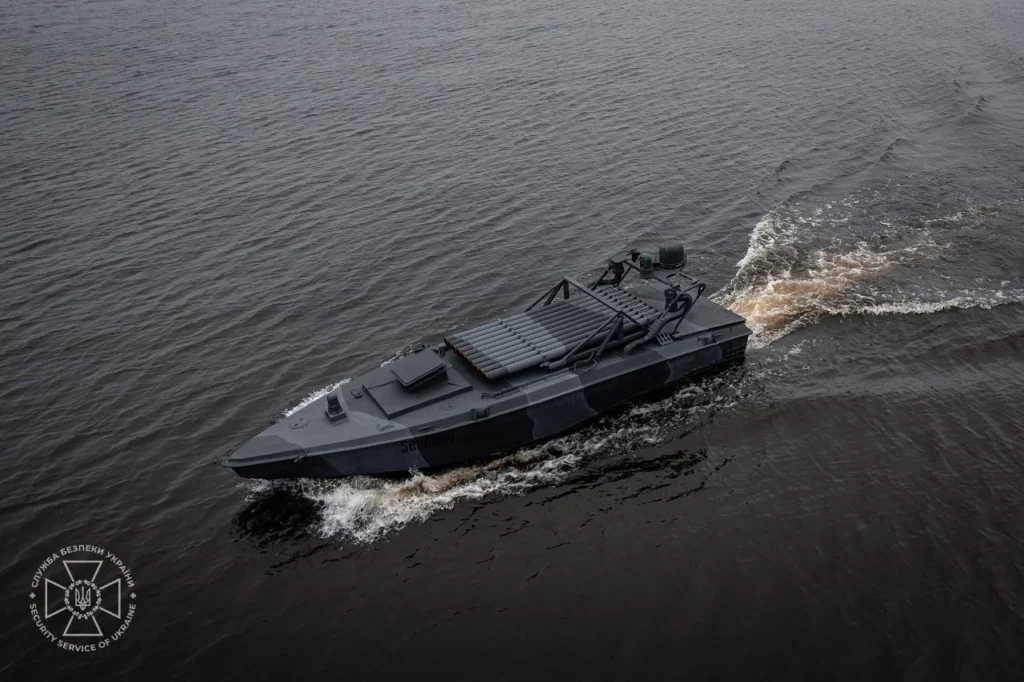
In general, most of our work is reactive to battlefield challenges, but it also includes efforts to anticipate the enemy’s mirror responses. Maritime unmanned systems are not only about offensive operations but also defence. Thanks to uncrewed surface vessels, Ukraine has largely reopened its grain corridor. At the same time, there are almost no reports of successful enemy attacks using similar systems. Much of this work is carried out by less visible units, including naval groupings, the river flotilla, border guards, and other agencies.
The Unmanned Systems Forces have also actively contributed to developing the maritime component. Despite a limited operational area, the number of challenges continues to grow. We aim to stay ahead and anticipate enemy actions to maintain the initiative.
Key challenges for 2026. The first is preserving our scientific, technical, and production scaling potential. Maritime systems are expensive to produce, requiring significant infrastructure and highly skilled personnel. They cannot be built in garages or small underground facilities. This makes cooperation with international partners critical — particularly joint production in partner countries. This would accelerate development, enable scaling, and reduce costs, while also allowing Ukraine to receive needed equipment through partnerships.
The second challenge is countermeasures. Ukraine has demonstrated strong capabilities in deep-strike operations, including repeated successes near Novorossiysk and other areas. It is important to maintain this initiative while also ensuring the protection of our own waters. The tragedy on the Danube is an example of what can happen if insufficient attention is paid to defence. This requires investment in both passive protection measures — such as nets and barriers — and active systems, including radar, acoustic sensors, and satellite surveillance.
A further challenge — or continuation of last year’s efforts — is the deliberate development of an unmanned fleet. Traditional navies consist of various types of vessels: frigates, missile carriers, landing ships, aircraft carriers, and more. These concepts evolved over centuries.
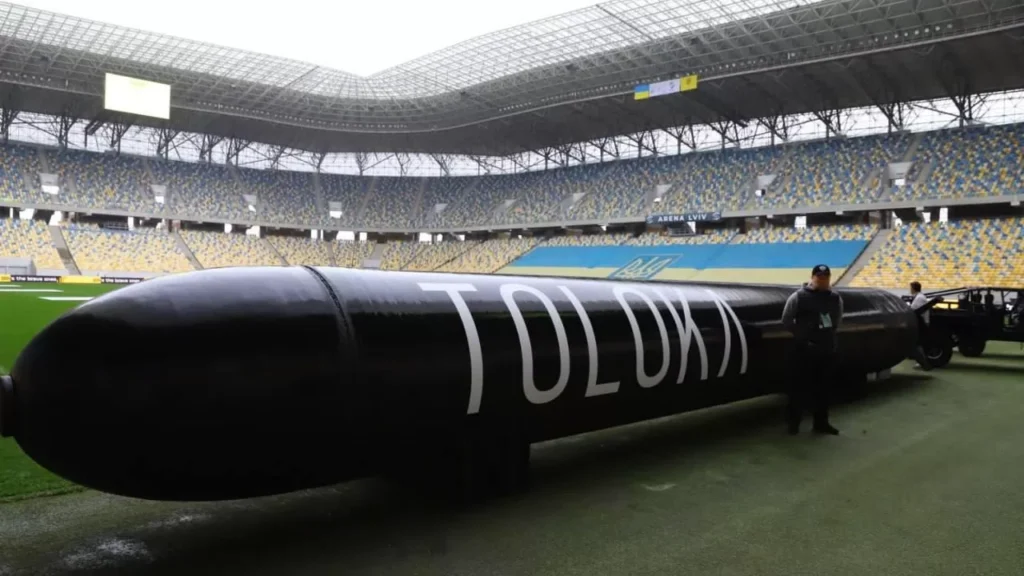
Ukraine does not have a traditional navy but rather a flotilla. However, it has the opportunity to build a full-fledged unmanned fleet by replacing conventional platforms with unmanned equivalents. While an unmanned aircraft carrier carrying fighter jets is not feasible, conceptually similar capabilities could be achieved using carriers of deep-strike kamikaze drones capable of moving freely across the Black Sea and striking from unexpected directions.
This is why it is important to identify which elements of a traditional fleet are still missing in this new model and equip the Armed Forces accordingly. This includes air defence systems. A good example is maritime drones acting as carriers of interceptor drones, which are expected to play a major role in securing the Black Sea and protecting coastal cities.
Reading now
1
SkyFall officially unveils Thor Hammer mid-strike and announces 1,000+ km version
2

260+ vacancies in Ukrainian defence technology at BlueBird Tech, Sine Engineering, Buntar Aerospace and more
3
British-Ukrainian Occam Industries raises €3.8m. The funds will go towards scaling drone autonomy software
4
Terra Drone acquires 50% of Ukrainian Kurin Technologies for $3.5 million
5

Autonomous interceptor drones need radars to work. Why is there still a lack of them
By submitting this form, you give Defender Media consent to the processing of personal data.
Надсилаючи цю форму, ви надаєте Defender Media згоду на обробку персональних даних.

Latest news
1

Denmark to hold first-ever Danish Defense Tech Week in four cities: what to expect
2
Forbes: Airlogix plans to raise $100m at a $2bn valuation
3
Tencore launches an ecosystem to bring together UGVs and components from several manufacturers
4

Defense companies may see staff deferrals cut from 100% to 85%
5