Dorozvidka #85: aerial evacuation, space warfare, and news from Patria, DIU and the SSU
A roundup of notable news and publications from the week that remained off Defender Media’s radar
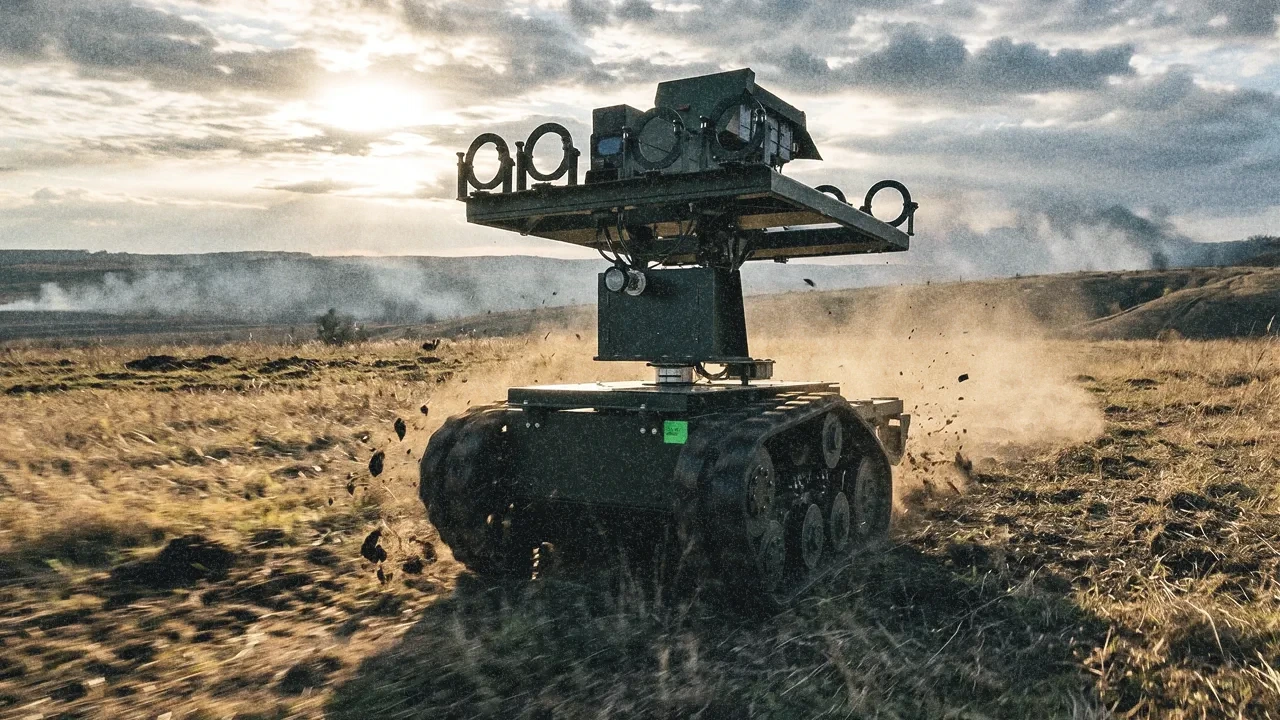
UGV with a flamethrower. Image: Defence Intelligence of Ukraine
In this issue:
- Ukraine tests systems to intercept missiles in near space;
- DIU tests a flamethrower-armed UGV;
- The SSU offers defence companies help against staff recruitment, leaks and cyberattacks;
- The Code 9.2 regiment carries out its fifth evacuation with a StarGate drone;
- Finland’s Patria shows one system controlling naval and aerial drones;
- Ukraine’s Defence Forces carry out more than 30,000 UGV missions in a month for the first time.
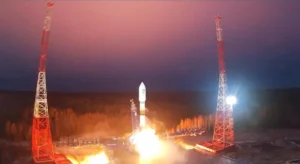
Ukraine tests systems to intercept missiles in near space
Ukraine has carried out three tests of exo-atmospheric interception systems designed to destroy ballistic targets in near space, primarily Russia’s Oreshnik missile. The Guardian reported this, citing MP Fedir Venislavskyi, who chairs the state security subcommittee of the Verkhovna Rada’s national security and defence committee.
According to Venislavskyi, Ukraine is now working out whether it can set up serial production of these systems. He warned that funding could become a serious problem. The Guardian gives no test dates or results, and does not name the system or its developer.
The reasoning behind the project is that Oreshnik launch sites lie beyond the reach of Ukraine’s longest-range weapons, so the missile has to be intercepted outside the atmosphere.
DIU tests a flamethrower-armed UGV
Ukraine’s Defence Intelligence (DIU) has shown tests of a ground robot armed with a flamethrower. According to HUR, the system was tested by the Bratstvo unit of the Tymur Special Unit. DIU has not disclosed the robot’s model, the type of flamethrower, its range or how it will be used in combat. More details and footage are promised in the next episode of DIU’s video series.
For Ukrainian forces, this is yet another type of armed UGV. Ground robots have already assaulted positions with grenade launchers and heavy machine guns, keeping infantry out of the line of fire.
The SSU offers defence companies help against staff recruitment, leaks and cyberattacks
Arms manufacturers can join Forpost, a new programme run by the Security Service of Ukraine (SSU), the agency said. It gives defence companies a direct line to the relevant SSU units, so a company that spots a threat can get help quickly. According to the SBU, representatives of more than 300 defence companies have already backed the initiative.
The programme addresses three risks that defence manufacturers face. The first is employees recruited, or already used, by Russian intelligence. The second is unintended leaks: staff saying too much in interviews, at events or on social media. The third is cyberattacks: the SSU promises to warn companies about current threats, help them recover after attacks and investigate incidents.
Participating companies will receive security recommendations and step-by-step guidance for responding to threats. To join the programme or find out more, write to insider@ssu.gov.ua.
The Code 9.2 regiment carries out its fifth evacuation with a StarGate drone
The 475th Separate Assault Regiment Code 9.2 has used a drone to evacuate another wounded soldier from the front line. It is the regiment’s fifth aerial evacuation. Details are to follow.
The regiment evacuates casualties with StarGate, a heavy drone developed by Ukrainian company Skyfall. Code 9.2 carried out its first two evacuations in late October, rescuing two soldiers from the grey zone about 5 km from the Russian border. According to the regiment, water obstacles and Russian FPV drones prevented ground vehicles from reaching them. On one of the missions, StarGate flew almost 30 km each way.
The regiment evacuated a third casualty at the start of November: a 54-year-old soldier who had spent 57 days at his position after being wounded.
Finland’s Patria shows one system controlling naval and aerial drones
At a Finnish Navy event in Upinniemi on 5 November, Patria demonstrated a mission management system that brings different unmanned platforms together to carry out a shared mission. The demonstration involved a USV fitted with Patria’s autonomy kit, a light fixed-wing UAV, and a Patria ONE quadcopter launched from a Jehu-class vessel. The group was controlled remotely from two locations in Finland. According to the company, the systems can be used for surveillance, target acquisition and reconnaissance, and can be fitted with warheads for one-way missions. At the same event, the Finnish Navy announced it would set up an unmanned systems company in its Coastal Brigade at the start of 2027.
In April, Patria, the Finnish-Ukrainian investment firm Double Tap Investments (DTI) and the Lviv-based defence cluster IRON signed a memorandum of understanding. It covers eALLIANCE, a Patria-led Finnish research and development programme with more than 50 participants. The memorandum provides for information exchange, joint testing and the planning of joint projects between eALLIANCE participants, IRON cluster companies and DTI’s portfolio companies. It was signed at the Drone Autonomy conference in Lviv.
Patria has other agreements with Ukrainian companies. In August, it signed a letter of intent with Ukrainian drone maker General Cherry, under which Patria plans to start drone production in Finland.
Ukraine’s Defence Forces carry out more than 30,000 UGV missions in a month for the first time
The Ministry of Defence says 31,398 logistics and evacuation missions by unmanned ground vehicles were recorded in the DELTA combat system in October. This is the highest monthly figure since the ePoints (eBaly) programme was launched.
In January 2026, UGVs carried out 7,511 missions, so the monthly number grew more than fourfold over the first ten months of the year.
Reading now
1

Why A&D manufacturers need a coherent digital strategy now
2
Ukrainian-Japanese FPV KT-2 drones appear on Brave1 Market: key details and specs
3
Why Danes, Swedes and Norwegians invest in Ukrainian defence tech: Gardar, Final Frontier and Varangians explain
4

6th UK-UA Defence Tech Forum to take place in London: cooperation with Ukraine, arms production and investment
5

14+ defence tech events around the world in November
By submitting this form, you give Defender Media consent to the processing of personal data.
Надсилаючи цю форму, ви надаєте Defender Media згоду на обробку персональних даних.

Latest news
1
Dorozvidka #85: aerial evacuation, space warfare, and news from Patria, DIU and the SSU
2
From Magura to SPECTER: Which imaging UAVs are available on Brave1 Market
3
25 km range and two warhead types: Ukrainian Armor codifies new FPV drones
4
Infozahyst Pluton EW system tracks mesh modems on Russian UAVs
5