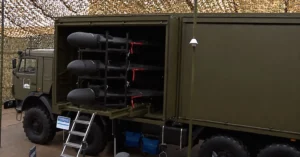
Black Mirror #54: weather-resistant drones, new modules for ‘Kurier’, drop systems, and recent Russian miltech developments
Overview of new developments in Russia’s military-industrial complex in the second week of April
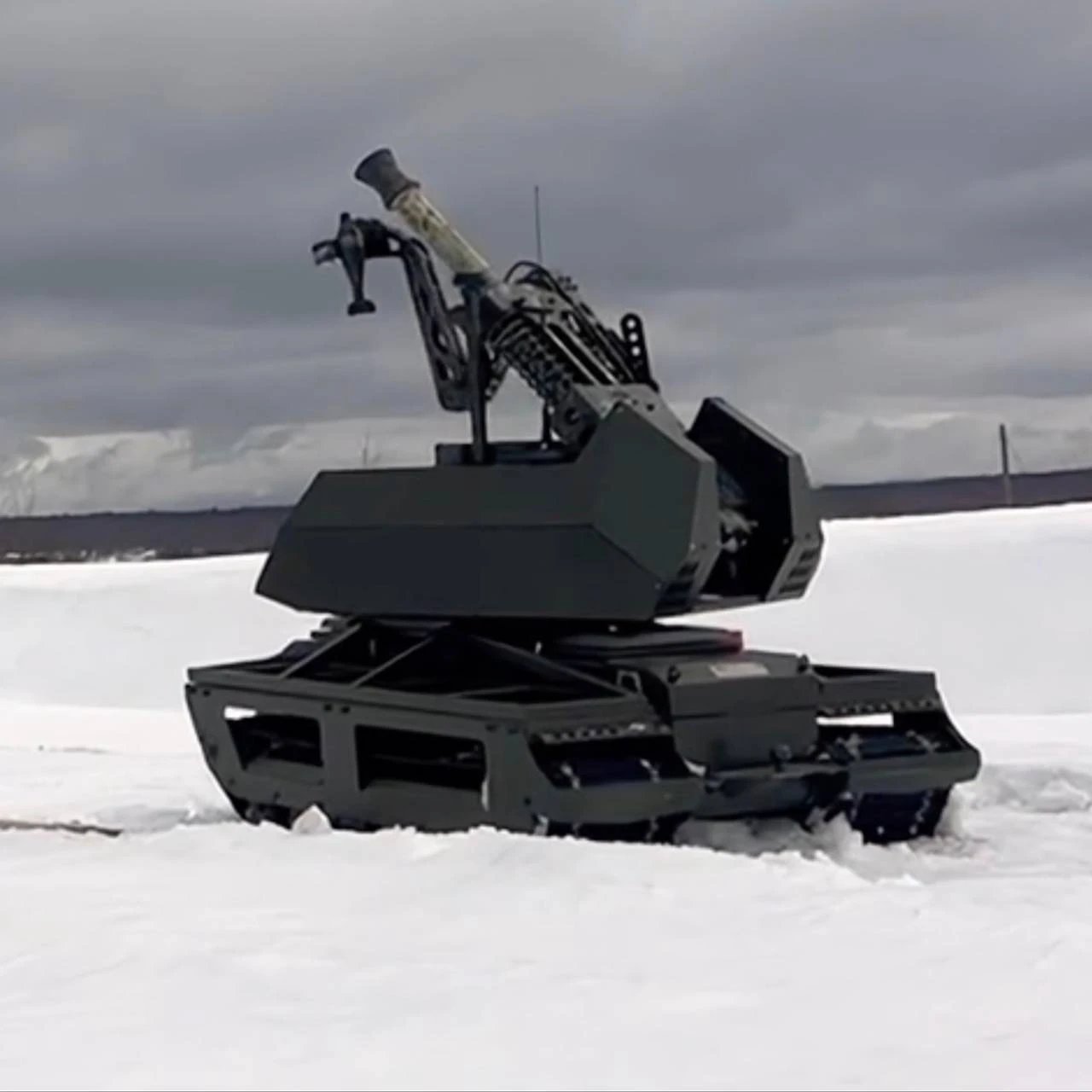
Russia has updated the modular systems for the ‘Kurier’ UGV, developed a thermal management module for UAV operations in high-temperature environments, and introduced new ammunition for automated sniper systems. These and other Russian defence industry innovations are covered in this week’s Defender Media review, Black Mirror.
Modules for hibernating drones
The deployment of drones equipped with “hibernation” capabilities is becoming increasingly prevalent. Serhii Beskrestnov, adviser to Ukraine’s Minister of Defence, has published data regarding the use of a specialised hibernation module. This technology allows drones to remain in a dormant yet lethal state for over 24 hours, waiting for a target to enter their operational zone.
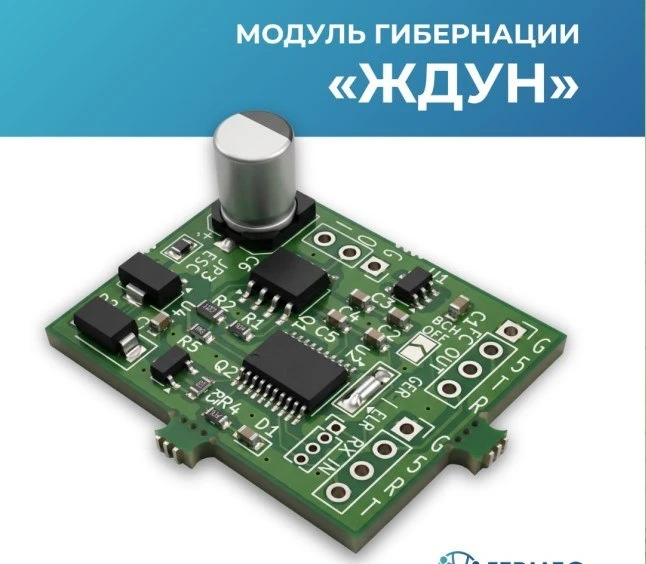
Experimental data on the module’s performance are as follows:
- At minimum transmitter power, the battery life extends to 12 hours.
- When the transmitter is deactivated via a relay, the drone can launch after 17 hours of standby with a 2 kg payload and operate for 5 minutes.
- With all onboard electronics except the receiver powered down, the drone retains enough charge for a 13-minute flight after 17 hours of standby.
Russian developers design drone thermal protection system
An engineering team from the Moscow Aviation Institute has unveiled a cooling module for fixed-wing UAVs. The developers claim the system enables drones to operate at ambient temperatures of up to +60 °C while maintaining critical internal components at approximately +30 °C. The module weighs 1.2 kg and comprises a compressor, condenser, evaporator, expansion valve, refrigerant, and a suite of pressure and temperature sensors. The prototype cost is estimated at 25,000 roubles.
New modules for the ‘Kurier’ UGV
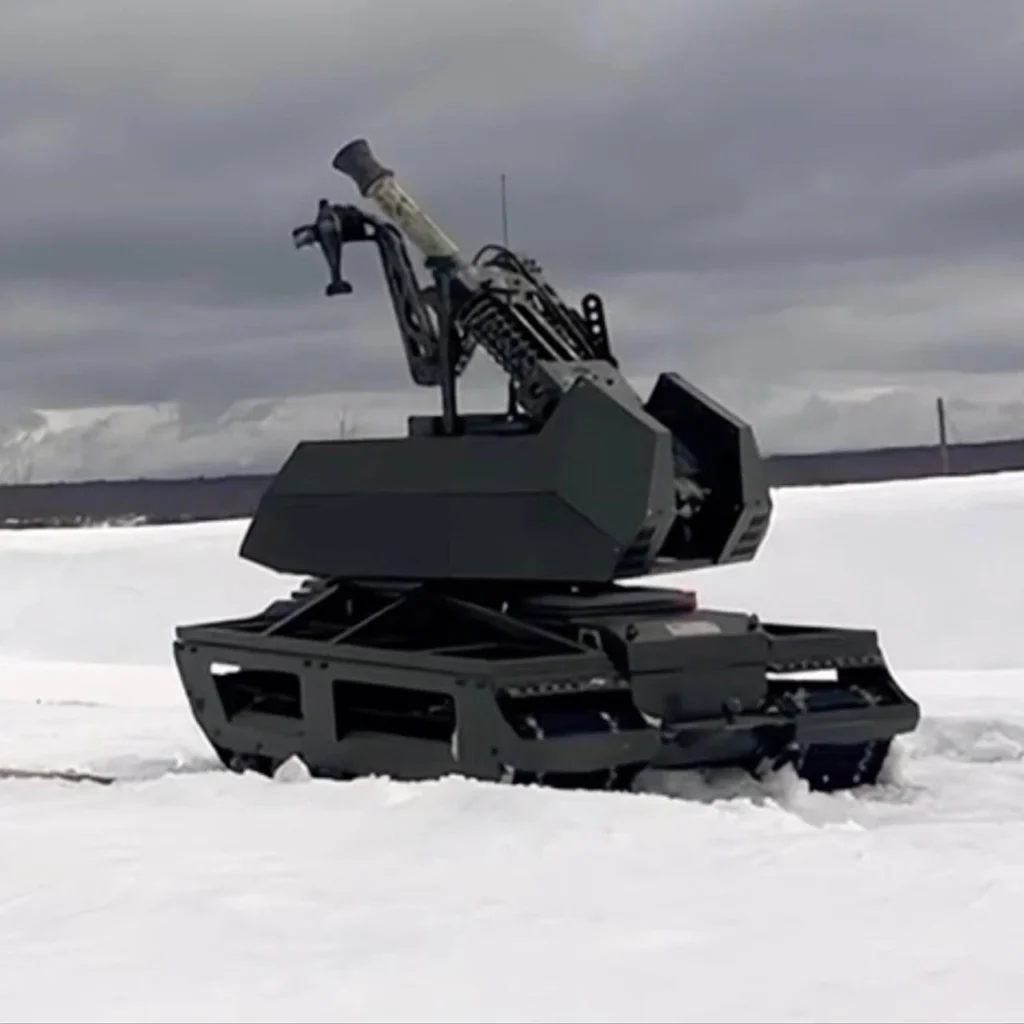
Several new mission modules have been introduced for the Russian ‘Kurier’ UGV: the ‘Bagulnik’ mine-launching system, a Type 75 MLRS integration, and the ‘Adis’ smoke generation system.
The ‘Bagulnik’ mortar module is based on an 82 mm mortar equipped with an automated loading manipulator. This allows the firing process to be fully automated. The system is designed for unmanned operations: it can autonomously transit to a firing position, engage targets, and redeploy, significantly reducing risks to personnel. The reported firing range is up to 6 km using standard 3-O-26 mortar bombs.
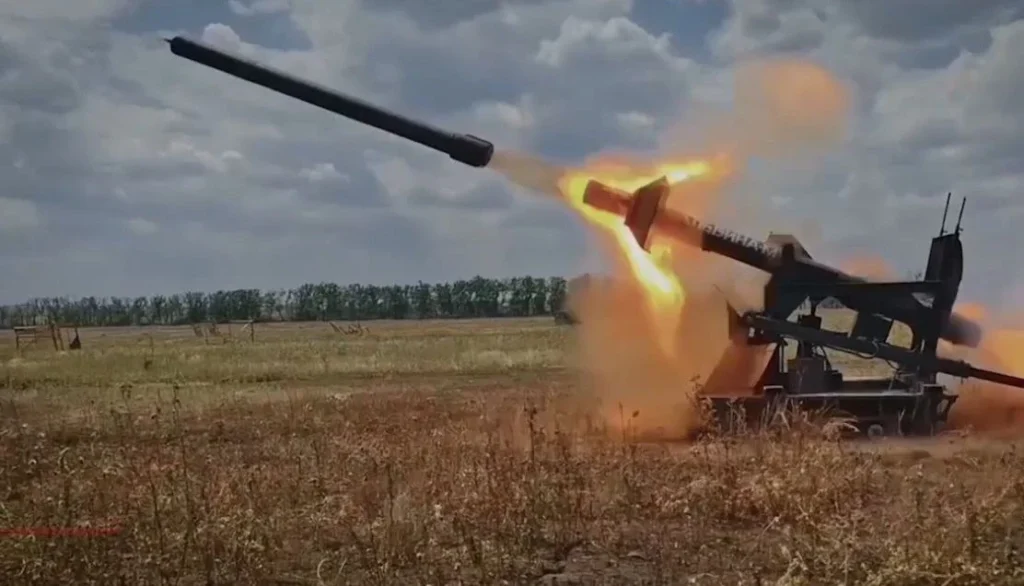
Another armament option involves integrating a 107 mm Type 75 multiple launch rocket system (MLRS). This hybrid platform provides enhanced mobility and remote operation, enabling strikes from a safe distance without a crew present at the launch site. The declared firing range is approximately 7.5–9.5 km, with the capability to fire 8 rockets in seconds. However, the system retains inherent limitations, including low precision and a restricted ammunition load.
The ‘Adis’ module is engineered to deploy smoke and aerosol screens. It generates a dense camouflage environment that obstructs visual surveillance and can degrade the effectiveness of thermal imaging systems and precision-guided munitions. While exact technical specifications remain classified, the system is reportedly capable of rapidly masking the platform and creating infrared interference.
The ‘Malvina-M’ UGV seeks to augment ‘TOS’ flamethrower systems
Russian engineers have integrated a launcher from the legacy TOS-1A heavy flamethrower system onto a robotic platform, equipped with autonomy modules. The system, designated ‘Malvina-M’, is designed to deploy thermobaric munitions at ranges of up to 6 km without crew involvement. It autonomously moves to position, executes the strike, and regresses. Reports suggest that several UGVs can coordinate in a group strike, though the module currently utilises only a single launch rail and suffers from limited accuracy.
Declared firing range: up to 6 km.
Patent for armoured vehicle protection against aerial threats
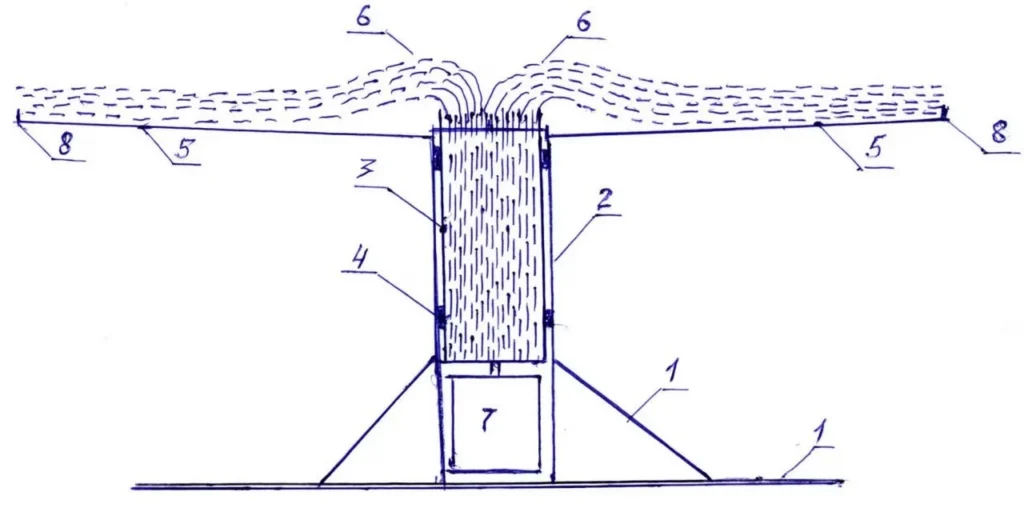
A new patent has been registered to protect armoured vehicles against aerial attacks. Similar to previous iterations, the design involves rotating cables that create a protective “canopy” above the vehicle. Developed by engineer Anatolii Ukhov, the system can reportedly be deployed and stowed while the vehicle is in motion and is intended to counter anti-tank missiles. Prototype testing is anticipated in the near future.
‘Kalashnikov’ commences trials of the ‘Krona’ anti-drone system
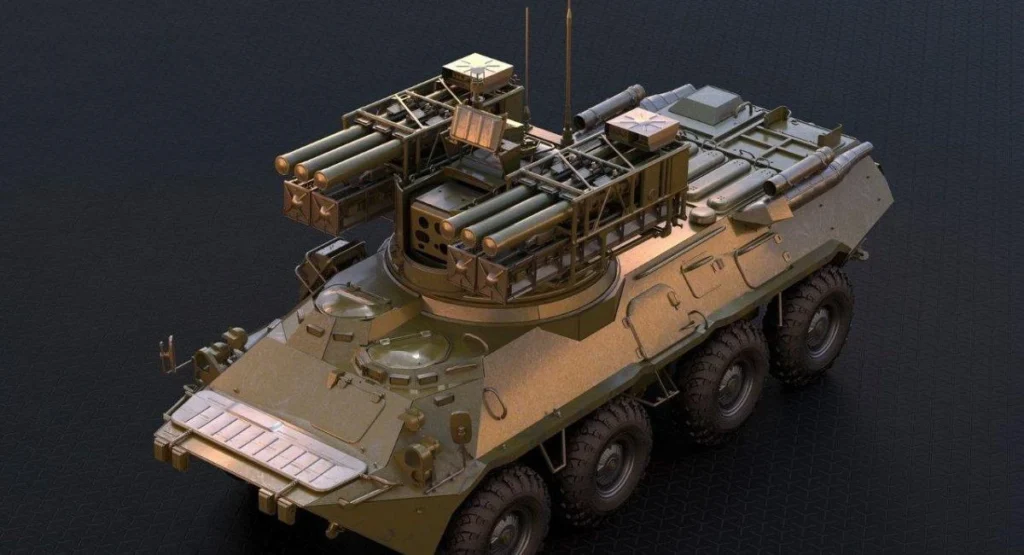
The Kalashnikov Concern has begun trials of the ‘Krona’, a new short-range air defence (SHORAD) system designed specifically to engage UAVs The system is intended to protect critical infrastructure and key operational axes.
First revealed in 2025, the ‘Krona’ is an integrated detection, command, and engagement complex. It is equipped with ten missiles: six ‘Sosna-R’ and four 9M333. The system has a reported deployment time of 10 minutes and an engagement envelope of up to 6 km in range and 3.5 km in altitude.
Lobaev Arms tests high-velocity round for counter-drone roles
The Russian firm Lobaev Arms has launched serial production of the ‘Dvoynik’ sniper module and tested a corresponding new round. The platform and ammunition are developed as a unified system, optimised for automated fire and integration with robotic platforms.
The ‘Dvoynik’ can function under remote operator control or in a semi-autonomous mode. It is designed for installation on static positions or mobile carriers, including UGVs. The declared accuracy is approximately 0.2 MOA.
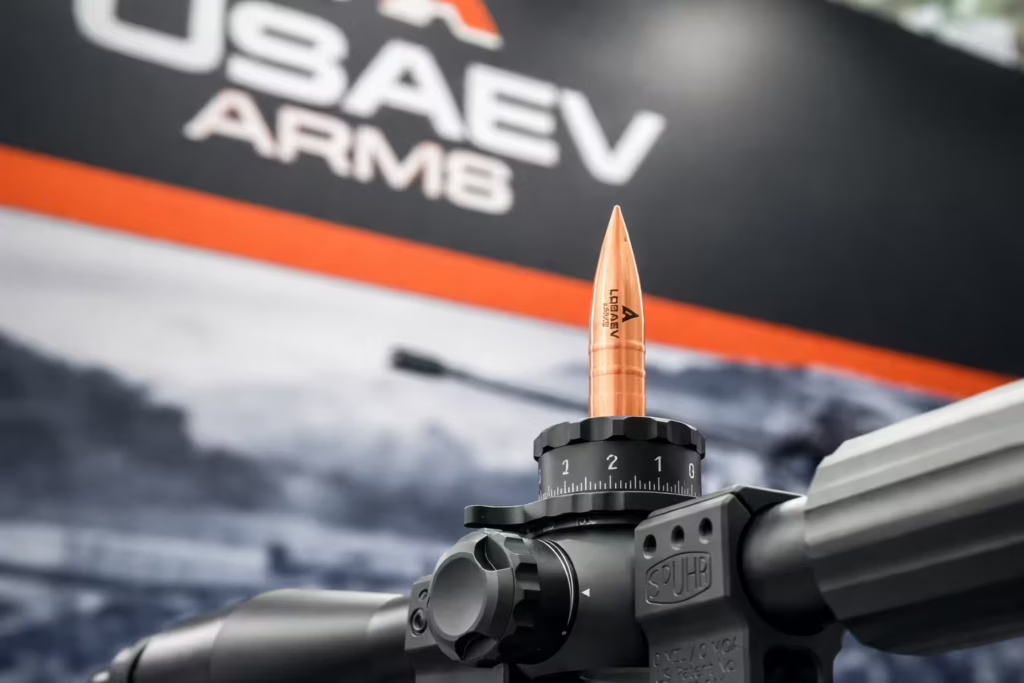
The system supports various calibres, including 5.56×45 mm, 7.62×51 mm, and 6.5 mm (Creedmoor and Lapua). The new round achieves a muzzle velocity of approximately 1,530 m/s, providing the minimal reaction time and high repeatability required for automated robotic firing modules.
‘TEN-V4’ detectors claim capability against Wi-Fi-enabled drones
Developers of the ‘TEN-V4’ UAV detector claim the device can identify drones utilising digital communication channels, including Wi-Fi. According to the manufacturer, the system operates across the 2,000–2,300 MHz and 3,300–3,800 MHz bands using 2×2 MIMO technology.
The detector can also operate in an extended 6,500–7,200 MHz segment, though the detection range in this band is limited to 50 m. In lower frequency ranges, the declared detection range is up to 1,000 metres, with an endurance of 10 hours.

The device provides multi-channel alerts (visual, audible, vibration, and voice). The ‘TEN’ system also supports integration with modules for UAV interception or video signal substitution. Furthermore, the manufacturer claims the system can detect signals from motion-sensor mines.
Foldable ‘Matryoshka’ FPV drone with thermal container enters production
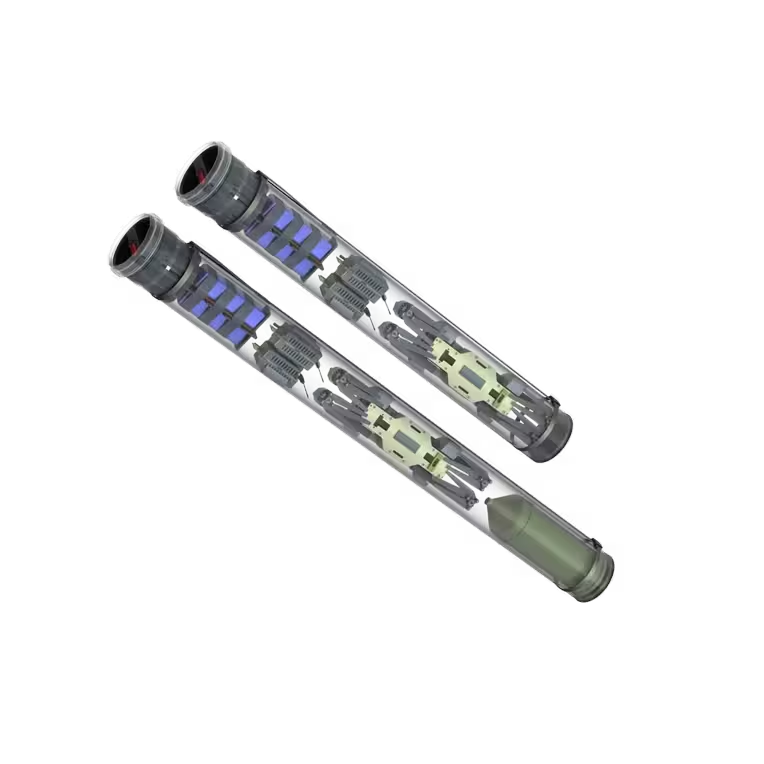
Serial production of the foldable ‘Matryoshka’ FPV drone has commenced. The system is supplied in a sealed container featuring battery thermal management. This maintains the battery at an optimal operational temperature and activates heating in cold environments, ensuring rapid deployment.
The drone features a modular architecture, allowing operators to swap communication systems or utilise a fibre-optic link. For large-scale logistics, a system of up to 29 containers with a centralised power supply has been proposed.
New composite netting for UAV countermeasures
The Russian company Teratex has introduced a composite protective net designed to provide mechanical protection for infrastructure against UAV attacks. The material is marketed as a high-strength solution capable of withstanding loads of up to 10 tonnes per square metre. It is designed for operation in harsh environments, including extreme frost, seawater exposure, and temperature fluctuations.
To demonstrate durability, the manufacturer claims the netting successfully withstood a 140 kg projectile. The net is composed of composite fibres with flame-retardant additives. According to the developers, the structure effectively ensnares UAV propellers while maintaining integrity under kinetic impact. The design remains lightweight and flexible for installation on complex structures.
Proposed ‘staged’ battery system to extend UAV range
Specialists from the Peter the Great Military Academy of the Strategic Missile Forces have proposed a system that increases the range of kamikaze drones by dropping spent batteries. The concept involves the sequential use of multiple power sources, which are jettisoned once depleted, thereby reducing the aircraft’s mass.
The system includes a power management unit, a servo-driven release mechanism, and a common power bus. The developers expect this to significantly improve the operational efficiency of UAVs over long-distance missions.
Reading now
1
SkyFall officially unveils Thor Hammer mid-strike and announces 1,000+ km version
2

260+ vacancies in Ukrainian defence technology at BlueBird Tech, Sine Engineering, Buntar Aerospace and more
3
British-Ukrainian Occam Industries raises €3.8m. The funds will go towards scaling drone autonomy software
4

Terra Drone acquires 50% of Ukrainian Kurin Technologies for $3.5 million
5

Autonomous interceptor drones need radars to work. Why is there still a lack of them
By submitting this form, you give Defender Media consent to the processing of personal data.
Надсилаючи цю форму, ви надаєте Defender Media згоду на обробку персональних даних.

Latest news
1
Phantom Defense acquires net-launcher developer KARAKURT to integrate its technology into its UAVs
2

Acoustic sensor developer Zvook raises investment from new Czech fund managed by DEPO Ventures
3

Denmark to hold first-ever Danish Defense Tech Week in four cities: what to expect
4
Forbes: Airlogix plans to raise $100m at a $2bn valuation
5