August 5, 2026
Defender Media also found out when a satellite manufacturing plant will appear in the Ukraine
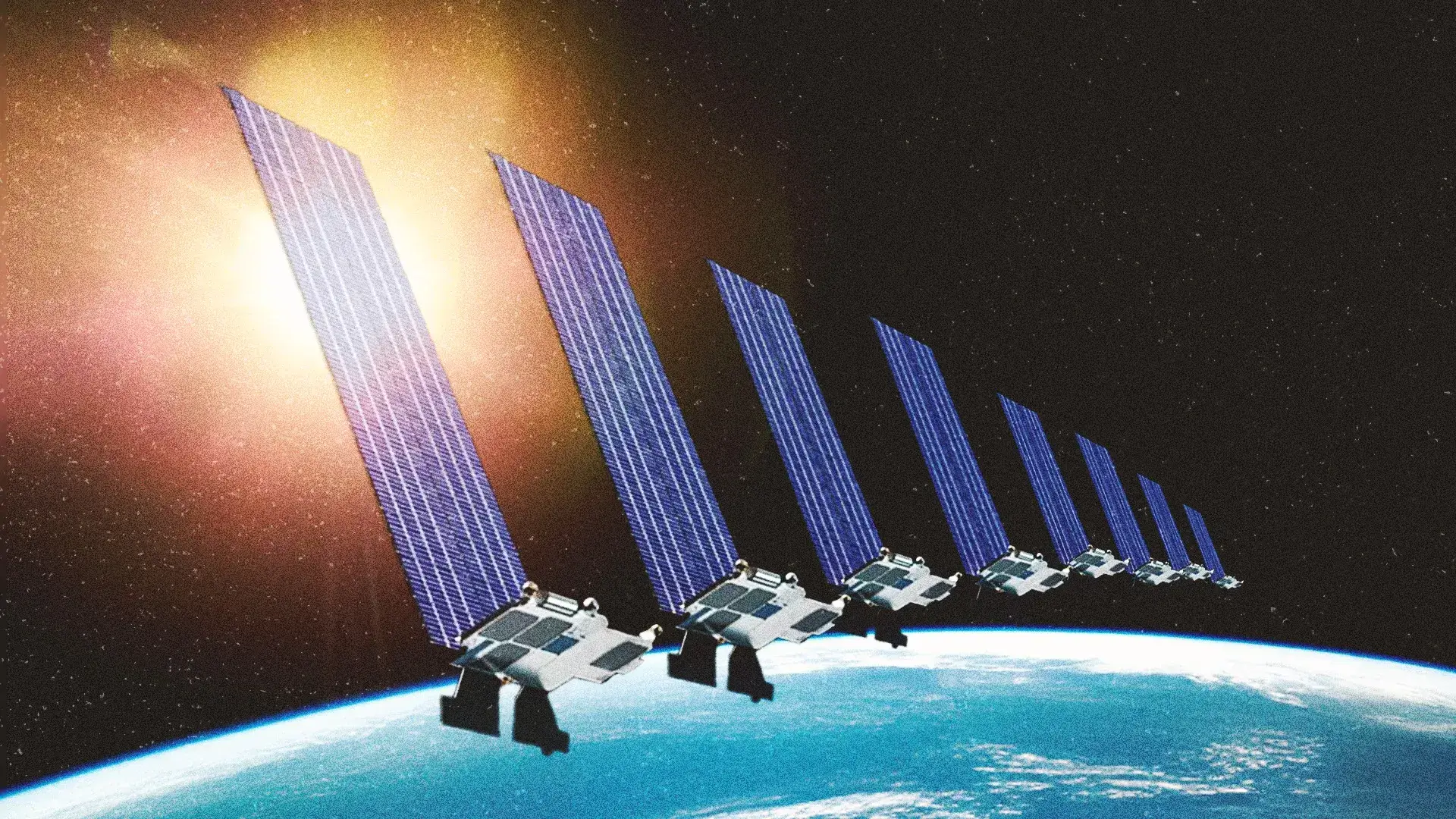
Ukraine is soon set to have its own satellite constellation in low Earth orbit. The company behind it is Stetman – a private firm that sells satellite communication terminals to the military, emergency services, medical personnel and others.
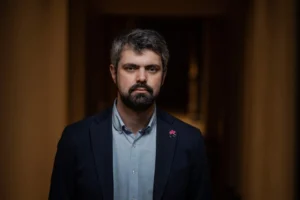
Defender Media spoke with its director, Dmytro Stetsenko, about the project’s expected cost, localisation of production, and the products the company currently offers.
What Stetman does
Stetman was registered in 2023 and launched using “private investments, European loans and so on,” as Dmytro Stetsenko puts it. The company supplies its products to the military, police, emergency services, the ombudsman’s office, and medical personnel.
In its first year, tenders brought in 4.9 million UAH, according to YouControl. Asked how they reached their first clients and why those clients chose this particular manufacturer, a company representative said: “We implemented an industrial approach: quality, warranty and consistency.”
The company currently employs more than 200 people, with plans to expand the headcount to 500. Its product line includes around 30 items. The company sells both standard Starlink terminals and a modified version called Starmod, tailored to military needs – including protection against electronic warfare. It is not, however, an official reseller as yet.

In addition, the company manufactures UASAT Geo satellite communication terminals that operate via the Hughes Jupiter satellite in geostationary orbit, 35,000 km above Earth. The company’s website also features an empty section for OneWeb terminals; Stetsenko clarifies that these are supplied exclusively to the military forces.
Procurement takes place through tenders, though military units may also purchase products directly – all of which are codified. Starmod is also available on the Brave1 marketplace. Purchasing through the company’s website is possible, but rarely occurs in practice.
In 2024, tenders accounted for more than half of Stetman’s total revenue – 13.7 million UAH out of 25.3 million UAH, according to YouControl. Last year, government procurement brought in nearly 17 million UAH, though the 2025 annual revenue figure is not yet listed on YouControl.

The satellite constellation Stetman plans to launch will be positioned at an altitude of approximately 550 km. The advantage of such a constellation over geostationary satellites is lower data transmission latency. At the same time, this orbit requires more satellites to ensure reliable communications, says Andrii Kolesnyk, former adviser to the head of the State Space Agency of Ukraine.
A test satellite is scheduled to be sent into space in October 2026 to validate the technology – the company has agreed this with SpaceX. However, no agreement has yet been reached on the delivery of the remaining constellation satellites.
“SpaceX is the best option, as they are the cheapest and the most reliable. I hope it will be available,” the director says.
Full deployment of the constellation is set to begin in 2027 and will take three years. The total constellation size is 360 satellites. The network is intended to provide communications for critical state infrastructure; private individuals are not the target audience. Andrii Kolesnyk believes this capacity would be sufficient not only for Ukraine’s needs but also for other countries’. Ukraine itself would require approximately 150 satellites.
Manufacturing and launching a single satellite costs several million euros, according to the company. Kolesnyk confirms that producing such a satellite costs $2–3 million, which is approximately the equivalent in euros. Such satellites are cheaper than geostationary ones, as they are manufactured in large quantities from the outset.
A single rocket – such as SpaceX’s Falcon 9 – would be sufficient to launch several dozen satellites into orbit. According to Kolesnyk, a Falcon 9 launch costs $60–70 million.

The total project cost exceeds one billion euros, though a Stetman representative clarifies that the project is being financed in stages. The budget encompasses the satellite constellation, software, launch services, broker fees, salaries and other costs.
The source of funding is private investment of Ukrainian origin. Further details and the names of investors are not disclosed by the company. “The European Commission wishes to participate in this financing. Therefore, the total investment cost will be reduced through European loans, assistance and so on,” Stetsenko adds. The Ministry of Defence and the government, he says, are supportive of the constellation project.
The baseline network configuration is 100,000 terminals per country. The company believes this will be sufficient for Ukraine’s critical needs. Between 30,000 and 50,000 terminals are planned to be transferred to the Armed Forces of Ukraine in 2027.
The satellites for the constellation will be manufactured by the Danish company GomSpace. Stetsenko says the company has the technology and expertise for this, and that communication with them is swift. There are also plans to establish a joint satellite manufacturing facility in Ukraine with GomSpace.
Full launch of the facility is planned for next year, for which the manufacturer needs to procure additional equipment, among other things. The estimated investment required to launch the factory runs to several hundred million euros; the sources of this funding are not disclosed.
Dmytro Stetsenko says they are in communication with European partners at various levels and see strong interest in the project. As a result, services may in future be provided not only to Ukraine but also to allied nations.
The primary focus is on the United Kingdom and Germany. “These are partners with whom the technology must be shared. We therefore hope this will materialise and that ground stations and control centres will be established there as well, with communications services provided accordingly,” a Stetman representative says.
By submitting this form, you give Defender Media consent to the processing of personal data.
Надсилаючи цю форму, ви надаєте Defender Media згоду на обробку персональних даних.