Black Mirror #72: Brave1 Market clone, Geran upgrades, 350 km/h jet drone, and other Russian miltech developments
Overview of Russian defence-industrial complex developments for the second week of August
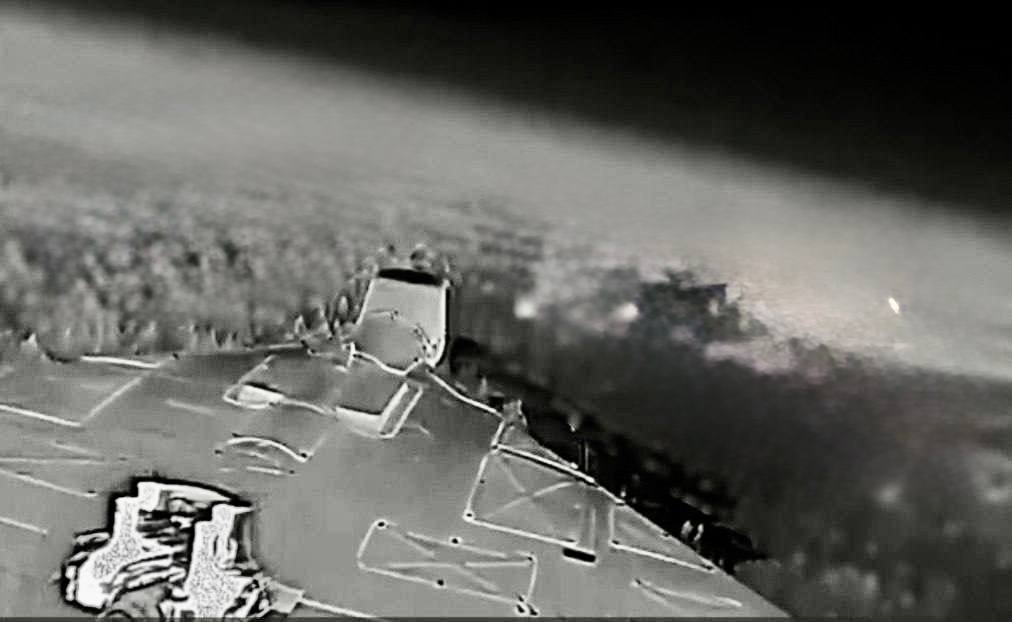
Russian Geran UAV with unknown component
Last week, Russian forces showcased several new modifications of Geran and Gerbera-type strike drones and adapted the BM-35 strike UAV for operation without Starlink satellite links. Other featured developments include the previously undisclosed Nositel Degtyareva fixed-wing UAV and a triple-barrel automated turret designed for air defence. Read about these and other innovations in Defender Media’s weekly Black Mirror review.
Russia expands and modernises Geran and Gerbera product lines
Russian UAVs of the Geran and Gerbera families are receiving new modifications and auxiliary payloads. Individual aircraft have been recovered featuring electronic warfare (EW) suites, satellite navigation units, MESH communication links, electro-optical payloads, and passive radar homing heads.
Over the past week, a new structural feature was identified on a Geran-2 UAV nose section — a raised fairing protrusion. Its precise operational purpose remains unconfirmed, with potential functions including housing auxiliary electronics, satellite communications gear, or decentralised MESH network nodes. Tactical markings reading “5+0 Spets” were also observed on another airframe.
Separately, the Defence Intelligence of Ukraine (DIU) reported recovering passive radar homing head components from a Geran-2. According to Ukrainian intelligence, such sensors are employed to detect and homing-engage surface-to-air missile (SAM) systems and radar stations.
Other Geran variants are being equipped with onboard EW suites to counter interceptor drones. According to Russian military analysts, the system employs dual optical sensors: a forward-facing camera for target navigation and a rearward wide-angle sensor monitoring the tail sector. Upon detecting an interceptor, the system generates targeted RF interference against its video feed.
Russian forces also showcased dual Geran-4 Siker UAVs operating simultaneously under a real-time command-and-control link. The platform is claimed to deliver an operational ceiling of up to 5 km. Ukrainian intelligence recovered a Chinese Honpho TS130C-01 camera from an intercepted airframe.
A scaled-up iteration of the Gerbera, designated Gerbera-2, has also surfaced. Preliminary data indicates an enlarged airframe, a 63-litre fuel capacity, upgraded avionics, composite airframe materials, and a higher-output engine. The platform reportedly carries a 20–30 kg warhead or equivalent payload.
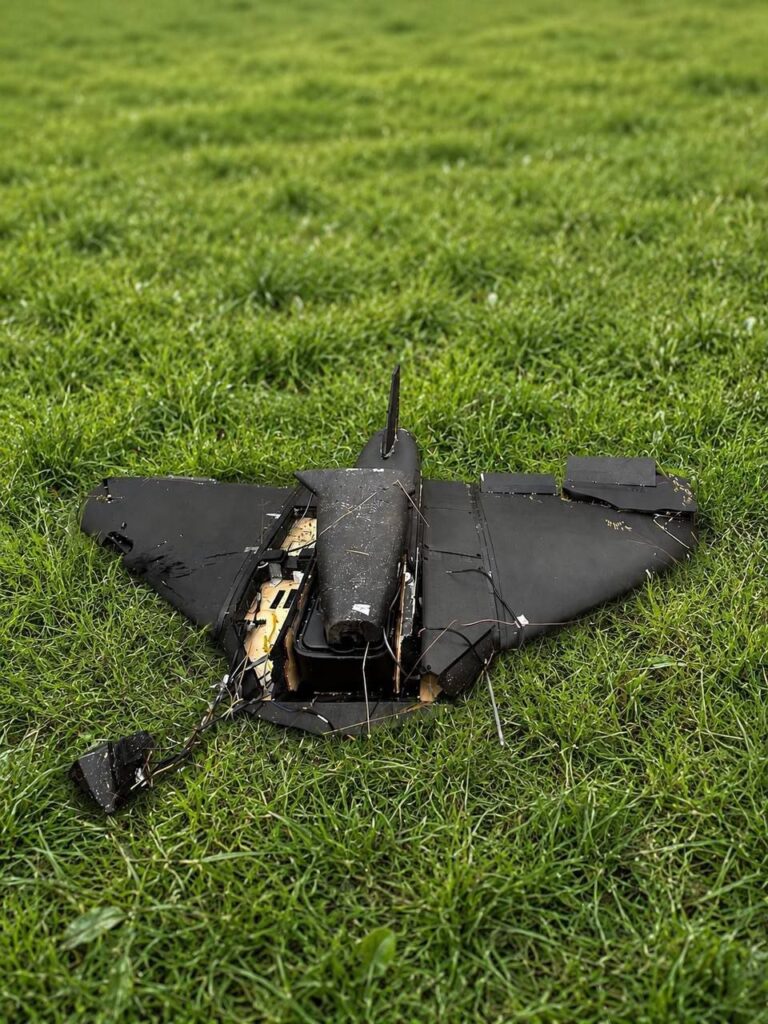
Select Gerberas feature 3-axis gyro-stabilised electro-optical turrets with 40x optical zoom and automated target detection and tracking (ATR) capabilities. MESH network modules and 12-element Kometa-M CRPA anti-jamming antennas designed to counter GNSS electronic warfare were also recovered.
Chinese XK-F358 modules manufactured by Shenzhen Xingkai Technology were additionally identified inside Gerberas. These chips are engineered for robotics and unmanned architectures. Previously, Gerberas began serving as mother-drones for micro-UAVs and aerial video relays.
BM-35 jet-powered UAV accelerates past 350 km/h
Russian forces have fielded a modernised BM-35 jet-powered strike UAV. According to the claimed performance specifications, the drone achieves top speeds exceeding 350 km/h and an operational range exceeding 200 km.
The BM-35 carries a 10 kg high-explosive warhead. Launching from a mobile trailer requires only a few minutes of pre-launch preparation. Russian sources claim operators maintain man-in-the-loop control across the flight profile via satellite links to bypass EW jamming.
The BM-35’s speed was previously estimated at approximately 200 km/h. In January 2026, reports indicated the platform relied on Starlink terminals for terminal guidance. Following the terminal blockades, the UAVs were adapted to alternative satellite internet links.
S-70 Okhotnik evaluated as carrier platform for compact UAVs
The Russian S-70 Okhotnik heavy stealth UCAV, engineered to operate alongside the Su-57 fighter, is being evaluated as an airborne mother-drone for compact UAVs.
According to open-source estimates, the Okhotnik carries roughly 2 tonnes of ordnance within internal weapons bays. Russian analysts suggest the bays could accommodate air-launched swarms, including Gerans, small cruise missiles, and missile-drones such as the Banderoli.
KVN receives long-range variant up to 42 km and acoustic sensor
The Ushkuynik Research and Production Centre continues expanding its Knyaz Vandal Novgorodsky (KVN) line of fiber-optic FPV drones. Recently, an extended-range variant capable of reaching 42 km was deployed near Sumy and Kostiantynivka. Achieving this range required larger fibre-optic spools, necessitating structural redesigns to the airframe, motor size, and propeller diameter.
The baseline KVN platform also received software enhancements. Developers noted that extended spool lengths elevate the risk of fibre-optic line breakage during high-speed manoeuvres.
Additionally, the KVN was deployed as an acoustic “listening drone.” An FPV quadcopter fitted with a high-sensitivity microphone is concealed out of line of sight — such as along roadside yards. Upon detecting acoustic vehicle signatures, the drone launches automatically to execute a strike.
Molniya-2 tested as carrier for auxiliary FPV drones
The Russian Molniya-2 fixed-wing FPV drone underwent testing as an airborne carrier platform. Engineers from the BARS-Sarmat Special Purpose Centre showcased three integration configurations.
The first configuration mounts two strike quadcopter FPVs under the Molniya-2’s wings. The second configuration slinks a high-speed C-UAS interceptor drone beneath the centre fuselage. The third secures a single FPV quadcopter directly atop the main wing centre section.
Under the operational concept, the Molniya-2 transports secondary UAVs into the target area before air-releasing them to execute independent missions. Operators from the Rubikon Centre previously demonstrated a similar mother-drone concept utilising fixed-wing platforms.
S-71M Monokhrom with US components recovered in combat zone
The Russian S-71M Monokhrom precision strike weapon has entered operational service at the front lines. Unlike the baseline S-71 Kover series, which relies on preprogrammed GPS/INS coordinates, the Monokhrom features an autonomous target-search guidance system.
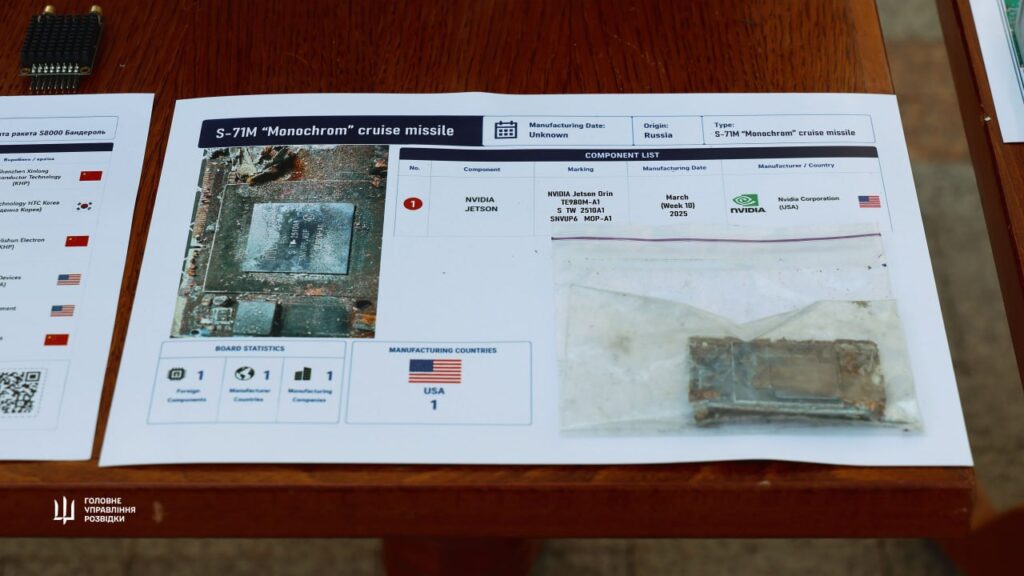
According to Russian technical descriptions, the munition transits to a designated target box and then scans the terrain via computer vision to match detected signatures with preloaded target models. The munition then executes an autonomous strike or requests operator confirmation.
The DIU reported recovering an Nvidia Jetson Orin compute module and optical sensor from Monokhrom wreckage. The Jetson Orin is a high-performance edge computing unit engineered for computer vision and machine learning workloads, enabling real-time onboard image processing for terminal guidance.
Nositel Degtyareva deployed in deep rear operations
Russian forces are deploying a new long-range fixed-wing UAV designated Nositel Degtyareva. While exact tactical-technical specifications remain classified, the platform belongs to the strategic long-range strike class designed for deep rear operations. Russian sources claim its flight envelope allows it to target Kharkiv and Kharkiv Oblast.
Developers prioritised EW-resistant communication architectures and anti-jam control channels. Video footage released by Russian media indicates the Nositel Degtyareva is equipped with a dual electro-optical/infrared (EO/IR) sensor payload.
Three-barrel automated turret based on PKT machine guns
An automated three-barrel remote weapon station (RWS) utilising 7.62 mm PKT machine guns completed field trials at ranges from 100 to 500 m. The system incorporates automated multi-sector target acquisition and target tracking across varying angular velocities, maintaining lock at tracking rates exceeding 60 degrees per second.
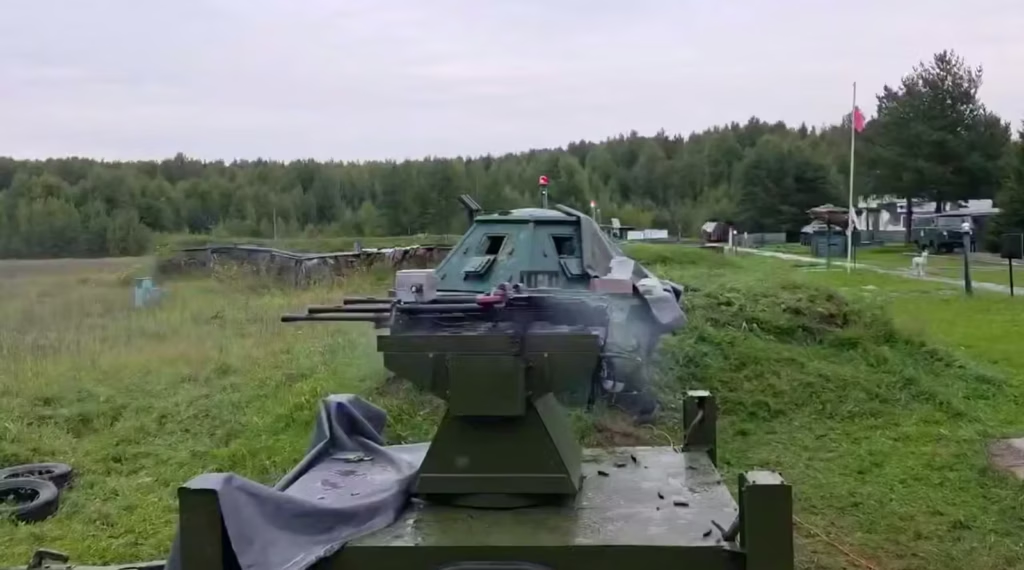
According to the Radart Design Bureau, the calculated circular error probable (CEP) at 300 m did not exceed 10 cm, expanding approximately threefold at 500 m.
Vikhr anti-tank missile adapted for counter-UAS role
The Kalashnikov Concern announced the operational deployment of counter-UAS variants of the Vikhr anti-tank guided missile (ATGM). The missile received a proximity fuze modification, enabling effective fragmentation engagement against aerial targets.
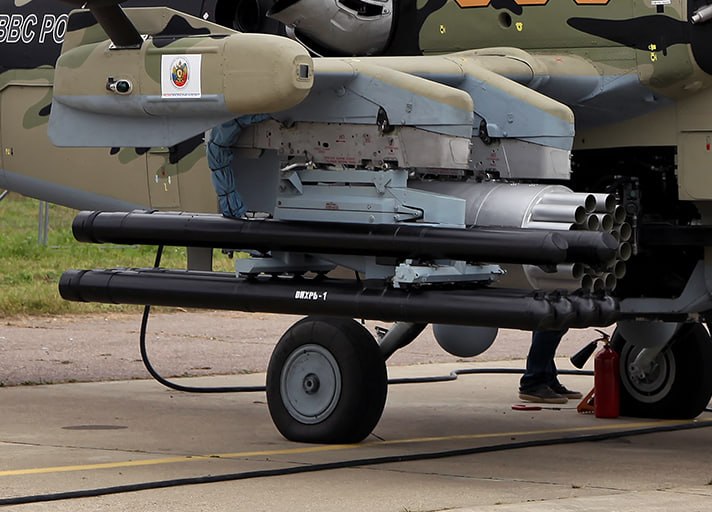
According to Kalashnikov, the Vikhr was selected due to its active mass-production lines and proven combat record against armoured targets.
Russians launch Roy.Market military marketplace
The specialised Roy.Market e-commerce platform built for military procurement has transitioned from pilot testing to full-scale operations, according to the Russian Centre for Unmanned Systems and Technologies (CBST). The platform facilitates closed-loop sales of military and dual-use equipment restricted to personnel from armed forces and security agencies.
Vendors receive dedicated portal accounts to independently manage inventory, pricing, and stock logistics. Available listings encompass UAV components, fibre-optic spools, 3D printing equipment, and tactical gear.
Logistics operate on a distributed 4PL model, where vendors retain physical custody of goods until order placement. The CBST claims the ecosystem connects over 500 developers and manufacturers of unmanned systems, communication gear, and robotics.
Reading now
1
SkyFall officially unveils Thor Hammer mid-strike and announces 1,000+ km version
2

260+ vacancies in Ukrainian defence technology at BlueBird Tech, Sine Engineering, Buntar Aerospace and more
3
British-Ukrainian Occam Industries raises €3.8m. The funds will go towards scaling drone autonomy software
4
Terra Drone acquires 50% of Ukrainian Kurin Technologies for $3.5 million
5

Autonomous interceptor drones need radars to work. Why is there still a lack of them
By submitting this form, you give Defender Media consent to the processing of personal data.
Надсилаючи цю форму, ви надаєте Defender Media згоду на обробку персональних даних.

Latest news
1

Tencore launches an ecosystem to bring together UGVs and components from several manufacturers
2

Defense companies may see staff deferrals cut from 100% to 85%
3
Japan signs contract with Ukrainian company SkyFall to procure interceptor drones
4
260+ vacancies in Ukrainian defence technology at BlueBird Tech, Sine Engineering, Buntar Aerospace and more
5