Dorozvidka #72: “Magyar” with Chaklun, HIMERA in the Amazon, European Starlink, plus Ryan O’Leary, Neros, NABU and Skibitskyi
What international media wrote about Ukrainian defence tech, as well as news that flew under Defender Media’s radar
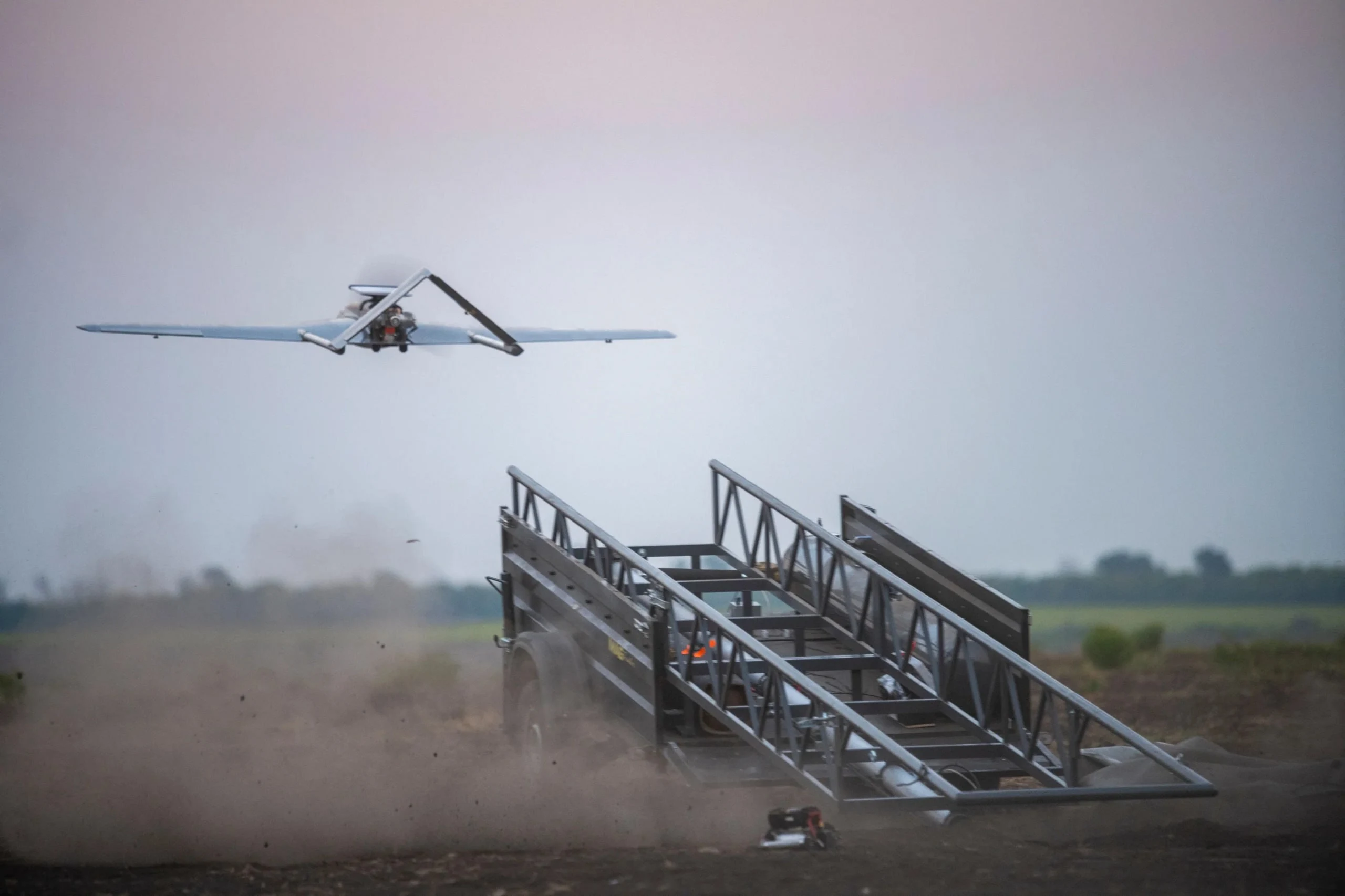
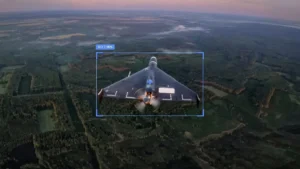
The launch of Chaklun mid-strike drone. Photo: AP
In the new edition of Dorozvidka:
- Highlights from birthday boy “Magyar’s” interview with AP;
- Ukrainian secure communications system HIMERA tested in the Amazon rainforest;
- US veteran Ryan O’Leary is developing a UGV in Ukraine with a top speed of 120 km/h and a range of 350 km;
- Ukraine’s Defence Ministry has turned to NABU to develop an anti-corruption risk assessment for the defence sector;
- Vadym Skibitskyi: Russia is exceeding its missile production targets;
- Zelensky on FREYJA: what’s new;
- EU to accelerate deployment of its own Starlink analogue;
- US drone maker Neros raises $250 million at a $2.5 billion valuation.
Highlights from “Magyar’s” interview with AP
On August 9, Robert “Magyar” Brovdi, commander of Ukraine’s Unmanned Systems Forces, celebrated his birthday. The following day, the Associated Press published an interview with him. He said there would have been seven times as many strikes on military targets in Crimea if the money promised by Western allies had arrived faster. According to “Magyar”, his forces currently have only 14% of the resources needed for a full-scale strike campaign in Crimea.
Despite the funding shortage, the summer campaign in Crimea has inflicted significant losses on the enemy. The ultimate goal is to make the peninsula unsuitable for use as a staging ground for Russian forces. “It’s not that Ukrainian manufacturers can’t produce the required number of drones,” he explained. “The problem is simple: funding from partners is coming in, but much more slowly than our plans.”
The AP report also featured the Ukrainian mid-strike drone Chaklun, which rarely makes it into reporters’ lenses.
Ukrainian secure communications system HIMERA tested in the Amazon rainforest
Ukrainian developer of tactical communications systems HIMERA reported testing its products in the Amazon rainforest. The tests were conducted in challenging climatic and geographical conditions, in the lowlands of the Amazon jungle during heavy tropical rainfall. Despite dense vegetation and adverse weather conditions, the system demonstrated stable operation and high reliability, the company said.
One of the key results of the tests was confirmation that mobile autonomous network infrastructure can quickly expand communications coverage. During testing, the team deployed a full-fledged voice and data transmission network covering more than 100 sq km.
US veteran Ryan O’Leary is developing a UGV in Ukraine with a top speed of 120 km/h and a range of 350 km
Ryan O’Leary is a US veteran of the wars in Afghanistan and Iraq who came to Ukraine to defend the country after Russia’s full-scale invasion. He led Chosen Company, an assault unit made up of foreign veterans. Until May 2025, the unit took part in operations in eastern and southern Ukraine.
This week, O’Leary said on his X account that he and his team are working on a UGV project. The announced specifications are impressive: a range of 350 km, a payload capacity of 1,000 kg and a top speed of 120 km/h.
Defender Media will follow the project’s development.
Defence Ministry turns to NABU to develop anti-corruption risk assessment for defence sector
Semen Kryvonos, director of the National Anti-Corruption Bureau of Ukraine (NABU), and Oleksandr Klymenko, head of the Specialised Anti-Corruption Prosecutor’s Office (SAPO), held a briefing on the results of their work in the first half of 2026. They also discussed corruption risks in the defence industry.
Corruption in the defence sector undermines the country’s defence capabilities, and tackling the problem requires joint work with the Defence Ministry, the heads of the anti-corruption bodies stressed.

“Corruption is now transforming in the following way: influential people can suddenly appear as beneficial owners of major arms suppliers,” Kryvonos said. He added that huge arms supply contracts then emerge, “but the question is how that contract was obtained”. In Kryvonos’s view, such practices destroy competition.
Klymenko added that it was impossible for NABU and SAPO alone to combat corruption in the defence sector. “Because there is a huge budget and a huge number of procurements, and each of them may carry a corruption risk. This requires joint work by the anti-corruption bodies and the ministry itself,” he said.
According to the SAPO chief, over the past six months the Defence Ministry has, for the first time, approached NABU to develop an analysis of corruption risks in the defence sector.
Vadym Skibitskyi: Russia is exceeding its missile production targets
Major General Vadym Skibitskyi, deputy chief of Ukraine’s Defence Intelligence, gave an extensive interview to RBC-Ukraine. He said Russia is exceeding its missile production targets and actively increasing production of strike drones, including the jet-powered Geran-4/5. Russia is focusing its attacks on Ukraine’s defence industry and energy infrastructure, while also accelerating the deployment of its own satellite communications system, Rassvet.
Skibitskyi also said that the Russians see Ukraine’s long-range weapons production as a threat and are therefore closely monitoring Ukrainian defence industry facilities.
Zelenskyy on FREYJA: what’s new
Last week, Ukrainian President Volodymyr Zelensky said he had held a meeting on the development of Ukrainian ballistic weapons and the progress of the FREYJA anti-ballistic programme.
He said Ukrainian weapons manufacturers had already reached the required level to develop ballistic and anti-ballistic missiles. “We expect Ukraine to achieve the required results in 2026–2027,” Zelenskyy said.
In his address, the president also noted that 10 countries have already joined the FREYJA project.
EU to accelerate deployment of its own Starlink analogue
The European Commission and the SpaceRISE consortium have signed an agreement to deploy IRIS², the European Union’s new flagship satellite constellation. The European Commission announced the agreement in a press release on August 7.
The future constellation will consist of 348 spacecraft, including 330 satellites in low Earth orbit and 18 in medium Earth orbit, along with additional elements to support specific missions. The first satellite launches are expected by 2029.
Once operational, the constellation will provide “sovereign, secure and highly reliable connectivity for European governments, defence and security forces, as well as emergency services across Europe”.
The project will be financed through a combination of EU budget resources for 2028–2034 and additional investments from member states and third countries.
US drone maker Neros raises $250 million at a $2.5 billion valuation
US company Neros, which supplies drones to Ukraine and has an office in Kyiv, has raised $250 million in investment. Bloomberg reports that the company was valued at $2.5 billion in the current round.
The round was led by Sequoia Capital and the American Strategic Technology Fund. The funds will be used to expand production capacity and support international growth in allied countries.
Reading now
1
Ukrainian Skyeton secures $10.6M US army contract
2
Canadian General Dynamics signs agreements with Ukrainian GreenTech
3
The Pentagon has announced the results of Drone Dominance Gauntlet II – announced Ukrainian companies did not make the top 5
4
Korven Systems project: How Teletactica co-founder is building an autopilot for interceptor drones
5
Ukrainian SkyFall again among winners of US Drone Dominance Program
By submitting this form, you give Defender Media consent to the processing of personal data.
Надсилаючи цю форму, ви надаєте Defender Media згоду на обробку персональних даних.

Latest news
1
12 British defence companies to gain access to Ukrainian AI platform Avengers Labs
2

Defence tech startup Zmiyar takes second place at IT Arena Startup Competition 2026
3

Mykhailo Fedorov launches ‘Army of Robots’ project to bring together venture fund, own companies and R&D for frontline robotics
4

Pentagon uses Ukrainian Unwave’s EW to test UAVs in Drone Dominance programme: details of cooperation
5