Dorozvidka #9: Zaluzhnyi on arms exports, plus Skyeton, Mantis Analytics, Batyar, Targan, and White Wolf
Highlights from our editorial backlog over the past week
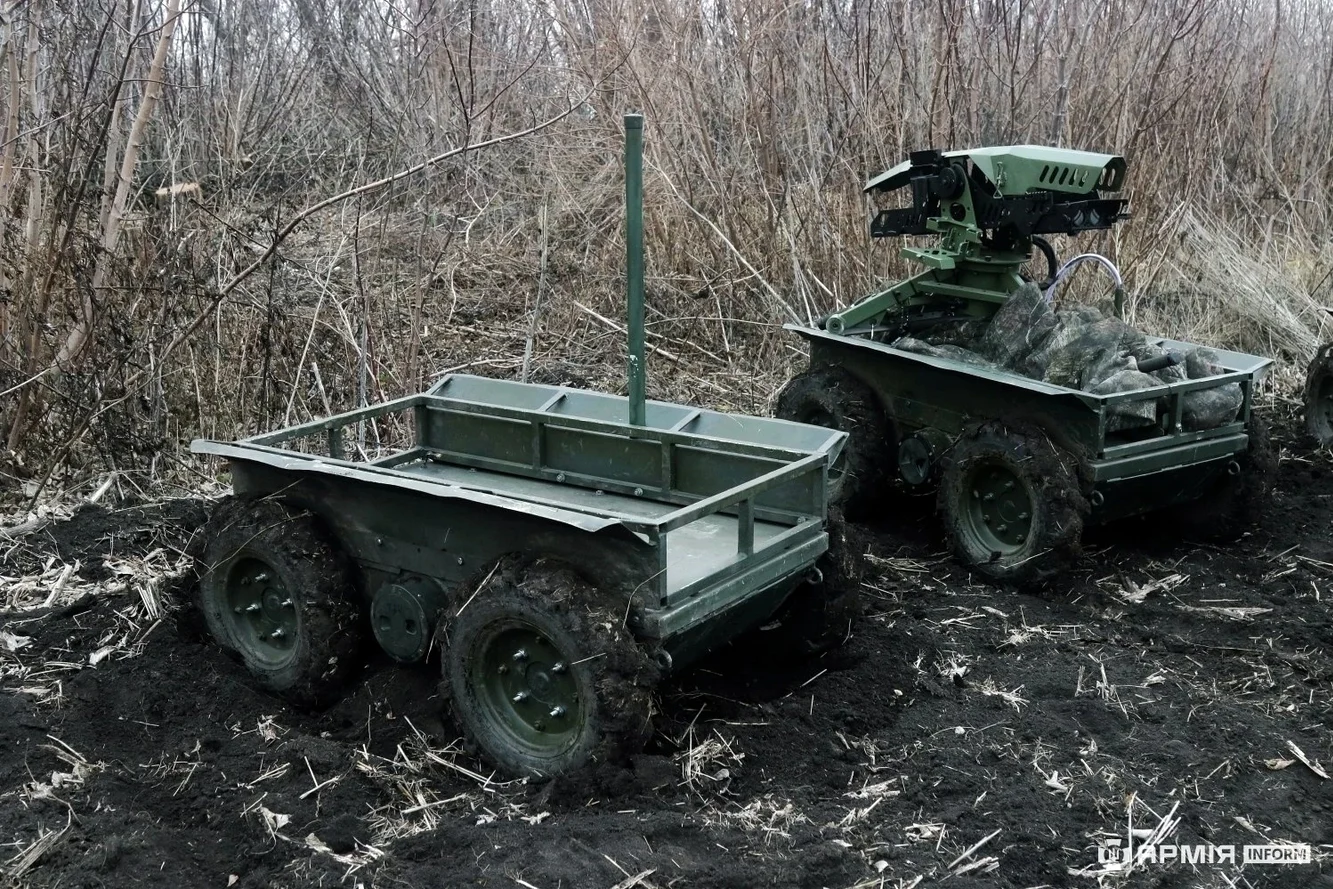
'Targan' UGV / Photo Credit: Khartia Brigade
It’s been an incredibly busy week for Ukraine’s defence tech sector, packed with conferences, hackathons, and breakthroughs. Several manufacturers unveiled new cutting-edge products, Valerii Zaluzhnyi backed opening up arms exports, the Khartia Brigade reported a successful evacuation using a Ukrainian UGV, and Brave1’s director shared updates on the development of the defence tech marketplace.
More details — in Dorizvidka #9.
“Batyar” — a versatile strike drone from DeepStrikeTech
Ukrainian outlet Militarnyi showcased tests of the new “Batyar” drone and spoke with DeepStrikeTech, the company behind the project. Visually, the drone resembles Russia’s Shahed, but it can serve as a decoy, bomber, or front-line loitering munition, depending on the payload and software.
The long-range version of “Batyar” weighs 60 kg, uses a gasoline engine, and carries an 18 kg warhead — capable of flying over 800 km. Priced at around $25,000, it is four times cheaper than other long-range systems like “Bober” or “Liutyi.”

Its core strength lies in a complex navigation system based on multiple components. The drone uses a modern CRPA antenna and optical navigation, allowing it to stay on target even under heavy electronic warfare interference.
For front-line strike missions, DeepStrikeTech has developed a version with smaller fuel tanks and a heavier warhead — up to 26–30 kg of explosives over a 100 km range. Developers say the same airframe can support a more powerful payload of up to 60–80 kg.
There’s also a decoy version that visually matches the strike drone but costs just $3,500 and is designed to absorb enemy air defence fire.
“Batyar” is now nearing the final stage of development. Combat trials are expected to begin within the next month.
Ukrainian tech community urges Zelensky to open defence exports
On May 22, the Technological Forces of Ukraine (TFU) held a forum in Kyiv titled “Security Export: Ukrainian Tech Weapons on the Global Market.” During the event, TFU Executive Director Kateryna Mykhalko presented an open letter to President Volodymyr Zelensky, calling to lift the ban on controlled export of domestic weaponry. Representatives of defence companies, TFU partners, and civil society signed the letter live during the event.
“This decision is not just about industry growth. It’s about positioning Ukraine as a strategic exporter of security, capable of strengthening allies and shaping a new global defence system,” the letter says. “Allowing controlled exports will boost Ukraine’s economy through job creation, investments, and increased foreign currency inflows.”

The letter also warns that delays could result in Ukraine missing its chance to become a global defence tech leader.
Among the forum’s speakers was Ukraine’s ambassador to the UK and former Commander-in-Chief of the Armed Forces, Valery Zaluzhnyi. He endorsed the initiative, stating that weapons exports could be Ukraine’s key tactic for entering future alliances.
Mantis Analytics to represent Ukraine at The Next Web
On June 19–20, Amsterdam will host The Next Web Conference, one of Europe’s leading tech events. For the first time, Ukraine will have a national delegation at the event. Eight startups were selected, including Mantis Analytics — a dual-use project using AI to analyse the information space in real time, detect fakes and manipulations, and fight disinformation.
Ukrainian MoD codifies “White Wolf” strike drone
Ukraine’s Ministry of Defence has officially codified the “White Wolf” UAV strike system, approving it for use by the Armed Forces.
The drone is capable of delivering a heavy combat payload to enemy targets, including fortified positions, armoured vehicles, and other hardened assets. The system can be deployed within minutes and includes a UAV equipped with a digital combined camera, a control and monitoring station, power battery units, and additional accessories.

The “White Wolf” is designed to provide rapid, precise strikes against high-value enemy targets on the front lines.
Inside the development of DELTA — Ukraine’s key battlefield software
Ukrainian tech portal DOU published a deep dive into the Ministry of Defence’s Centre for Innovation and Defence Technology Development (CIDTD), which is building the DELTA system — critical software used by over 90% of Ukrainian military units.
Key facts about DELTA:
- It provides real-time battlefield visibility and enables coordination based on enemy positions;
- 3,000 pieces of enemy heavy equipment are destroyed monthly using DELTA;
- It features the “Avengers” module, using AI to identify targets — 70% of which are detected within 2.2 seconds;
- The system architecture follows NATO standards and is interoperable with allies’ systems, including Poland’s TOPAZ artillery management;
- One NATO member state has officially requested to import DELTA.
CIDTD is now actively recruiting IT specialists. The article covers working conditions, tech stacks, compensation, error margins, motivation, polygraph procedures, and the products under development.
Skyeton and Quadsat to co-develop UAV-based SIGINT platform
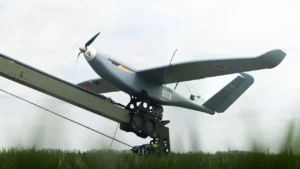
Ukrainian UAV producer Skyeton has entered a strategic partnership with Danish RF research company Quadsat. The two will develop an electromagnetic spectrum monitoring system based on Skyeton’s ACS-3 Raybird multipurpose drone.

The resulting system will provide real-time electronic intelligence and support operations in contested electromagnetic environments.
Brave1 launches codification support platform
The state-run Brave1 defence tech cluster has launched a new codification website designed to simplify the process for manufacturers.
The site includes:
- Step-by-step action guides
- Document templates
- Formatting requirements
- Sample successful applications
- Frequently asked questions
Manufacturers can select their product type and receive tailored instructions. Categories currently include UAVs, UGVs, and EW/SIGINT systems.
Khartia Brigade evacuates wounded soldier using “Targan” UGV
Ukraine’s Khartia Brigade successfully evacuated a wounded soldier using the “Targan” ground robotic vehicle (UGV) in northern Kharkiv. The operation video was shared on the brigade’s social media.
ArmyInform journalists learned that no other means of evacuation — let alone a team — could reach the soldier, and time was critical. The 12-km evacuation route was covered using the Targan-3K UGV, equipped with a stretcher and electronic warfare protection to defend the wounded from drone attacks.

The mission was led by developers from the Center for Scaling Tech Solutions, who had recently upgraded the platform and integrated the “KhMARKA” control system.
Natalia Kushnerska on what soldiers can buy through Brave1 Market
Brave1 director Natalia Kushnerska wrote a guest column for Ukraine’s 24 Channel, outlining progress on the Brave1 Market — a defence tech marketplace for Ukrainian troops.
According to her, this is the world’s first marketplace of its kind, revolutionising how innovations reach the front. Soldiers can now browse and recommend effective tools to fellow fighters, and soon they’ll be able to purchase tech using “combat points” earned for verified enemy kills.
Brave1 Market currently features over 1,100 solutions across UAVs, UGVs, EW/SIGINT, components, AI, and software. New categories are coming soon, including tactical gear and combat simulators.
Kyiv hosts first-ever UGV conference
On May 20, the “Ukrainian Ground Dominance Tech” conference was held in Kyiv with participation from the Armed Forces’ Ground Forces Command, Strategic Industries Ministry, Defence Ministry, and other agencies. Over 200 attendees discussed UGV deployment in combat, secure comms for robotic operations, and training of operators and engineers.

“We must take our soldiers off the front lines and replace them with machines,” said Brigadier General Andrii Lebedenko, Deputy Commander-in-Chief of Ukraine’s Armed Forces. “These robots will perform demining, eliminate enemy forces, and more. Our people should be safe. This is a challenge — and we can only meet it by uniting and building more sophisticated, integrated UGVs that can be managed as full robotic units rather than individual machines.”
Reading now
1
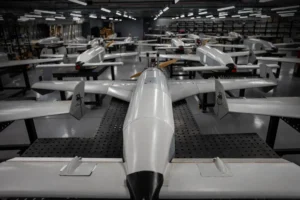
SkyFall officially unveils Thor Hammer mid-strike and announces 1,000+ km version
2

260+ vacancies in Ukrainian defence technology at BlueBird Tech, Sine Engineering, Buntar Aerospace and more
3
British-Ukrainian Occam Industries raises €3.8m. The funds will go towards scaling drone autonomy software
4
Terra Drone acquires 50% of Ukrainian Kurin Technologies for $3.5 million
5

Autonomous interceptor drones need radars to work. Why is there still a lack of them
By submitting this form, you give Defender Media consent to the processing of personal data.
Надсилаючи цю форму, ви надаєте Defender Media згоду на обробку персональних даних.

Latest news
1
Phantom Defense acquires net-launcher developer KARAKURT to integrate its technology into own ecosystem
2

Acoustic sensor developer Zvook raises investment from new Czech fund managed by DEPO Ventures
3

Denmark to hold first-ever Danish Defense Tech Week in four cities: what to expect
4
Forbes: Airlogix plans to raise $100m at a $2bn valuation
5