Twist Robotics updates Obriy UAV mission simulator: what’s new
Developers add new drones, revise interception logic, and refine UAV models
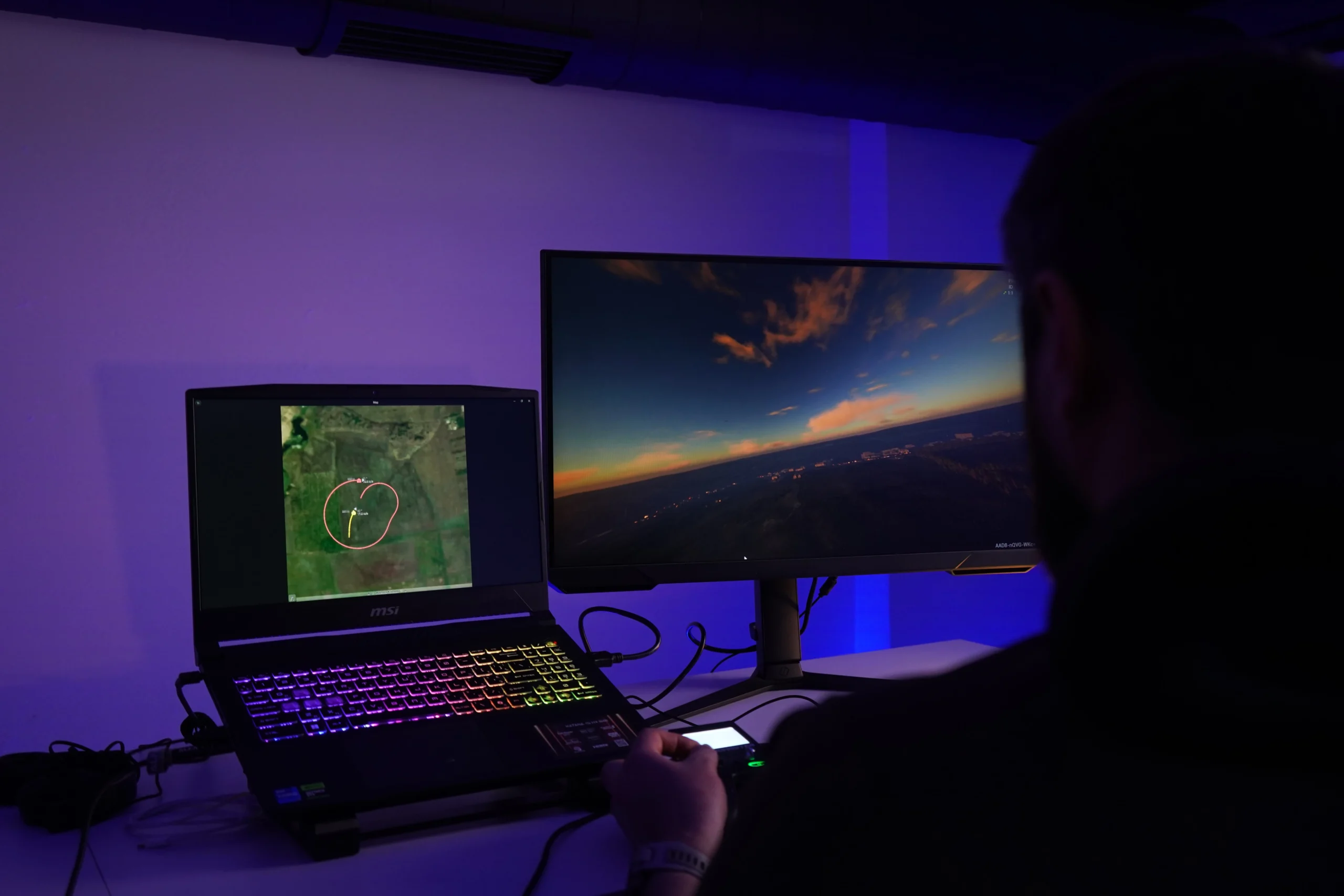
Photo: Twist Robotics
Ukrainian defence tech company Twist Robotics has updated Obriy, a drone mission simulator that allows pilots to train in conditions close to real ones. The new version features a larger number of supported drones, improved aerodynamics, and expanded platform functionality.
New drones in the simulator
The drone fleet has been expanded with Blyskavka-1, the Ukrainian equivalent of the Molniya. Engineers created it by reverse-engineering the Russian drone, Defender previously reported.
Blyskavka-1 has become the first twin-engine drone in the simulator. The UAV reaches speeds of 70 km/h and above and can carry munitions of varying weight. This allows operators to compare the platform’s behaviour under different payloads.
Deepstrike, a fictional model for scenarios with heavier payloads, has also been added to Obriy. This drone carries a 9.5 kg TM-62 and flies at speeds of up to 120 km/h.
Meanwhile, a new hostile target – Molniya-2 – has been added to the Obriy Anti-Shahed version, which allows air defence operations to be practised.
Other changes to the platform
The developers add that the update has made work with aerial targets more precise. Radars now take into account the radar cross-section of objects, and several radars can be used within a single scenario.
At the same time, an electronic reconnaissance system similar to MilELRS and a new hostile target – a ground station that can be detected by its emissions – have appeared in the simulator.
The logic for interception has been revised: a collision with an enemy drone no longer results in its destruction. To destroy a target, the interceptor must now use an impact or non-contact detonator. At the same time, a collision is likely to cause critical damage to the interceptor itself.
The developers have also increased the thermal detection range for Shaheds and added control inversion for multirotor interceptors.
Existing drone models have been improved – the flight dynamics of the Saker Hunter, Mid-Strike, and VB-140 Blyskavka aircraft have been refined, along with stall and spin mechanics, wind effects, and the aerodynamic models of the Sting and Kraken interceptors.
Reading now
1
380+ vacancies in Ukrainian defence tech from Fire Point, DevDroid, UFORCE and others
2

A new Ukrainian fund, WildField Ventures, plans to invest $10-15 million in 20 dual-use startups. What areas is it interested in
3
230+ vacancies in Ukrainian defence tech from Tencore, Zvook, Airlogix and others
4
SkyFall unveils new StarGate hexacopter for casualty evacuation
5
Ukrainian units conduct “world’s first airborne evacuation from the frontline” using Audag-6 drone
By submitting this form, you give Defender Media consent to the processing of personal data.
Надсилаючи цю форму, ви надаєте Defender Media згоду на обробку персональних даних.

Latest news
1
Black Mirror #82: Filin cruise missile, Geran upgrades, new interceptor drones and other Russian miltech developments
2
Ukrainian defence firms sign 54 subsidised leasing agreements worth UAH 244.5 million
3
Himera and Danish GomSpace launch OBRIA NANO – a test satellite for the future Ukrainian communications network
4
TAF Industries and DoD Solution have integrated the Aura autonomy module into the Kolibri 10 Advance FPV drone
5