September 11, 2026
Russia is stepping up its use of mesh networking on the battlefield. Several Ukrainian companies are also developing similar systems
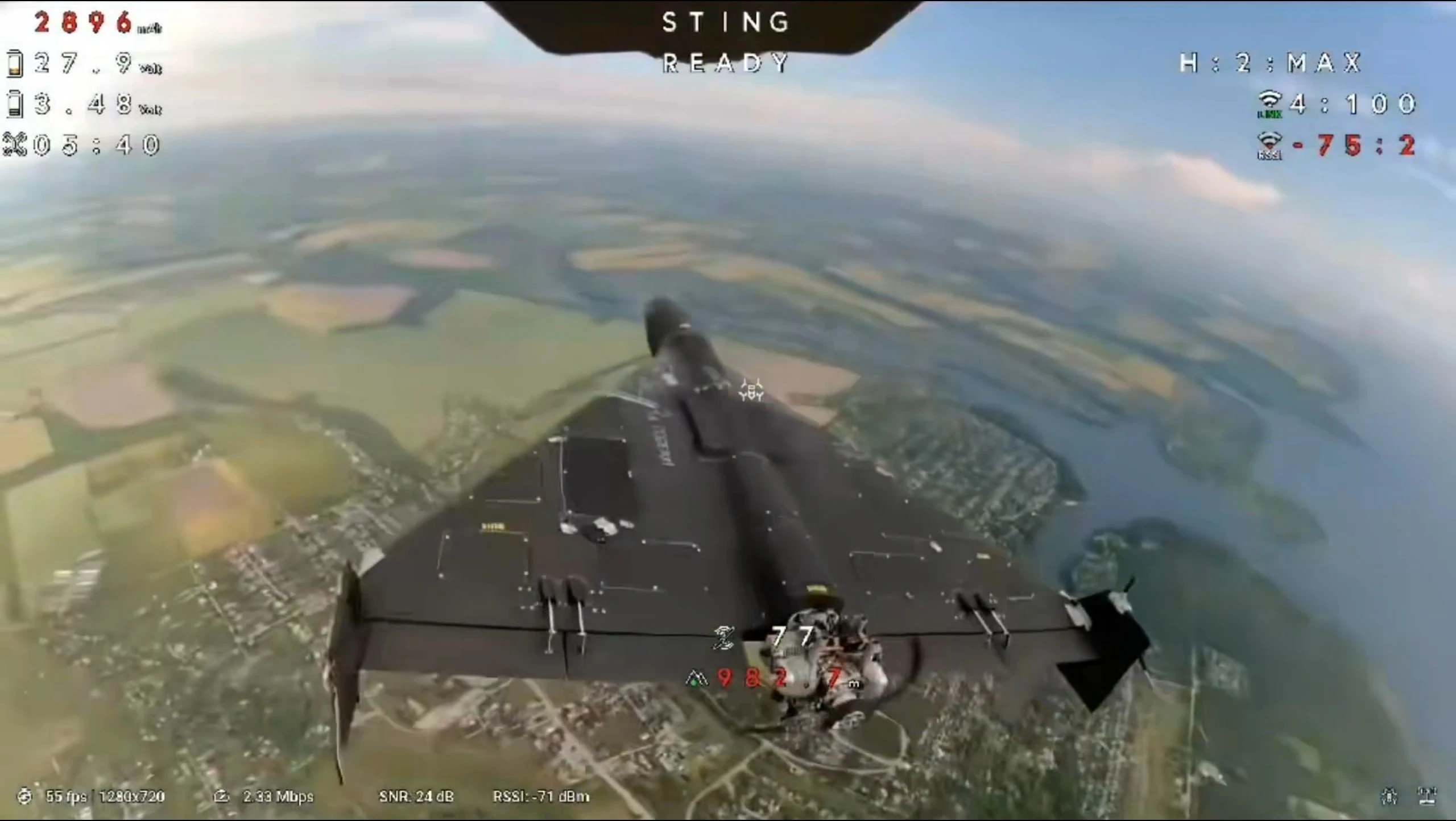
“Put simply, mesh communication makes it possible to control a Shahed directly, almost like an FPV drone,” explains Serhii Skoryk, Commercial Director at Kvertus.
A mesh network is a decentralised communication system used by both the Russian and Ukrainian sides. Within it, drones not only receive a signal but also relay it further. This makes it possible, among other things, to control them manually over long distances.
Presidential Advisor Serhii “Flash” Beskrestnov adds that the number of Russian drones fitted with mesh modems is growing by the day. How this type of communication works and how to counter it – in this Defender Media article.
In a classical radio communication scheme, a direct connection between transmitter and receiver is used, Beskrestnov explains. At the same time, in a mesh network, each modem installed on a drone can not only receive a signal but also amplify and relay it further.
This makes it possible to build chains stretched out in length, where each of the drones follows one after another and passes the signal on. “The second option is redundancy. For example, if there are several drones in the air and one of them disappears, communication with the others will continue to work,” the presidential advisor adds.
Mesh technology allows drones to transmit various types of data between themselves, including video, which is ultimately received by the operator. In this way, the Russians conduct reconnaissance on the ground, as well as observe interceptor drones in the sky. This helps build corridors for subsequent drones.
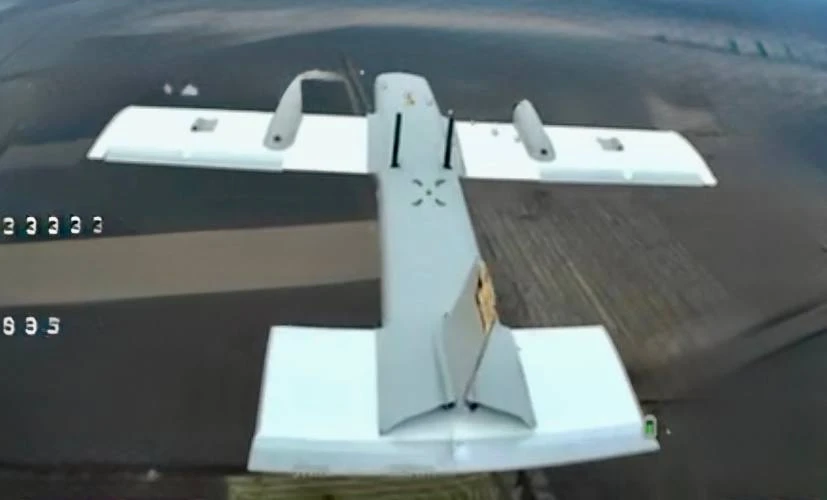
Information from the modems reaches the operator, who is located deep inside Russia, thanks to remote relay points, explains Bogdan Trynka, CEO of Bravo Dynamics. His team is developing a mesh system for UGVs. The points that Trynka refers to have operated in Belarus, exist in Kursk Oblast, in the occupied territories of Ukraine, and elsewhere.
In addition, thanks to mesh communication, an operator can manually control a given drone from Russian territory. This makes it possible to attack moving targets: trains, mobile fire groups, and so on. If one of the drones detects air defence activity, the next one in manual control mode can locate and destroy the air defence position.
This also allows the Russians to attack critical infrastructure more effectively. The first drone finds the most vulnerable point and strikes it, and all subsequent ones follow suit.
“A strike by 10 Shaheds on a single point equals the effect of an Iskander impact, but costs less,” says Skoryk of Kvertus.
Defender Media’s interlocutors say that the Russians use Chinese mesh systems due to their accessibility. According to DIU data, Gerbera drones and some Geran drones are fitted with the XK-F358 modem, which costs around $8,000.
American and European analogues are more expensive, with interlocutors naming Silvus as the best-known among them. “The price ranges from $16,000 to $20-30,000 per communication point, and a mission typically requires at least three,” says Trynka of Bravo Dynamics.
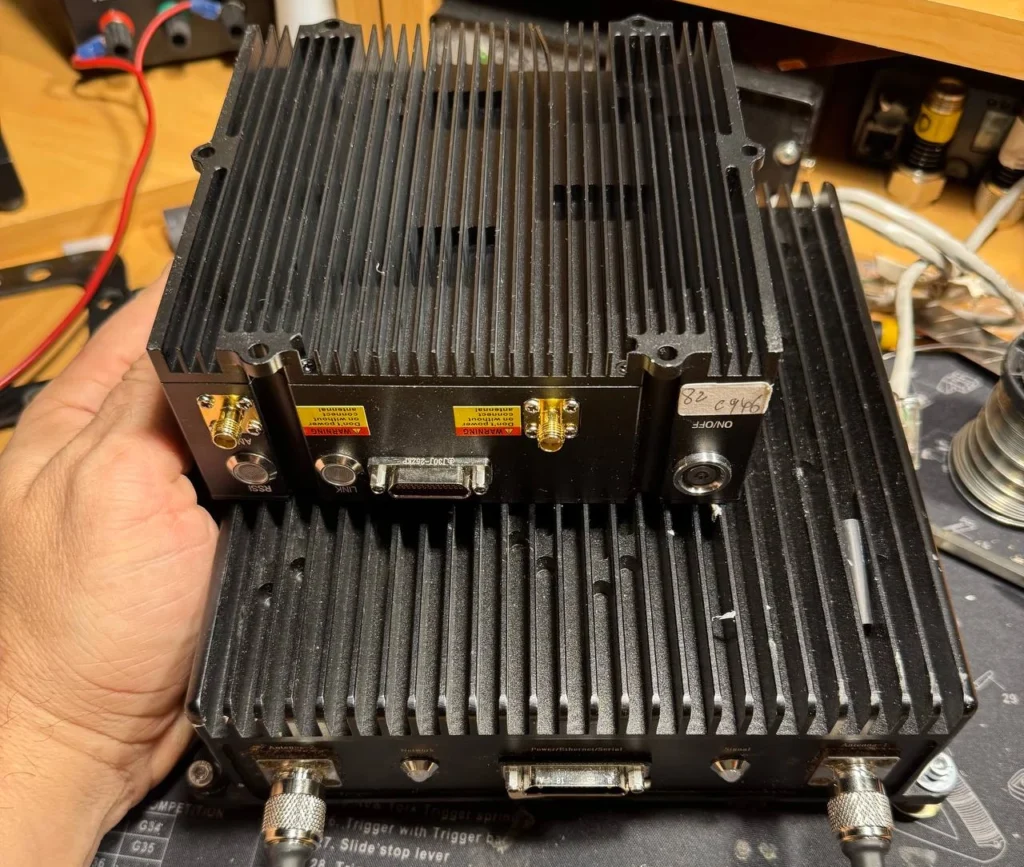
At the same time, Western systems have not caught on in Ukraine due to their price, he adds. Starlink, on the other hand, has found its place.
However, there are still situations where Musk’s terminals do not work. For example, the signal disappears when its direct line of sight to the sky is lost. This is why Trynka says an ecosystem of different means should be used for communication.
Currently, according to his data, there are 4 companies in Ukraine developing their own mesh systems:
Bogdan Trynka explains this number by the fact that the technology is quite complex and requires qualified personnel, who are difficult to find.
The Bravo Dynamics solution is suited to controlling unmanned ground vehicles. In June 2026, the company conducted trials and stated that the network simultaneously supports the operation of up to three UGVs. This kind of communication helps them operate on difficult terrain, in dense vegetation, and under the influence of EW.
Teletactica is also developing protected equipment adapted to work under conditions of intensive EW activity and the absence of GPS. In addition to UGVs, its developments are integrated into UAVs and other small unmanned platforms. Sine Engineering’s solution, meanwhile, is oriented towards aerial drones. As Defender previously reported, the company cooperates with more than 150 Ukrainian and foreign manufacturers.
The network being developed by Himera is suited to communication between tactical groups and message exchange. As its CEO Mykhailo Rudominsky has said, the company is currently working on a Comprehensive Resilient Network: a protected, unified network that allows all devices, drones, military personnel, software, and sensors to transmit data within a single communication system.
Serhii Skoryk of Kvertus recalls that until mid-2025, Shaheds were mainly controlled via satellite. When Ukraine began suppressing this method, as well as drones’ use of mobile communication, the Russians began applying mesh more actively.
Beskrestnov explains that there are two ways to counter mesh systems: disabling the relay points that receive data from the modems, or jamming the modems themselves that are installed on the drones.
One such point was destroyed in Belarus in February 2026. The mesh network there later resumed operation, until Zelensky issued Lukashenko an ultimatum in June to switch off the relay transmitters.
This worked, but on 15 July “Flash” stated that the relay transmitters in Belarus may possibly continue to be used from time to time for attacks on Ukraine. On 15 July, a guided Shahed flew along the border with Belarus and subsequently struck a petrol station in Zhytomyr Oblast.
“The distance from the point of attack to the borders of the Russian Federation is 260 kilometres. This is too far for a direct radio channel to operate. There were no other Shaheds (possible relays) in the air at the time,” Beskrestnov added.
It is possible to suppress individual modems on drones thanks to EW equipment. Skoryk explains that their equipment can detect a drone at a distance of up to 110 km and suppress it at a distance of from 20 km.
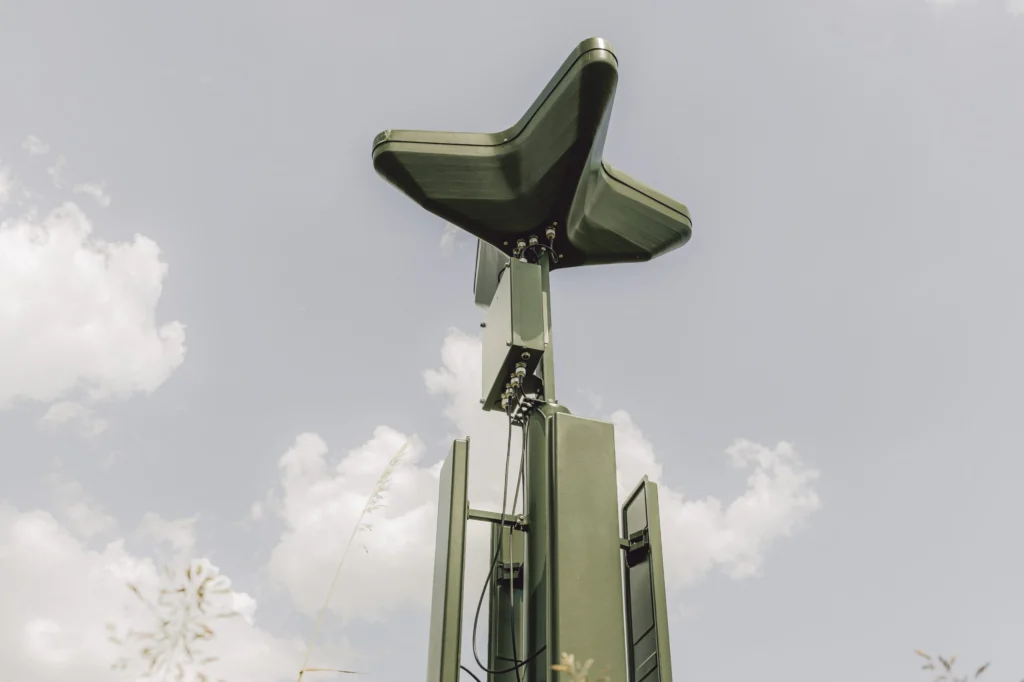
Thanks to this, the Shahed loses communication and begins to perform standard manoeuvres: flying in a circle or a figure of eight. It is then shot down by interceptor drones or mobile fire groups.
The Russians are adapting to this: installing several modems on a single drone and changing communication frequencies. The frequencies 1300-1500 and 3200-3400 MHz are currently popular. About a month ago, the 3900-4100 MHz frequency appeared, Skoryk adds.
“Flash” also says that the Russians will quickly change frequencies if they see our countermeasures. He therefore proposes building a system of equipment for the future as a strategy, one that will provide protection not in a single frequency band.
In 2025, the Ukrainian EW equipment market was estimated at $220m. Short-range systems make up its largest share – 36%. Anti-drone electronic warfare equipment and systems designed to counter high-precision weapons hold smaller shares.




By submitting this form, you give Defender Media consent to the processing of personal data.
Надсилаючи цю форму, ви надаєте Defender Media згоду на обробку персональних даних.