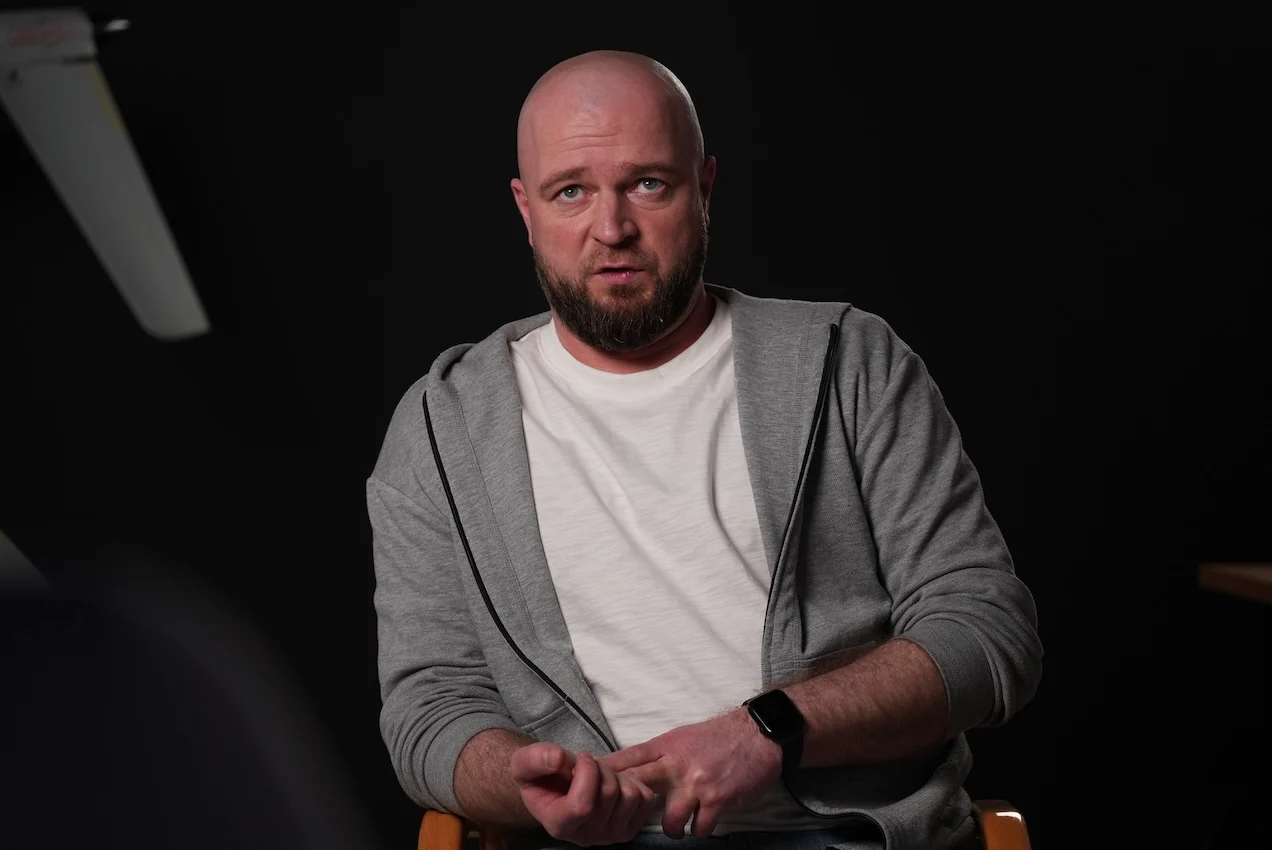
How to enter Finland’s defence market: an ultimate guide from Mikko-Pekka Hanski of DTI
Key takeaways from the presentation at Calibrated’s Defence Tech Comms Bootcamp

Finland is not an easy market to enter, especially for foreign defence companies. Procurement procedures are complex, and trust needs to be built long before contract discussions begin.
Who influences procurement decisions in Finland, where commercial opportunities can be found, and what Ukrainian companies need to do to be taken seriously by Finnish decision-makers? Mikko-Pekka Hanski, co-founder of investment firm Double Tap Investments Ltd, addressed these questions during the May edition of the Defence Tech Comms Bootcamp: Go Global, organised by Calibrated & Tech PR School.
With the author’s permission, Defender Media publishes Hanski’s key advice for founders of Ukrainian defence tech companies looking to build closer ties with Finland’s defence ecosystem.
Understanding the Finnish mindset
To enter Finland’s defence market, companies must understand how Finns communicate, make decisions and view national security.
- Silence signals attention. Finns often process information quietly. Do not fill every pause. A quiet Finnish counterpart often means that the person is listening and thinking. Calm, precise communication builds credibility.
- Practical users carry authority. Sergeants, platoon leaders, technical officers and lifecycle managers are those who shape procurement outcomes. Do not sell to generals. Convince the people who will operate and maintain your product.
- Practical capability matters more than status. Rank, headlines and political visibility will not compensate for an inadequate product. Finnish users will examine reliability, maintenance requirements, interoperability and performance in temperatures that can fall below -25°C.
- Do not arrive as Finland’s saviour from Russia. As they say in Finland, “the threat always came from the east”. Finland has planned around risks from its eastern border for generations. Every parking garage in Helsinki is a shelter. Every bridge can be mined.
- Defence is embedded in society. Military preparedness, ~900K reservists, civil-defence infrastructure and national resilience form part of Finland’s security model. Understand this system before proposing how to improve it.
- Knowing some culture enhances business. Finland’s first men’s Ice Hockey World Championship victory in 1995 is sometimes described humorously as another Finnish “Independence Day”. The Unknown Soldier film, The Moomins, created by Tove Jansson – add these topics in your conversations with Finnish people, and you get a lot of open doors.
- Bring the human story behind the technology. Finnish partners will evaluate the engineering, but they also trust people they can imagine on a sauna bench. Bring your story, your family, and your personal reason for being in defence.
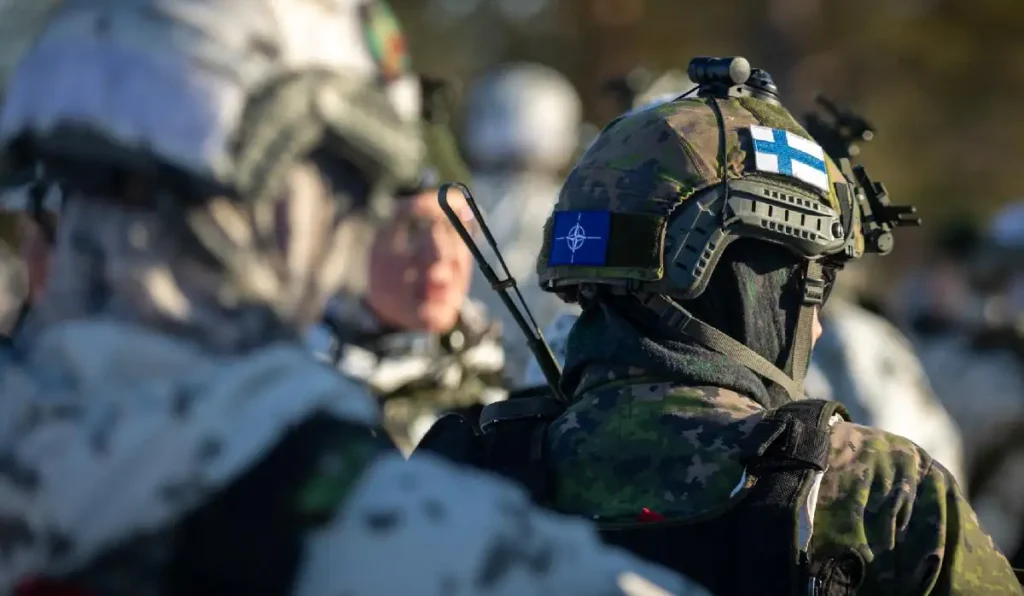
Market entry points: Who matters in Finland
Finland’s defence ecosystem is compact and closely connected. For a Ukrainian company, the market has three power centres and one formal innovation entry point.
- The state and defence administration. The central actors are the Ministry of Defence (PLM), Finnish Defence Forces (PV), Defence Forces Logistics Command (PVLOGL), Ministry for Foreign Affairs (UM), Business Finland and VTT. They shape policy, capability requirements, procurement, research and funding. Approach them with a specific operational use case, test data and a credible plan for maintenance, security of supply and lifecycle support.
- The defence industry. Key companies include Patria, Insta, Bittium, Nokia, Telia, Sako, Nammo Lapua, Millog, Saab Finland and Lockheed Martin Finland. The ecosystem is small, and professional reputations travel quickly. A Finnish industrial partner can provide integration capacity, local maintenance, regulatory knowledge and access to established networks.
- Civil society and the reserve. Finland has approximately 900,000 trained reservists, supported by organisations such as MPK, the Finnish Reservists’ Association and the Finnish Reserve Officers’ Federation. Publications such as Reserviläinen also influence the professional conversation. These organisations do not award contracts, but they form an important credibility layer. Relevant demonstrations, training events and engagement with reservist networks can show that a company understands Finnish operational needs.
- The formal innovation entry point: PVINYX. The Finnish Defence Forces Innovation Unit operates under the Finnish Defence Research Agency and connects the Defence Forces with companies, researchers and other innovation actors. Ukrainian companies can approach it when seeking to match a solution with a military need, organise evaluation or testing, or enter the wider defence innovation network. Its contact address is pvinyx@mil.fi
Important: PVINYX is a gateway, not a buyer. Contact with PVINYX can help a company present its technology, identify a relevant Defence Forces user, arrange discussions, and potentially move toward testing or evaluation. It does not place orders, guarantee a pilot, register the company as an approved supplier or bypass procurement rules.
Key national figures
- Alexander Stubb – President of the Republic and Commander-in-Chief of the Finnish Defence Forces.
- Antti Häkkänen – Minister of Defence.
- General Janne Jaakkola – Chief of Defence.
These figures shape Finland’s strategic direction. A company’s practical route into the market usually runs through technical users, capability owners, PVINYX, procurement officials and established industrial partners.
Finnish Defence Forces structure
Before pitching, identify where your solution fits across three axes: domain, function and future capability. Each service branch has its own Inspector, and each function has its own procurement chain. The correct entry point is therefore specific.
By domain: service-level fit
- Land – Army: firepower, mobility and protection, including Leopard 2A6 tanks, CV90 infantry fighting vehicles and artillery.
- Sea – Navy: coastal defence, mine warfare and anti-submarine warfare.
- Air – Air Force: the F-35 transition, radar and air defence.
By function: cross-service fit
- Joint capabilities: effects and systems operating across several domains.
- Logistics: supply chains, sustainment and security of supply.
- ISTAR: intelligence, surveillance, target acquisition and reconnaissance.
- C4: command, control, communications and computers.
By future wave: where attention is moving
- Unmanned systems, including UAVs, UGVs and other uncrewed platforms.
- Artificial intelligence, robotics and autonomy.
- Sensor-to-shooter integration.
- Commercial off-the-shelf and dual-use technologies.
- Space and cyber capabilities.
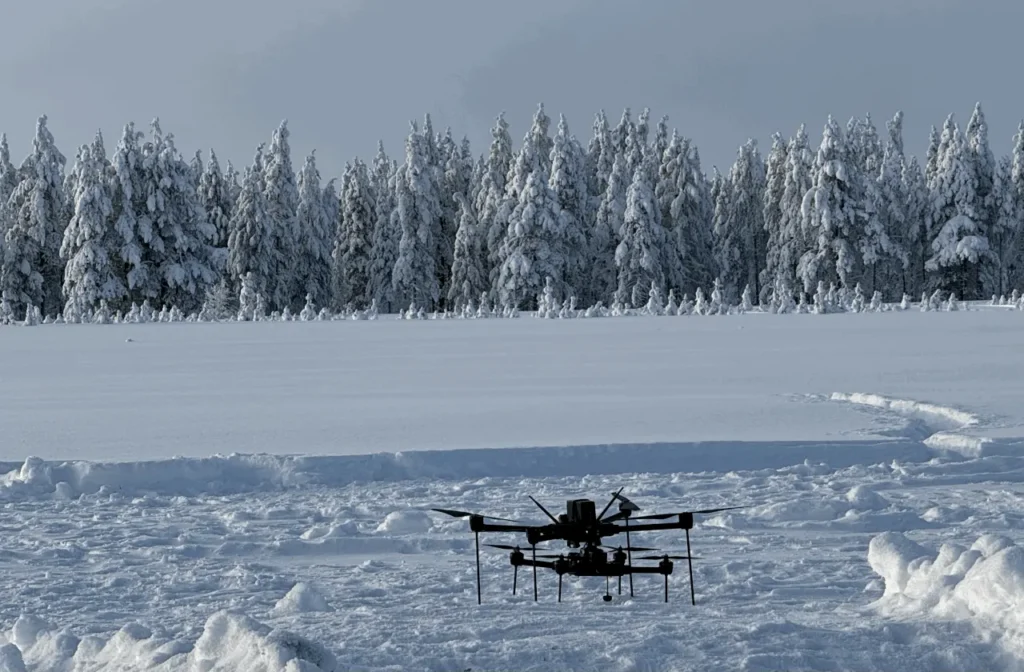
Determine the exact service, function and capability area your solution serves before approaching the Finnish Defence Forces.
Investors active in defence-adjacent capital
Finland offers several routes into defence-adjacent investment, research funding and innovation programmes.
Defence-first investors
- Double Tap Investments (DTI)
- Tesi – Finland’s state-owned investment company and a NATO Innovation Fund co-investor.
- NATO Innovation Fund (NIF)
Deep-tech generalists
- Lifeline Ventures
- Maki.vc
- Inventure
- OpenOcean
- Voima Ventures
- Icebreaker
- Finnish Business Angels Network (FiBAN)
These investors may consider dual-use companies. Pure defence businesses can face restrictions imposed by a fund’s limited partners.
Useful names
- Oles Khudoba – Double Tap Investments
- Keith Bonnici – Tesi
- Tiina Puheloinen-Laisi – FiBAN
Family offices
A small group of Finnish families with industrial backgrounds provides quieter forms of capital. These investors can be highly influential within the Finnish industrial ecosystem.
Research and development
Finland has an integrated research ecosystem. VTT, Aalto University, Tampere University and other universities regularly conduct co-funded projects with industry.
For Ukrainian companies, bringing a difficult technical problem may be more valuable than presenting a fully finished product.
- VTT: Finland’s state research centre, with expertise in radio-frequency technologies, electronic warfare, sensors, materials, autonomy and quantum technologies. Projects are often co-funded with industry partners. Contracting can be slow, but the technical depth is significant.
- Aalto University: dual-use artificial intelligence and robotics.
- Tampere University: signal processing and communications.
- University of Jyväskylä: cybersecurity.
- University of Oulu: wireless technologies and 6G.
- University of Turku: maritime technologies and materials.
- Business Finland: co-funding for foreign startups working through Finnish research and development partners. Access generally requires a Finnish entity or local partner.
Accelerators and innovation programmes
- NATO DIANA: the Defence Innovation Accelerator for the North Atlantic. Finland hosts sites in Espoo and Tampere. The programme is cohort-based, focused on dual-use technologies and provides a strong signal of relevance to NATO markets.
- Business Finland: offers innovation funding through instruments such as Tempo and R&D funding, as well as programmes related to areas including mobility and artificial intelligence. Foreign startups generally need a Finnish partner or entity.
- Finnish defence accelerators and clusters: xEdge in Tampere is an emerging defence cluster. Other relevant initiatives include eAlliance, DEFINE and Finnish Defence House.
How Finnish defence procurement works
Finnish defence procurement moves through specific institutions and long-term capability programmes.
PV and PVLOGL
- PV – Finnish Defence Forces: defines operational needs and capability priorities.
- PVLOGL – Defence Forces Logistics Command: manages purchasing, contracts, sustainment and lifecycle support.
For companies, the first step is to identify a specific military need and the unit that would use the capability. Once that need is validated, the procurement, contracting and sustainment process usually runs through PVLOGL.
Capability programmes
Major acquisitions are organised through capability requirements and long-term programmes, including:
- HX / F-35
- Squadron 2030
- Army 2030+
These programmes are the long-term capability tracks through which Finland plans and acquires major defence systems. They operate on multi-year timelines with defined requirements, budgets and procurement chains.
Rapid procurement
Since 2022, Finland has also used faster routes for capabilities made more urgent by the war in Ukraine, including:
- Counter-UAS
- Intelligence, surveillance and reconnaissance
- Electronic warfare
These procurements are smaller than major strategic programmes, but they are real opportunities. Timelines may be around 12-18 months, compared with five to seven years for conventional procurement.
Finnish dual-use pioneers
Many of the country’s most important defence capabilities also come from dual-use companies whose technologies serve both civilian and military customers. These firms are often key partners, suppliers and innovation drivers within the Finnish defence ecosystem.
- Nokia: expanded from commercial telecommunications into mission-critical networks, defence communications, radio-frequency technologies and private 5G for tactical use. One of Finland’s most underestimated defence assets.
- ICEYE: an Espoo-based company operating a major commercial synthetic-aperture radar satellite constellation. Its technology has been used in support of Ukraine.
- IQM: builds quantum computers in Espoo and works with customers across NATO countries. Quantum technology represents a future dual-use field in encryption, optimisation and simulation.
Who do you actually call?
Two questions determine the correct entry point: what capability you bring and how mature the technology is. Both must be clear before you contact the Finnish Defence Forces.
- Substance: What do you bring?
Your capability area determines the relevant branch and Inspector. Each area belongs to a different part of the Defence Forces. Contacting the wrong audience will usually end the conversation. Do not assume that your message will be forwarded internally.
Choose one of these categories:
- Firepower
- Protection
- Mobility
- Mines
- Air defence
- Electronic warfare
- ISR
- Special operations
- Cyber
- Maturity: How ready is the technology?
The Technology Readiness Level (TRL) determines which organisation you should approach:
- TRL 1-3 – Research: Finnish Defence Research Agency.
- TRL 4-6 – Development: relevant Branch Inspector.
- TRL 6-8 – Innovation: PVINYX, the faster innovation route.
- TRL 9 – Finished product: Defence Forces Logistics Command tenders and HILMA.

The correct contact is found by combining the capability area with the product’s TRL. Knowing a senior person’s name is less important than approaching the right function at the right stage.
Conclusion: Find where you fit
The Finnish market is small, technically demanding and relationship-driven. Experience in another Nordic country does not automatically transfer.
Ukrainian companies must identify the right service branch, operational user, capability area and Technology Readiness Level before entering the market. Start with dialogue. Build interest, ask for feedback, adapt the proposal and return with stronger evidence.
Success depends on finding the correct entry point and showing exactly how your capability fits Finland’s existing defence system.
Defence Tech Comms Bootcamp: Go Global also features expert insights on market entry and partnership opportunities in Lithuania, France, and Norway.
“Every market has its own rules, decision-making processes and relationship dynamics. Understanding them directly from experts who operate within these ecosystems can significantly shorten the learning curve for Ukrainian defence tech companies,” says Julia Petryk, Co-Founder and CEO of Calibrated and Founder of Tech PR School. “That is the idea behind Defence Tech Comms Bootcamp: Go Global – connecting Ukrainian defence tech teams with practitioners and insiders who can help them navigate international markets more effectively.”

Mikko-Pekka Hanski
Co-Founder of Double Tap Investments
Reading now
1
SkyFall officially unveils Thor Hammer mid-strike and announces 1,000+ km version
2
Pentagon to hold Drone Dominance trials for bomber drones, with UFORCE, Gurzuf Defence, Grim Tech and others taking part
3
Terra Drone acquires 50% of Ukrainian Kurin Technologies for $3.5 million
4
British-Ukrainian Occam Industries raises €3.8m. The funds will go towards scaling drone autonomy software
5

Frontline Robotics CBDO Mykyta Rozhkov: Ukraine and Norway are working on an autonomous system to protect maritime infrastructure
By submitting this form, you give Defender Media consent to the processing of personal data.
Надсилаючи цю форму, ви надаєте Defender Media згоду на обробку персональних даних.

Latest insights
1
Everything about the RAM-2X mid-strike drone: interview with Ukrspecsystems deputy director Andrii Rymaruk
2

A demo is not demand: How to prove the value of a defence tech product. Column by Tekever Ukraine Director Kateryna Bezsudna
3
How to choose the right video link for an FPV drone: analogue, digital, or fibre-optic?
4

How a frontline signal becomes an engineering task. A column by Defence Builder Accelerator Director Yana Shkvarovska
5