BlueBird Tech presents Chuyka 4.5.0 drone detector with expanded frequency range
The device scans 4 frequency ranges, detects signals at distances of up to 4 km and can transmit intercepted video to external monitor
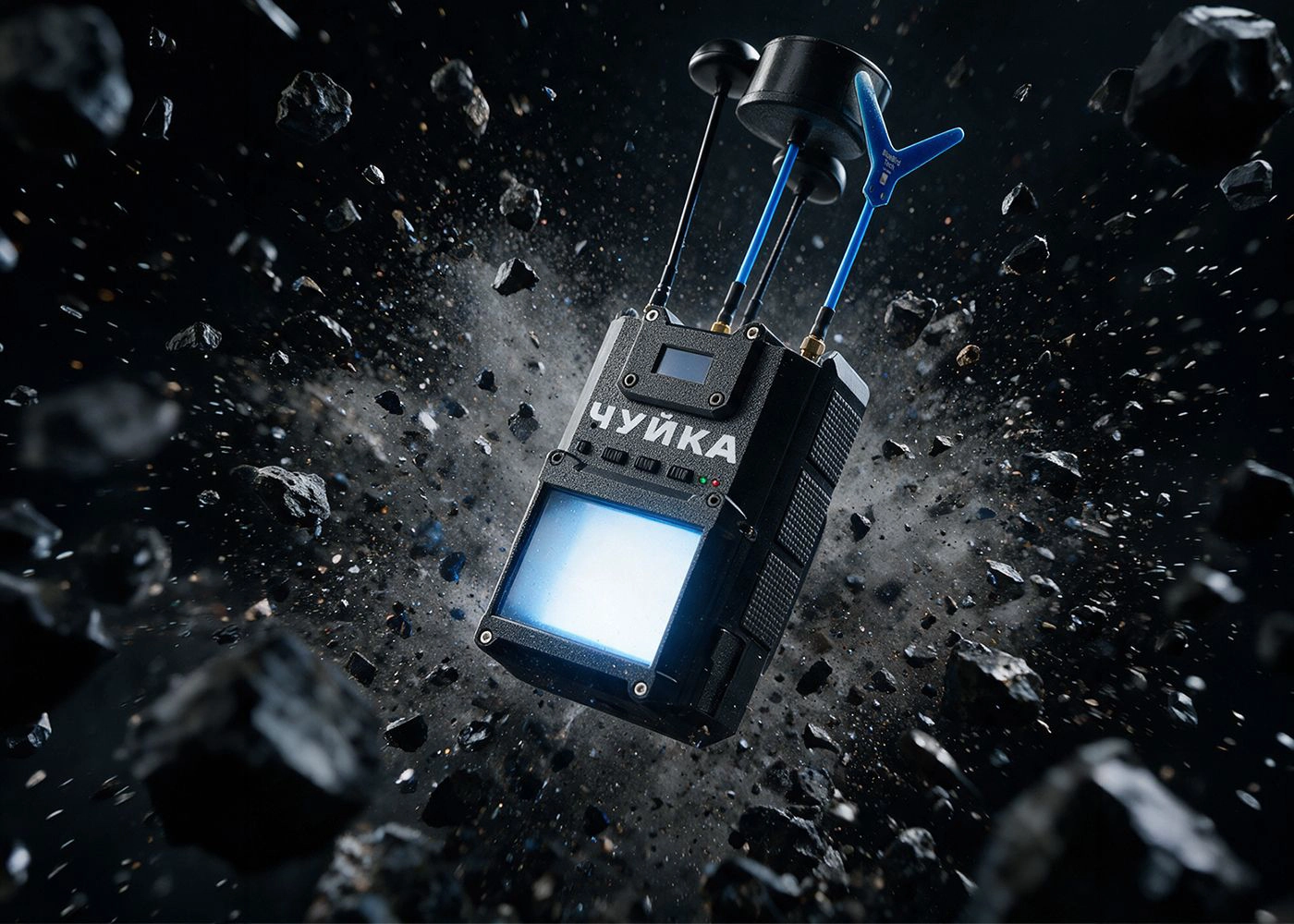
Chuyka 4.5.0. Image: BlueBird Tech
Ukrainian company BlueBird Tech presented a new version of its Chuyka 4.5.0 drone detector. The device features an expanded frequency range, an updated housing and the ability to display intercepted analogue video from FPV drones on external monitors.
According to the manufacturer, the expanded range responds to the growing number of frequencies Russian forces use to transmit video from FPV drones, Molniya drones and other unmanned systems.
One of the main features of Chuyka 4.5.0 is the ability to transmit analogue video from a detected drone to an external monitor or television. BlueBird Tech says this function can be used at command posts and headquarters to analyse intercepted video signals.
Frequencies scanned by Chuyka 4.5.0
The new detector operates across four frequency ranges:
- 1080–2200 MHz;
- 2870–4500 MHz;
- 4890–6040 MHz;
- 6050–8800 MHz.
The newly added 6.05–8.8 GHz range expands detection of video signals from FPV drones and fixed-wing unmanned aircraft.
The device scans all four ranges in parallel in approximately 4–8 seconds. When it detects a signal, the detector activates visual and audio alerts and displays the intercepted video on its own screen.
The claimed detection range is up to 4 km, depending on conditions and signal strength.
Other Chuyka 4.5.0 specifications
- dimensions — 104 × 158 × 67 mm;
- weight — up to 940 g;
- housing protection — IP54;
- cooling system — active;
- mounting — MOLLE;
- power supply — via USB-C or XT60;
- external power — 12–28 V;
- battery life — up to 4.5 hours;
- battery — four cells, each with a capacity of 5000 mAh.
The detector’s housing is made of PETG plastic. The model name refers to military slang: the code “4.5.0” means that the situation is calm and there are no threats.
The company presented the previous version, Chuyka 4.0, in June 2026. Its detection range reached 4 km in the 900–1800, 2870–4080 and 4860–6060 MHz ranges, and 2–2.5 km in the 6100–8600 MHz range.
Reading now
1

260+ vacancies in Ukrainian defence technology at BlueBird Tech, Sine Engineering, Buntar Aerospace and more
2
Forbes: Airlogix plans to raise $100m at a $2bn valuation
3
US Buys 1,320 more FPV drones from Ukraine’s F-Drones for $6.5M
4
Japan signs contract with Ukrainian company SkyFall to procure interceptor drones
5
Phantom Defense provided EW systems for UAV tests under Drone Dominance
By submitting this form, you give Defender Media consent to the processing of personal data.
Надсилаючи цю форму, ви надаєте Defender Media згоду на обробку персональних даних.

Latest news
1
General Cherry says it cannot deliver drones under the tenders it has won. What is the DPA’s response
2

Quantum Tencore Industries plans to produce first TerMIT UGVs in Germany by end of 2026
3
ANT upgrades Mercury reconnaissance UAV system: flight time increased to five hours
4

DevDroid and Norway’s Inission Norge AS to cooperate on the production of UGV remote control systems
5