Dorozvidka #75: Khmara, “Hulk”, Protector, TrophyLab, DELTA chatbot, and Ukraine’s kill chain
What international media wrote about Ukrainian defence tech, plus news that flew under Defender Media’s radar
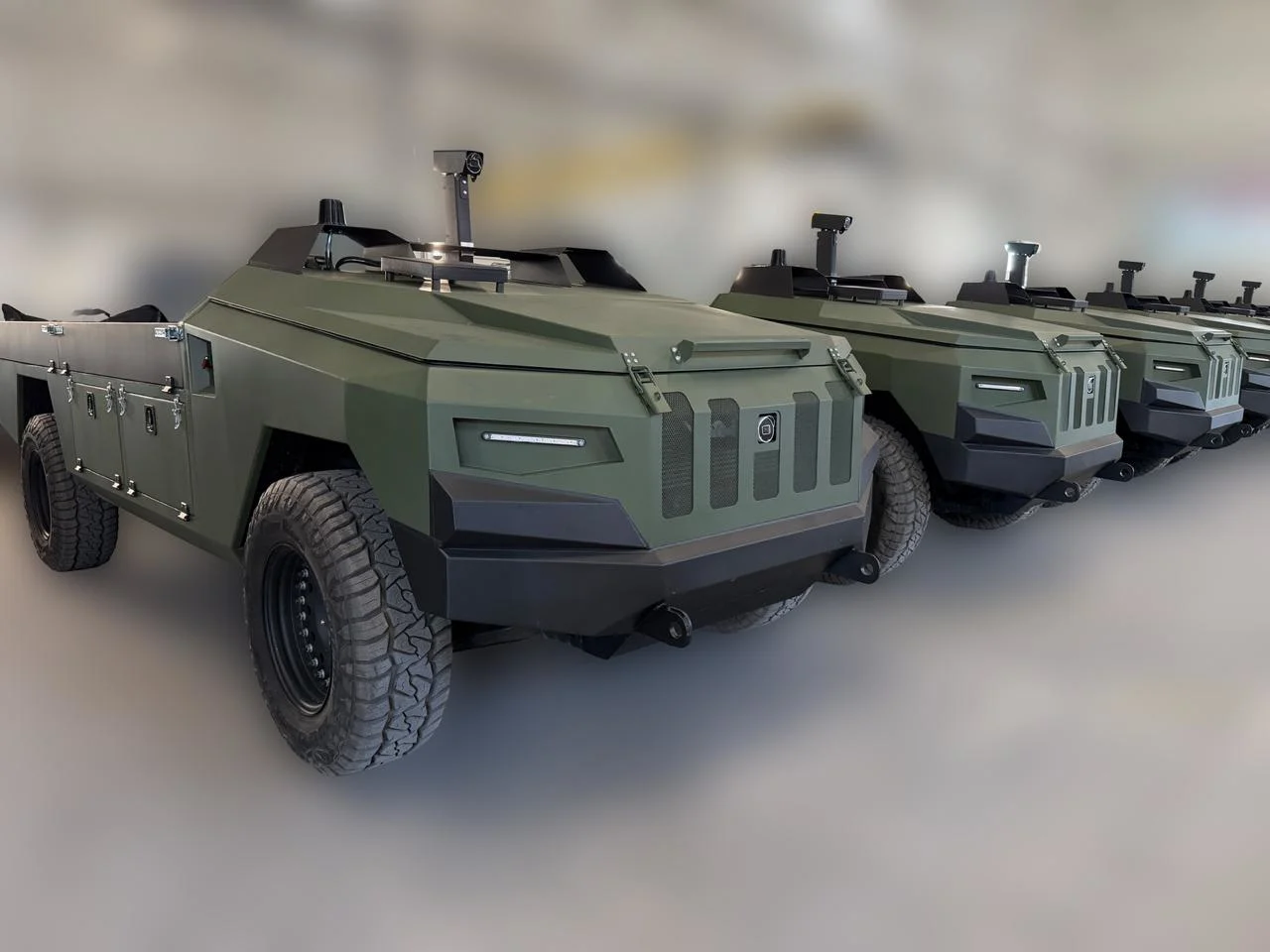
Protector UGV. Photo: Ukrainian Armor
In the latest Dorozvidka:
- Yevhenii Khmara: efforts to counter jet-powered Shaheds are ongoing, with four potential interceptors already tested;
- More than 430 companies have applied for access to a database of captured Russian weapons;
- Hero of Ukraine “Hulk” on countering jet-powered Shaheds and developing “small air defence”;
- Ukraine’s National Guard receives 10 Protector UGVs funded by the German government;
- The New York Times on the DELTA system and SPECTR battlefield chatbot;
- A factory producing drones for Ukraine was set on fire in Poland;
- Ukraine’s Defence Ministry explains what the kill chain is and how AI speeds up the destruction of enemy targets;
- Simon Ostrovsky on how Ukraine uses electronic points to motivate soldiers.
Khmara: efforts to counter jet-powered Shaheds are ongoing, with four potential interceptors already tested
Ukraine is continuing to develop ways to counter enemy jet-powered Shaheds, with field tests already conducted involving four potential interceptor systems. Defence Minister Yevhenii Khmara said this at a meeting with journalists, Interfax-Ukraine reports.
He stressed that the current task is to “bring these solutions to the required level as quickly as possible and scale production to thousands of units”.
More than 430 companies have applied for access to a database of captured Russian weapons
Ukraine’s Defence Ministry has published the first statistics for TrophyLab. The service provides manufacturers and researchers with data on captured enemy weapons collected by the Defence Intelligence of Ukraine, the Security Service of Ukraine and specialised research institutions. This helps developers create countermeasures faster.
More than 130 Ukrainian and over 300 foreign companies have so far applied for access. To access the database, applicants must complete a form and submit an application via the trophylab.mod.gov.ua website.
Hero of Ukraine “Hulk” on countering jet-powered Shaheds and developing “small air defence”
The Sternenko Community published an interview with Roman “Hulk”, a platoon commander in the Bulava unit of the 72nd Mechanised Brigade, Hero of Ukraine and full holder of the Order for Courage. He has already been credited with shooting down more than 500 Shaheds.
He discussed how Shahed intercepts are carried out, what can be done to bring down the enemy’s jet-powered deep-strike drones, and how the “small air defence” project could develop.
National Guard receives 10 Protector UGVs funded by the German government
Four units of Ukraine’s National Guard have received the first batch of heavy Protector logistics UGVs manufactured by Ukrainian Armor. A total of 100 of these systems have been contracted for the National Guard with financial support from the German government.
Protector is designed for logistics and evacuation missions in combat zones. It has a payload capacity of 1,480 kg, one of the highest figures among modern UGVs. The system can also tow a trailer weighing up to 4 tonnes.
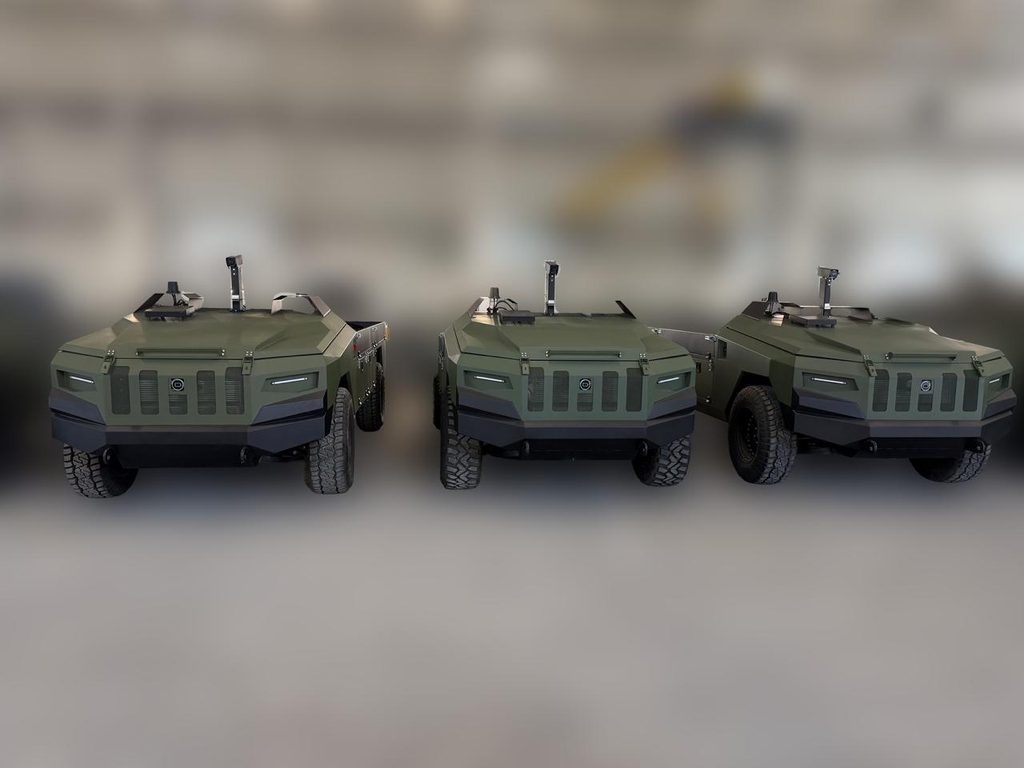
Protector is already being used by Ukrainian forces on the frontline. In particular, the system is deployed with a separate National Guard artillery brigade and will be used in the Dobropillia area.
The New York Times on DELTA and the SPECTR battlefield chatbot
The New York Times published an in-depth report on Ukraine’s DELTA situational awareness system, which is playing an increasingly important role in battlefield management.
Speaking to the NYT, Defence Ministry AI Centre head Danylo Tsiovokh revealed details for the first time about a new AI solution being developed by his team. Called SPECTR, the AI assistant is essentially a chatbot for the battlefield. It connects to DELTA and other systems and can answer questions. Commanders will soon be able to test it while planning attacks.
“This is essentially part of a future platform solution,” Tsiovokh wrote on Facebook. “But we are starting with an assistant for commanders to work quickly with data and analytics.”
A factory producing drones for Ukraine was set on fire in Poland
A fire broke out at a facility operated by Polish company WB Electronics in the city of Skarżysko-Kamienna during the night of 30–31 August. The plant produces components for drones used by the Polish and Ukrainian militaries. Poland’s Internal Security Agency (ABW) and Military Counterintelligence Service have joined the investigation, Polish outlet Onet reports.
According to law enforcement officials, the fire alarm was triggered at around 00:23. Shortly before that, an external security operator detected an alarm activation. CCTV footage captured an unidentified person wearing a balaclava entering the facility through the fence.
Police found an abandoned backpack and jacket near the scene and launched a large-scale search involving police officers, a sniffer dog and a thermal-imaging drone. Polish authorities are currently considering sabotage and arson as among the main possible causes of the incident.
Simon Ostrovsky on how Ukraine uses electronic points to motivate soldiers
Journalist Simon Ostrovsky spoke to Andrii, an analyst at Brave1 Market, about how the state-run Brave1 cluster has gamified real-world warfare. They also discussed how the e-points system motivates soldiers and generates battlefield data that is reshaping traditional defence procurement.
Andrii is a verification analyst at Brave1 Market, an online marketplace where military personnel can purchase equipment using electronic points awarded for successful combat missions. He reviews thousands of hours of drone footage to determine the correct number of points for each soldier.
Ukraine’s Defence Ministry: what the kill chain is and how AI speeds up the destruction of enemy targets
Ukraine’s Defence Ministry has published an explainer on the kill chain and how artificial intelligence can make the process of striking enemy targets more effective.
The kill chain is the sequence of actions involved in engaging an enemy target, from detection to assessing the result. According to the Defence Ministry, AI can save up to 90% of the time spent searching for enemy targets.
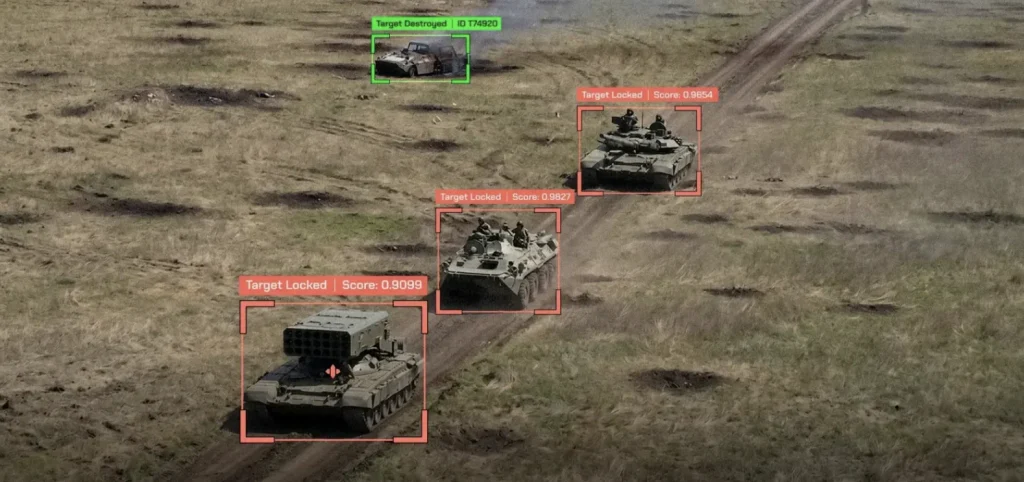
The Avengers platform integrated into the DELTA combat system already identifies 70% of enemy equipment in real time and analyses more than 100,000 video streams every month.
Ukrainian developers have access to Avengers Labs, a dataset of 5 million frames collected during combat missions, for training such systems.
Reading now
1
F-Drones launches FPV drone simulator, Ukrainians to get free access on August 24
2
Rise Technologies unveils Nakande digital communications system for drones
3

200+ new vacancies in defence innovation: Jobs at TAF Industries, Airlogix and other leading industry companies
4
Ukraine’s Defence Ministry codifies first jet-powered Alexa Spatium interceptor drone
5

European defence giant Leonardo opens a subsidiary in Ukraine
By submitting this form, you give Defender Media consent to the processing of personal data.
Надсилаючи цю форму, ви надаєте Defender Media згоду на обробку персональних даних.

Latest news
1

The Rada abolishes VAT and import duties on weapons components and buggies: details of the new laws
2
Brave1 has revealed how many Ukrainian companies are developing jet-powered interceptor drones
3
Mavka Technology has unveiled the MAVKA 4K evacuation and logistics UGV
4

Chernohorenko proposes customs “green lanes” for defence components
5