Robotic systems carried out 94 assault and sabotage operations during Operation Vivaldi, says NC13 unit commander
In the initial stage, ground drones distracted the enemy, drawing all focus onto itself
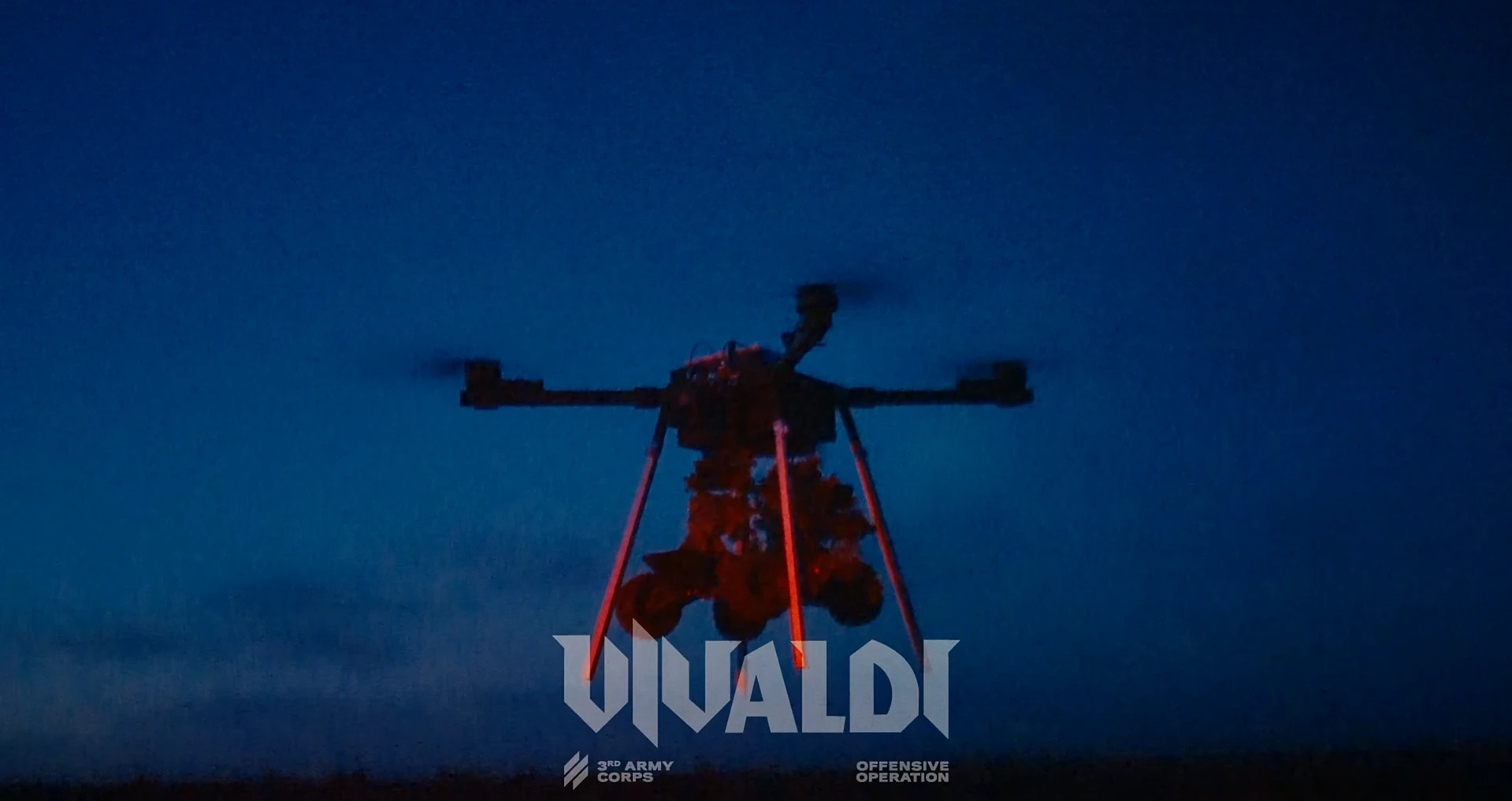
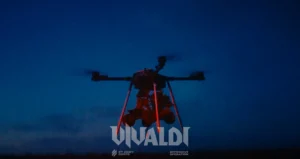
Air-dropping of a UGV (Screenshot from NC13 video)
Unmanned ground vehicles became one of the key factors in the success of the Vivaldi offensive and delivered more than 200 strikes against the enemy. Mykola Zinkevych, callsign “Makar”, commander of the NC13 strike UGV unit, disclosed this in an interview with Defender Media.
UGVs carried out 94 assault and sabotage missions without risk to Ukrainian troops, and their deployment saved the lives of about 2,500 people.
In the initial stage, ground drones distracted the enemy and forced it to reveal its surveillance and fire assets, drawing all focus onto itself. While the enemy was hunting the robots, assault groups entered its battle formations unimpeded.
Afterwards, kamikaze UGVs and drones with combat modules kept up constant fire on command posts, UAV operator positions and areas where personnel were concentrated. This disrupted Russian logistics, disorganised command and control and undermined the enemy’s morale
In total, since the start of offensive actions, troops have recaptured 176 km² of territory and taken at least 250 Russian soldiers prisoner.
NC13 is part of the Third Army Corps and has been working with strike UGVs since 2025. Read the full interview to learn more about the unit’s history, the use of ground drones at the front line and sabotage missions:
Reading now
1
SkyFall officially unveils Thor Hammer mid-strike and announces 1,000+ km version
2
Pentagon to hold Drone Dominance trials for bomber drones, with UFORCE, Gurzuf Defence, Grim Tech and others taking part
3
British-Ukrainian Occam Industries raises €3.8m. The funds will go towards scaling drone autonomy software
4
Terra Drone acquires 50% of Ukrainian Kurin Technologies for $3.5 million
5

Frontline Robotics CBDO Mykyta Rozhkov: Ukraine and Norway are working on an autonomous system to protect maritime infrastructure
By submitting this form, you give Defender Media consent to the processing of personal data.
Надсилаючи цю форму, ви надаєте Defender Media згоду на обробку персональних даних.

Latest news
1
US Buys 1,320 more FPV drones from Ukraine’s F-Drones for $6.5M
2
Robotic systems carried out 94 assault and sabotage operations during Operation Vivaldi, says NC13 unit commander
3
NeoLens, an AI assistant for military vehicle repair, is now available as an Android app
4
Lithuania’s Unmanned Defense Systems sets up joint venture in Ukraine, led by Stepan Veselovskyi
5