Brave1 cluster tests AI-powered mother drone from Strategy Force Solutions
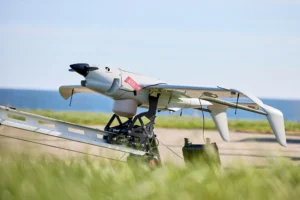
GOGOL-M reusable drone capable of delivering two FPV strike drones up to 300 km
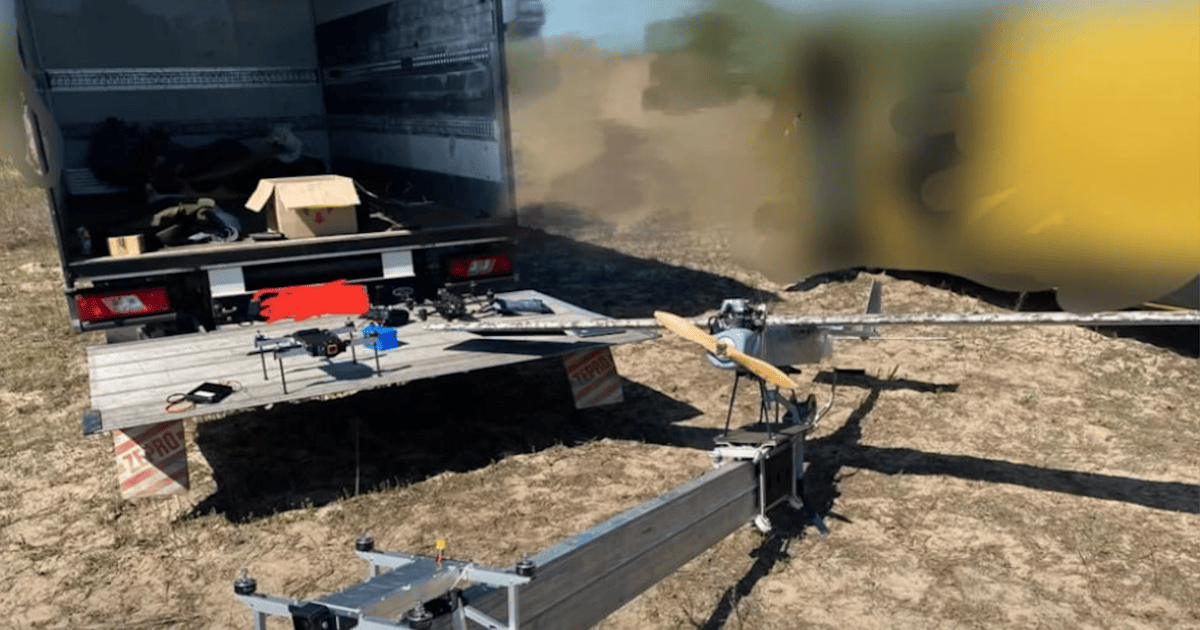
Photo: Strategy Force Solutions
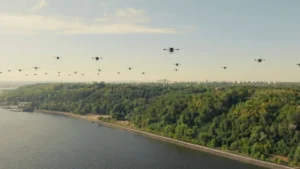
The Ukrainian defence cluster Brave1 has announced the first combat use of a drone carrier featuring artificial intelligence elements. The new technological solution is designed to enhance the effectiveness and accuracy of strikes against enemy targets.
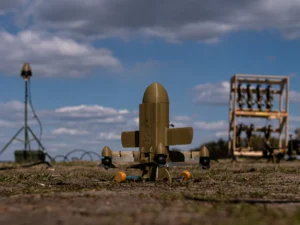
The system involves the GOGOL-M, a reusable drone capable of delivering two FPV strike drones up to 300 km. These drones autonomously detect and engage targets, including parked aircraft, air defence systems, and military infrastructure. For missions of up to 100 km one way, the carrier drone can return for reuse.
The system operates without GPS, relying instead on SmartPilot visual-inertial navigation. Cameras serve as the primary sensors, with LIDAR providing additional support. Artificial intelligence enables automatic target recognition and selection.
According to Forbes, the development is the work of Ukrainian startup Strategy Force Solutions, which reports that its drone carriers have completed the first autonomous strike drone missions during tests against Russian targets.
StratForce’s flagship product is the SmartPilot system, which combines advanced sensors with artificial intelligence. LIDAR generates a 3D map of the environment and functions in all lighting and weather conditions. A key feature of SmartPilot is its AI engine, which integrates input from multiple sensors to interpret surroundings and identify targets. This enables the AI to make decisions, plot a flight path, and carry out missions autonomously, akin to a human pilot.
In typical use, the carrier drone flies to the target area and deploys two FPV drones, each equipped with a lightweight version of SmartPilot. The carrier then returns to base, while the FPV drones locate, identify, and attack pre-designated targets such as air bases, missile launch sites, or air defence systems.
The autonomous drones can support ambush missions, landing to await targets such as incoming aircraft or units emerging from cover. Alternatively, they can be deployed along convoy routes, ready to launch autonomous attacks.
The cost of a single mission is approximately $10,000—significantly lower than the estimated $3–5 million cost of a missile strike.
Reading now
1
F-Drones launches FPV drone simulator, Ukrainians to get free access on August 24
2

British platform Grenadyr has invested in five Ukrainian defence tech startups. Defender is telling its story for the first time
3

60+ new job openings in Ukrainian defence tech: offers from Vyriy, TENCORE, Ukrspecsystems and others
4
Ukrainian company has developed a jet-powered interceptor drone that reaches speeds of over 600 km/h
5
Rise Technologies unveils Nakande digital communications system for drones
By submitting this form, you give Defender Media consent to the processing of personal data.
Надсилаючи цю форму, ви надаєте Defender Media згоду на обробку персональних даних.

Latest news
1
Tencore developed a flamethrower combat module for its TerMIT 2.0 UGV
2
Skyeton has acquired a plot of land in Germany, local media report
3
Norda Dynamics announces partnership with American company Palladyne AI
4
Dutch Tulip Tech developed batteries that can double the flight time of Matrice and Mavic drones
5