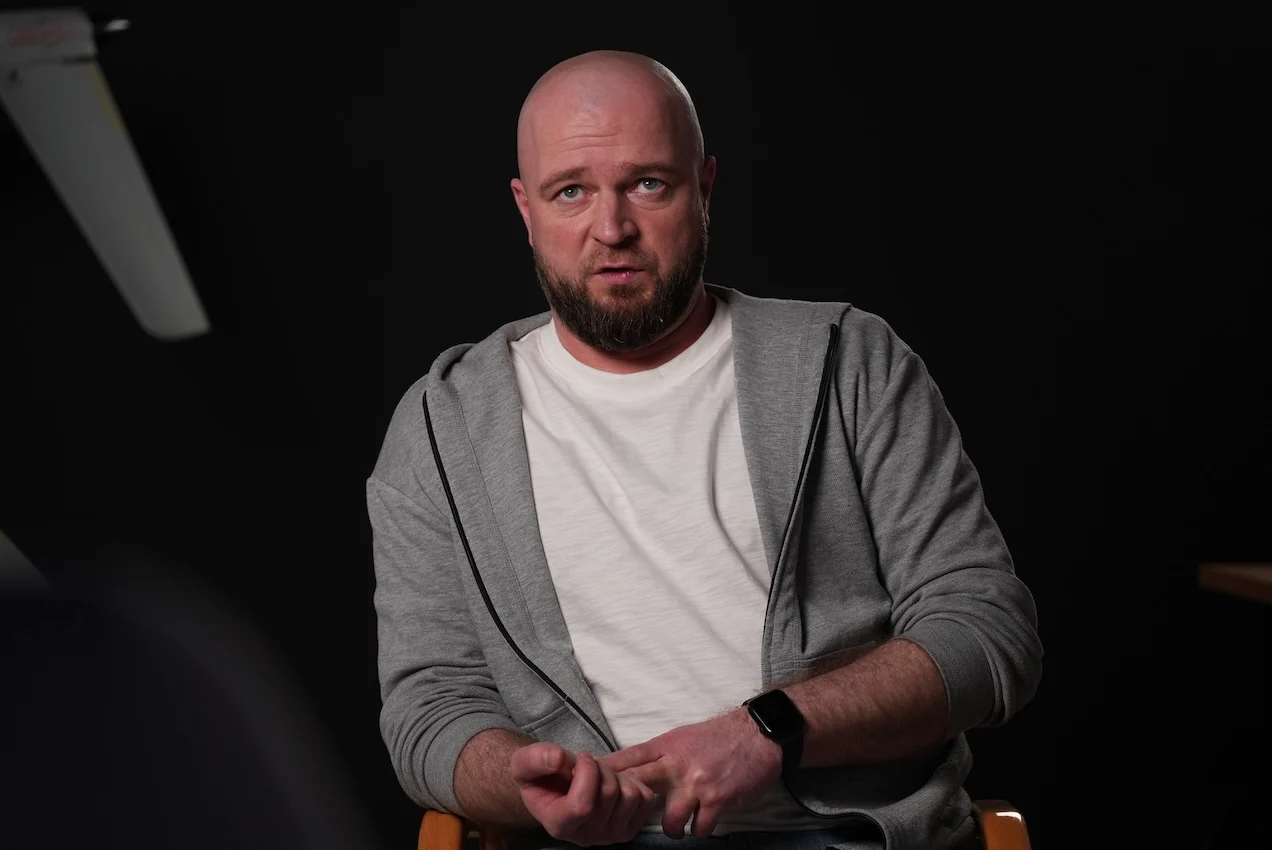
Codification mechanisms for defence products: What manufacturers should consider
Ukraine currently has three codification mechanisms, each designed for a specific type of product and following its own process

The codification of defence products is one of the most important issues for Ukrainian arms manufacturers. The route a manufacturer takes determines not only how quickly a product can reach the market, but also whether it can be sold at all.
Yana Sviderska, a lawyer with ADVANQ’s defence procurement practice, explains that Ukraine currently has three codification mechanisms. Each is designed for a specific type of product and follows its own process. Yana’s column for Defender Media explores each mechanism in detail.
Resolution No. 1275: A clear and predictable pathway
Cabinet of Ministers Resolution No. 1275 regulates the codification of domestically produced tactical unmanned systems and electronic warfare (EW) systems during martial law.
Its main advantage is the predictability of both the codification procedure and the subsequent commercialisation of the product. The resolution clearly defines the required documentation (technical specifications, test reports, testing programmes and methodologies), the procedural steps, and the stages of codification.
Once codified, manufacturers can continue supplying their products directly to military units while also gaining access to new procurement channels, such as the DOT-Chain Defence platform and government contracts.
This predictability is precisely what makes Resolution No. 1275 so attractive to manufacturers.
Resolution No. 345: Covers all weapons, but with important caveats
Resolution No. 345 applies to all categories of weapons and military equipment, most commonly those that do not fall within the scope of Resolution No. 1275. At first glance, it appears to be a more universal mechanism. In practice, however, it does not necessarily provide a simpler route to securing contracts.
Where does the challenge arise?
Consider the case of an electronic warfare system manufacturer whose product exceeds the tactical-level criteria established under Resolution No. 1275. The logical solution is to pursue codification under Resolution No. 345.
However, after successfully completing codification, the manufacturer faces another practical issue: how to sell the codified product.
This is because the special procurement procedures established under Resolution No. 1275 for unmanned systems and EW products do not apply to such equipment. As a result, manufacturers must identify alternative sales channels and resolve a range of operational issues, including documentation requirements, profit margin restrictions, and other commercial limitations.
In other words, Resolution No. 345 may create challenges not during codification itself, but at the commercialisation stage — a risk that is equally critical for manufacturers.
Resolution No. 489: An innovation pathway for new products
A separate mechanism is provided under Resolution No. 489. It is intended for fundamentally new or significantly upgraded products.
To qualify, a product must either be newly developed or substantially modified (modernised or upgraded), and either have no equivalent currently used by Ukraine’s security and defence forces or not be procured by the Ministry of Defence.
In practice, the determination of whether a product qualifies as an innovative defence product is made on a case-by-case basis, taking into account its technical characteristics, degree of novelty, and the existence or absence of comparable solutions.
For example, if the product is an electronic warfare system, no approved Ministry of Defence technical requirements must exist for that category. Otherwise, codification will proceed under Resolution No. 1275 instead.
In simplified terms, the procedure consists of several stages. The Ministry of Defence first collects information about the innovative product and justifies the operational need for it. It then decides whether to procure the product and determines the scope of testing as well as the participating units.
A contract is signed with the manufacturer, after which the product is transferred to designated military units for experimental combat deployment. It is then used in real operational conditions to verify its actual tactical and technical characteristics and assess its ability to address specific operational challenges.
Following deployment, the military unit prepares a report evaluating the product’s performance, including whether codification is appropriate. Based on this report and the manufacturer’s application, the Ministry of Defence decides whether to codify the product. The manufacturer must also submit technical specifications together with factory test reports and testing programmes.
The main advantage of this mechanism is that it allows products that do not fit into any other codification framework to be legalised while validating their real-world performance under combat conditions.
Its main drawback is that the mechanism remains largely untested and not yet fully established in practice, meaning additional procedural obstacles may arise.
Conclusion
These three codification mechanisms operate in parallel and are formally available to a broad range of manufacturers. Choosing between them, however, is not merely a technical decision but a strategic one that determines not only whether a product can be codified, but also its commercial future.
Selecting the wrong mechanism can cost manufacturers months of work and ultimately leave them with a codified product that cannot be sold.

Yana Sviderska
A lawyer specialising in defence procurement at ADVANQ with three years of experience and expertise in defence procurement, weapons codification, and comprehensive legal support for defence industry companies.
Reading now
1

70+ vacancies in Ukrainian defence tech at Ukrspecsystems, Strix Air, DoD Solution and other industry leaders
2
Ukrainian Skyeton secures $10.6M US army contract
3
Canadian General Dynamics signs agreements with Ukrainian GreenTech
4
Korven Systems project: How Teletactica co-founder is building an autopilot for interceptor drones
5
The Pentagon has announced the results of Drone Dominance Gauntlet II – announced Ukrainian companies did not make the top 5
By submitting this form, you give Defender Media consent to the processing of personal data.
Надсилаючи цю форму, ви надаєте Defender Media згоду на обробку персональних даних.

Latest insights
1
Everything about the RAM-2X mid-strike drone: interview with Ukrspecsystems deputy director Andrii Rymaruk
2

A demo is not demand: How to prove the value of a defence tech product. Column by Tekever Ukraine Director Kateryna Bezsudna
3
How to choose the right video link for an FPV drone: analogue, digital, or fibre-optic?
4

How a frontline signal becomes an engineering task. A column by Defence Builder Accelerator Director Yana Shkvarovska
5