September 8, 2026
The platform allows module integration and is capable of performing combat and engineering tasks
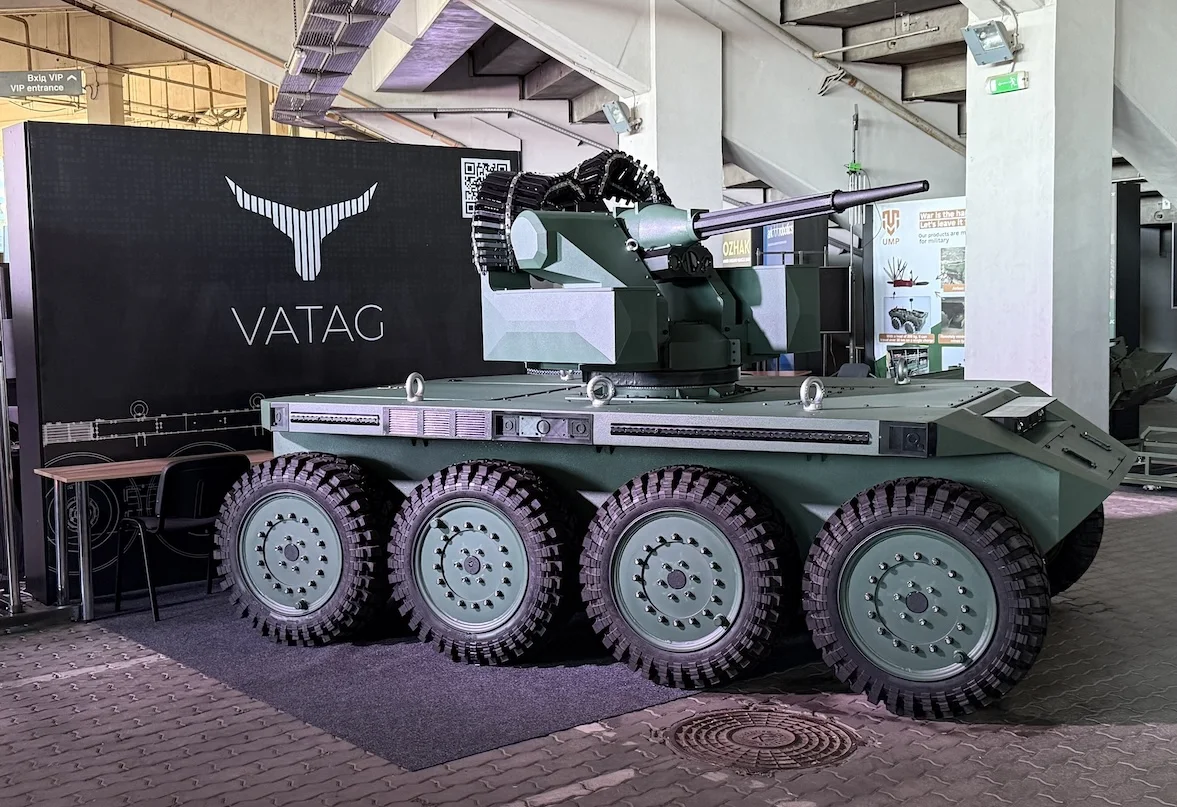
At the Brave1 Defense Tech Valley 2025 summit, Ukrainian company Ground Robotics unveiled its heavy UGV VATAG, capable of transporting more than 2 tonnes of cargo. A company representative told Defender Media that the UGS is currently undergoing internal testing and preparing for codification.
VATAG is a multifunctional platform designed for a wide range of tasks. The vehicle can transport weapons, carry out engineering works and support combat operations in challenging environments. The UGV can reach speeds of over 40 km/h even off-road and is equipped with armour for both the hull and the chassis, ensuring resistance to shrapnel and mines.
The UGV’s basic weapons configuration includes a 25 mm M242 Bushmaster automatic cannon. However, the platform also supports the integration of cannons up to 30 mm, a 40 mm Mk19 automatic grenade launcher, a 12.7 mm machine gun and anti-tank missile systems. Provision is also made for the installation of multiple rocket launch systems.
For reconnaissance and targeting, VATAG is equipped with a multispectral optical system. This enables automatic detection and tracking of targets, as well as supporting algorithms for fire planning and control. The vehicle’s architecture allows the integration of additional modules, such as electronic warfare systems, telescopic masts with surveillance and data transmission equipment, or aerosol camouflage systems.
VATAG can autonomously unload cargo, use navigation based on machine vision, lidar and sensors, operate in convoy mode and carry out missions with adaptive responses to the surrounding environment.
It is also worth noting that in August the Cabinet of Ministers opened the market for training operators of unmanned ground vehicles and naval drones. Military personnel will be able to attend certified courses at private schools, with the state covering the cost of training.




By submitting this form, you give Defender Media consent to the processing of personal data.
Надсилаючи цю форму, ви надаєте Defender Media згоду на обробку персональних даних.