Dorozvidka #81: Ukraine faces StarShield restrictions, fourth season of “Vivaldi”, plus Khmara, Ukroboronprom and Calibrated
Important updates from the front, officials’ statements, and news the editorial team missed

Євгеній Хмара. Фото: Міноборони
In the new Dorozvidka:
- Ukrainian troops’ StarShield speeds throttled, disrupting key missions
- Fourth season of “Vivaldi”: another 101 km² liberated
- Highlights from Defence Minister Yevhenii Khmara’s offrec briefing
- Ukraine and NATO jointly develop two AI models for combat tasks
- Ukroboronprom to be turned into a holding company
- Calibrated shortlisted for Women in Defence UK Awards 2026
Ukrainian troops’ StarShield speeds throttled, disrupting key missions
On the night of 13-14 October, SpaceX restricted the operation of Starlink terminals in Ukraine, volunteer Serhii Sternenko and presidential adviser Serhii Beskrestnov reported.
According to Beskrestnov, the restrictions currently affect the “military package” of StarShield services, which has been capped at a speed of 100 miles per hour. Ukraine received no warning of the restriction, and it caused a number of missions to fail.
“Obviously, this action cannot be a coincidence and is linked to the current political situation,” Beskrestnov writes. On Monday, US media reported that the United States is threatening to stop sharing intelligence unless Kyiv stops attacking Russian oil refineries.
Troops of the 7th Air Assault Corps also confirmed that Starlink terminals are being restricted at the front. In a comment to hromadske, they said that communication with drones drops out for 10-20 seconds at speeds as low as 110-120 km/h. The drones keep moving, but such interruptions make them harder to control. Lowering drones’ flight speed makes them more vulnerable to Russian fire.
The corps added that the problem is even more acute when launching high-speed drones, including mid-strike ones. “Under these conditions, unstable communication will make it impossible to launch such aircraft or use them as intended,” the corps says.
Some of the 7th Air Assault Corps’ missions in the Huliaipole direction had to be cancelled because of communication problems.
Fourth season of “Vivaldi”: another 101 km² liberated
Andrii Biletskyi, commander of the Third Army Corps, announced the fourth season of Operation “Vivaldi”. Corps fighters and attached units have liberated another 101 km² of territory, including the settlements of Zelena Dolyna, Lypove and Kolodiazi.
According to Brigadier General Biletskyi, the operation, which began with the elimination of Russian infiltration, has grown into a large-scale offensive. Over the whole operation, Ukrainian troops have returned 16 settlements to full Ukrainian control and liberated 277 km². Enemy losses total 8,000 soldiers.
Last week, “Makar”, commander of the NC13 strike UGV unit within the Third Army Corps, told Defender Media in an interview about the role of ground robotic systems in Operation “Vivaldi”.
Highlights from Yevhenii Khmara’s off-the-record briefing
Defence Minister Yevhenii Khmara met with journalists. Key points from RBC’s report:
- Russia is working on jet-powered drones with a speed of 800 km/h. The Ministry of Defence is looking for ways to counter the next generation of threats. Defence industry manufacturers have been tasked with submitting proposals and prototypes.
- One unit destroyed five jet-powered Gerans with five Bars interceptors. This experience is now being studied and scaled up, with additional specialists and units being brought in.
- There are results from using heavy-calibre turrets against jet-powered UAVs. Their number in Ukraine’s arsenal is already in the hundreds.
- Aviation remains one of the most effective means of countering jet-powered drones. The Ministry of Defence is therefore working to increase the availability of F-16s for combat duty. One of the bottlenecks is aircraft maintenance, and the relevant capacity is now being expanded.
- In September and October, the Defence Forces struck eight ballistic missile launchers: three were destroyed and five damaged.
- Ukraine is testing solutions that would counter glide bomb carrier aircraft more effectively.
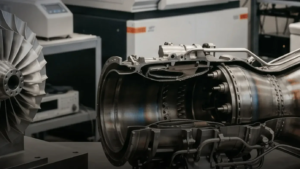
- The need for jet engines spans several classes of systems: interceptors, mid-strike, deep strike and cruise missiles. Ukraine already has a number of developments that the state is supporting. In total, about two dozen Ukrainian manufacturers work in the three main categories. For one engine type, the 2027 demand could reach about 10,000 units per month.
Ukraine and NATO jointly develop two AI models for combat tasks
The NATO-Ukraine Joint Analysis, Training and Education Centre (JATEC) presented two AI-based developments. The first forecasts enemy drone attacks; the second helps plan one’s own artillery operations.
“Model No. 13” analyses previous data, weather and the current situation, and forecasts:
- intensity of UAV use;
- areas;
- time windows;
- types of drones.
The solution has already been tested on real datasets. It is ready for integration into the Armed Forces’ situational awareness systems.
“Model No. 32” helps plan artillery operations. It takes into account available weapons, ammunition, firing positions, logistics, ballistics and other constraints.
The AI discards unfeasible options, assesses the feasible ones and ranks them. A prototype has already been handed to Ukrainian customers for trials and validation.
Ukroboronprom to be turned into a holding company
The joint-stock company Ukrainian Defence Industry (UDI) is planned to be turned into a state holding company. First Deputy Prime Minister and Energy Minister Denys Shmyhal announced this on his Telegram channel. In his view, the reorganisation should help improve production efficiency, update the management system and consolidate other state defence assets.
“UDI also faces two management tasks: completing the competition to appoint a new head, and forming a fully fledged board and updating the structure,” Shmyhal added. He reminds that Ukroboronprom is among the 50 largest defence companies in the world.
Calibrated shortlisted for Women in Defence UK Awards 2026
Ukrainian communications agency Calibrated has been shortlisted for the Women in Defence UK Awards 2026 in the international projects category. The jury recognised the Defence Tech Comms Bootcamp project, which Calibrated runs jointly with Tech PR School.
The agency actively works with Ukrainian and foreign defence businesses. Calibrated’s founders are Yuliia Petryk, Liuka Lobareva and Olha Danchenkova.
Defender has repeatedly published materials from the Defence Tech Comms Bootcamp, including:
Reading now
1
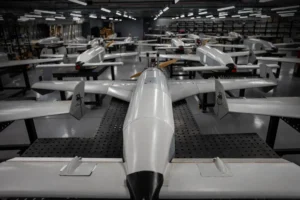
SkyFall officially unveils Thor Hammer mid-strike and announces 1,000+ km version
2

260+ vacancies in Ukrainian defence technology at BlueBird Tech, Sine Engineering, Buntar Aerospace and more
3
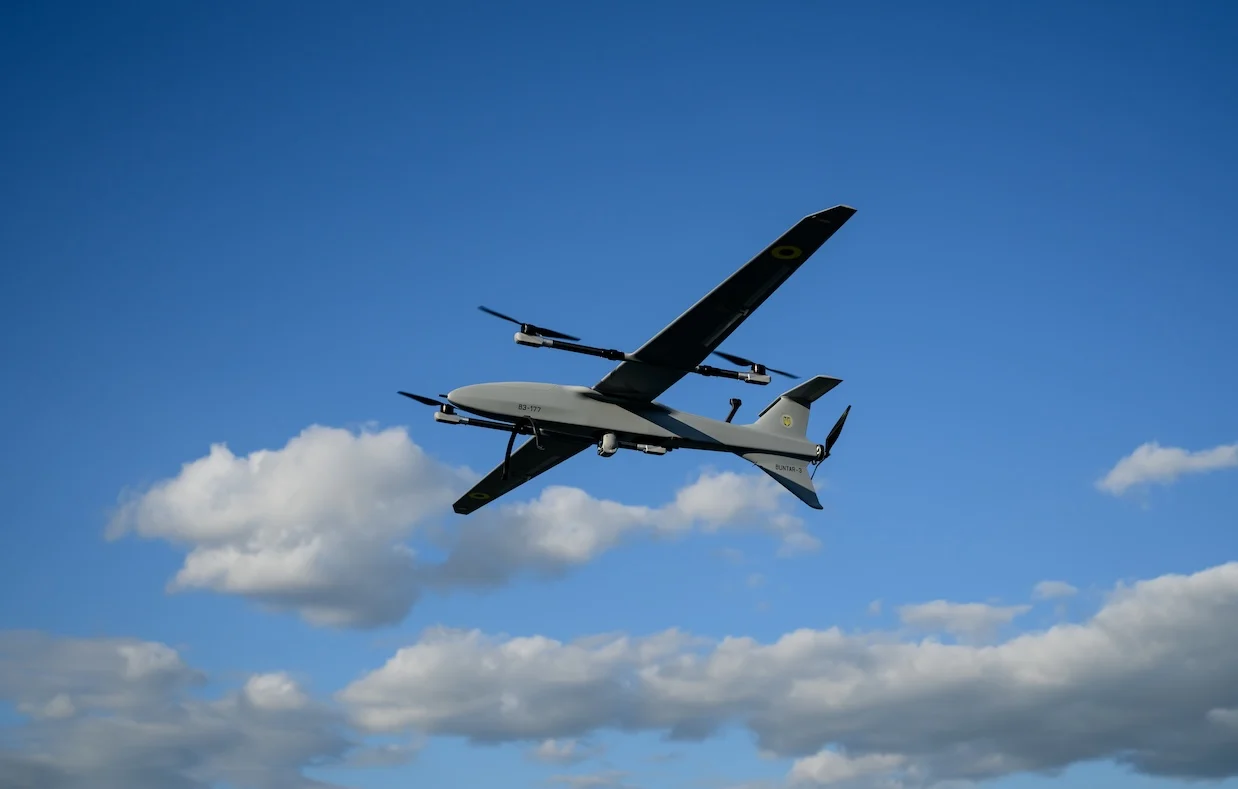
Buntar Aerospace raises $16M to scale up and enter foreign markets
4
6,000 lives saved by replacing people with robots. “Makar” on the ground strike drone unit NC13 and its role in Operation Vivaldi
5
Ukrainian developer of AI tools for detecting information threats Osavul raises $10 million
By submitting this form, you give Defender Media consent to the processing of personal data.
Надсилаючи цю форму, ви надаєте Defender Media згоду на обробку персональних даних.

Latest news
1

Dorozvidka #81: Ukraine faces StarShield restrictions, fourth season of “Vivaldi”, plus Khmara, Ukroboronprom and Calibrated
2
Nearly 100 enterprises join private air-defence project
3
Trypillian codifies VORON-10 FPV kamikaze drone
4
Ukrainian forces down Russian helicopter with VB140 Blyskavka drone
5