September 16, 2026
The company claims the system is increasing the operational efficiency of specialized units by 3–5 times
Defence tech developers worldwide have been working for years on drone swarm technologies designed to automate the coordinated use of unmanned systems on the battlefield. It is still unclear whether fully operational solutions exist. Meanwhile, technologies allowing a single pilot to coordinate multiple drones are emerging. One of the first is Pasika, a resilient navigation and communications system developed by Ukrainian company Sine Engineering.
Small uncrewed aerial vehicles account for up to 80% of combat losses on the frontline; however, the “one pilot, one drone” model exhausts human resources and hits a brick wall against electronic warfare (EW). Pasika enables a single operator to command a group of UAVs in conditions where communications and GPS are jammed. Defender Media investigated how this system works and spoke with its end-users within the Defence Forces.
One of the primary problems Pasika is designed to resolve is operating UAVs amidst total suppression of GNSS and radio channels. Under such conditions, standard UAVs lose orientation and connectivity. Sine Engineering says its solution combines secure communications and non-GPS navigation with a coordination platform.
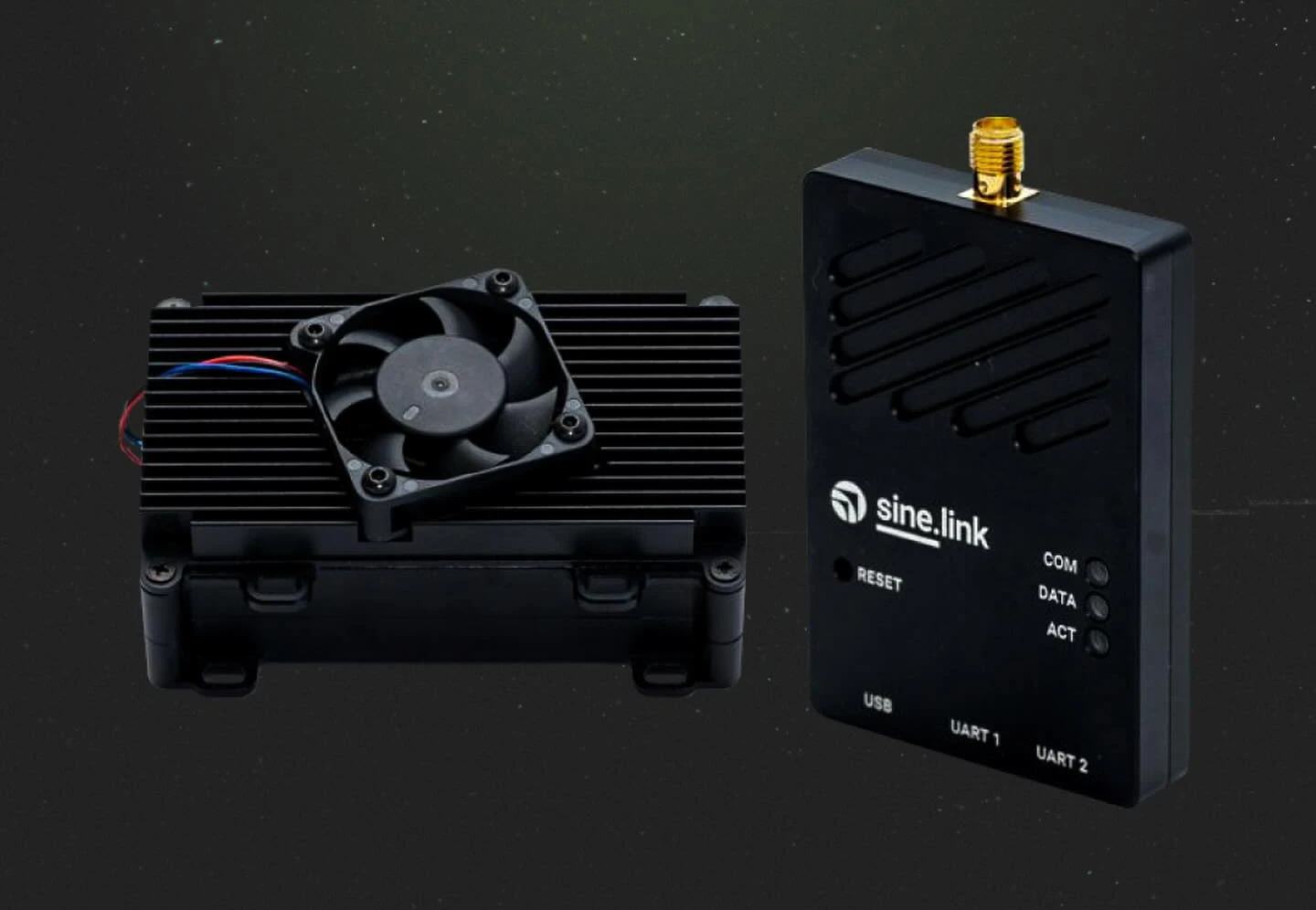
Because the company develops its own EW systems, its engineers created ultra-compact, on-board Sine.Link modules, which ensure encrypted data and telemetry transmission within congested frequency bands. A stable video feed is handled by the Sine.video digital transmitter.
The SNS navigation system does not rely on satellites: instead of weak satellite signals, the drones navigate using signals from neighbouring Sine.Link modules. The company notes that this maintains heading stability and orientation even within continuous enemy EW coverage.
In public statements, Sine Engineering co-founders Andriy Chulyk and Andriy Zvirko emphasise that Pasika is not a fully autonomous artificial intelligence or a classic autonomous swarm where machines act without human intervention. It is a human-in-the-loop, human-centric coordination tier that relieves the pilot of routine tasks, expands their capabilities, and boosts efficiency.
The operator specifies mission execution zones on a map and launches several drones simultaneously or sequentially; the system then automatically calculates routes and prevents mid-air collisions between the UAVs. The drones autonomously head to the designated area in quasi-radio silence or via secure communications, then loiter within a specified sector awaiting commands.
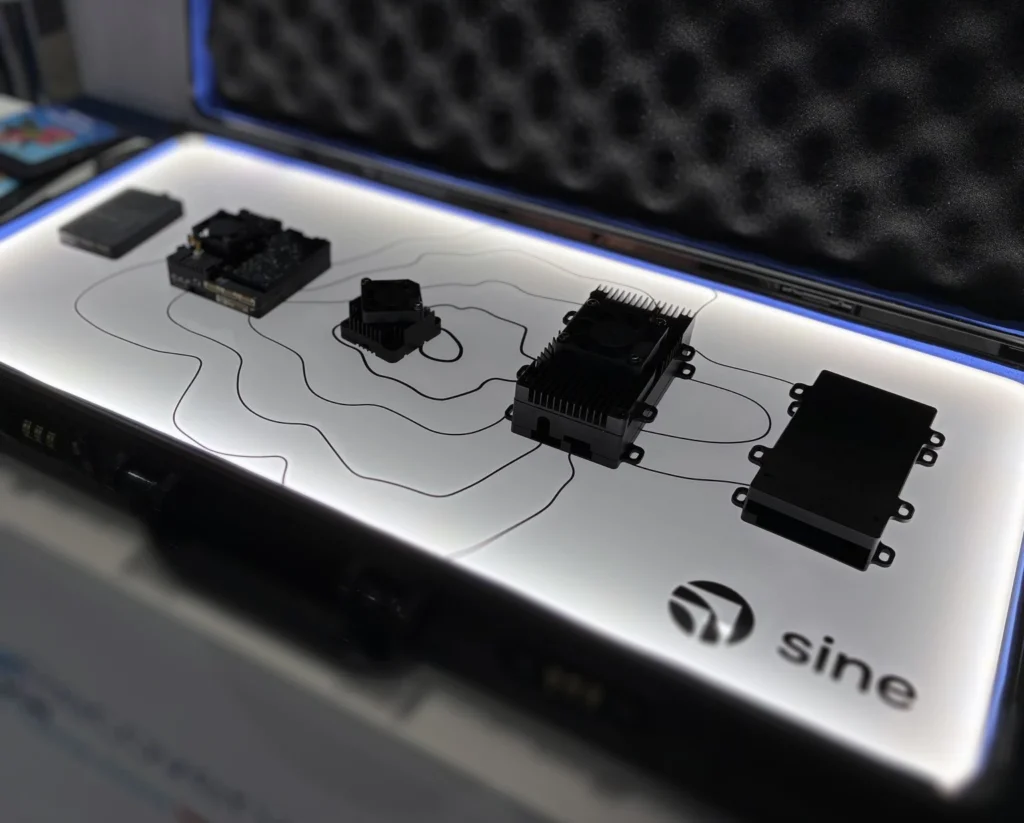
This entire group is rendered on a single interface where the operator can switch between video streams of any drone in the group with one click, detect targets, and assign strike priorities. For a direct strike, Pasika supports API integration to connect third-party auto-target acquisition modules; the operator simply locks onto the target, hands it off to the drone’s homing system, and immediately switches to the next UAV.
The company states that such optimisation increases a unit’s operational efficiency by 3–5 times, allowing the operator to complete missions faster, more safely, and under significantly less stress.
Sine Engineering states that, thanks to its versatility and low unit cost, the platform integrates into FPV kamikaze drones, heavy multicopters, and new types of uncrewed aircraft. Pasika is also suitable for managing groups of low-cost FPV interceptors—such as the Sting by Wild Hornets or developments by Besomar—to shoot down Russian reconnaissance UAVs and Shahed drones across vast areas.
According to the developers, autonomy allows for covert reconnaissance along a pre-programmed route without emitting radio signals, rendering the drone invisible to enemy signals intelligence (SIGINT). Furthermore, Pasika automates the delivery of ammunition, medical supplies, or night-time road mining via heavy multicopters.
According to public statements, Sine Engineering’s priority for 2026 is to scale up, expand production, partner with industrial stakeholders, and gradually integrate the system into NATO-allied standards. Looking ahead, the developers plan to train Pasika to account for terrain contours, react to ground threats in real time, and achieve deeper data integration from optical and radar sensors.
According to a serviceman with the 12th Special Purpose Center, callsign “Petros”, Pasika by Sine Engineering is a highly promising product, but it is not yet mature enough for mass combat deployment.
“We view this technology through the lens of mass combat deployment, rather than isolated operations or slick promotional videos. From this perspective, the system still requires further development. Practice has shown that the technology currently turns out to be either overly complex in its settings and interface, or issues arise when adapting it to real UAVs,” says “Petros”.
According to him, developing universal swarm-management solutions for any uncrewed system is currently out of the question, as flight assignments, combat missions, and airframes vary significantly. Furthermore, in “Petros’s” view, software developers are not collaborating closely enough with manufacturers and combat crews. “We are currently working actively at this intersection: bringing together the efforts of software developers, UAV manufacturers, and crews to combine their achievements and create a single, combat-ready product,” the serviceman says.
Speaking specifically about Pasika, the soldier adds that operating the system does not require specialised training, but it does take time for the crew to adapt to working with specific drones. “It appears that drone swarm management will soon become a distinct specialisation,” says “Petros”. “This entails separate pilot training, its own tactics of employment, and most likely a revision of the traditional crew structure. This field demands significantly greater cohesion, coordination, and interaction.”
Once active combat ends, Sine Engineering plans to adapt its technology and the Pasika system for the civilian sector —ranging from automated infrastructure monitoring to emergency medical logistics—though for now, all of the company’s efforts are focused on enhancing the effectiveness of the Ukrainian Defence Forces.
Alongside Sine Engineering’s Pasika, other Ukrainian and foreign developers are testing their own solutions in group control and swarm deployment, including Swarmer, The Fourth Law, and Auterion with its Skynode system.
Defender Media previously reported that Sine Engineering’s developments are already being utilized by 150 drone manufacturers. In March 2026, the company secured investment from the US-Ukrainian fund URIF.




By submitting this form, you give Defender Media consent to the processing of personal data.
Надсилаючи цю форму, ви надаєте Defender Media згоду на обробку персональних даних.