
Dorozvidka #76: Sting on Magura, Ukrainian missiles in Poland, NYT on MoD corruption, and multi-billion valuations for Fire Point and Vyriy
The most interesting stories about Ukrainian defence tech from international and Ukrainian media
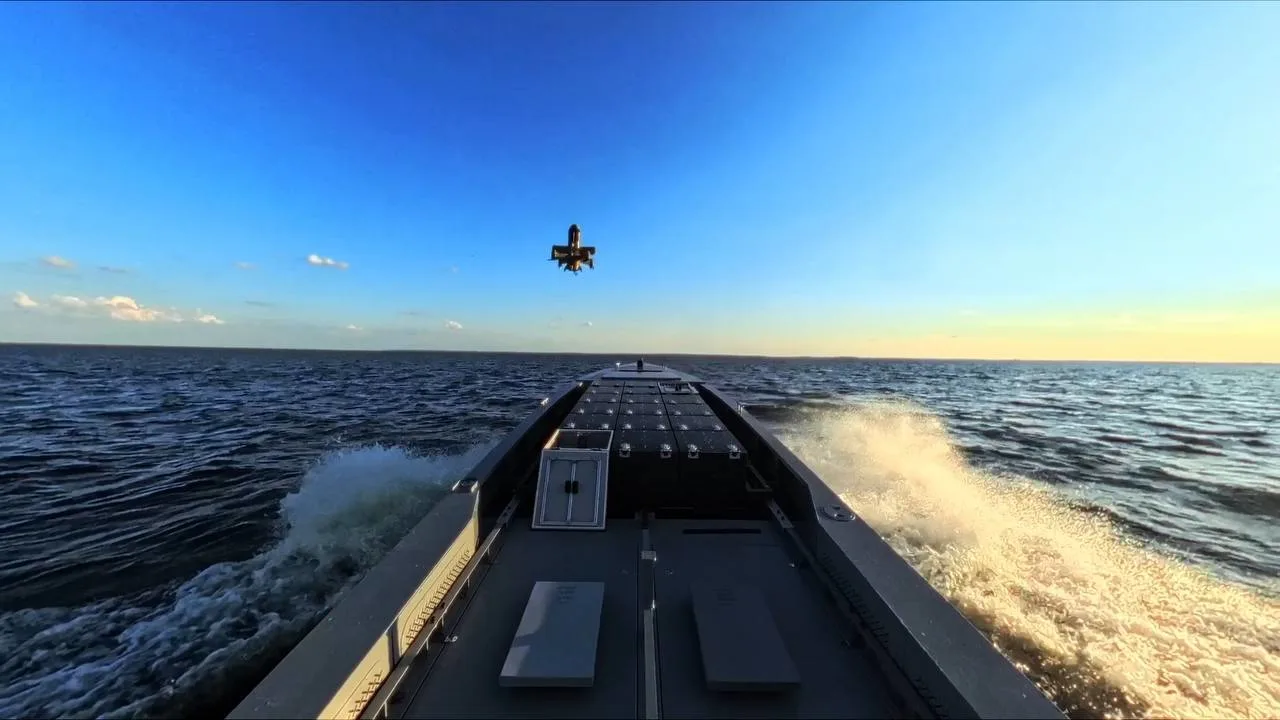
Sting interceptor drone злітає з безекіпажної платформи Magura MV11. Фото: "Дикі Шершні"
In this edition of Dorozvidka:
- NYT journalists published findings from a Defence Ministry audit: Ukraine lost $1.2 billion on procurement in 2024;
- Sting interceptor drones were integrated onto Magura MV11 maritime UAVs;
- New missiles developed by Ukraine’s Luch Design Bureau were showcased at MSPO in Poland;
- What Brave1 CEO Andrii Hrytseniuk told Forbes;
- Eric Schmidt offered $25 million for Vyriy. Its founder, Oleksii Babenko, now values the company at $2–5 billion;
- Fire Point CEO Irina Terekh told CBS News that the FP-9 ballistic missile will strike Russia by the end of the year;
- Italy’s Michelangelo air defence system will be tested in Ukraine by the end of 2026.
NYT publishes findings from Defence Ministry audit: Ukraine lost $1.2bn on procurement in 2024
Ukraine lost around $1.2 billion on defence procurement in 2024 due to fraud, waste and mismanagement, The New York Times reports. The newspaper obtained audit results from the State Audit Service and the Defence Ministry covering 2024–2025. The findings had not been made public before.
According to the audit, seven of the Defence Ministry’s 10 largest suppliers continued to receive new contracts despite ongoing criminal investigations, previous failures to fulfil contracts, or their executives being suspects or defendants in corruption cases.
Auditors also identified 18 companies that signed new deals after failing to fulfil previous contracts. Six of them had not fulfilled a single contract.
In one case, a company failed to deliver any of the 600 specialised drones it had agreed to supply to the military, but later received a new contract for another 1,950 drones. Only 50 were delivered on time.
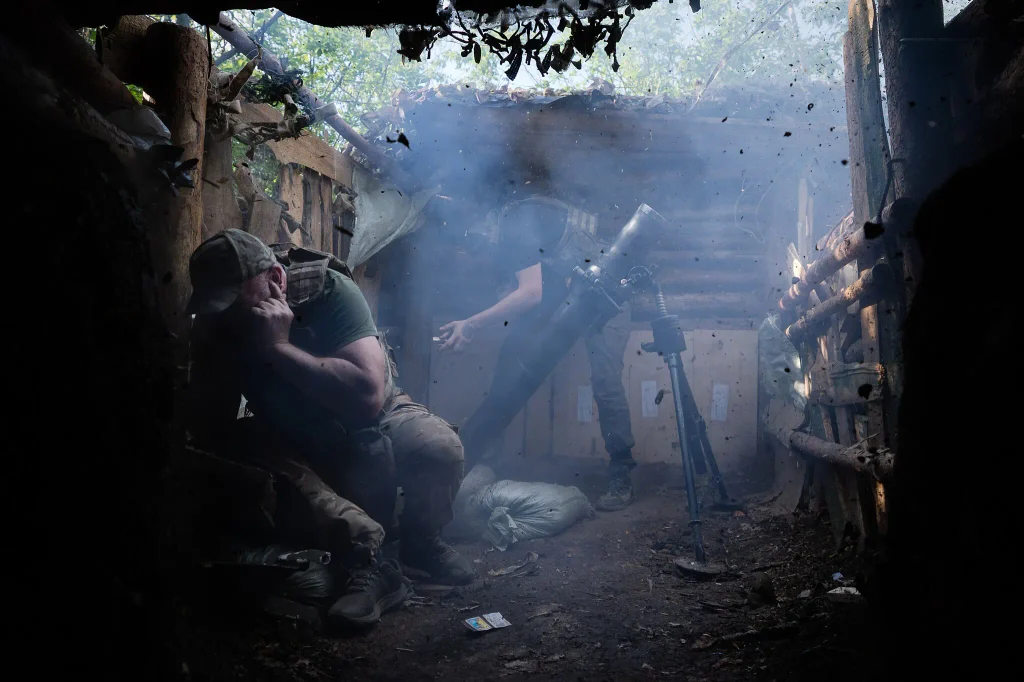
Companies also received contracts without proving they could supply the required weapons or even without the necessary licences. In one case, a Turkish manufacturer warned the Ukrainian side that it could not supply the quantities an intermediary promised, but Ukraine signed the contract anyway.
Another issue was the use of intermediaries. In one procurement case, Ukraine could have bought missiles directly from a Turkish manufacturer for about $4,200 each, but the contract went to an intermediary at around $5,100 per missile. According to the NYT, this increased the bill by roughly $130 million.
Auditors attributed another $126 million to bypassing lower bids and overpayments. In a separate case, at least $100 million in advance payments remains disputed after a deal collapsed.
Sting interceptor drones integrated onto Magura MV11 USV
The Wild Hornets has demonstrated integrating its Sting interceptor drones onto the MV11 naval drone developed by UFORCE.
The interceptors are mounted in protected compartments on the maritime drone and secured inside using four guide tubes.
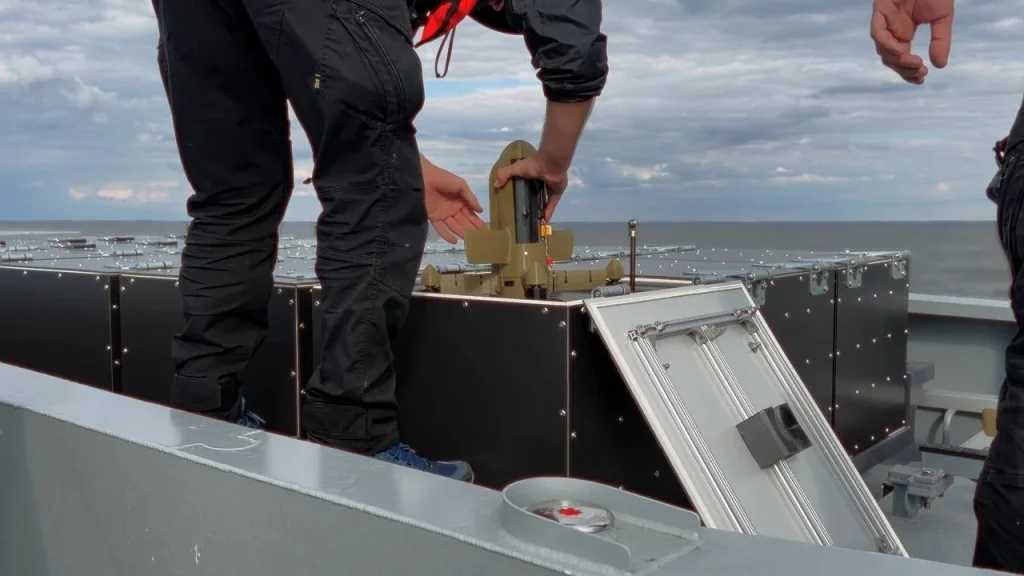
The Sting interceptors are controlled via the Hornet Vision Ctrl system, which allows them to be operated from hundreds of kilometres away.
Luch missiles showcased at MSPO in Poland
The MSPO 2026 defence exhibition is taking place in Poland from September 8 to 11 and features a range of Ukrainian developments. Among them, the state Luch Design Bureau has brought several new missiles, according to Oboronka.
At MSPO, Luch unveiled the RK-2PZ surface-to-air missile for the first time. Based on the Stugna anti-tank missile, it is designed for use with the Desna surface-to-air missile system or, after the necessary upgrades, a Soviet-era Strela-10 system.
The missile weighs 29 kg and carries a 6.1 kg high-explosive fragmentation warhead. It uses proximity fuzing based on onboard sensors and also supports direct impact. The missile is reportedly intended to engage heavy strike UAVs.
Luch also presented the RK-19 missile, developed for Osa air defence systems. The missile can intercept subsonic and supersonic aerial targets at ranges of up to 10 km and altitudes of up to 5,000 metres. Its flight speed reaches 600 m/s.
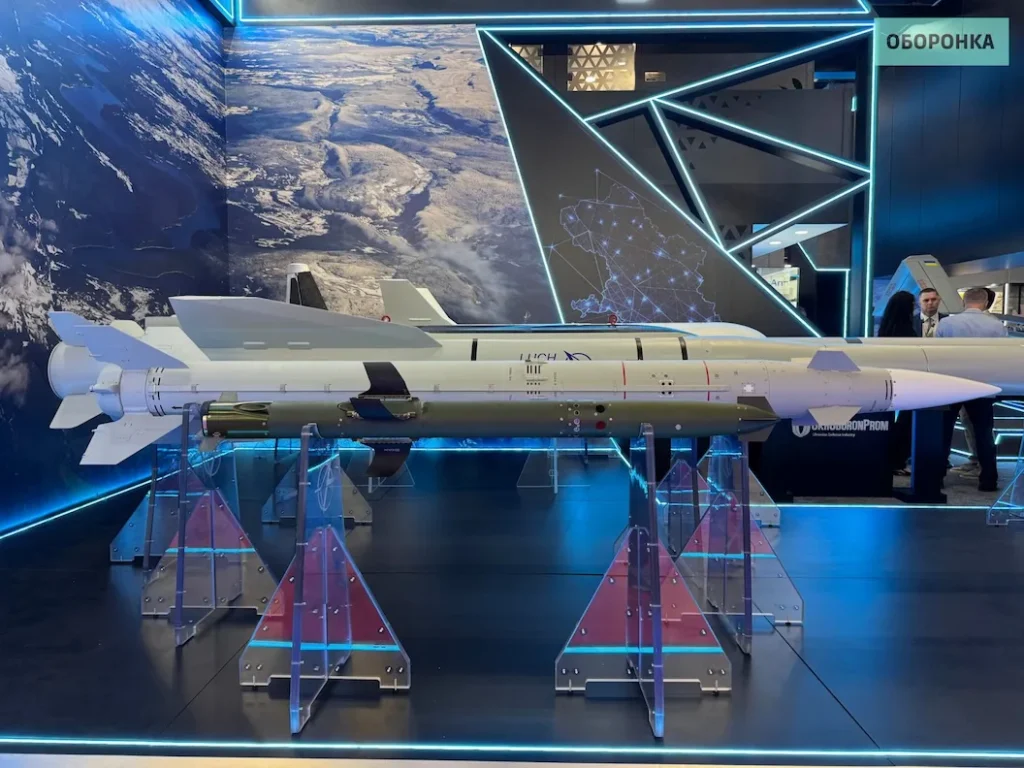
Finally, Luch specialists have developed the R-624MS guided munition for the Vilkha multiple rocket launcher system, with a range of 110 km. The missile is a further development of the Vilkha-M project and adjusts its flight based on pre-set coordinates throughout the trajectory using satellite navigation and an onboard inertial system.
The missile is designed to engage ground targets at ranges of up to 110 km and carries a 220 kg warhead.
Brave1 CEO Andrii Hrytseniuk on Ukraine’s defence tech sector
The last crystal for interceptor missile seeker heads was produced in Ukraine in 2008, says Andrii Hrytseniuk, CEO of the state defence technology cluster Brave1, in an interview with Forbes Ukraine. The technology was subsequently lost, while only eight countries in the world still possess it, including Russia. Without these crystals, Ukraine cannot produce small air defence missiles — one of the potential responses to Russia’s jet-powered Shaheds.
Hrytseniuk also discussed ways to overcome the crystal shortage, whether Ukraine can produce 10,000 short-range air defence missiles by winter, how many missiles companies use to bring a product to the battlefield, and what is preventing Ukraine from intercepting Russian glide bombs.
Eric Schmidt offered $25m for Vyriy. Its founder now values the company at $2–5bn
American businessman Eric Schmidt wanted to acquire Oleksii Babenko’s Vyriy Industries for $25 million. Babenko disclosed this in an interview with LIGA.NET.
Vyriy is now one of Ukraine’s largest drone manufacturers. Babenko said the company’s turnover exceeded UAH 10 billion in the first six months of 2026 and that it expects a significantly higher figure for the full year.
The founder estimates Vyriy Industries’ current valuation at between $2 billion and $5 billion. In the interview, Babenko also discussed changes in the Defence Ministry’s leadership, the company’s corporate bond issuance, the State Bureau of Investigation case involving allegations against the company, and the technologies he believes are still missing from the battlefield.
Fire Point CEO Irina Terekh on CBS News: FP-9 ballistic missile to strike Russia by year-end
Fire Point CEO and CTO Irina Terekh spoke to CBS News. She said Fire Point could be worth more than $5 billion and that drones currently account for two-thirds of the deep strikes against targets in Russia, with FP-1 among the systems being used.
Terekh also said that Fire Point’s FP-9 ballistic missile, capable of reaching Moscow, will strike Russia by the end of the year.
Italy’s Michelangelo air defence system to be tested in Ukraine by the end of 2026
Italian defence giant Leonardo plans to test its Michelangelo air defence system in Ukraine by the end of 2026, Leonardo CEO Lorenzo Mariani told Bloomberg.
Leonardo’s Kyiv-based subsidiary is involved in developing the system. Defender Media reported on its opening on August 25.
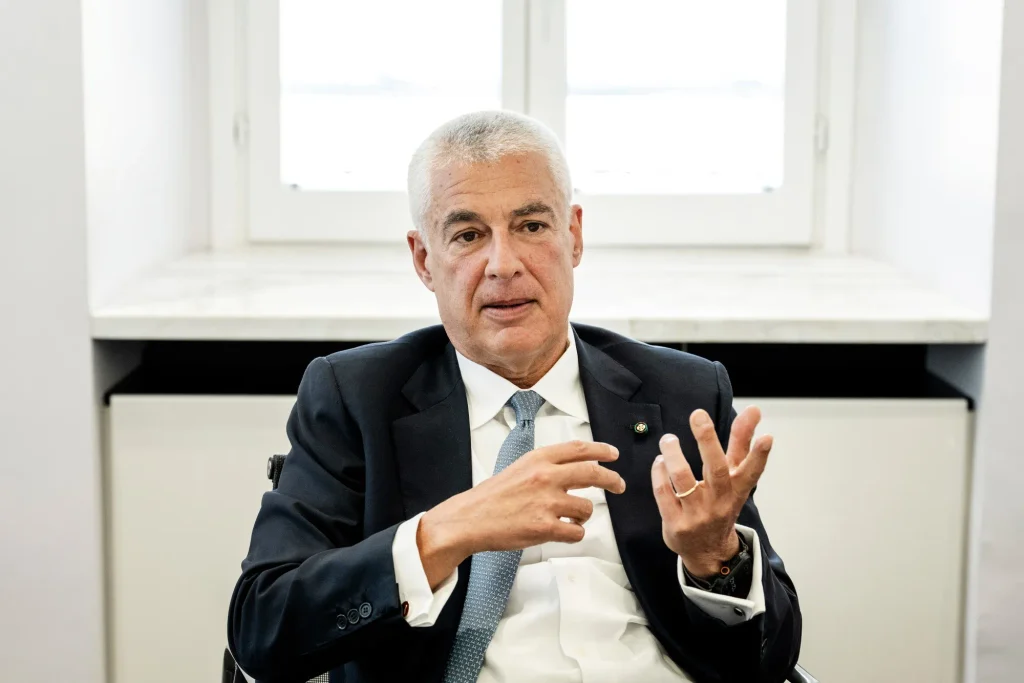
“Leonardo is already testing a component of the counter-drone system in Italy and will initially deploy the artillery layer in Ukraine,” Bloomberg reported.
The Italian company’s CEO also said the Kyiv-based subsidiary would allow Leonardo to strengthen cooperation with Ukraine’s defence sector. Mariani said the company is considering investments, acquisitions and other forms of partnerships.
Reading now
1

380+ vacancies in Ukrainian defence tech from Fire Point, DevDroid, UFORCE and others
2

A new Ukrainian fund, WildField Ventures, plans to invest $10-15 million in 20 dual-use startups. What areas is it interested in
3

230+ vacancies in Ukrainian defence tech from Tencore, Zvook, Airlogix and others
4
SkyFall unveils new StarGate hexacopter for casualty evacuation
5
Ukrainian units conduct “world’s first airborne evacuation from the frontline” using Audag-6 drone
By submitting this form, you give Defender Media consent to the processing of personal data.
Надсилаючи цю форму, ви надаєте Defender Media згоду на обробку персональних даних.

Latest news
1

Himera and Danish GomSpace launch OBRIA NANO – a test satellite for the future Ukrainian communications network
2
TAF Industries and DoD Solution have integrated the Aura autonomy module into the Kolibri 10 Advance FPV drone
3

Buntar Aerospace forms an advisory board. The first member is a co-founder of the Delta system
4
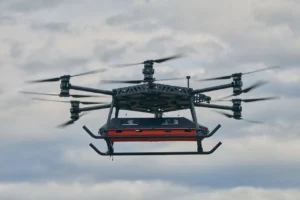
CODE 9.2 fighters evacuate two wounded soldiers with SkyFall’s StarGate aerial casevac drone
5