PG Robotics unveils upgraded Lucky Strike-1.5 drone with up to 4kg payload for remote mining
The company has substantially upgraded the tactical bomber, which has been used on the front line since 2023
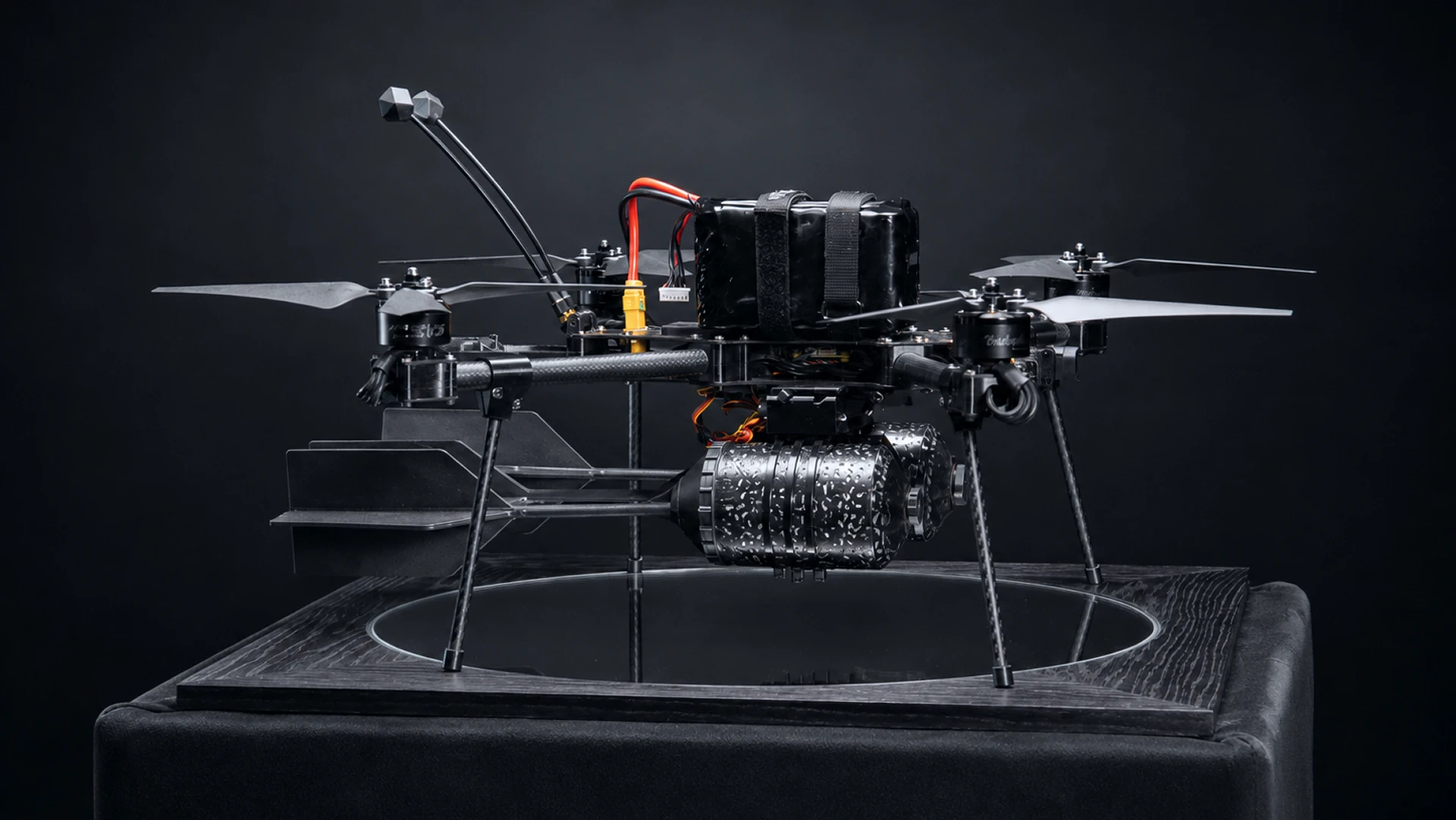
Lucky Strike 1.5 UAV. Manufacturer's photo
The Ukrainian company PG Robotics has upgraded and launched serial production of the Lucky Strike-1.5 bomber drone.
As Defender Media learned from the manufacturer, the drone has received more powerful motors, an upgraded power supply system and an increased payload capacity of up to 4 kg. At the same time, the manufacturer has retained the control system of the previous version and compatibility with its ground station.
The increased payload capacity has expanded the range of tasks the drone can perform. The configurations stated by the manufacturer include light logistics, infantry support, fire strikes, remote mining, operation with relay equipment, destruction of drones waiting for targets, as well as searching for and evacuating drones from the battlefield. The upgraded version also supports the use of a four-barrelled shotgun.
For remote mining, the Lucky Strike-1.5 can be equipped with three hardpoints. The platform supports a drum-type release system for six mines or for three aluminium cassette modules, each containing three mines. The nine-mine configuration uses the drone’s maximum payload capacity.
Depending on the payload, the Lucky Strike-1.5 has a tactical radius of 10 to 17 km, while flight endurance ranges from 20 to 50 minutes.
The Lucky Strike-1.5 also features active cooling for the video system. According to the manufacturer, this solution had previously been added to earlier modifications in response to user feedback.
Compatibility with the Lucky Strike-1 ground station allows units already using the previous version of the system to operate the Lucky Strike-1.5 without replacing the ground equipment.
Earlier, PG Robotics presented the Lucky Strike-2 reconnaissance-strike drone, which underwent testing in real-world conditions and uses frequency-hopping communications to operate in conditions of electronic warfare. In July, the company unveiled its upgraded Lucky Strike-2.1 version with a new computing platform, Salamandra optical navigation and a digital communications channel with automatic frequency switching.
Reading now
1
SkyFall officially unveils Thor Hammer mid-strike and announces 1,000+ km version
2

260+ vacancies in Ukrainian defence technology at BlueBird Tech, Sine Engineering, Buntar Aerospace and more
3
British-Ukrainian Occam Industries raises €3.8m. The funds will go towards scaling drone autonomy software
4
Terra Drone acquires 50% of Ukrainian Kurin Technologies for $3.5 million
5

Autonomous interceptor drones need radars to work. Why is there still a lack of them
By submitting this form, you give Defender Media consent to the processing of personal data.
Надсилаючи цю форму, ви надаєте Defender Media згоду на обробку персональних даних.

Latest news
1
Tencore launches an ecosystem to bring together UGVs and components from several manufacturers
2

Defense companies may see staff deferrals cut from 100% to 85%
3
Japan signs contract with Ukrainian company SkyFall to procure interceptor drones
4
260+ vacancies in Ukrainian defence technology at BlueBird Tech, Sine Engineering, Buntar Aerospace and more
5