
Dwarf Engineering CEO Vladyslav Piotrovskyi on the importance of arms exports and drone standardisation
What Ukrainian defence tech is teaching foreign companies — and when to expect a home-grown unicorn

At the DOU Day conference, Dwarf Engineering CEO Vladyslav Piotrovsky shared his thoughts on the strategic challenges and opportunities for Ukrainian defence tech. His speech was a call to action for the entire industry – to develop simple, effective solutions that can be quickly scaled and to expand into international markets to maintain Ukraine’s technical and market advantage. Defender Media highlights the key takeaways from his speech.
Сooperation with European and American companies
Foreign defence tech is many times slower than ours. In Ukraine, you can develop a product, complete codification, and approach a contract in three months. Abroad, the contracting process often stretches to a year and a half. A developer must stay in constant contact with partners, present developments, persuade them to test, and gather feedback. As a result, entering foreign markets is extremely difficult.
One way to speed up this process is to become a subcontractor to a foreign company that holds the contract, or to establish joint ventures. It’s a common arrangement: you create a legal entity together — they handle the legal side, and you handle the product. Most such collaborations are simply tools for expanding market reach.
You can’t just ‘walk into’ the American or, say, German market. It’s not possible. The quickest way is to build a relationship with a local company, give them a percentage, and use them as your legal representative.
Why foreign defence companies are entering Ukraine
The decision by international companies to open offices in Ukraine is strategic. The current military context is changing global standards in the defence industry. Many players realise that without operating in Ukraine, they may lose competitiveness within five years.
At the IDEX exhibition in Abu Dhabi, 90% of the weapons on display were already obsolete from the perspective of our war. Tanks without active protection systems can be destroyed by drones costing a thousand dollars, yet they cost millions. Their EW and counter-EW systems no longer function in our conditions.

Ukrainian solutions are both cheaper and more effective — they have the potential to radically reshape the global market. It’s also logistically challenging for a foreign company to move operations to Ukraine, especially during wartime. Instead, they often acquire Ukrainian companies to gain legal presence, access to defence technologies, Ukrainian engineers, and field testing — which remains difficult to obtain, even for domestic firms.
Scaling as a strength factor
Russia’s defence industry benefits from a centralised structure and lack of regulatory barriers. While many of its developments are technically crude, mass production makes them effective in combat. Even drone guidance systems assembled from Chinese components and glued together with hot glue are deployed against Ukrainian forces.
The Russian Federation can push equipment into production without regard for quality or cost-effectiveness. This approach contrasts sharply with Ukraine’s system, where contracts are subject to competitive tendering, inspections, and efficiency justifications.
They’re very good at stealing designs, then using their totalitarian system to scale production. We’ve learned how to build tech solutions quickly — but we’ve yet to master scaling.
Betting on software flexibility
One of the key priorities in Ukrainian defence tech is the standardisation of drones with updatable software. This means integrating onboard computers that allow changes in functionality without physical alterations.
All drones must be built on a platform where various software can be uploaded. That way, any update can be implemented within a day.
The ability to upgrade quickly, process new signals, add detection systems, and adapt to battlefield changes should become a decisive advantage over Russian “disposable tech”.
If any change can be rolled out to all drones in a day, we can outpace Russia’s mass production through the rapid deployment of intelligent solutions.
What Ukrainian defence tech should learn from the West
One of the main differences between Ukrainian and Western defence-tech startups lies in how they approach sales and investment. Western startups often sell an idea first and only build a product afterwards. Ukrainian engineers typically spend their own resources to create a working prototype before seeking investors.

Another contrast is the boldness of Western firms. It’s normal for them to claim a solution is “unique” — even if it doesn’t yet work. They then refine the product once contracts are signed. Ukrainian startups, by contrast, often hesitate to go public until they’ve achieved tangible results.
Nevertheless, Ukrainian developers are not technically inferior — and often win on cost.
Western firms focus on long-term threats, from hypersonic weapons to future rearmament. In contrast, Ukraine’s experience offers a rare example of real-world combat testing. But despite growing interest, international partners often don’t know how to engage.
Will there be a Ukrainian unicorn?
Ukrainian defence companies have the potential to become unicorns — but only if they enter foreign markets.
Relocating a company abroad immediately increases its valuation, even without product changes. This is due to improved access to capital, partnerships, and markets. Foreign players are already showing interest in Ukrainian innovations, especially in drones and software — and may acquire companies or poach talent in future.
To preserve their technological edge, Ukrainian firms should not only go global but also partner with promising international players. This will help them retain control over intellectual property and strengthen their position in the global defence value chain.
Foreign defence companies are doing the same things we do here in Ukraine — except they have off-the-shelf solutions. Meanwhile, we have an incredible number of ideas, and every day we’re achieving what once seemed impossible.
Ukrainian businesses must act proactively — selling their products first, rather than waiting to be acquired.
Reading now
1
Ukrainian SkyFall’s drone wins at Pentagon’s Drone Dominance selection
2
Black Forest Systems raises $400,000. Here’s what drones the startup is building
3
Sting interceptor by Wild Hornets downs costly Russian Granat-4 reconnaissance drone
4
UForce unveils Bucha middle-strike drone with a 200 km range
5
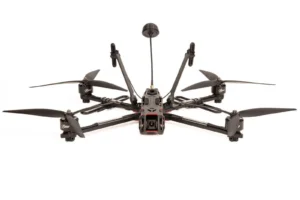
The F10 drone becomes the second Ukrainian finalist in the Pentagon’s Drone Dominance Program
By submitting this form, you give Defender Media consent to the processing of personal data.
Надсилаючи цю форму, ви надаєте Defender Media згоду на обробку персональних даних.

Latest insights
1
What defence manufacturers need to know about Defence City — insights from the UCDI’s Head of GR
2
“In a year, my unit destroyed over 3,000 aerial targets.” Maksym Zaichenko on the 3rd Army Corps air defence system
3

Intelligence dependence as a strategic vulnerability: From satellite constraints to autonomous analytical platforms
4
A full-cycle unmanned business: Drone Fight Club founder Vladyslav Plaksin on manufacturing, pilot training, and investment
5