How veteran leadership can reshape Ukrainian business: 5 key lessons
Military career consultant on the role of veterans in business

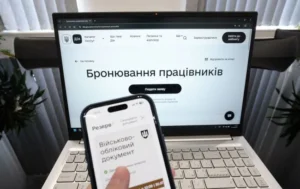
Among the founders of Ukrainian defence tech startups are many veterans of the war. One notable example is Trypillian – a startup that recently received a $5 million investment from former UK minister Brooks Newmark. Together with recruitment agency CORE Team, Defender Media explores the broader landscape of veteran-led business in Ukraine — including beyond the defence sector. In this first piece of the series, Ivan Afonin, a veteran and advisor at CORE Team, shares insights on which military-honed qualities are helping veterans succeed in business.
According to the Ministry of Veterans Affairs, there are already around 1.3 million veterans in Ukraine — a number that could rise to 5–6 million, including family members, after the war ends.
Once peace is secured, Ukraine will face not only global business challenges but also unique post-war economic recovery hurdles. While business depends on sound management skills, it is leadership that becomes essential in times of turbulence. Ukrainian veterans — even those who didn’t serve on the front line — are bringing to business environments the mindset shaped by operating under extreme uncertainty and risk.
1. Decision-making under pressure
What makes it into the newsfeed is just the tip of the iceberg. On the front line, conditions can change by the minute. Sometimes, there are only seconds to make a critical decision. Commanders often act without full information and may even have to defy orders — while fully aware of their responsibility for their unit.
Businesses frequently seek people who are not afraid to take the initiative. In veterans, they can find exactly that — individuals who operate on the principle: “There is no perfect moment to act. Do what you can with what you’ve got.”
2. Teamwork over ego
In the military, your pre-service background — whether IT, agriculture, or university — doesn’t matter. In combat units, success depends on how well everyone works together. People learn to listen, to take responsibility not just for themselves but for the whole team. Victory depends not only on the skills of those on the front line, but on the cohesion of logistics, command, support, and reconnaissance.
In business terms, this is the difference between an “all-star team” and a “team of stars”. Veterans can foster this team-first culture — encouraging mutual support, collaborative problem-solving, and post-action reflection, even amid uncertainty.
3. Discipline and responsibility
In the Armed Forces, discipline isn’t just cultural — it’s a matter of survival. Tasks must be completed precisely and on time. While initiative is valued, from day one of basic training every soldier learns that others’ lives may depend on their actions.
This mindset carries over into business as a strong sense of ownership, detailed planning, and attentiveness. Veterans rarely say, “That’s not my problem.” We’re talking, of course, about the generation shaped by a decade of war.
4. Crisis management as routine
Look at the daily life of a frontline brigade or battalion, and it may seem like constant firefighting. While that’s not entirely accurate, soldiers do face unpredictable crises daily — namely, enemy actions. You can’t always plan for a bomb wiping out an irreplaceable observation post. Every day becomes a chain of emergencies that must be resolved instantly — without losing operational effectiveness.
In business, this translates into resilience during economic downturns, shifting market conditions, or other challenges. Military service gives veterans a sort of immunity to panic. They’re used to operating with minimal resources and delivering maximum results.
5. Hierarchy and trust – not about control, but support
Military hierarchy isn’t about authoritarianism — it’s about clarity: who’s responsible, who makes decisions in a crisis, who can be relied on. At its core are people, and trust is the foundation. If a commander breaks promises, avoids accountability, or fails to support initiative, the unit loses effectiveness.
In business, this becomes a healthy organisational culture built on shared values. A leader isn’t a ruler, but someone who leads by example, with clear roles and mutual respect across the team.
Leading by example
The most powerful asset veterans bring to business is leadership by example. In a healthy team environment, they don’t wait for permission, hide behind orders or bureaucracy. They take initiative, deliver on promises, and work alongside others toward a common goal.
Being a strong subject-matter expert with good managerial practice is valuable — but not enough. Leadership enhances expertise, and leadership by example shapes strong company culture. This is precisely what Ukraine needs today — not just on the battlefield, but in its economy, tech sector, and public administration.
Afterword
Hundreds of Ukrainian veterans have already returned to civilian life and are thriving as entrepreneurs, managers, or consultants. Their stories aren’t just “inspirational” — they represent a new standard of leadership. Leadership grounded not in theory, but in action. And that is the kind of leadership that can transform business — and with it, Ukraine itself.
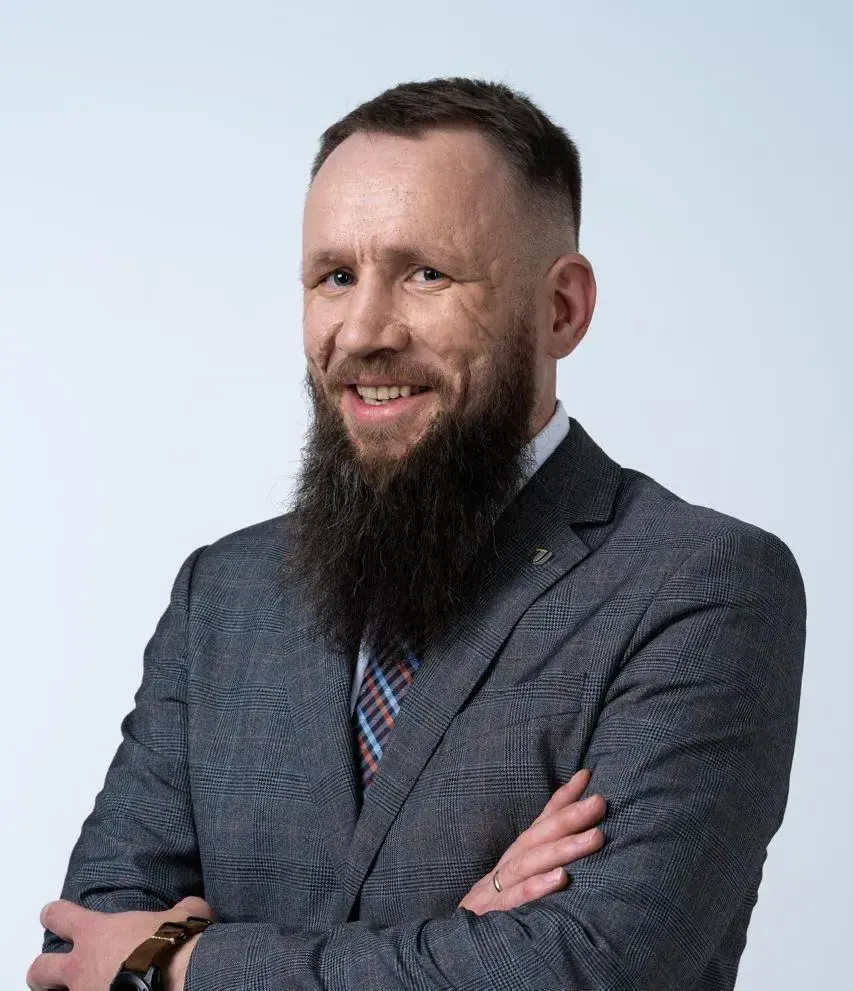
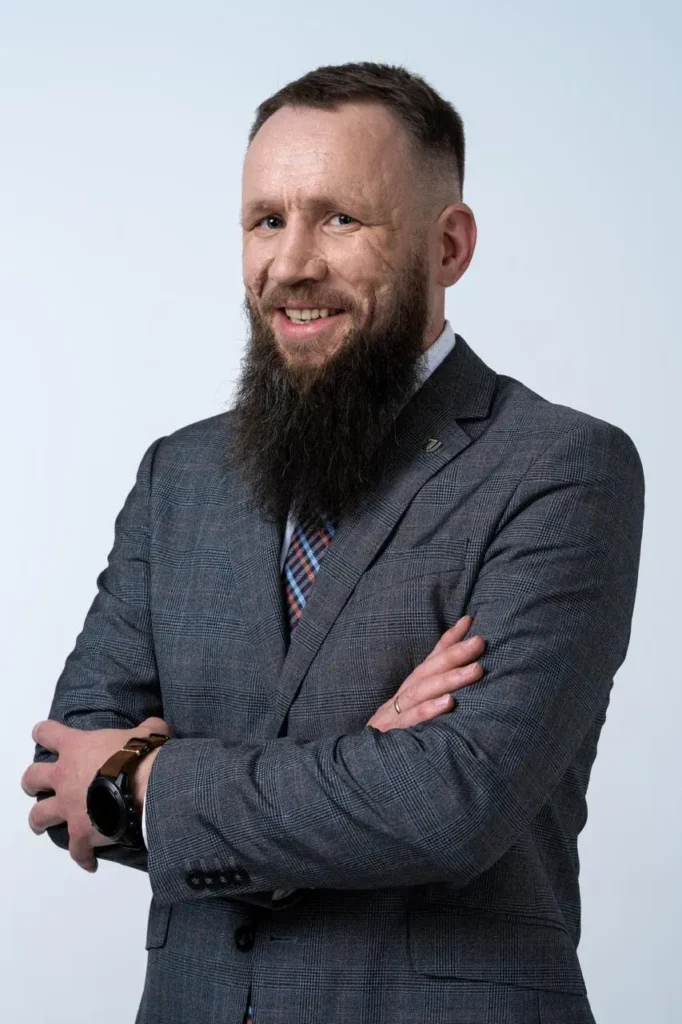
Ivan Afonin
CORE Team advisor, veteran of the Russian-Ukrainian war, military career consultant
Reading now
1
Ukrainian SkyFall’s drone wins at Pentagon’s Drone Dominance selection
2
Black Forest Systems raises $400,000. Here’s what drones the startup is building
3
Sting interceptor by Wild Hornets downs costly Russian Granat-4 reconnaissance drone
4
UForce unveils Bucha middle-strike drone with a 200 km range
5
The F10 drone becomes the second Ukrainian finalist in the Pentagon’s Drone Dominance Program
By submitting this form, you give Defender Media consent to the processing of personal data.
Надсилаючи цю форму, ви надаєте Defender Media згоду на обробку персональних даних.

Latest insights
1
What defence manufacturers need to know about Defence City — insights from the UCDI’s Head of GR
2
“In a year, my unit destroyed over 3,000 aerial targets.” Maksym Zaichenko on the 3rd Army Corps air defence system
3
Intelligence dependence as a strategic vulnerability: From satellite constraints to autonomous analytical platforms
4
A full-cycle unmanned business: Drone Fight Club founder Vladyslav Plaksin on manufacturing, pilot training, and investment
5