Iryna Terekh on becoming Fire Point CEO and the antitrust setback in the EDGE Group deal
Fire Point expects the Antimonopoly Committee to eventually approve the UAE deal — even if not on the first attempt
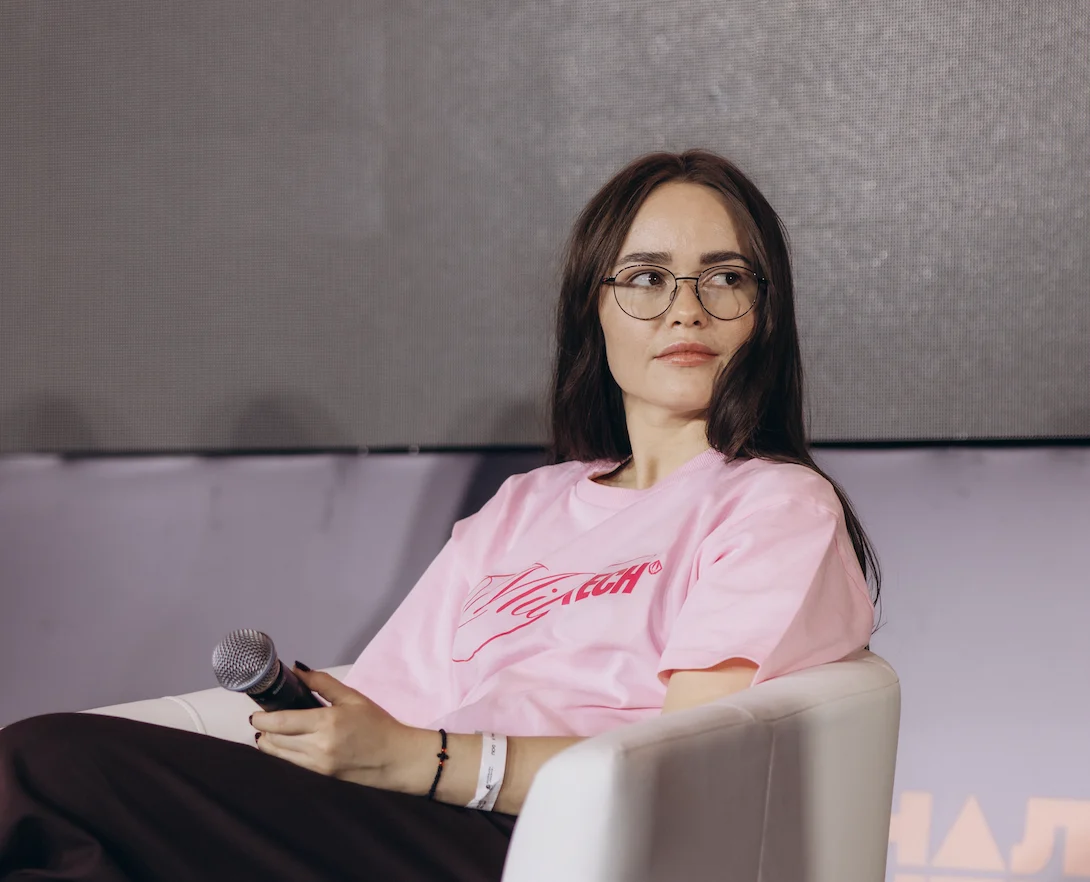
Iryna Terekh at the Arsenal of Talents event on 14 March 2026. Photo: Misha Zaitsev
Iryna Terekh has recently taken on the role of CEO at Fire Point in addition to her duties as CTO. The change became known during her appearance at the Arsenal of Talents event organised by Lobby X and DOU on 14 March in Kyiv. Defender Media spoke with Terekh on the sidelines of the event.
The conversation covered the second test launch of the FP-7 ballistic missile, the company’s work with the Antimonopoly Committee of Ukraine regarding its deal with the UAE sovereign fund EDGE Group, the FP-1 drone platform in an interceptor role, and the construction of a rocket engine plant in Denmark.
How recently was the CEO role added to your Fire Point résumé?
Not long ago, we are still in a transition period. In reality, my responsibilities had long gone beyond the formal CTO role. I had already been doing many CEO-type tasks, including working with international partners, strategic business development and communications. So in a sense, we simply formalised what I had already been doing.
You mentioned interesting updates on the FP-7 ballistic missile…
Yes, the rocket’s second test launch took place on 14 March. It actually happened almost live while we were speaking at Arsenal of Talents. The launch was successful. We are now collecting data and analysing the telemetry. More detailed information will have to wait a little.
Is it true that the Antimonopoly Committee blocked your deal with EDGE Group?
Yes, but it’s completely normal for the committee not to approve an application the first time. Our initial filing was returned, so we added the required documents and resubmitted it. This is a normal process — deals are often approved on the second or third attempt. We are interested in providing all required documentation in full to comply with the state’s requirements for Ukrainian manufacturers, rather than seeking ways to bypass them to attract this capital.
Part of Fire Point’s strategy is to set a new standard of transparency not only in the defence tech market but in the Ukrainian business environment more broadly. Therefore, ensuring our actions comply with both international and Ukrainian standards is a priority.
So you have not received signals from the government that the deal will fundamentally not be approved?
No, we have not received such signals. I believe we would be told directly if that were the case. Otherwise, I see strong support from Ukraine, including in obtaining the documents and permits we need, although the process does not move as quickly as we would like.
Is it true that Fire Point produces interceptor drones?
No, we do not. We have a combined project that uses the FP-1 platform as a carrier for interceptor drones. There are also FP-1 versions equipped with machine guns and anti-aircraft weapons — they also serve in interceptor roles against enemy UAVs, but we are not developing a separate interceptor drone product line.
You said the company now has 67 production sites, 66 of them in Ukraine. How is your Danish plant progressing?

Right now, we are building the facility and obtaining all the necessary permits to start production — environmental approvals, waste management, and so on. It turned out to be a bit more complicated than doing this in Ukraine, but not as difficult as I expected. For the European system, it is also a challenge to adapt to the wartime pace of life we have become used to in Ukraine.
We hope to open the first stage of the plant in 2026 and the main stage most likely the following year. The plant will produce rocket engines — that means rocket fuel, casings and connecting components for other parts of the missile.
It is important to understand that we are opening a chemical plant in one of the most environmentally conscious parts of Europe. This is the first Ukrainian investment project of this kind: a chemical plant, hazardous materials, and defence industry production. Many things are happening for the first time, so naturally, not everything goes smoothly. It is not the same as opening an FPV drone assembly line — it is a bit more complicated, but that does not mean it is impossible. For us, it is extremely interesting and valuable to act as an icebreaker in the new security architecture not only of Ukraine but of Europe.
What other international projects are you developing besides Denmark?
I cannot disclose details yet, but several governments are very interested in adopting our company’s experience to strengthen their defence capabilities. It is not even about purchasing specific products — it is about acquiring our experience. They want to understand how we built our ecosystem: production, services and training. That is a large part of the work that goes beyond the product itself. We therefore now have several strategic partnerships in which, with our support, the governments of other countries are beginning to build similar ecosystems.
Are these countries in Europe or the Middle East?
Both.
You also shared interesting numbers about the Fire Point team during your presentation.
Yes. At the moment, we already employ nearly 5,000 people. About 25% work in R&D — roughly 1,200 people. Our team includes people aged from 17 to 92. The company currently has around 800 open vacancies.
We are constantly looking for people with technical education, a high level of motivation and a strong sense of patriotism. These are the basic qualities we work with. If we share the same values, core competencies and deep motivation, the chances of successful cooperation approach 100%.
Reading now
1
Ukrainian Skyeton secures $10.6M US army contract
2
Pentagon to hold Drone Dominance trials for bomber drones, with UFORCE, Gurzuf Defence, Grim Tech and others taking part
3
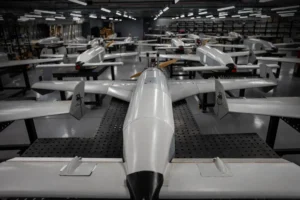
SkyFall officially unveils Thor Hammer mid-strike and announces 1,000+ km version
4

Frontline Robotics CBDO Mykyta Rozhkov: Ukraine and Norway are working on an autonomous system to protect maritime infrastructure
5
Terra Drone acquires 50% of Ukrainian Kurin Technologies for $3.5 million
By submitting this form, you give Defender Media consent to the processing of personal data.
Надсилаючи цю форму, ви надаєте Defender Media згоду на обробку персональних даних.

Latest news
1
120+ vacancies in Ukrainian defence tech companies: Osavul, M-Fly, Occam Industries and more
2
Tencore CEO Maksym Vasylchenko to head the board of Ukrainian Council of Defence Industry, replacing Oleksandr Kamyshin
3
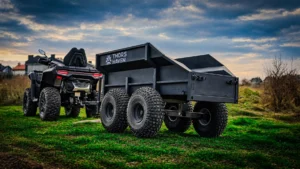
THOR’S HAVEN presents mobile modules for command and medical posts on the front line
4
Lithuania deploys Ukrainian SkyFortress air target detection system
5