Black Mirror #42: Naval drones in the Black Sea and the Dnipro, the first combat use of Monokhrom, and the stratospheric drone
A review of Russian military technology developments in the third week of January 2026
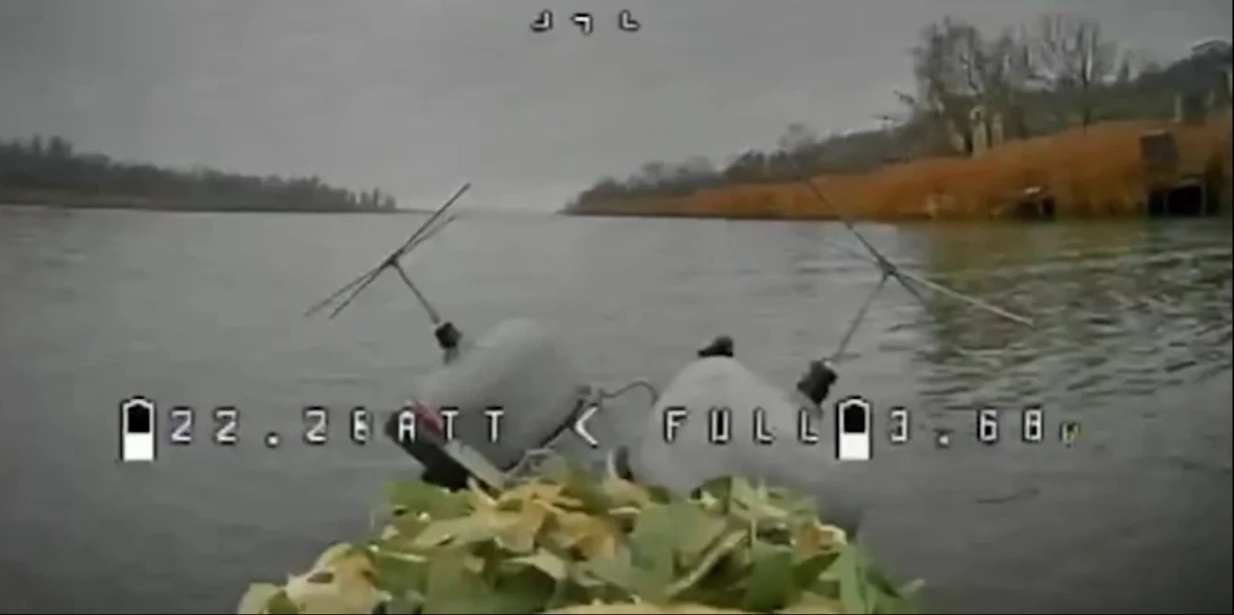
The Russian Armed Forces continue to refine long‑range strike drones of the Shahed and Geran types, while also employing unmanned surface vessels for terrorist attacks in the Black Sea and for mining sea routes. In the longer-term plans is the development of a stratospheric drone capable of reaching altitudes of up to 15 km and flying distances of up to 12,000 km. These and other new developments in Russian military technology are covered in Defender Media’s weekly review.
Unmanned surface vessels used to strike the port of Chornomorsk
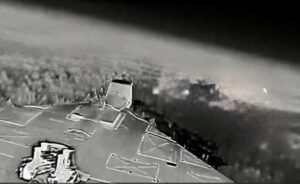
Reports have emerged of the first strike by a Russian kamikaze unmanned surface vessel against port infrastructure in the city of Chornomorsk in Odesa Oblast. According to preliminary assessments, the attack may have been carried out using modernised unmanned vessels of one of three types promoted by the Russian side as reconnaissance‑strike platforms.
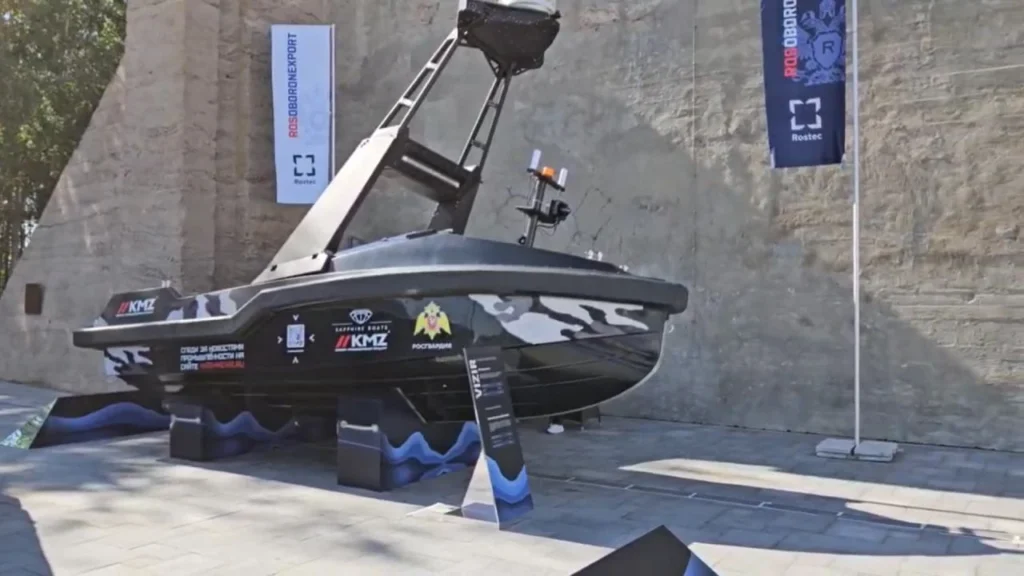
In particular, this refers to the GRK‑700 “Vizir” electro‑optical reconnaissance and strike USV with a specialised mast system for raising television and thermal imaging sensors to a height of 3.5–4 metres and a composite hull with a reduced radar cross‑section. The vessel is equipped with water‑jet propulsion powered by an engine of up to 350 horsepower, enabling speeds of up to 83 km/h and a range of around 200 km.
Among other possible options, the Russians also cite the “Orkan” USV with an extremely low radar cross‑section, very shallow draught, a payload of around one tonne and a speed of up to 85 km/h, as well as the ASV‑1000 reconnaissance‑strike USV.
All of the listed types of USV could theoretically be equipped with a Starlink terminal and a mesh module for remote control and objective monitoring, and likely also for the deployment of strike FPV drones directly from the vessel.
USV mine‑layer “Sirius‑82”
The Russian Ministry of Defence has for the first time publicised the use of “Sirius‑82” unmanned surface vessels in the Dnipro River area in Kherson Oblast. The vessels are capable of carrying two anchored river mines to control waterways and impede river crossings.
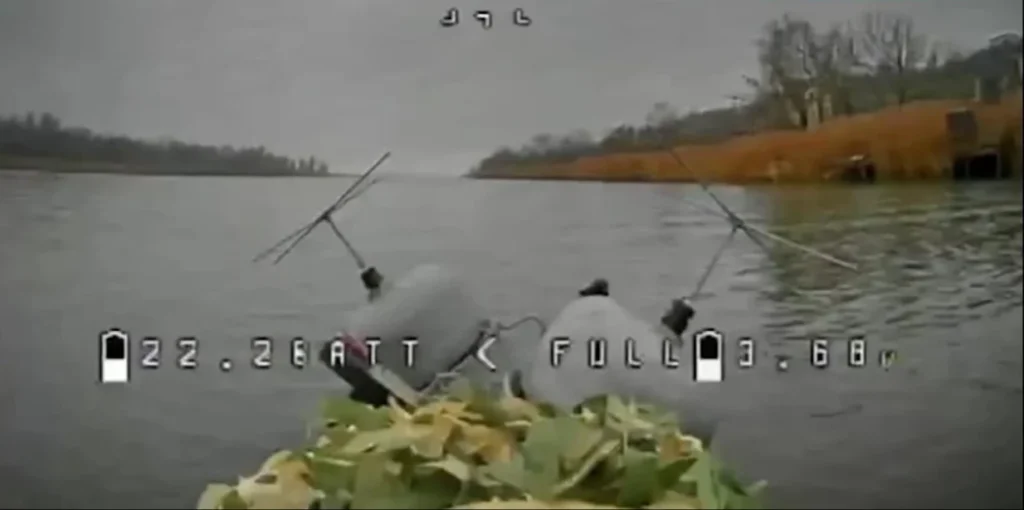
“Sirius‑82” can perform several roles simultaneously: in addition to laying mines, it can operate as a minesweeper and also as a strike vessel.
According to some reports, video demonstrating the use of “Sirius‑82” in combat conditions indicates the possibility of remote control using controllers similar to those used to operate FPV drones. The vessel’s specific technical characteristics have not been officially disclosed.
Drone‑missile S‑71K “Monokhrom”
The Russians have likely used a new strike drone‑missile based on the S‑71K platform to strike Kharkiv Oblast. According to Russian data, two modifications are known on this platform: the “Monokhrom” loitering munition, which can autonomously hover over a target and strike it without the direct presence of an operator, and the “Kover” tactical drone‑missile for engaging ground or surface targets whose coordinates are known in advance.
According to published information, the S‑71K platform has a flight speed of up to 0.75–0.8 Mach, a low‑altitude profile, a range of up to 350 km, and uses GLONASS/GPS navigation combined with artificial intelligence, a thermal imaging correlation sensor and a thermal imaging seeker; the presence of a command‑telemetry channel is also assumed.
It is noted that the “Kover” modification is designed for external carriage on Su‑35, Su‑30 and Su‑34 fighter aircraft, while “Monokhrom” is placed in the internal weapons bays of the Su‑57 fighter.
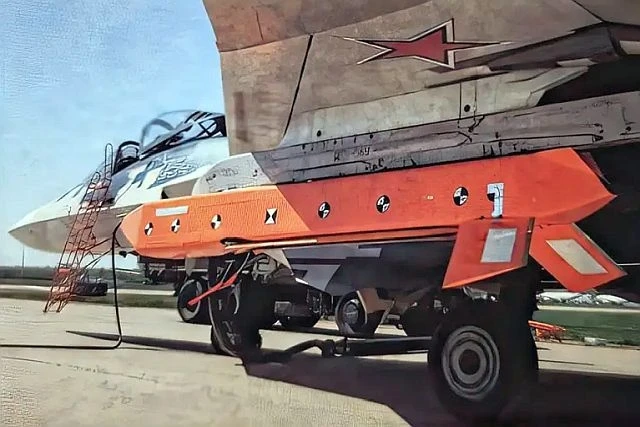
“Monokhrom” was first discussed back in 2024, but only now has there been talk of its use in the Russo‑Ukrainian war. It is known that “Monokhrom” has V‑shaped tail fins, folding wings and a small turbofan engine TRDD‑50, which is also used in the Kh‑59M and Kh‑101 cruise missiles. Russian commentators claim that the munition’s speed could reach 0.6 Mach and its flight altitude up to 8 km.
Strike drone “Khishchnik” capable of climbing to 15 km
The Russian company “Geron” has announced the creation of a stratospheric drone called “Khishchnik”, which, according to its developers, is capable of patrolling airspace at altitudes of up to 15 kilometres. The development is positioned not simply as a drone, but as a universal high‑altitude platform for long‑duration missions.
The declared characteristics of “Khishchnik” include an operating altitude of up to 15 km, a flight range of up to 12,000 km, a maximum speed of up to 550 km/h and a payload capacity of up to 500 kg. The aircraft is said to have vertical take‑off and landing with a hover mode, which, according to the developers’ concept, should simplify its operation from limited sites.
According to the developers, the drone will have a “monowing”, an onboard computer with elements of artificial intelligence, and a 3D spatial scanning system. Investment in its development is estimated at 230 million roubles.
Equipping Shahed with magnetic mines
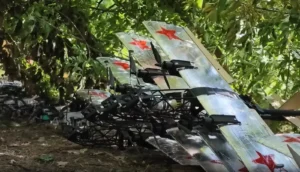
In various regions of Ukraine, cases have been recorded of PTM‑3 anti‑tank mines being dropped from Shahed‑type drones. Some of these incidents are linked to area mining, but often the mines are placed directly near the crash site of the drone itself, creating a threat to rescue services and police, writes Serhiy “Flash” Beskrestnov.
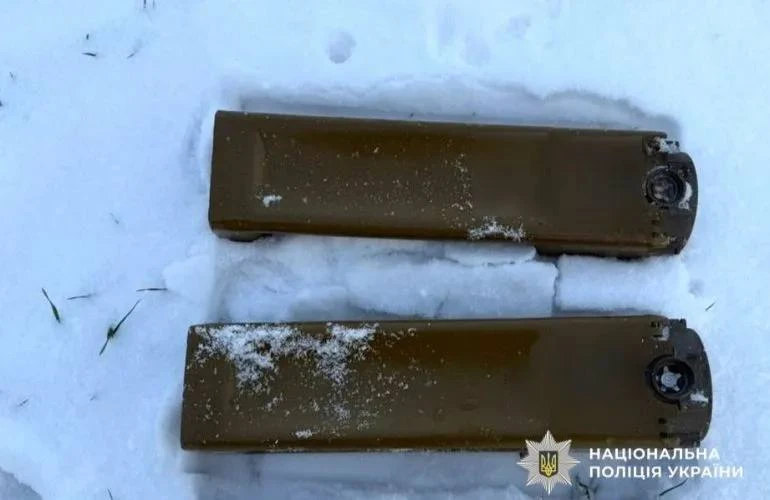
As noted, a particular danger is that the PTM‑3 mine has a magnetic detonator that can activate when a vehicle approaches or comes into contact with it. Similar cases had been recorded previously, but their number has increased due to weather conditions: deep snow makes visual detection of munitions more difficult.
Experts recommend not approaching a Shahed crash site by car, especially along its flight path, as the risk of detonation remains high.
Features of the warhead of the “Gerbera” UAV
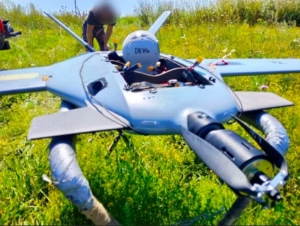
In “Gerbera”‑type drones, a warhead containing several kilograms of explosive is increasingly being observed. According to information from Serhiy “Flash” Beskrestnov, during flight the UAV sends a signal via two wires to arm the detonator, after which the charge detonates on impact.
In the case of a “soft” landing, the detonator may not explode, but remains in an armed state, creating a significant risk of an uncontrolled blast, including during transportation of debris in a car boot.
Developments of drones in the “Kniaz Vandal Novgorodskiy” family
The developers of the fibre‑optic FPV drone “Kniaz Vandal Novgorodskiy” are working on creating a loitering munition with a range of over 50 km and the ability to operate in tandem with “Vandal”. The new drone will be able to use an FPV as a communications relay, and the employment scenario will be similar to that of the “Lancet” drone.
In parallel, a jet‑powered strike UAV with a flight speed of over 500 km/h is being developed, though details of its use have not yet been disclosed.
It is stated that prototypes with a flight endurance of up to 3.5 hours are currently being tested, and work is underway on systems to detect Ukrainian interceptors and implement evasion algorithms.
Cargo drone “Mikhalych”
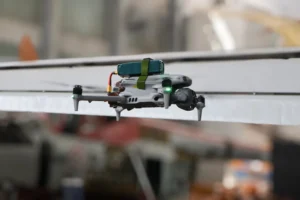
The Russian scientific and production centre “Svarog” is completing tests of a new cargo drone “Mikhalych”, whose main purpose will be to operate in kill zones along the front line.
According to Russian state agencies, the drone is positioned as a logistical platform for delivering cargo to places inaccessible to conventional transport. “Mikhalych” will be able to lift up to 10 kg and fly a distance of at least 20 km. The UAV is equipped with inertial and optical navigation systems, allowing it to perform missions without reliance on satellite signals, as well as to conduct flights in automatic mode with minimal operator involvement.
A distinctive design feature of the drone is said to be the placement of batteries along the sides of the fuselage, freeing internal space for additional equipment. According to the developers, this makes it possible to integrate additional modules onto the platform, including electronic warfare systems or communications terminals.
“Mikhalych” is currently at the stage of test flights, and the start of its practical use in the Russo‑Ukrainian war is expected from February 2026.
New experimental missiles for strategic aviation
The Russian Armed Forces have completed production of experimental samples of new air‑launched cruise missiles that they plan to use on Tu‑95MS and Tu‑160M strategic bombers. Among them is Kh‑BD‑K, a subsonic missile with a flight range of up to 3,000 km and a speed of up to 900 km/h, which is considered a further development and potential replacement for the Kh‑101 missile with a modified guidance system and low‑altitude flight to complicate detection by air defence systems.
In addition, the Kh‑99 hypersonic missile for Tu‑160M carriers has a maximum speed of approximately 6,600 km/h and a declared range of up to 5,500 km, making it one of the longest‑range air‑launched missiles in the arsenal. Another sample, Kh‑MTC, is a hypersonic anti‑ship missile with a speed of up to 4,200 km/h and a range of around 900 km, which is compared to the Soviet Kh‑22. All these missiles, according to reports, are manufactured entirely from Russian components and could be tested in combat conditions.
Furthermore, the annual review of Russian military publications refers to Russia’s plans for developing strategic weapons. In 2026, key stages of testing of the Sarmat intercontinental ballistic missile are expected to be completed; it was previously claimed to have already been placed on experimental combat duty.
In addition, the following are due to enter service with the Russian Navy:
- the Project 885M “Yasen” nuclear‑powered cruise missile submarine “Perm”, which will become the first regular carrier of the “Tsirkon” hypersonic missile;
- the Project 955A “Borei‑A” strategic submarine “Dmitriy Donskoy”;
- the special submarine of Project 09851 “Khabarovsk”, which is a carrier of the autonomous underwater vehicles “Poseidon” and may already begin sea trials.
At a meeting of the Russian Ministry of Defence, new mobile anti‑aircraft systems with the code names “Zubr” and “Tsitadel” were also mentioned; these are believed to be intended for countering unmanned aerial vehicles and other specialised targets. Details of these projects have not yet been disclosed.
Reading now
1
F-Drones launches FPV drone simulator, Ukrainians to get free access on August 24
2

British platform Grenadyr has invested in five Ukrainian defence tech startups. Defender is telling its story for the first time
3

60+ new job openings in Ukrainian defence tech: offers from Vyriy, TENCORE, Ukrspecsystems and others
4
Ukrainian company has developed a jet-powered interceptor drone that reaches speeds of over 600 km/h
5
Rise Technologies unveils Nakande digital communications system for drones
By submitting this form, you give Defender Media consent to the processing of personal data.
Надсилаючи цю форму, ви надаєте Defender Media згоду на обробку персональних даних.

Latest news
1
Ukraine’s Defence Forces receive low-cost strike UGVs equipped with Kalashnikov rifles
2
Tencore developed a flamethrower combat module for its TerMIT 2.0 UGV
3
Skyeton has acquired a plot of land in Germany, local media report
4
Norda Dynamics announces partnership with American company Palladyne AI
5