On The Light Side#1: new developments from Neros, ARX Robotics, Auterion, Rheinmetall, DragonFire, and others
A review of new developments and tests in the European and American defence sector during the first half of December
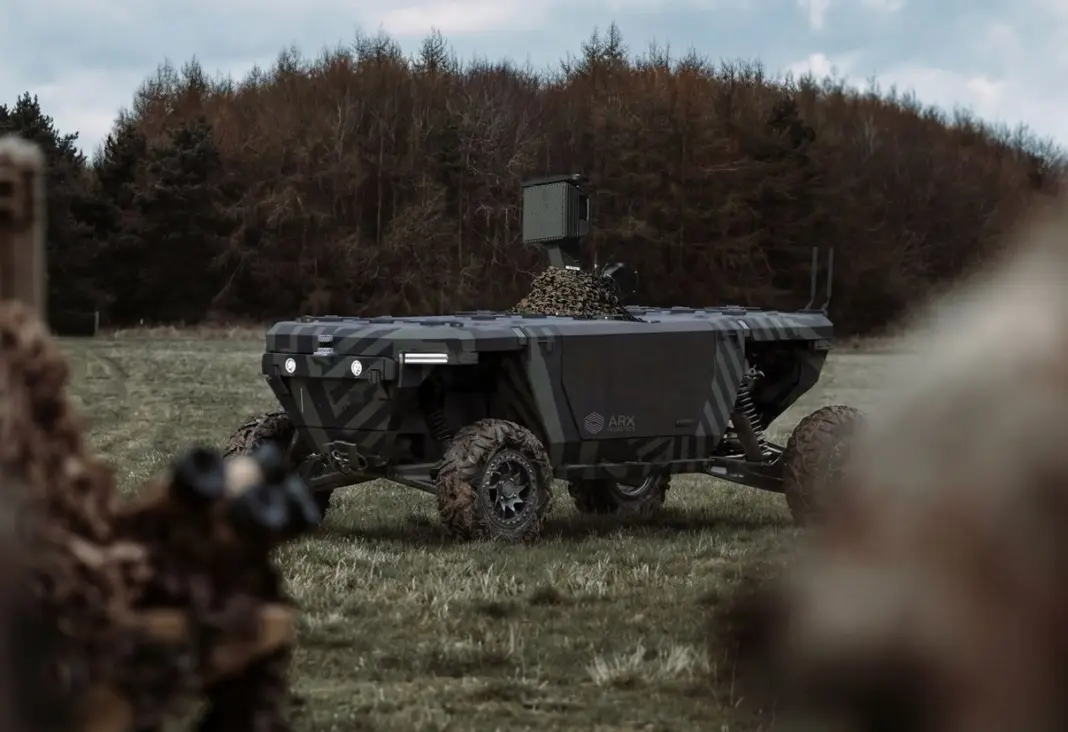
Photo by the manufacturer
The Light Mirror is a new regular digest by Defender Media, in which the editorial team curates notable defence tech news from countries of the so-called free world. In contrast to Black Mirror, which publishes a weekly overview of Russian military inventions and technologies, the new rubric focuses primarily on noteworthy updates from manufacturers in countries allied with Ukraine.
In the debut edition of the Light Mirror, we examine the latest counter-UAV systems, precision-guided munitions, laser complexes, and integrated multi-domain defence systems, highlighting European countries’ efforts to strengthen their defence capabilities and secure an operational advantage on the modern battlefield.
Fibre‑optic FPV Archer by Neros Technologies and Kela Technologies
The US company Neros Technologies, in partnership with Israel’s Kela Technologies, is developing a fibre‑optic drone based on the flagship Archer FPV. The drone’s defining feature is that it is built without Chinese chips; all components are of US and European origin. The current version is equipped with a five‑kilometre fibre‑optic spool, with future variants expected to extend the fibre length to 10 and 15 kilometres.
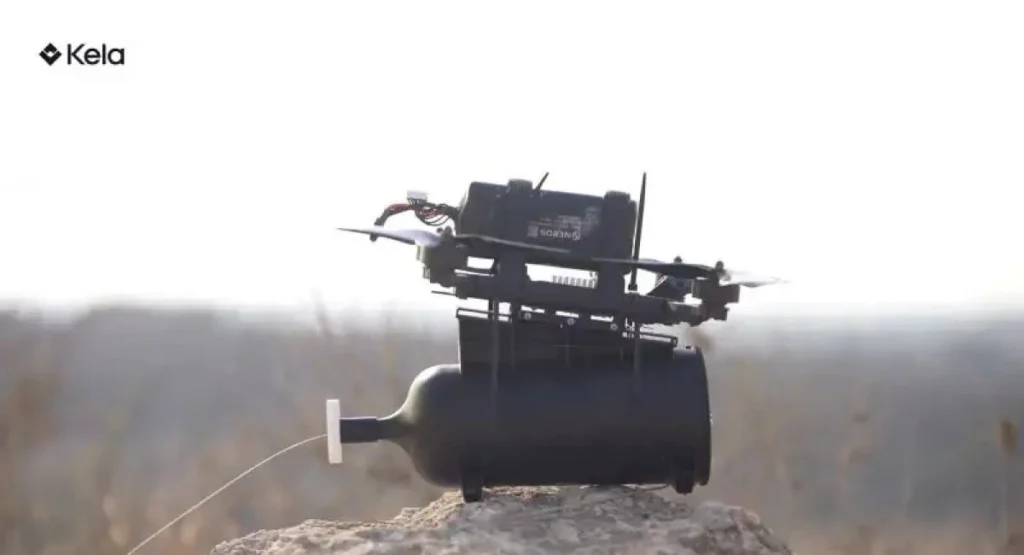
Neros Technologies is a US startup backed by major venture capital funds, including Sequoia Capital. Two military contracts are known: the supply of 6,000 drones to Ukraine and 8,000 Archer Strike drones to the US Marine Corps.
Israel’s Kela Technologies develops software and hardware solutions for integrating civilian and military systems in the defence sector. The company is also backed by Sequoia Capital and has raised a total of $99 million in investment.
Logistics UGV by ARX Robotics
ARX Robotics has unveiled Hector, an unmanned ground transporter designed for European land forces. The platform can be driven by an operator to the area of operations and then switched to remote control or autonomous mode to carry out missions.
Two versions are available: a diesel variant with a top speed of 120 km/h and a range of 350 km, and an electric version with a low acoustic and thermal signature. Both share a common modular chassis, payload interfaces and secure encrypted communications.
The architecture, built on Mithra OS, enables software‑defined integration, scalability and flexible support for interoperability with different platforms.
Bundeswehr conducts tests of drones and loitering munitions
In early December, the German armed forces conducted tests of a reconnaissance‑and‑strike system based on unmanned platforms and loitering munitions. All stages — from target detection to destruction — were carried out without direct human involvement, relying solely on autonomous systems.
During the trials, drones conducted reconnaissance and transmitted data to a digital map, while a human operator authorised the use of weapons. The munitions received updated target coordinates, compared them with sensor data and carried out strikes. The outcome included a reduced time between detection and engagement, the simultaneous use of multiple platforms, and the creation of a foundation for future drone‑swarm operations.
A key element of the integration was the proprietary C2‑UMS command‑and‑control system developed by the Bundeswehr to preserve technological sovereignty. C2‑UMS enables interaction between aerial, ground and maritime unmanned systems and allows rapid integration of new weapon systems.
Auterion tests drone swarm under Nemyx control
The German‑American company Auterion tested a drone swarm in real‑world conditions at a training ground near Munich. Drones from different manufacturers were combined into a single swarm using the Nemyx system and simultaneously attacked two mock tank targets.
The swarm was controlled by artificial intelligence in real time. The system supports autonomous or semi‑autonomous operation, is resilient to electronic interference, and is integrated into a central command structure.
According to the developers, Nemyx can connect any compatible platform to a swarm via a software update. The system is capable of simultaneously detecting, prioritising and neutralising multiple targets, significantly enhancing the effectiveness of small units on the battlefield.
Finnish Army tests Rheinmetall Skyspotter counter‑drone system
Rheinmetall successfully demonstrated its Skyspotter counter‑small‑UAS system during Finnish Armed Forces air‑defence trials. The tests covered the system’s ability to detect, track and engage targets ranging from high‑speed jet‑powered drones to small quadcopters in a near‑combat environment.
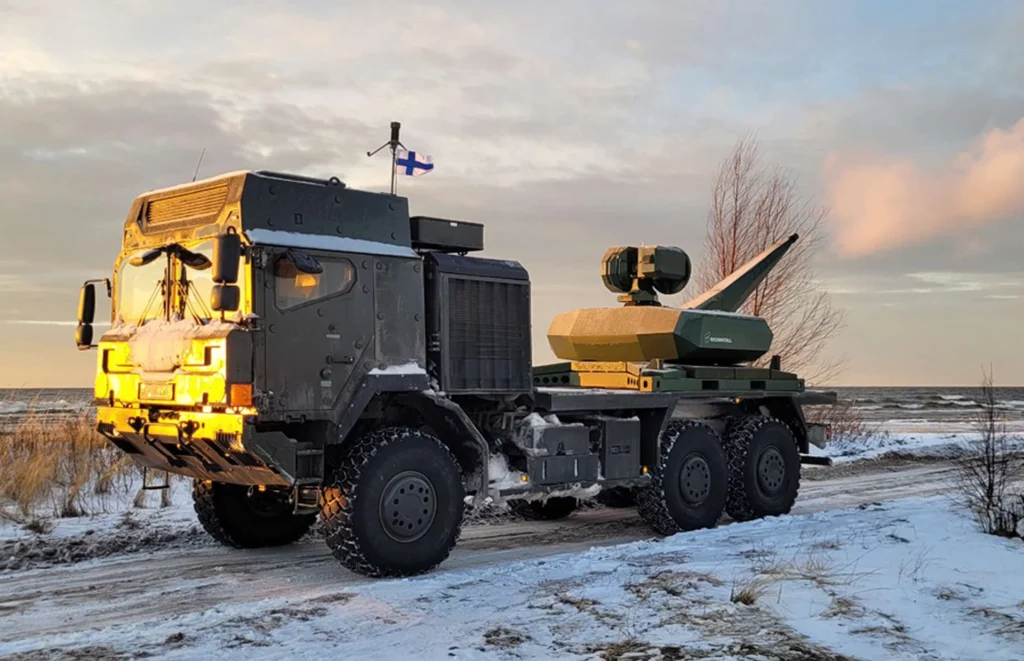
The Skyspotter sensor container integrates S‑ and X‑band radars with detection ranges of approximately 5 km and 7.5 km respectively, along with an electro‑optical target‑confirmation unit featuring daylight and thermal cameras and a laser rangefinder. The system provides automatic detection, tracking and identification of small, low‑flying, slow targets in challenging conditions. Passive emitter‑detection sensors can also be employed to identify drone control links without active radar emissions.
The primary engagement element is a 30‑mm revolver cannon firing programmable KETF ammunition. These rounds disperse a cloud of tungsten sub‑projectiles ahead of the target, forming a lethal cone and significantly increasing the probability of destroying small, manoeuvring drones.
The cannon is reported to have a rate of fire of around 1,200 rounds per minute and a ready ammunition load of more than 250 rounds, with the option to integrate short‑range missiles for layered defence.
Turkey tests Tayfun hypersonic ballistic missile
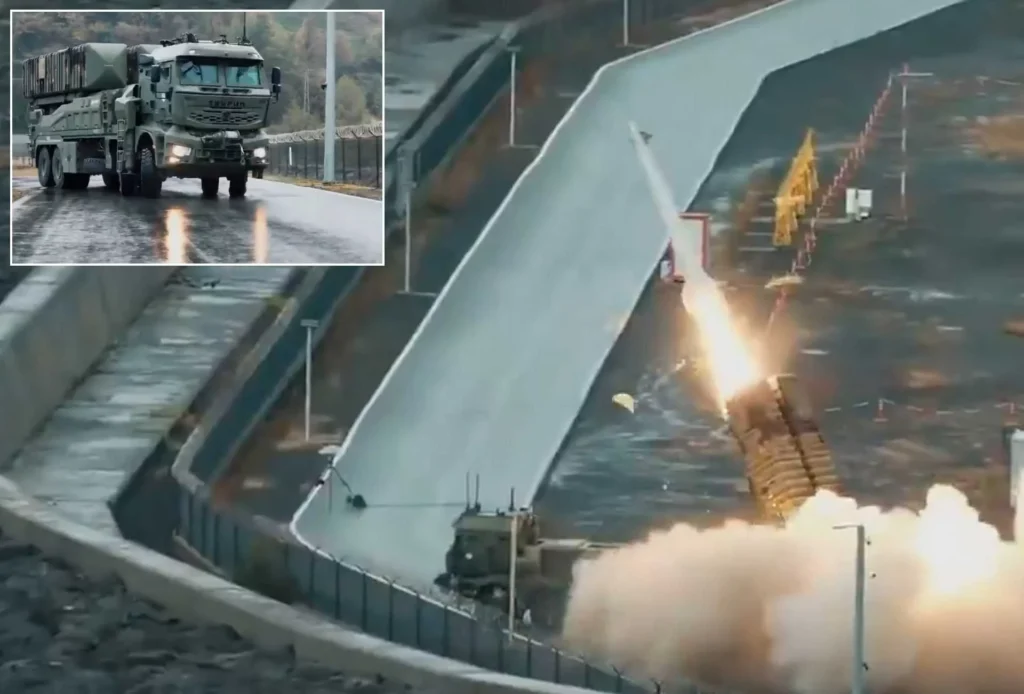
Turkey has successfully tested the Tayfun hypersonic ballistic missile developed by Roketsan. It is the first such missile to enter service within NATO outside the United States.
The Tayfun Block‑4 features a two‑stage solid‑fuel booster, reaches speeds above Mach 6 and has a range exceeding 1,000 km. Launches are conducted from a mobile 8×8 TEL platform carrying two launch containers.
France conducts first test of long‑endurance EyePulse MALE reconnaissance drone
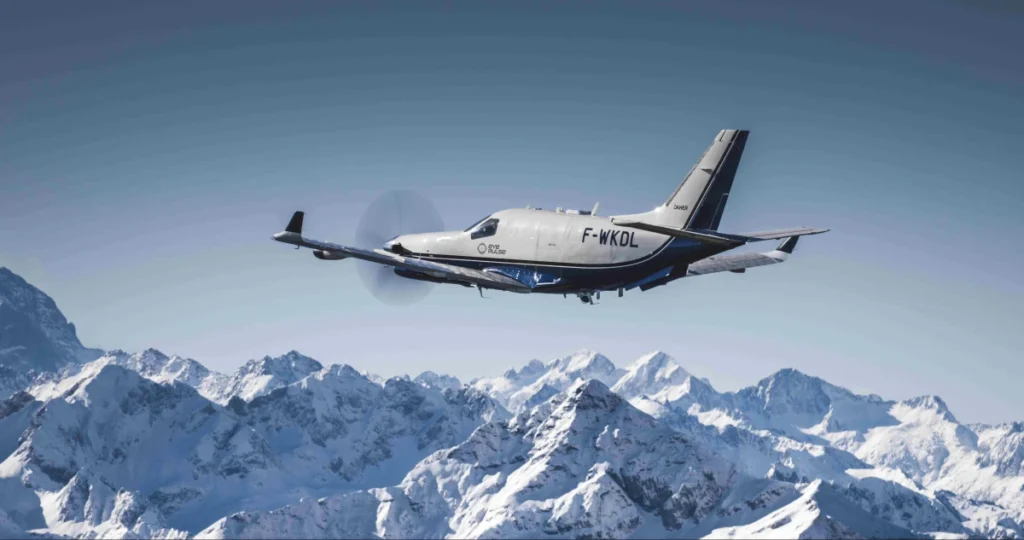
The French company Daher has successfully completed the maiden flight of the EyePulse medium‑altitude long‑endurance reconnaissance drone prototype. The project was carried out in partnership with Thales and demonstrated the company’s ability to develop prototypes rapidly: the drone was built in under six months.
The prototype is based on the TBM platform, a serial light turboprop aircraft, allowing the use of a proven aviation architecture. EyePulse integrates Thales ScaleFlyt avionics and an air‑to‑ground data system for remote control and communications. No further technical details have been disclosed.
EyePulse reconnaissance drone prototype. Photo: manufacturer
Italy’s Leonardo presents Michelangelo Security Dome air‑defence system
Italian company Leonardo has unveiled the Michelangelo Security Dome, a system designed to protect critical infrastructure, cities and strategic assets. The system integrates sensors, command elements and effectors across multiple domains—air, land, sea and space.
On 3 December 2025, the system achieved its first significant field result with a qualification firing by the Italian SAMP/T NG air‑defence system equipped with Leonardo’s KRONOS Grand Mobile High Power radar.
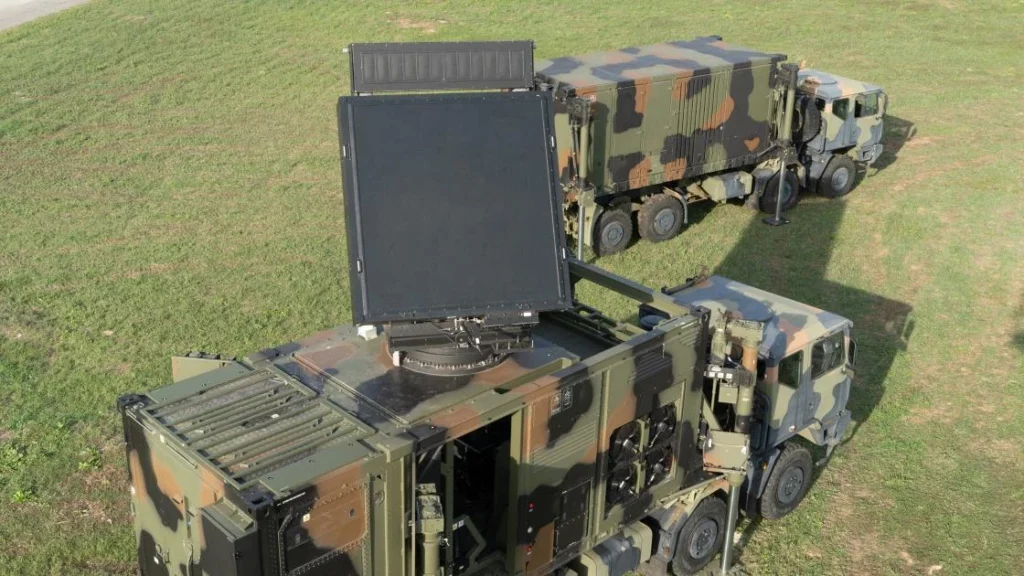
The KRONOS Grand Mobile High Power radar tracked the target and guided an Aster interceptor, achieving a hit at a record distance for the Eurosam SAMP/T system. No further details have been released.
DragonFire laser system successfully destroys high‑speed drones in tests
The UK’s DragonFire laser system has successfully shot down high‑speed drones during recent trials at a UK Ministry of Defence test range. During the tests, the drones reached speeds of up to 650 km/h, and the system carried out the UK’s first over‑the‑horizon tracking, targeting and engagement of such targets.
Official information on DragonFire’s range remains classified. It is known that earlier versions could only engage targets within line of sight and, according to experts, had an estimated laser output power of 50–100 kW.
Reading now
1

400+ jobs in Ukrainian defence tech from BlueBird, Vyriy, The Fourth Law, Odd Systems and other sector leaders
2

8 top defence tech events in September
3

Former defence minister Mykhailo Fedorov launches fund to invest in defence tech
4
20 Ukrainian companies are working on jet-powered interceptor drones. Firebolt Engineering is among them
5

European defence giant Leonardo opens a subsidiary in Ukraine
By submitting this form, you give Defender Media consent to the processing of personal data.
Надсилаючи цю форму, ви надаєте Defender Media згоду на обробку персональних даних.

Latest news
1
Black Mirror #75: terminal-guidance for interceptors, mesh communications, a mini mine-layer and other Russian miltech developments
2
Ukraine’s Bars jet-powered drone to enter production in Germany, with range extended to 1,000 km and warhead payload to 60 kg
3

Ukrainian intelligence officers test new AI system to coordinate UGVs and naval drones
4
400+ jobs in Ukrainian defence tech from BlueBird, Vyriy, The Fourth Law, Odd Systems and other sector leaders
5