
Digital twin, real results – smart manufacturing in Aerospace & Defense
How digital twins, AI and integrated systems help optimise manufacturing, reduce risks and improve efficiency in the A&D industry

Closing the loop between design and the shop floor
The pressure in the Aerospace & Defense (A&D) industry is enormous: shorter timelines, higher complexity and less room for error. While many manufacturers have successfully digitalized the design phase, the real test comes at the handoff, where digital models meet the constraints of real production.
Smart manufacturing, with the digital twin of production at its core, enables a seamless transition from design to the shop floor, without compromising speed or quality.
The digital twin of production: the factory’s decision-making hub
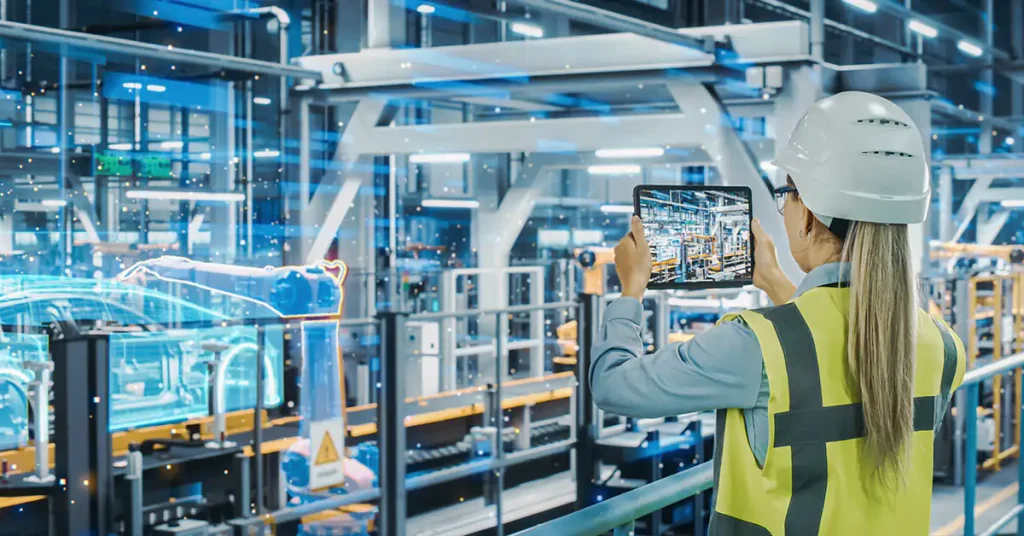
A digital twin of production is a dynamic, real-time representation of manufacturing processes. It can function as a simulation model, while also integrating empirical data by connecting machines, OT and IT systems, and manual processes into a single ecosystem. This enables continuous monitoring and allows teams to predict and test changes before implementation.
A key element of this architecture is the integration of systems – PLM (Product Lifecycle Management), ERP (Enterprise Resource Planning), and MES (Manufacturing Execution System) –within the Digital Thread that connects design, production, and operational data. Siemens Digital Industries Software builds this connectivity across its portfolio, from NX and Teamcenter on the engineering side to Opcenter on the shop floor. This way, manufacturing always operates on the latest documentation and errors caused by siloed systems are eliminated at the source.
From reacting to predicting
The digital twin of production enables a shift from reactive to proactive approach. For example, production schedule changes can be simulated in advance to assess their impact on resource availability, machine utilization, and delivery timelines.
One of the most practical applications is virtual commissioning of production lines. Before any physical infrastructure is built, a company can optimize workstation layouts, validate assembly sequences, test performance, and identify potential bottlenecks. This shortens ramp-up time and reduces the risk of unplanned downtime and costly post-launch adjustments. In defense manufacturing, where delays can carry serious operational consequences, such capabilities are becoming essential.
The digital twin generates data, AI puts that data to work
Machine learning has been part of industrial operations long before the current wave of AI adoption. In smart manufacturing, typical applications include:
- predictive maintenance – forecasting equipment failures based on sensor data,
- production schedule optimization,
- quality control.
Combined with the digital twin, ML algorithms can be trained on real production data, significantly improving their effectiveness. Integrating PLM and MES with an AI layer creates practical architecture: PLM provides the product definition, MES captures how it is made. This allows AI to support design decisions by balancing manufacturability, cost, and quality from the earliest stages.
Digitalization as a growth strategy – Armor Meca case study
Armor Meca shows what digital transformation looks like in precision defense manufacturing. Siemens tools – NX CAM, Teamcenter Manufacturing, and Opcenter APS – have been central to every stage of its journey, which began in 2008 and continues today.
The French manufacturer serving the A&D sector has quadrupled its production footprint over a decade, with automation now accounting for approximately 60% of its machine base.
At the heart of the Armor Meca transformation are digital twins of machine tools, enabling simulation and optimization of the machining of complex aluminum and titanium parts before a single machine is run. Integrated postprocessing in NX CAM generates ISO code directly for specific machines, eliminating dependence on third-party tools and reducing production preparation time.
Teamcenter Manufacturing provides a single source of truth for engineers, designers, and programmers, ensuring full traceability and eliminating the risk of working on outdated documentation. The implementation of Opcenter APS has improved load balancing and reduced inventory levels.
All these gains share a common foundation: reliable data across every stage of production.
Data as the foundation of the intelligent factory
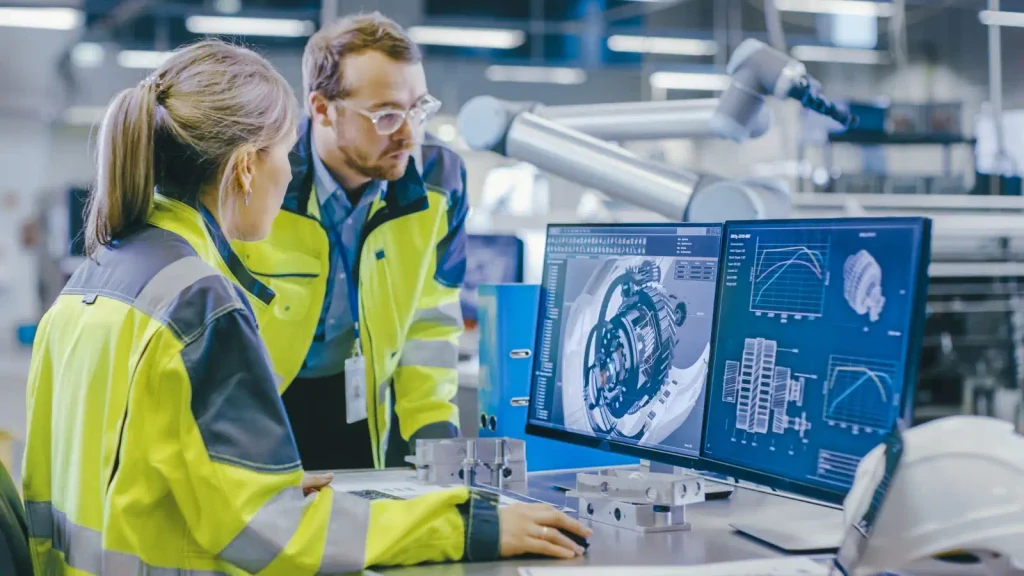
Digital transformation tools are only as good as the data behind them. As Sergii Bielienko, expert at Siemens Digital Industries Software, points out, companies that achieve the greatest benefits invest first in bringing order to their data sources, ensuring accuracy, consistency, and easy access for users.
In the coming years, the ability to integrate design, production, and operational data into a unified flow will be critical to maintaining market position. The path from spreadsheets to a smart factory is complex, but for those who complete it, the digital twin becomes not just an optimization tool, but a foundation of long-term competitive advantage.
This material was provided by a partner and published as paid advertising
Reading now
1
Why A&D manufacturers need a coherent digital strategy now
2
Ukrainian-Japanese FPV KT-2 drones appear on Brave1 Market: key details and specs
3

Why Danes, Swedes and Norwegians invest in Ukrainian defence tech: Gardar, Final Frontier and Varangians explain
4

6th UK-UA Defence Tech Forum to take place in London: cooperation with Ukraine, arms production and investment
5

14+ defence tech events around the world in November
By submitting this form, you give Defender Media consent to the processing of personal data.
Надсилаючи цю форму, ви надаєте Defender Media згоду на обробку персональних даних.

Latest news
1

Digital twin, real results – smart manufacturing in Aerospace & Defense
2

Ukraine’s MoD and Economic Security Bureau to vet defence procurement before contracts are signed
3
Abacus-Tech presented the NAMET-8 smart EW system with automatic activation triggered by SIGINT
4
Ratel ground robots receive active protection systems against FPV drones: development details
5