Air raid alerts threaten defence contracts: League of Defence Enterprises proposes solution
In September, Russian air strikes cut working hours at defense enterprises by a third
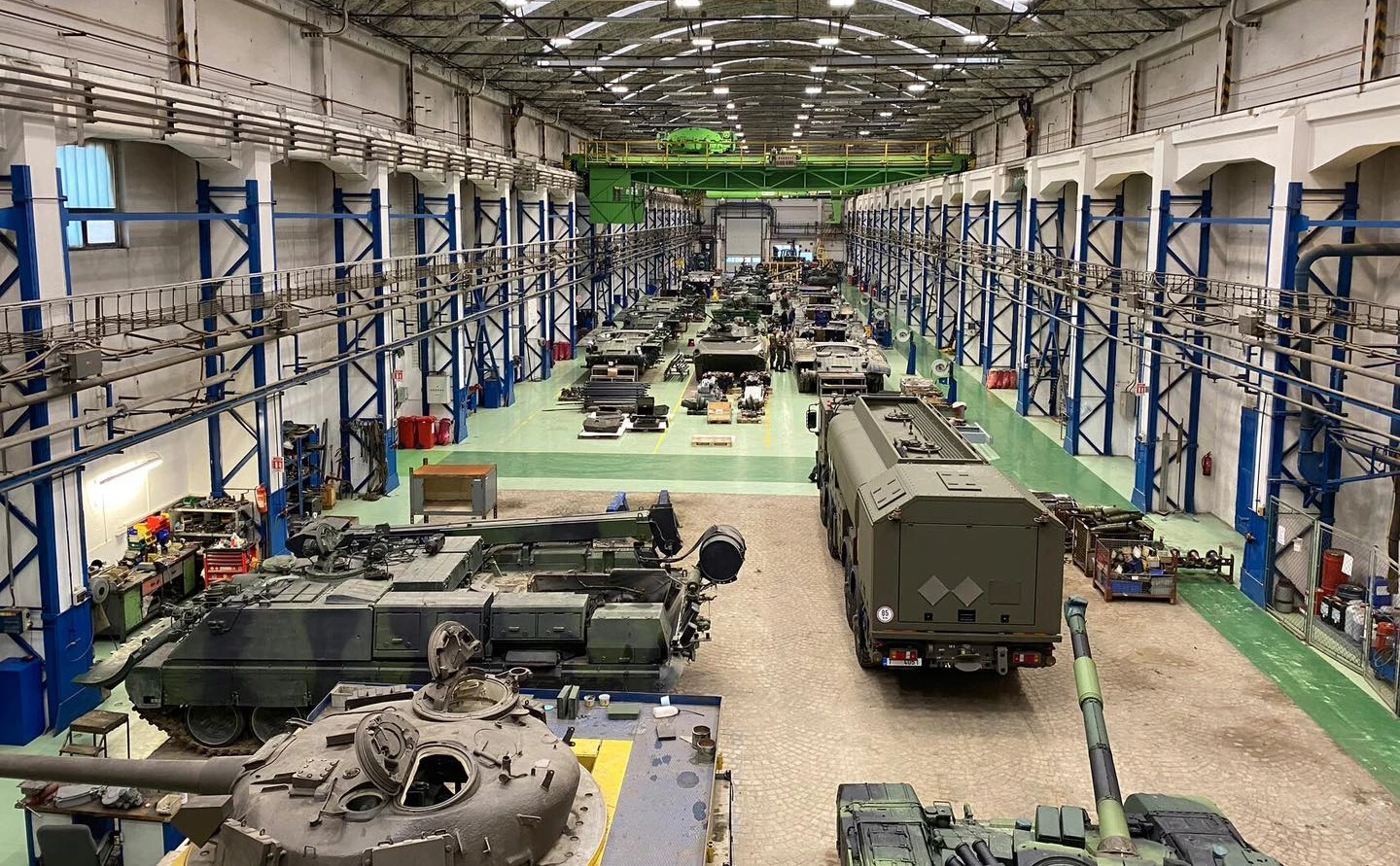
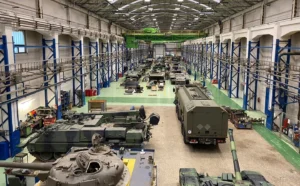
Tank production facility of a joint Ukrainian-Czech venture. Photo: VOP CZ
Prolonged air raid alerts mean defence manufacturers cannot always complete state contracts on time. This puts businesses at risk of lawsuits and multimillion-hryvnia fines.
The League of Defence Companies has proposed a solution. In its statement, it recommends amending the legislation to account for production downtime caused by air raid alerts when setting deadlines for state defence contracts.
Defender Media looks at the issue in detail.
Why it matters
According to an analytical brief seen by Defender Media, the duration of Russian air attacks, particularly in Kyiv, has increased three- to fourfold. The total duration of air raid alerts from 27 August to 29 September exceeded 274 hours. During this period, the capital saw an average of 7.1 air raid alerts per day.
“Actual operational time losses reach roughly 60% daily. As a result, enterprises possessing all necessary production capacity are physically unable to complete manufacturing and deliver equipment within specified deadlines,” Andrii Demchenko, CEO of the League, told Defender Media.
According to Demchenko, production halts affect manufacturers of drones and other defence equipment less, where production can be dispersed and individual production cycles are short. However, they severely affect enterprises manufacturing large, complex items composed of hundreds of components, where the production cycle for each unit can span weeks or even months.
“Effective production time losses exceed the actual duration of the alert itself: enterprises must shut down equipment, evacuate workers, and, after the all-clear, return to their workstations, restart equipment, and resume interrupted technological processes. Nighttime and weekend alerts make it impossible to offset lost time with additional shifts,” Demchenko noted.
What judicial practice shows
Delays in state contracts and subsequent lawsuits have already emerged. The Commercial Court of Kyiv considered a claim seeking over UAH 83 million in penalties from a defence enterprise that had missed its delivery schedule. One of the company’s defence arguments was frequent air raid alerts in Sumy, which forced its subcontractor to suspend thermal, welding, and machining operations.
Facing significant delays in these production processes, the defence enterprise obtained a certificate from the Chamber of Commerce and Industry confirming that air raid alerts had disrupted its production cycle. The company also proactively requested that the Ministry of Defence extend the contract deadline. Based on this evidence, the court dismissed the penalty claim.
In another case in Zaporizhzhia Oblast, the commercial court ruled against a company because the manufacturer failed to present evidence verifying the precise duration of its production stoppage.
Because legal disputes now concern not only whether air raid alerts occurred, but also their specific impact on contract performance and the actual duration of lost working time, the League of Defence Companies is proposing a separate procedure to document such downtime.
Legal framework
Cabinet of Ministers Resolution No. 1275 has been in effect since 2022 to resolve such situations and protect domestic manufacturers from unjustified penalties. The League is now proposing amendments to this resolution.
“We argue that if an enterprise was contracted to deliver, say, 100 units, it should provide documentary evidence of downtime caused by air raid alerts and deliver the volume of equipment it managed to manufacture, with the delivery of the full contracted quantity deferred. Once the enterprise submits the required documents, it should not have to pay penalties,” Demchenko explained.
The League of Defence Companies proposes recognising an actual production stoppage caused by the ‘Air Raid Alert’ signal as a valid legal ground for extending contract deadlines. The proposed calculation formula accounts not only for the alert’s duration, but also for the time required to safely shut down and resume production. The proposal also specifies that such an extension should not increase the contract price.
Furthermore, to simplify the procedure, the League proposes waiving the requirement for UAV and electronic warfare manufacturers to obtain a certificate from the Chamber of Commerce and Industry. Instead, it advocates introducing a clear list of documents—such as stoppage reports and production accounting records—to substantiate downtime to state customers.
Reading now
1
SkyFall officially unveils Thor Hammer mid-strike and announces 1,000+ km version
2
Pentagon to hold Drone Dominance trials for bomber drones, with UFORCE, Gurzuf Defence, Grim Tech and others taking part
3
British-Ukrainian Occam Industries raises €3.8m. The funds will go towards scaling drone autonomy software
4

Terra Drone acquires 50% of Ukrainian Kurin Technologies for $3.5 million
5

Autonomous interceptor drones need radars to work. Why is there still a lack of them
By submitting this form, you give Defender Media consent to the processing of personal data.
Надсилаючи цю форму, ви надаєте Defender Media згоду на обробку персональних даних.

Latest news
1

Swedish group Varangians has invested in two Ukrainian defence startups and is preparing at least three more deals
2
TAF Industries increases Babka reconnaissance drone’s range to 60 km
3

The Fourth Law and Odd Systems launch thermal sensor manufacturing project in Europe and the US
4
Ukrainian Mariupol bureau unveils Mara strike drone delivered by aerostat
5