Black Mirror #43: export Lancet, mesh‑networked UGVs, the Yolka interceptor drone and other updates in Russia’s miltech
Russian defence industry developments for the fourth week of January
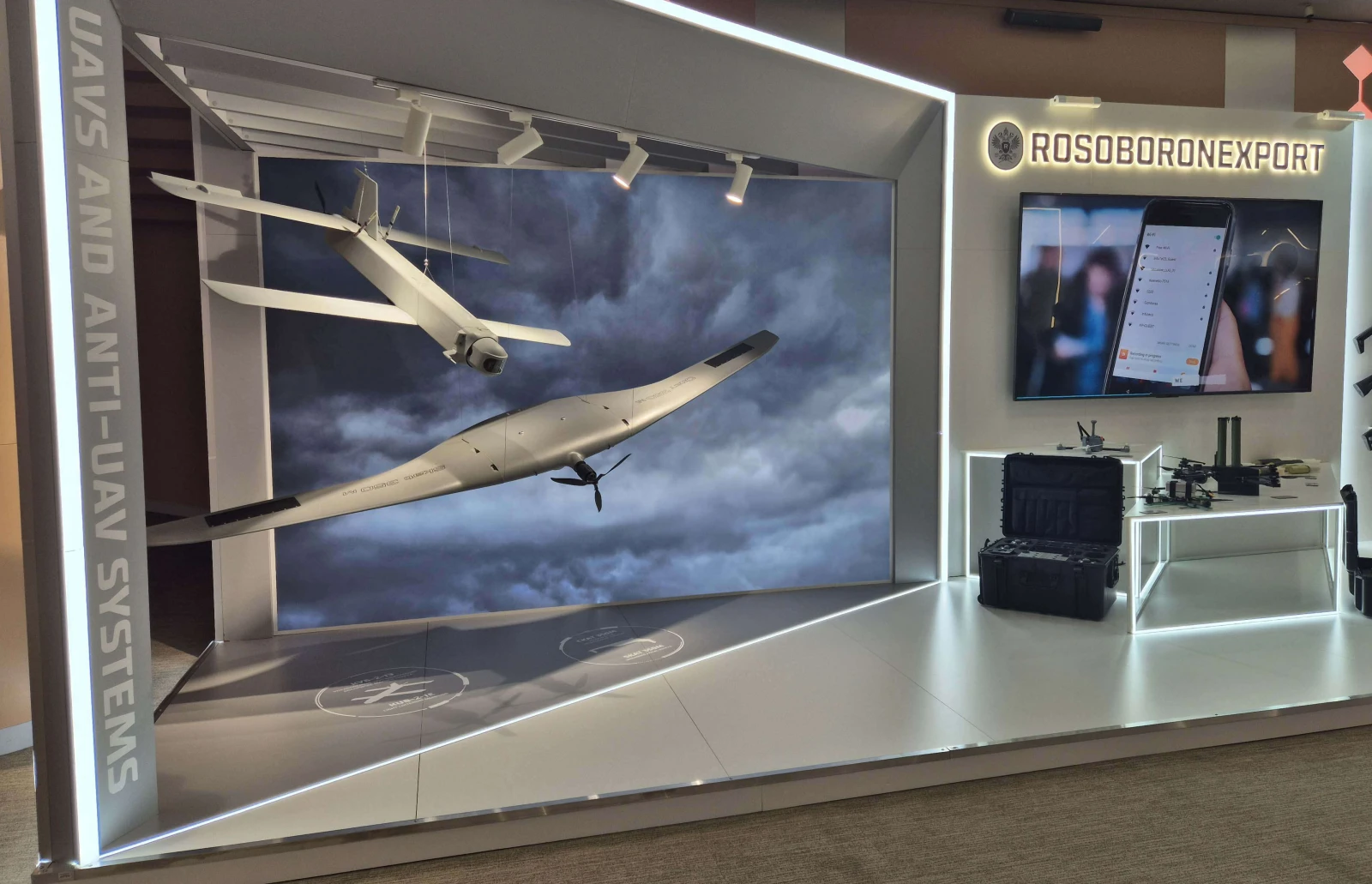
Last week, Russian military commentators focused on their participation in an international exhibition in Abu Dhabi, paying particular attention to the Lancet loitering munition and export versions of weapons systems. In addition, reports have emerged about logistics drones and unmanned ground vehicles (UGVs), as well as information about the first reported uses of interceptor drones to counter Ukrainian deep strikes. More on Russian military developments can be found in the Defender Media weekly review.
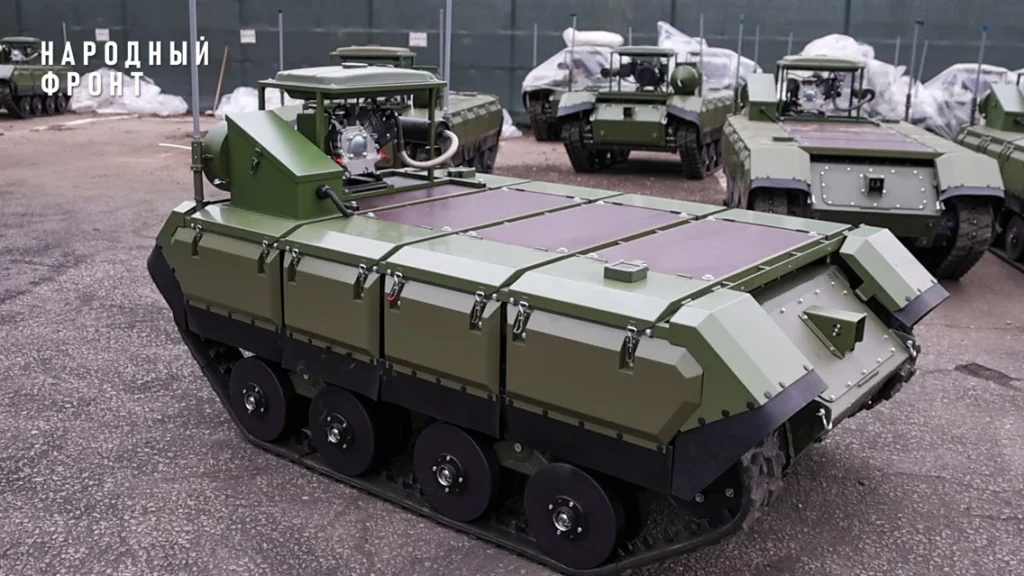
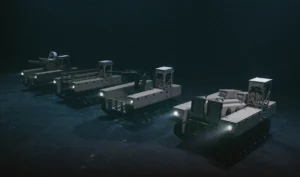
Logistics UGVs Impulse with mesh networking
The Russian military has received around a hundred Impulse UGVs designed for logistics and auxiliary tasks. The vehicles are controlled either via a fibre‑optic cable or via a protected radio channel using a mesh architecture. If the cable is damaged, the system automatically switches to radio communications; additionally, the mesh network allows the UGV to function as a relay.
It is stated that Impulse can carry up to 500 kg of cargo and tow a trailer weighing up to 1.5 tonnes. The platform supports group operations, allowing one or more operators to simultaneously control multiple vehicles.
Updated Lancet and KUB at the Abu Dhabi exhibition
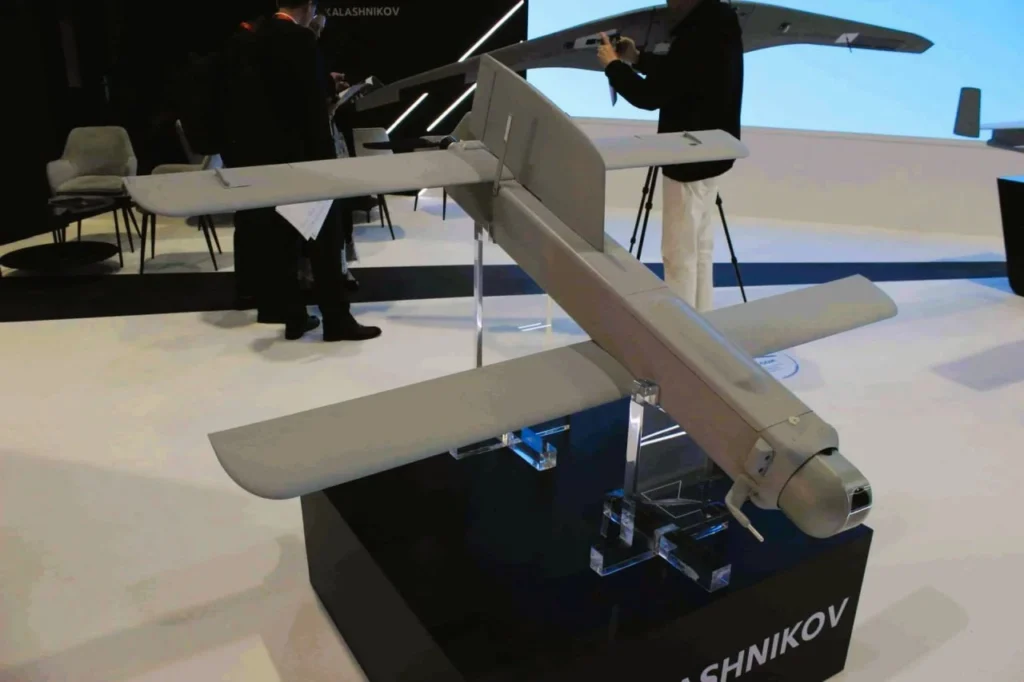
At the international UMEX 2026 exhibition in Abu Dhabi, Russia presented export modifications of the Lancet‑E and KUB‑2 loitering munitions, which differ from the base versions primarily in system configuration, integration with reconnaissance UAVs, and claimed increased resistance to electronic warfare.
According to open sources, the export version of the Lancet has reduced visibility, improved manoeuvrability and better resistance to electronic warfare, although specific numerical characteristics have not been disclosed.

In addition, ZALA presented a new launcher for Lancet drones. It is reported that a single operator can carry out a launch in under one minute. The launcher is assembled as a tubular guide made of an aluminium alloy, mounted on a tripod. A pyrotechnic charge located in the lower section ejects the munition.
Separately, KUB‑2 and KUB‑2‑2E were presented — guided loitering munitions by Kalashnikov, integrated with the Skat‑350M reconnaissance drone. According to the developers, the system operates on Russian software. It is known that KUB‑2 is intended to attack personnel, unarmoured and lightly armoured targets, as well as stationary objects; however, exact range and endurance parameters for the export versions have not been officially disclosed.
Logistics FPV drone Osa Okta
In Arkhangelsk, the company Aleks.Kom announced the development of the 10‑inch FPV drone Osa Okta, designed to deliver cargo to hard‑to‑reach areas. The drone is intended for transporting ammunition, medical supplies and equipment. The stated characteristics include a range of up to 30 km, an endurance of up to 25 minutes and a maximum payload of 13 kg, with an optimal load of 10 kg.
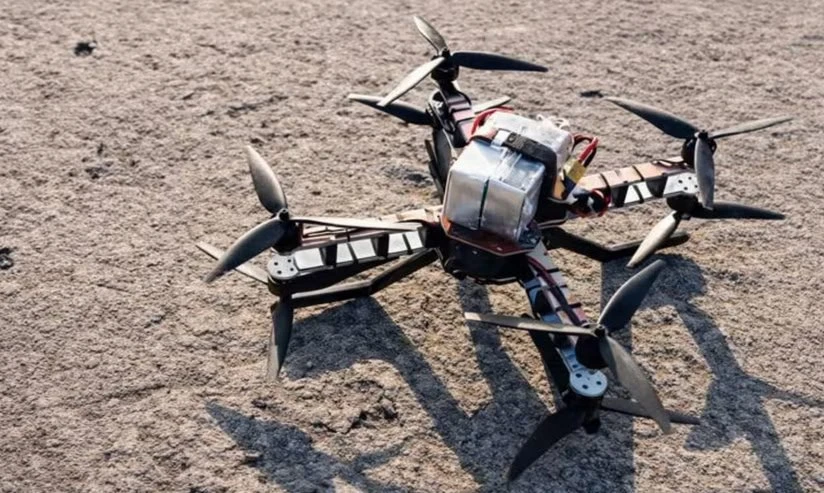
The company notes that Osa Okta was designed with operation in complex terrain and adverse weather conditions in mind, including wind, precipitation and other external factors.
At present, the project is at the development and initial testing stage, and there have been no reports of the start of serial production or practical implementation in military or civilian logistics.
Multi‑pellet anti‑drone munitions Mnogotochie
Russians are testing new multi‑pellet anti‑drone munitions Mnogotochie intended to engage small aerial targets at distances of up to 300 metres. The SC‑226 munitions in 5.45×39 mm calibre and SC‑228 in 7.62×54 mm calibre are equipped with a three‑element bullet that separates after leaving the barrel. A standard cartridge case and regular propellant charge are used, which, according to the manufacturer, simplifies serial production.
Unmanned ground system Malvina‑M
Russians are testing the Malvina‑M UGV, which is being considered as a means of artillery fire support in difficult terrain.
During the tests, two 220‑mm launcher blocks from the TOS‑1A Solntsepyok multiple launch rocket system were installed on the platform. Firing was conducted using standard thermobaric munitions.
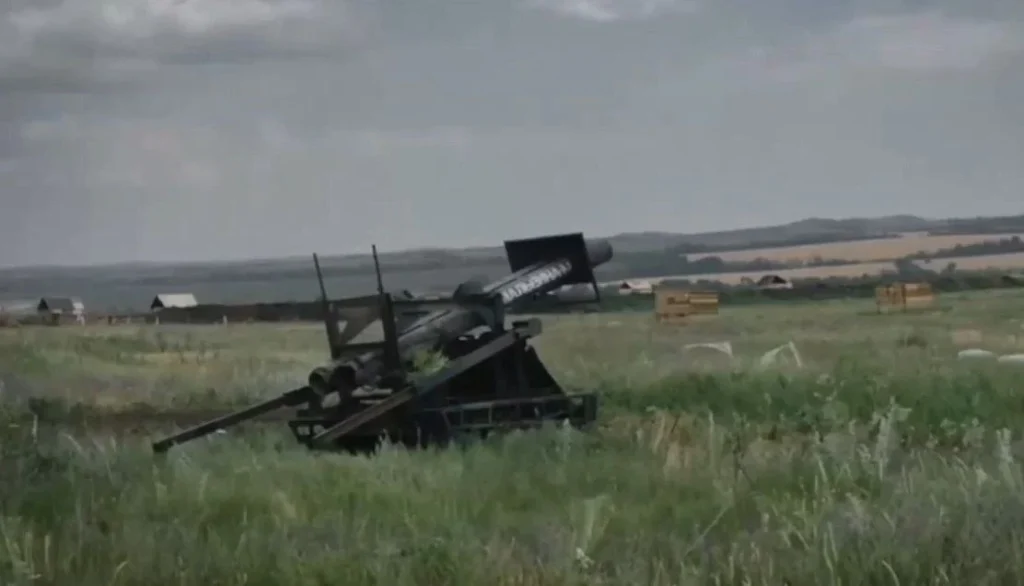
Anti‑drone drop system Krokha
Information has appeared in open sources about a compact anti‑drone drop system Krokha designed to engage aerial targets from aboard a UAV. The new drop mechanism can be installed simultaneously with other types of payload — munitions or cargo — and does not interfere with the drone’s primary mission.
Interceptor drones Yolka
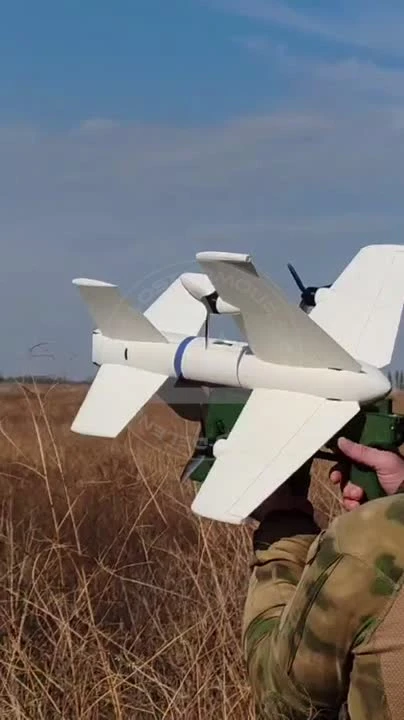
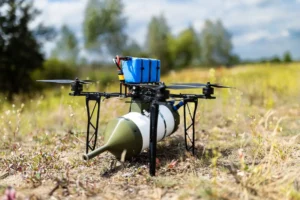
Russian sources have reported the use of Yolka interceptor drones to engage UAVs in Belgorod Region. The platforms are equipped with thermal-imaging homing heads and automated control elements.
The system is positioned as a kinetic interceptor, meaning it does not necessarily carry an explosive warhead: after launch, it independently searches for, acquires and collides with an aerial object.
The stated interception range is up to 3 km, with target engagement altitudes from 175 to 200 metres. According to reports, the drone’s maximum speed can reach 250 km/h. No other technical details or confirmed data on the scale of use have been officially disclosed.
Reading now
1

Ukrainian SkyFall’s drone wins at Pentagon’s Drone Dominance selection
2
Black Forest Systems raises $400,000. Here’s what drones the startup is building
3
Sting interceptor by Wild Hornets downs costly Russian Granat-4 reconnaissance drone
4
UForce unveils Bucha middle-strike drone with a 200 km range
5
The F10 drone becomes the second Ukrainian finalist in the Pentagon’s Drone Dominance Program
By submitting this form, you give Defender Media consent to the processing of personal data.
Надсилаючи цю форму, ви надаєте Defender Media згоду на обробку персональних даних.

Latest news
1
DPA to diversify drone and ammunition orders among multiple suppliers
2
‘Ukrainska bavovna’ and Czech company Pavetra Aerospace to produce Shuhay UAV through joint venture
3
59th Assault Brigade downs Russian Ka-52 helicopter with General Cherry OPTIX FPV drone
4
Tencore develops evacuation module for TerMIT UGV
5