Autonomy of UGVs: how the Ukrainian startup Lanka Robotics address a critical problem of ground drones
Team is seeking $1 million in investment for a solution that will allow ground drones to navigate their routes without an operator
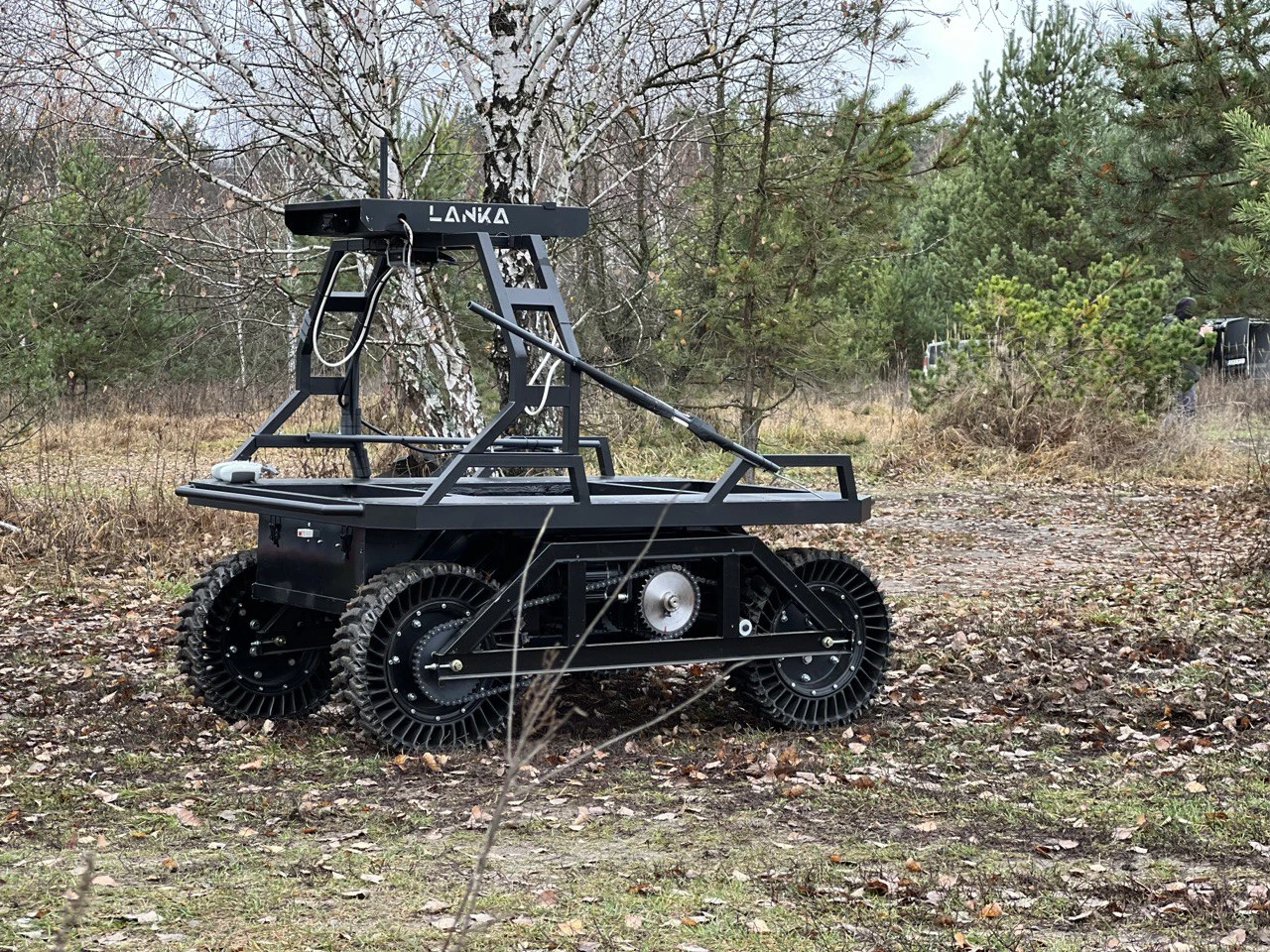
Photo by the manufacturer
By 2025, ground drones have moved from being used only by select units to serving as a logistics and evacuation tool adopted across the Defence Forces. However, frontline experience shows that UGVs remain highly vulnerable to battlefield challenges. Communication disruptions often lead to the loss of these relatively expensive machines in forest belts and other difficult areas. It is this issue that a new Ukrainian project, Lanka Robotics, aims to address.
Defender Media spoke with the startup’s co-founder, Sofia, about the team’s experience, their solution for ground robot autonomy, and the investment that could help the project take off.
Who are Lanka Robotics
The start-up team has been working in the UGV field for about three years. The co-founders are engineers who worked on robotic systems technologies even before the start of the full-scale invasion.
The team’s previous development is the Mammoth UGV, a logistics drone with a payload of up to 200 kg and a travel range of up to 15 km/h. The founders invested around $20,000 in the development, but have not yet reached codification: the UGV is undergoing field tests and is available for purchase via the Brave1 marketplace.
he Mammoth now serves as the platform for testing Lanka Robotics’ innovative solutions. “Although we have our own UGV, our strategy is focused on spreading the technology as quickly as possible. Instead of selling ready-made robots, we are developing a software module that can be integrated into UGVs built by other manufacturers who lack this intelligent software,” Sofia says.
Autonomy, recognition and navigation
The team has focused on improving the reliability and autonomy of UGVs. One of the robots’ key vulnerabilities is loss of communication, and this is precisely the problem the Lanka engineers are addressing.
“At present, our system enables a UGV to drive 100 metres without communication, where there is no GPS, because, for instance, Starlink can lose connection in forest belts or between tall buildings, where a delay of 1–2 seconds may occur, and this alone can result in the loss of a drone. Our solution is based on computer vision and visual navigation technology,” Sofia says.
UGVs equipped with the software module should orient themselves via the camera and make decisions about their trajectory without the operator’s involvement while the connection is down. “One could say this is corrective driving guidance — the task the military understand,” Sofia explains. In addition, a UGV will be able to stay on its route or return to the point where communication was last available.
Additional capabilities include repeating a successful route, recognising and bypassing obstacles, and automatic mine detection. A more ambitious project is currently at the R&D stage: creating an artificial intelligence-based system capable of “fending off” enemy FPV drones or turrets.
“The system has already been successfully tested at a training ground with the Mammoth, and we have established partnerships with manufacturers of two other UGVs. These days, the system is being handed over for testing by military units,” Sofia says.
On investment and key advantages
The founders registered Lanka Robotics in the summer of 2025, and by November the team had taken part in the Darkstar boot camp, receiving positive feedback from experts.
For further scaling, including team expansion and accelerating R&D, the company is actively seeking one million dollars in investment. They are also not ruling out the possibility of securing state funding: the company is awaiting approval of documents under the general track of the BRAVE1 grant programme.
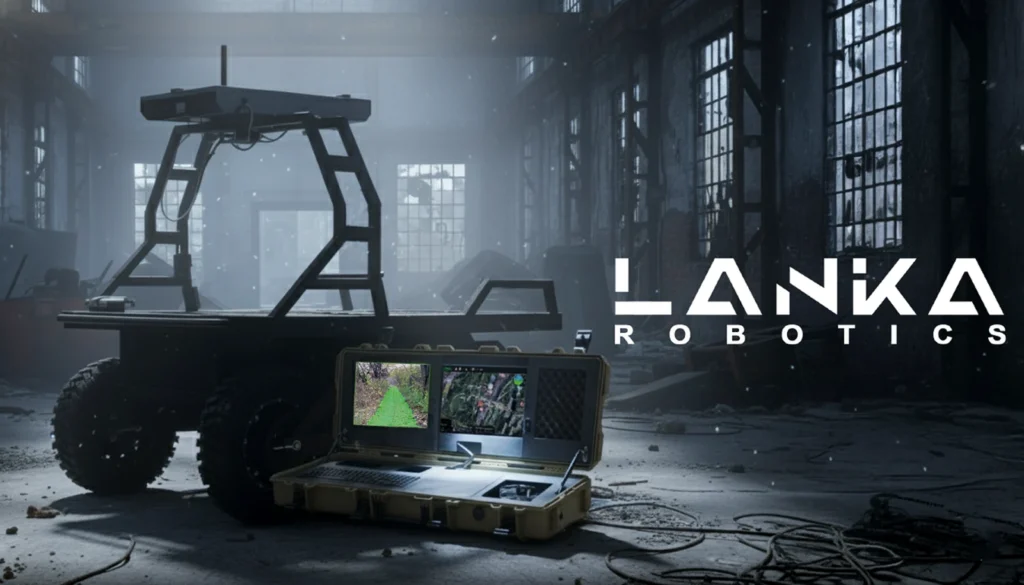
“The main advantage of a Ukrainian solution is accessibility. Foreign companies offer closed autonomy ecosystems that cost $100,000–$200,000. This makes their large-scale testing and deployment on the frontline practically impossible. By contrast, the domestic system, even as a full kit with a UGV, will cost significantly less,” Sofia explains.
The developers are convinced that the coming year will mark the beginning of autonomy for ground robotic systems. They aim to open this new technological chapter by integrating their innovative and accessible solution into Ukrainian military production.
Reading now
1

Ukrainian SkyFall’s drone wins at Pentagon’s Drone Dominance selection
2
Black Forest Systems raises $400,000. Here’s what drones the startup is building
3
Sting interceptor by Wild Hornets downs costly Russian Granat-4 reconnaissance drone
4
UForce unveils Bucha middle-strike drone with a 200 km range
5
The F10 drone becomes the second Ukrainian finalist in the Pentagon’s Drone Dominance Program
By submitting this form, you give Defender Media consent to the processing of personal data.
Надсилаючи цю форму, ви надаєте Defender Media згоду на обробку персональних даних.

Latest news
1
DPA to diversify drone and ammunition orders among multiple suppliers
2
‘Ukrainska bavovna’ and Czech company Pavetra Aerospace to produce Shuhay UAV through joint venture
3
59th Assault Brigade downs Russian Ka-52 helicopter with General Cherry OPTIX FPV drone
4
Tencore develops evacuation module for TerMIT UGV
5