Black Mirror #38: Starlink on Gerans, Oreshnik, and navigation without satellites
A review of Russian militech developments from the third week of December
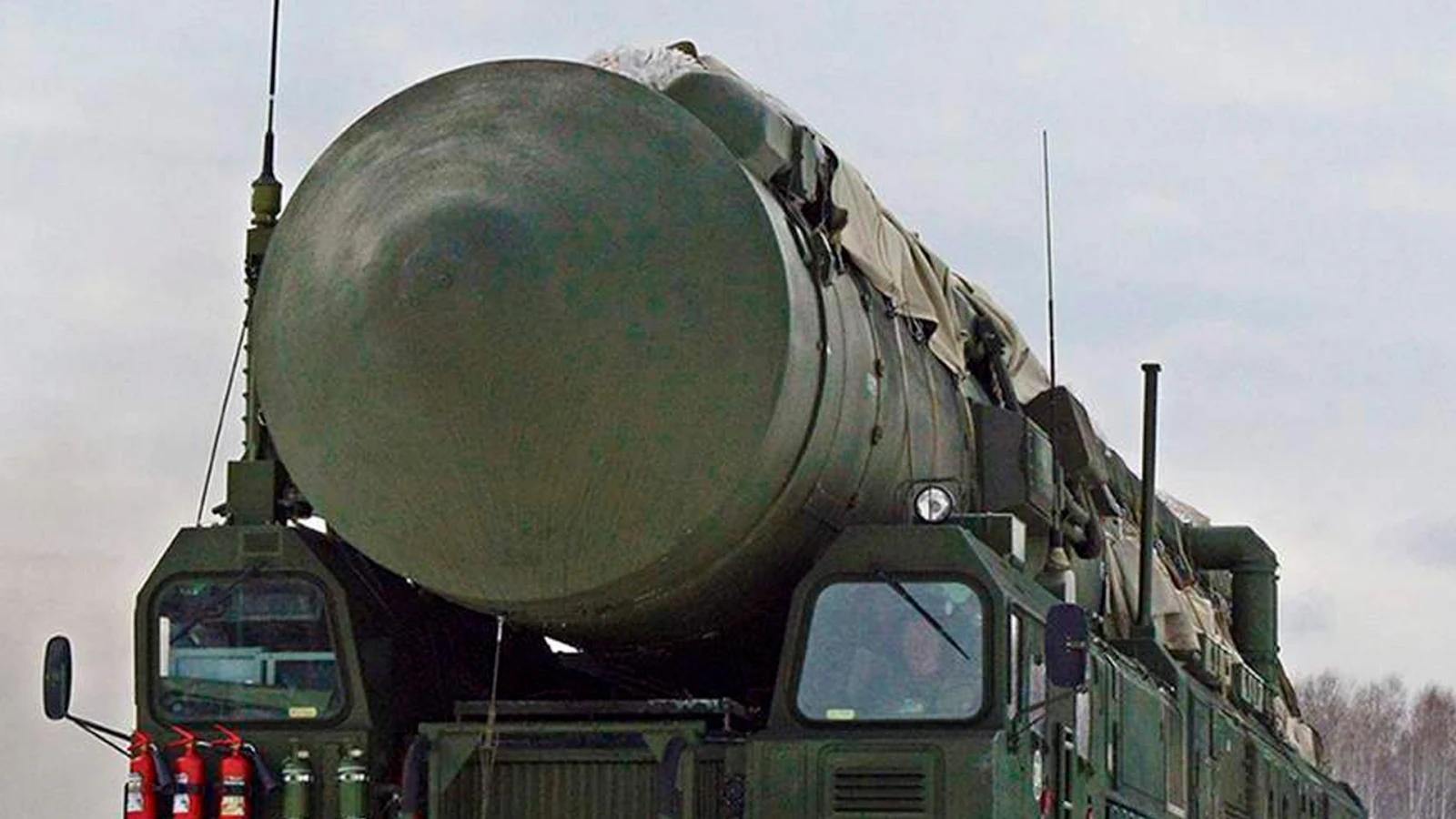
The use of Starlink terminals on Russian drones and armoured vehicles is becoming widespread. The week also brought another round of updates to enemy unmanned systems — UAVs, UGVs, and their components. Details are covered in issue #38 of Black Mirror, which the Defender Media editorial team compiles weekly to inform Ukrainian military personnel and engineers.
Upgrades to communications channels in drones and the deployment of new modules
Russia is significantly expanding and improving communications and data links for strike and reconnaissance unmanned aerial vehicles, according to analyst Serhii “Flash” Beskrestnov. On the front line, UAVs equipped with a new Kuznechik communications module operating in the 220–250 MHz band have been observed, and the use of Starlink satellite communications terminals has increased significantly. As the analyst notes, whereas such cases were previously isolated, terminals are now being detected daily, both on aerial platforms and on armoured vehicles.
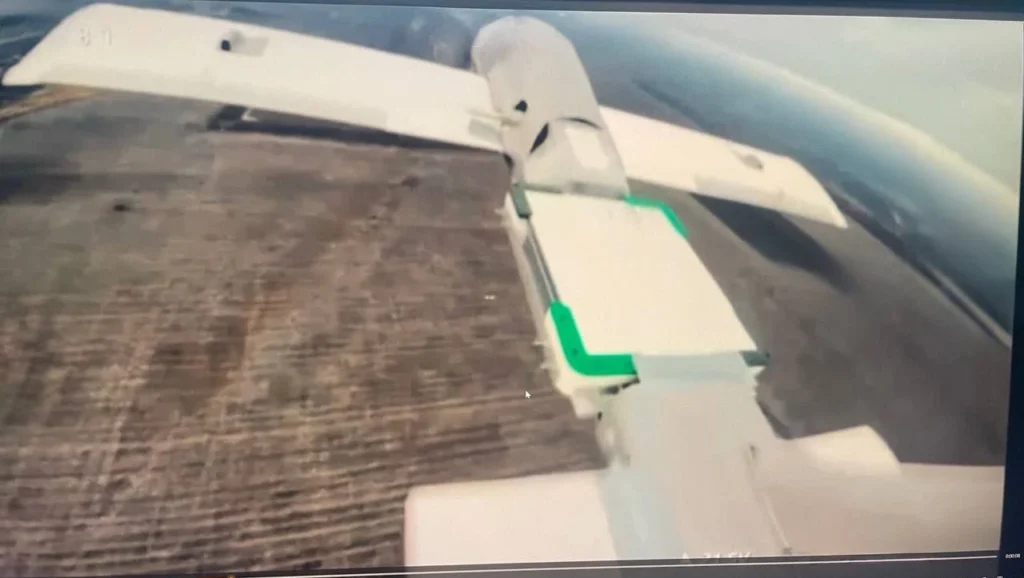
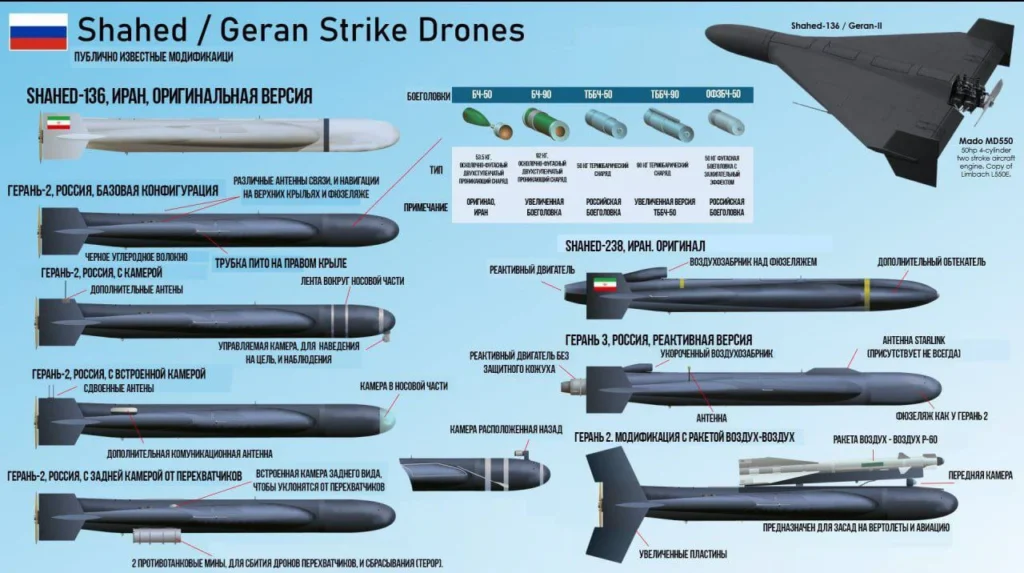
In Shahed-type strike drones and their variants, antenna sizes are increasing and protection against electronic warfare is being improved. Antennas with 16 elements have been identified. Russian sources have also published detailed infographics of the “Geran” family: the latest models are fitted with two strike payloads, each weighing about 50 kg.
Production of UAV servos in Yekaterinburg
Large-scale production of servos for unmanned aerial vehicles has been established in Yekaterinburg, regional governor Denis Pasler has reported. The project is being implemented by NewLink, a company specialising in the development and manufacture of UAVs and radio-electronic systems.
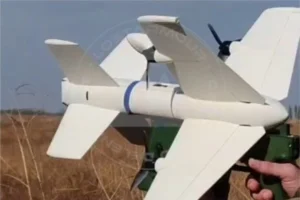
NewLink has received a grant of 300 million roubles and plans to produce “tens of thousands of units” annually to replace imported components used in unmanned aviation systems. The same company also manufactures, among other products, the Skat-10 reconnaissance drone.
Testing of the heavy transport UAV “BTS VAB S-76”
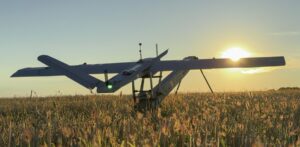
The Sukhoi Design Bureau is testing the heavy transport unmanned aerial vehicle BTS VAB S-76. The drone has a take-off weight of about 1,500 kg and a payload capacity of up to 300 kg in the larger version, while the smaller S-76 MBS variant can carry up to 50 kg.
The drone’s dimensions are known: length 7.2 m, wingspan 11 m, height 2.7 m. The stated cruising speed is about 180 km/h, the maximum flight altitude up to 4,000 m, and the range without refuelling is about 1,000 km for the larger version and about 400 km for the smaller one.
Communication with the operator is carried out via the GLONASS satellite system, and a single operator can control up to 12 drones of this type simultaneously.
“Oreshnik” redeployed to Belarus
The Russian intermediate-range missile “Oreshnik” has been redeployed to Belarus and is being prepared for deployment. In addition, a new brigade equipped with this missile has been formed in Russia, indicating that “Oreshnik” has entered operational service.
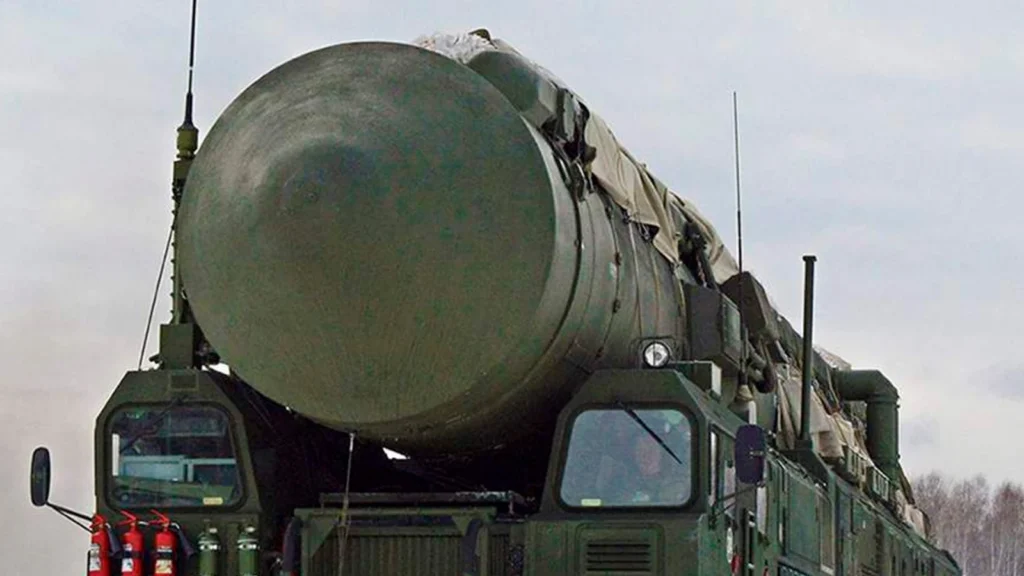
Independently confirmed data on the characteristics of “Oreshnik” are extremely limited. The missile is considered to be a modernisation of the previously known RS-26 “Rubezh” or RS-24 “Yars”, although Russia claims it is an entirely new development.
In publications from late 2024 and early 2025, Russian sources reported a flight speed for “Oreshnik” of up to Mach 10 (2.5–3 km/s) and a range of around 5,000 km. Some open reports indicated a multiple independently targetable re-entry vehicle (MIRV). According to other data, the missile may carry six single warheads or submunitions.
According to the latest publications, “Oreshnik” belongs to the intermediate-range class and is capable of carrying both conventional and nuclear warheads. There is no information in open sources about successful tests or launches of the missile after November 2024.
According to the Defence Intelligence of Ukraine, as of summer 2025 six enterprises in Russia were involved in the production of the intermediate-range ballistic missile “Oreshnik”: the Moscow Institute of Thermal Technology, the Federal Research and Production Centre “Titan-Barricades”, the “Prozhektor” Design Bureau, the “Sozvezdie” Concern, “Spetsenergomekhanika”, and the Research and Development Centre “Kontinent”.
Testing and prospects of the satellite-independent navigation system “Ariadna”
According to its developers, a prototype of the “Ariadna” navigation system achieves positioning accuracy of 15–20 cm and can be used for controlling unmanned aerial vehicles. The system relies on ground-based radio beacons (base stations) that transmit coordinates to receivers aboard UAVs and other technical platforms.
The system is intended for aerial logistics, UAV swarm control, autonomous delivery, and precise navigation “in industrial and agricultural applications”. It is known that initial tests have been successful, but the system itself is still undergoing registration. A pilot launch of “Ariadna” is stated to be planned for 2026.
Modernisation of the “Kurier” robotic complex and testing of an EW station
The Russian multi-purpose unmanned ground vehicle “Kurier” has received an upgraded Version 2.0 with a new chassis and improved cross-country capability.
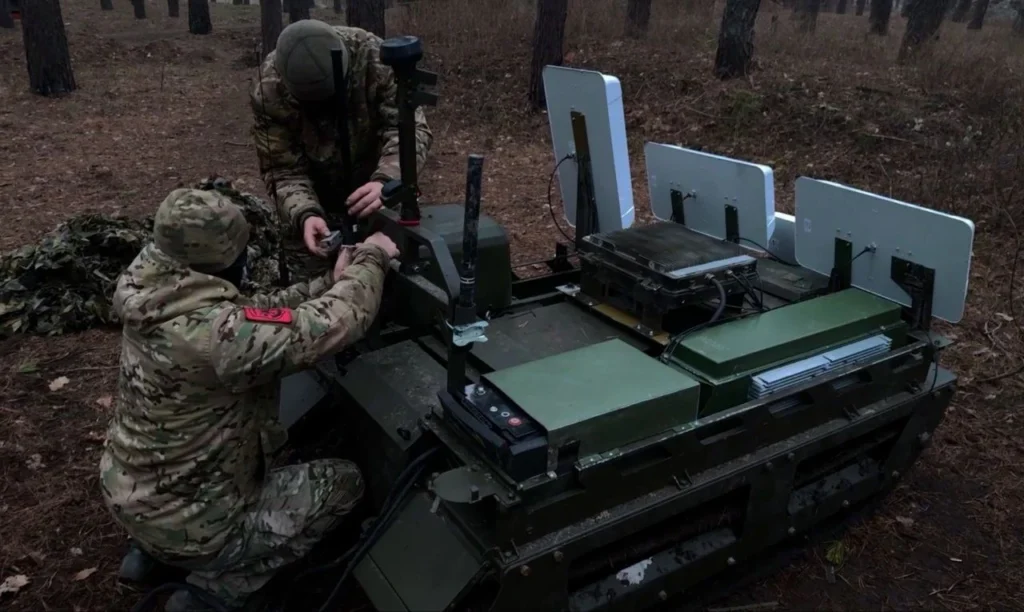
In December, several “Kurier” modifications were presented: one with a protective cage against drones; one with an engineering mine-clearing trawl; and one fitted with an AGS-17 automatic grenade launcher for remote fire at distances of up to 1.7 km. The creation of a fibre-optic version of the UGV has also been reported, as well as the use of “Kurier” for deploying smoke screens.
Reports from recent trials also describe a mobile electronic warfare station mounted on the “Kurier” chassis—this modification is intended to suppress FPV drone operations near the front line.
Serial production and deployment of the “Force” reconnaissance UAV
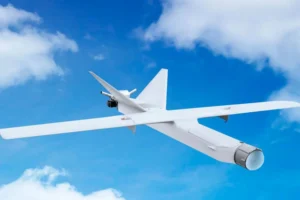
The Russian company Drone Force has launched serial production of the 15-inch “Force” reconnaissance unmanned aerial vehicle. The drone features shifted control frequencies and proprietary algorithms to counter electronic warfare. It is reported that the drone is already being used in the war against Ukraine.
“Force” is described as a “functional analogue of an FPV drone that outperforms Mavic-class solutions”. Its operating range is stated to be around 35 km; it is equipped with a thermal imaging camera and supports communications across 16 channels. The drone can carry up to 10 kg of payload, and it is therefore claimed to be used both for reconnaissance and for strike missions.
The manufacturer declares an output of around 600 drones per month.
Reconnaissance modification of the “Molniya-2R” loitering munition
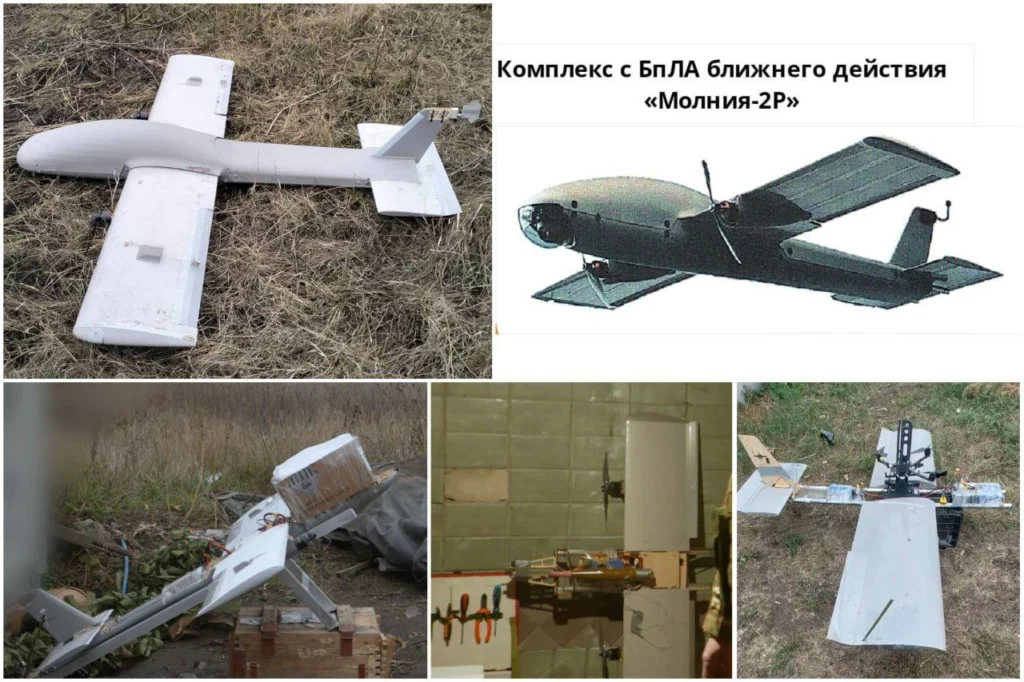
The Russian loitering munition “Molniya” has received a reconnaissance modification designated “Molniya-2R”. This version is fitted with a suspended camera and equipped with satellite communications terminals, including Starlink. Detailed characteristics have not yet been published by Russian sources; it is known that the strike version of “Molniya” has a range of 40–50 km and can carry a warhead of up to 10 kg. It is likely that the version without a strike payload has greater range and endurance.
Confirmed use of the “Nerekhta” unmanned ground vehicle
The Armed Forces of Ukraine destroyed a Russian unmanned ground vehicle that was subsequently identified as “Nerekhta”. Development of this system had been reported as early as 2021, but until now there had been no confirmation of its operational use.
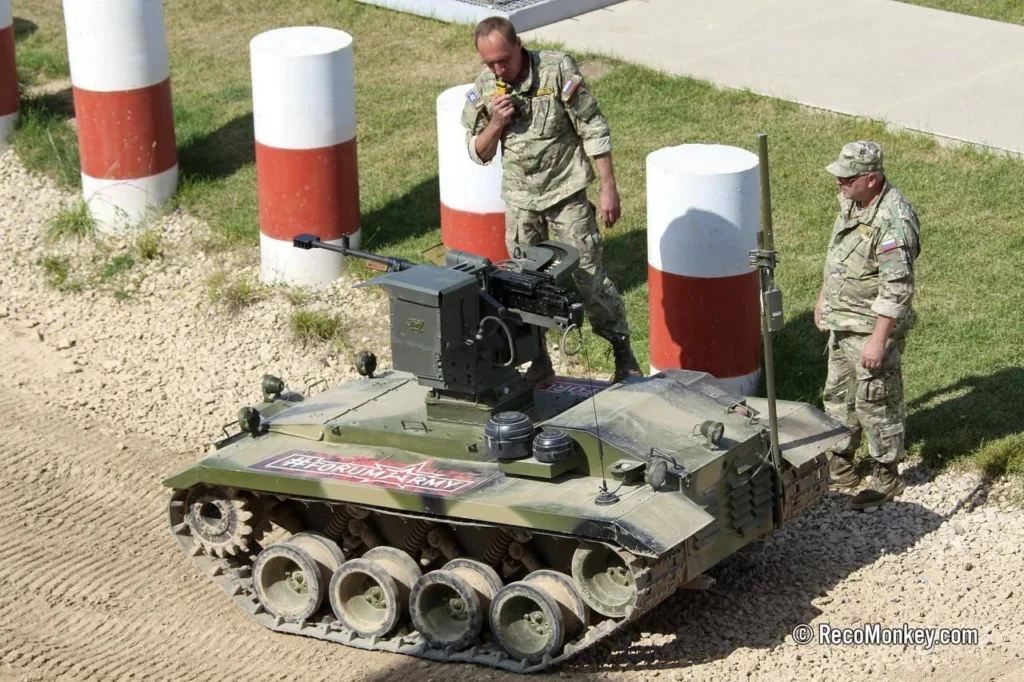
The platform is positioned as a multi-functional UGV for reconnaissance, patrol, logistics and combat tasks. According to open data, it has a modular architecture allowing the installation of various payloads, including weapon modules or specialised equipment.
Public technical descriptions state that “Nerekhta” has a combined powerplant, a video surveillance system with infrared and daylight cameras, and can reach speeds of “several tens of kilometres per hour”. At various times, the system has been demonstrated with machine-gun and grenade-launcher combat modules, as well as in variants for cargo transport and unit support. Military trials have been conducted, including in winter conditions, which were presented as tests of the platform’s suitability for operation in different climatic environments.
At the same time, there is currently no detailed information on serial production or delivery volumes.
Reading now
1

Ukrainian SkyFall’s drone wins at Pentagon’s Drone Dominance selection
2
Black Forest Systems raises $400,000. Here’s what drones the startup is building
3
Sting interceptor by Wild Hornets downs costly Russian Granat-4 reconnaissance drone
4
UForce unveils Bucha middle-strike drone with a 200 km range
5
The F10 drone becomes the second Ukrainian finalist in the Pentagon’s Drone Dominance Program
By submitting this form, you give Defender Media consent to the processing of personal data.
Надсилаючи цю форму, ви надаєте Defender Media згоду на обробку персональних даних.

Latest news
1
DPA to diversify drone and ammunition orders among multiple suppliers
2
‘Ukrainska bavovna’ and Czech company Pavetra Aerospace to produce Shuhay UAV through joint venture
3
59th Assault Brigade downs Russian Ka-52 helicopter with General Cherry OPTIX FPV drone
4
Tencore develops evacuation module for TerMIT UGV
5