What the controlled export of Ukrainian weapons will look like: clarifications from Umerov, Kamyshyn, Tsilvik and Fedirko
The first exports will primarily involve Ukrainian unmanned systems — aerial, ground and naval
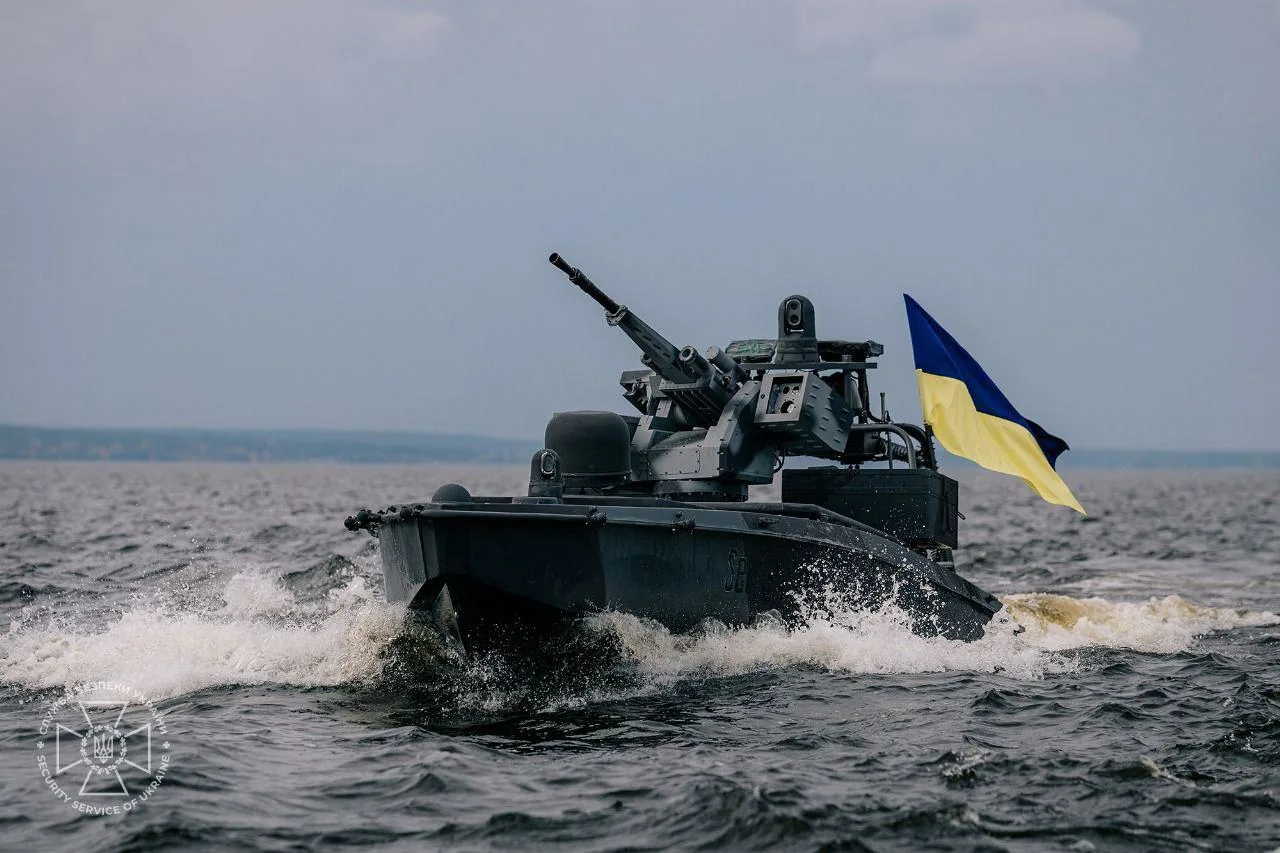
Naval drone Sea Baby / Image courtesy of SSU
On November 6, a meeting at the National Security and Defence Council (NSDC) was devoted to the controlled export of Ukrainian weapons. Speaking to journalists were NSDC Secretary Rustem Umerov, Presidential Strategic Adviser Oleksandr Kamyshyn, acting head of the State Service for Export Control Oleh Tsilvik, and Executive Director of the Ukrainian Council of Defence Industry Ihor Fedirko. Defender Media attended the meeting — here are the key points.
TL;DR
- The first exports will primarily involve Ukrainian unmanned systems — aerial, ground and naval — and only those produced in excess.
- The first actual contracts are expected no earlier than the second half of 2026.
- Of more than a thousand Ukrainian defence companies, fewer than half are currently ready to complete the required technical procedures and obtain export permits.
- Weapons may be exported only to countries on a list approved by the NSDC — initially those with which Ukraine has signed security agreements.
- If the Security and Defence Forces urgently need a system already cleared for export, the export licence may be suspended or revoked.
- Residents of Defence City will receive simplified access to export, international-transfer and co-production procedures.
Why open the export market
At the NSDC meeting it was announced that in 2025 the Ukrainian defence industry will be capable of producing military goods worth $35 billion. Still, funding will cover at most half of that volume. In 2026, the sector’s potential could reach $60 billion.
Speakers noted that such sums cannot be raised either from the state budget or partner assistance, so part of production will operate for controlled export to friendly countries. This will help maintain production rates, preserve jobs, and bring foreign-currency revenue into the defence sector.
According to officials, excess capacity should not stand idle: part of the output will go to the front, part to export. The resulting duties and taxes will provide resources for new contracts benefiting the Security and Defence Forces.
What and how will be exported
Speakers stressed that Ukrainian unmanned systems — aerial, ground and naval — will be the first to enter export markets. To boost export potential, joint projects are being launched under the “Danish model,” as well as through the Build in Ukraine and Build with Ukraine initiatives. This means partners will invest either in weapon production inside Ukraine or in joint facilities on their own territory.
The first real contracts are expected no earlier than the second half of 2026, as time is needed for testing, certification and partner procurement procedures. Although export opportunities are open to the entire market, fewer than half of Ukraine’s 1,000+ defence firms are currently ready to complete the necessary technical steps and obtain licences.
If a company meets the criteria for export access and has surplus production not required by the Security and Defence Forces, it may apply for an export licence from the State Service for Export Control (SSEC). Within 90 days the SSEC verifies all data and grants approval.
Determining surplus capacity involves several stages:
- The SSEC issues an interdepartmental inquiry;
- The Defence Ministry consolidates needs;
- The Interdepartmental Commission on Military-Technical Cooperation and Export Control, involving all security agencies, makes collective decisions or recommendations;
- The export licence is issued after coordination with both the SSEC and the NSDC commission.
This procedure, speakers said, ensures a double layer of oversight — technical and security.
The state will retain full control over each weapon’s end user: no product may be resold without Ukraine’s consent. Post-export monitoring will operate, including intelligence oversight.
The NSDC will form and update a comprehensive list of countries authorised to receive Ukrainian weapons. The first entries will be those with which Ukraine has signed security agreements.
If the Security and Defence Forces urgently need a particular weapon approved for export, its licence can be suspended or cancelled.
What representative offices in Europe will do
As Defender Media previously reported, Ukraine is opening its first defence-industry offices in Berlin and Copenhagen — the countries that have invested most in developing Ukraine’s defence sector.
Officials explained that these offices will serve not only as showrooms but also as cooperation hubs for governments, armed forces and businesses. Each office will feature three zones:
- Open — for public displays and demonstrations;
- Closed — for military planners;
- Office — for negotiations and contract work.
Additional offices are planned in the United States and countries of the Global South. The goal is to share Ukraine’s defence experience worldwide and establish it as a strategic brand.
Reading now
1
Ukrainian SkyFall’s drone wins at Pentagon’s Drone Dominance selection
2
Black Forest Systems raises $400,000. Here’s what drones the startup is building
3
Sting interceptor by Wild Hornets downs costly Russian Granat-4 reconnaissance drone
4
UForce unveils Bucha middle-strike drone with a 200 km range
5
The F10 drone becomes the second Ukrainian finalist in the Pentagon’s Drone Dominance Program
By submitting this form, you give Defender Media consent to the processing of personal data.
Надсилаючи цю форму, ви надаєте Defender Media згоду на обробку персональних даних.

Latest news
1
DPA to diversify drone and ammunition orders among multiple suppliers
2
‘Ukrainska bavovna’ and Czech company Pavetra Aerospace to produce Shuhay UAV through joint venture
3
59th Assault Brigade downs Russian Ka-52 helicopter with General Cherry OPTIX FPV drone
4
Tencore develops evacuation module for TerMIT UGV
5