Dorozvidka #12: Bulava, interceptor drones, Ukraine’s missile programme, and Brooks Newmark on his role in Trypillian
Highlights from the editorial backlog over the past week
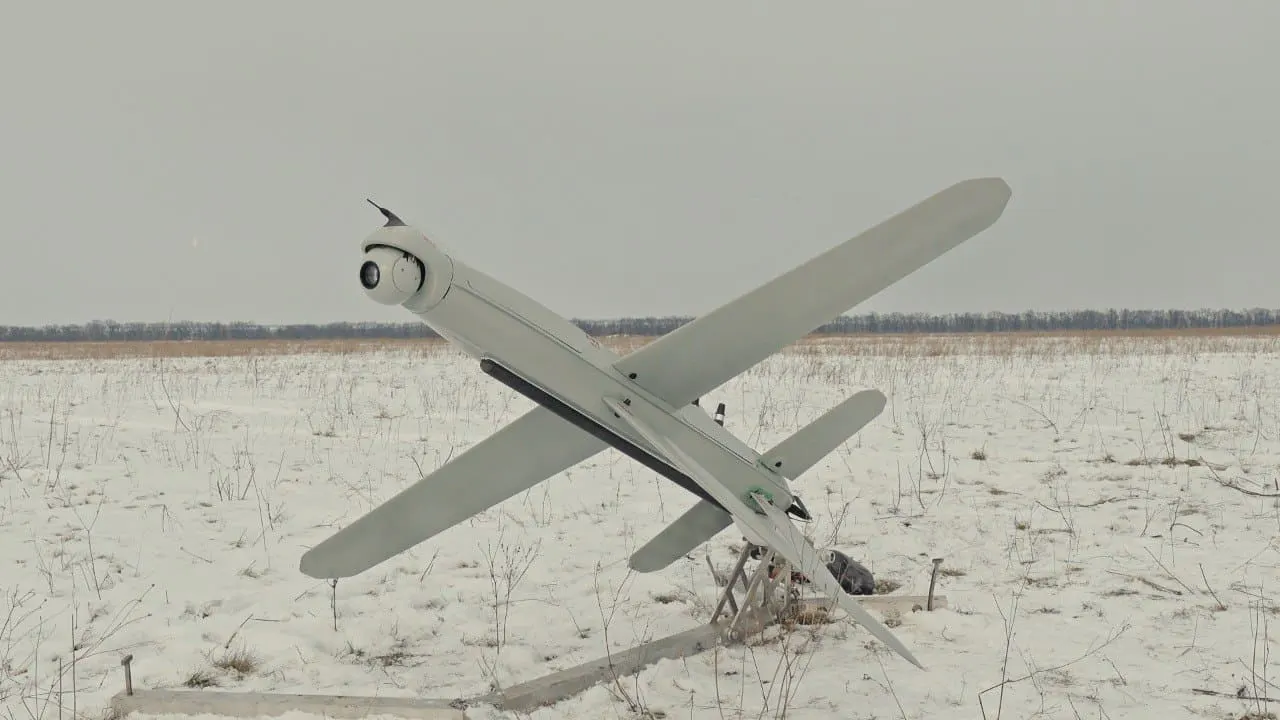
Фото: DeViRo
Last week saw new reports emerge about operation “Spiderweb,” in which Ukraine’s Security Service (SBU) struck a significant portion of Russia’s long-range aviation fleet. Sources at the SBU told Babel that engineers developed special drones for this mission, capable of being remotely operated in real time from thousands of kilometres beyond Ukraine’s borders. The system was also designed to bypass Russian air defences.
As always, Dorozvidka by Defender Media rounds up the most important defence tech news from the past week — from media reports to key statements by military officials, politicians, investors and experts.
Brooks Newmark – Co-founder of Trypillian
At the end of May, it was revealed that British-Ukrainian defence tech startup Trypillian had secured $5 million in investment from former UK government minister Brooks Newmark.
On 12 June, Forbes Ukraine published an interview with Newmark, in which he disclosed that he is actually a co-founder of Trypillian — meaning this is not a traditional venture deal. Nonetheless, it remains the largest public investment by a foreigner into a single Ukrainian defence tech company.

According to Newmark, Trypillian is currently developing three products. The first is a deep-strike drone for attacking targets far behind enemy lines. The second is a drone swarm system, and the third is a potential venture into atmospheric satellites. He expects at least two of the three products to be ready within three months. By the end of the year, Trypillian aims to produce over 1,000 drones.
Fedorov on the Bulava drone
Minister for Digital Transformation Mykhailo Fedorov has released combat footage of the Ukrainian VTOL drone Bulava. It’s a strike-reconnaissance system developed by DeViRo in partnership with the Brave1 defence tech cluster. Fedorov stressed that Bulava is already operational and outperforms the Russian Lancet drone on several key metrics.

According to Fedorov, Bulava does more than just hit targets — it “does so accurately, deep behind enemy lines, and in the toughest conditions.” The drone:
- Possesses several unique features that remain classified for security reasons.
- Eliminates high-priority targets such as electronic warfare systems and air defence platforms (Buk-M, Tor, etc.);
- Strikes both stationary and mobile targets;
- Provides real-time video confirmation of successful strikes.
Zelensky signs fibre optic exemption and announces interceptor drones
On 13 June, President Volodymyr Zelensky signed a law exempting fibre optic components for drones from VAT and customs duties. The legislation had earlier been approved by the Verkhovna Rada.
Last week, Zelensky also took part in the “Ukraine – Southeast Europe” summit, where he announced that Ukraine would strengthen the protection of its energy infrastructure with anti-aircraft interceptor drones. These solutions, he said, are actively being developed and funded.
Updates on Ukraine’s missile programme
Deputy Defence Minister Anatolii Klochko spoke to ministry spokesperson Dmytro Lazutkin on the Ministry of Defence’s YouTube channel. Klochko said that the missile programme now functions as a separate system with clear management and direct coordination with manufacturers. It draws funding from several sources, including foreign partners and private enterprises. As of June 2025, 47% of the missile programme’s budget has been executed. Klochko added that Ukraine’s defence-industrial complex is currently meeting up to a third of the armed forces’ weapons needs.

Valentyn Badrak, Director of the Centre for Army, Conversion and Disarmament Studies, shared further details about Ukraine’s Sapsan ballistic missile in a piece for Liga.net. He stated that the missile’s warhead weighs 480 kg. During trials, Sapsan reached speeds of Mach 5.2 (1,769.5 m/s), significantly faster than American ATACMS missiles (Mach 3 or 1,500 m/s), and approaching the velocity of Russia’s Iskander-M (Mach 6 or 2,100 m/s). Badrak reiterated that the missile successfully completed combat testing in May 2025 and has now entered serial production.
Reading now
1
Ukrainian SkyFall’s drone wins at Pentagon’s Drone Dominance selection
2
Black Forest Systems raises $400,000. Here’s what drones the startup is building
3
Sting interceptor by Wild Hornets downs costly Russian Granat-4 reconnaissance drone
4
UForce unveils Bucha middle-strike drone with a 200 km range
5
The F10 drone becomes the second Ukrainian finalist in the Pentagon’s Drone Dominance Program
By submitting this form, you give Defender Media consent to the processing of personal data.
Надсилаючи цю форму, ви надаєте Defender Media згоду на обробку персональних даних.

Latest news
1
DPA to diversify drone and ammunition orders among multiple suppliers
2
‘Ukrainska bavovna’ and Czech company Pavetra Aerospace to produce Shuhay UAV through joint venture
3
59th Assault Brigade downs Russian Ka-52 helicopter with General Cherry OPTIX FPV drone
4
Tencore develops evacuation module for TerMIT UGV
5