D3 comes out of the shadows: inside the fund’s 16-startup portfolio
At least half of the portfolio consists of Ukrainian companies that have received a total of $1.5 million in funding from D3

The D3 investment fund has recently stepped out of the shadows, unveiling details about 16 startups it has backed over the past two years. At least half of its portfolio consists of Ukrainian companies. Defender shares the key insights about the fund and the companies it supports.
About the Fund
The Dare to Defend Democracy (D3) investment fund was established in 2023. It focuses exclusively on defence innovation. The fund’s managing partner is Evelyn Buchatsky, well known in Ukraine for her work with Eastlabs, TA Ventures, and TechStars. Other team members include partners Anton Verkhovodov and Elya Checheneva, as well as investment manager Taras Lutsiv. Among the fund’s investors is former Google CEO Eric Schmidt.
D3 invests at the early stage. Its standard cheque size is $125,000, though the fund has announced plans to increase this amount. At the Invest in Bravery conference on 30 April, Verkhovodov stated that D3 has invested approximately $3.7 million since its inception, around $1.5 million of which has gone to Ukrainian startups. According to him, the fund has already made several follow-up investments in portfolio companies.
Today, D3 is one of Europe’s most active defence tech investment funds. Until recently, information about its investments came mainly from its portfolio companies. However, in April 2025, the fund independently published a comprehensive list of the majority of its investments.
“We’ve worked in silence for a long time, building a portfolio of solutions and supporting founders who are reimagining the modern battlefield. But now it’s time to speak openly about what’s working, what we’re learning on the front lines, and what our teams are building right now,” D3 stated.
About the Portfolio
In less than two years, D3 has funded 16 defence startups across five countries and ten technological verticals in defence tech.
These include developers of autonomous drones, robotic systems, counter-drone technologies, tactical navigation tools, and threat detection systems. Two companies remain undisclosed: one is reportedly developing air defence systems against drones and missiles, the other is focused on battlefield energy solutions.
Below is a brief overview of D3’s publicly known portfolio companies.
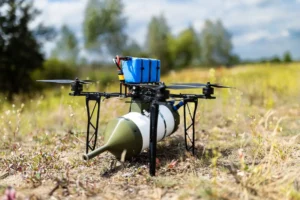
The Ukrainian startup Ailand Systems focuses on the development of autonomous drones for demining, agriculture, and sustainable development. Their drones are equipped with LiDAR and AI technologies, enabling them to operate effectively in challenging environments. In July 2024, the company raised $200,000 from Uklon founders, received a grant from the state-run Brave1 cluster, and had previously won funding from Google. Its flagship product is the ST1 drone, built from the ground up specifically for landmine detection. It automates the demining process, making it faster, safer, and more cost-effective.
Another Ukrainian venture, Airlogix, designs unmanned aerial vehicles for both military and civilian applications. Its platforms include electric VTOL (vertical take-off and landing) drones, enabling efficient delivery and reconnaissance. Founded in 2020 to develop commercial UAVs for medical delivery, the company pivoted to defence applications following the full-scale invasion of Ukraine. Its primary product, the GOR UAV complex, is a tactical reconnaissance drone with a flight range of up to 100 kilometres, a communication module resistant to electronic warfare, and the ability to serve as a repeater for other drones. A Diia.City resident, the company holds state contracts and, according to CEO Vitaliy Kolesnichenko, has already raised over $1 million in funding—with plans to double that for further scaling.
Buntar Aerospace, another Ukrainian defence startup, produces the Buntar reconnaissance UAV and the Buntar Copilot software, which automates UAV mission planning and execution. The project was recognised as Startup of the Year 2024 by the Innovation Development Fund Award. Co-founder Bohdan Sas told Defender in an interview that the startup has already secured close to $4 million in investment.
Drone Space Labs operates as a Ukrainian R&D facility focused on UAV development. Its product range includes the multi-purpose “Vuyko” UAV; attack drones such as the “Banderyk”, “Banderyk-24”, and “Velykyi Banderyk”; the “Dronarnia” ground control station; the “Shukhevych” attack UAV; the Eagle Interceptor drone; the “Vidlunnia” signal repeater; and an electronic warfare dome system. The company also collaborates with the NGO “Dronarnia” to train both drone pilots and engineers. To date, it has not publicly disclosed any investment from external funds.
Flightmind, another Ukrainian startup, develops innovative image processing and machine learning solutions, particularly navigation systems that function without GPS. These allow UAVs to navigate in GPS-denied environments, such as under intense electronic warfare. In 2024, the team won hackathons organised by the Ministries of Digital Transformation and Defence, and previously represented Ukraine at the VivaTech 2023 exhibition in Paris. No further public details on their technology have been released.
The Ukrainian company Frontline develops reconnaissance UAVs—specifically the Zoom and “Linza” drones—as well as combat robotic modules such as the “Storm” turret for the 40mm Mk 19 grenade launcher. Their products integrate visual navigation systems that function without GPS and utilise proprietary communication platforms. According to the company, seven of its technologies are already deployed by the Armed Forces of Ukraine. The startup recently closed a seed investment round, with Quantum Systems joining as lead investor and strategic partner.
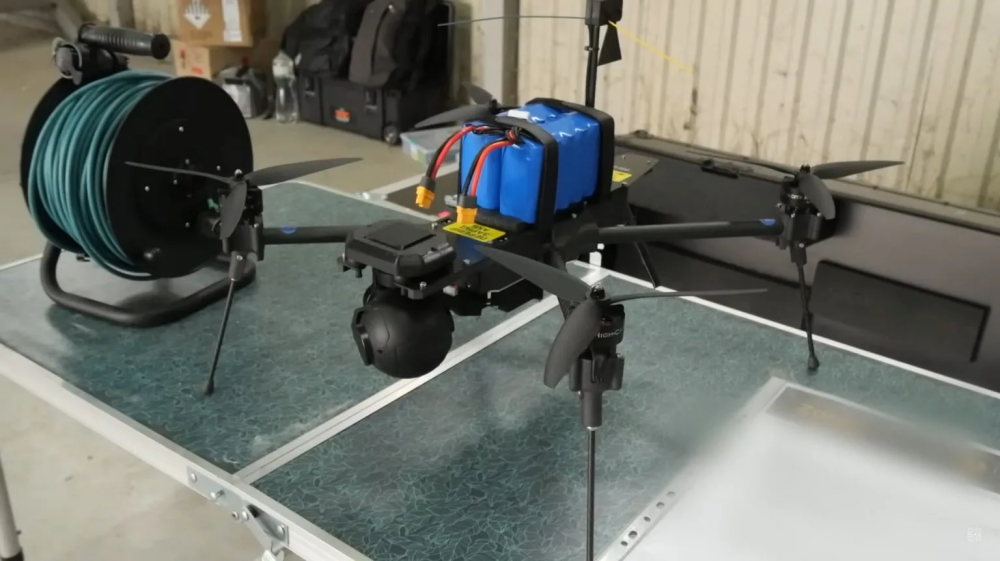
Swarmer, also Ukrainian, is working on technologies for autonomous coordination between robotic units, enabling them to execute complex group operations in challenging conditions. Their AI-based software enables a single operator to assign tasks to an entire drone swarm, authorising or cancelling actions as required. Swarmer was featured at the “Arsenal of Talents” event in March and was recognised as one of the most promising dual-use technology projects. In 2024, it secured $2.7 million in funding, with American defence firm R-G.AI leading the round and Radius Capital, Green Flag Ventures, and D3 also participating.
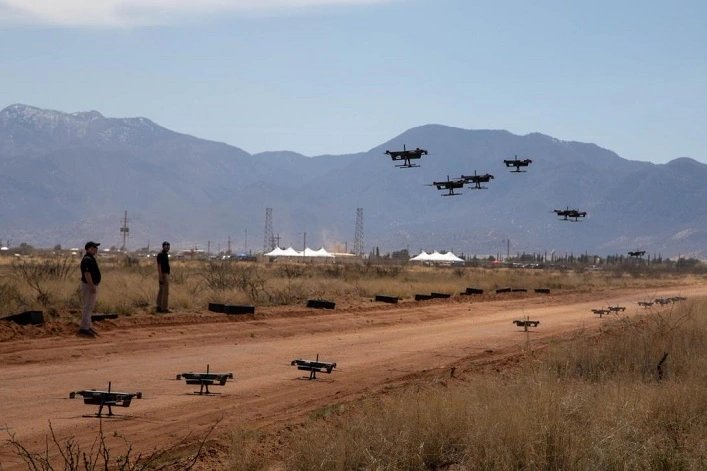
TYTAN Technologies, a European startup, develops cost-effective solutions to counter drone threats, applicable both on the battlefield and at critical infrastructure sites. The company collaborates with UXS Alliance and ARX Robotics. Its products, engineered in Germany, are currently undergoing battlefield testing in Ukraine. TYTAN participates in the Brave1 cluster in Ukraine and has received grants from the Bavarian government in Germany.
Zvook is a Ukrainian project working on a network of acoustic sensors designed to detect airborne threats such as drones and missiles. Their technologies enable early warning and rapid response. Zvook offers both networked systems for monitoring airspace and portable models for mobile fire teams. The latter operates at distances of up to one kilometre and classifies airborne targets within one minute of deployment. Networked sensors also determine a target’s altitude, velocity, trajectory, and coordinates. The system relies on machine learning algorithms for its analyses.
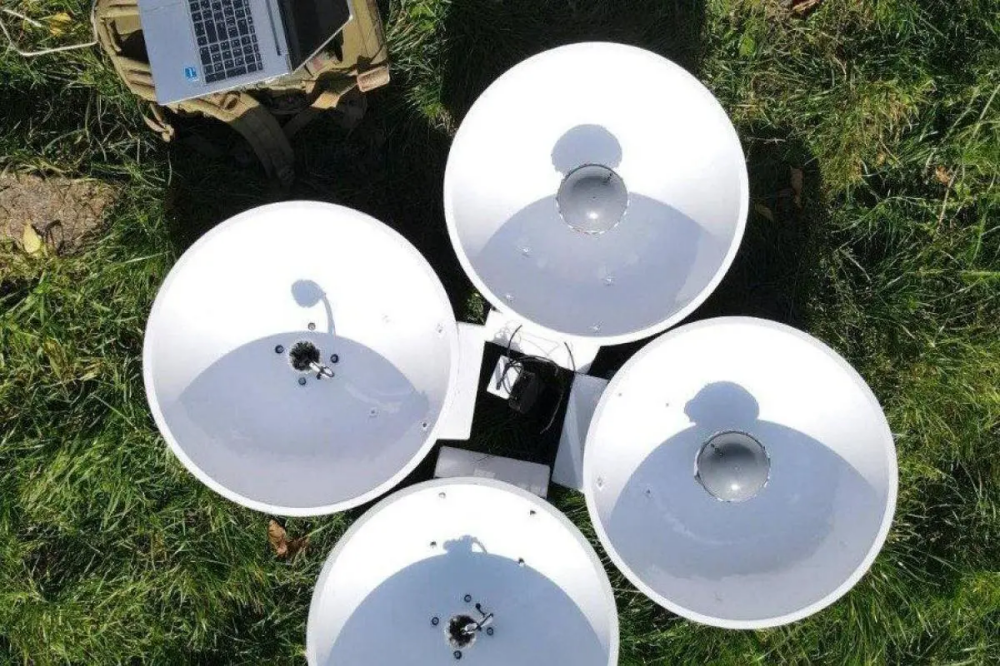
US-based Guardian RF develops radio frequency-based detection systems for identifying and neutralising hostile drones. Its technology can reportedly detect drones from up to five kilometres away and locate their operators. Its flagship products include the Scout portable drone detector and the Mosaic Sensor Network, which enables mapping and monitoring of drone activity. These systems have been tested under combat conditions in Ukraine.
The German firm HIGHCAT develops drones for use by military and law enforcement agencies. Its UAVs are used for surveillance, reconnaissance, and tactical missions. Two known models are the HCI and HCP reconnaissance quadcopters. In mid-2024, the company began testing its new HCX drone, equipped with fibre-optic control, and capable of flying up to 20 kilometres, in Ukraine.
Israeli startup Kela Technologies builds secure platforms for integrating civilian technologies—such as AI models, sensors, and other devices—into military operations. Initially founded to combat threats from Hamas, the company is now targeting broader defence markets, particularly those involving drone integration. Kela has raised $11 million from Sequoia and an additional $28 million from Lux Capital. After completing initial trials, it intends to enter the European and US markets.
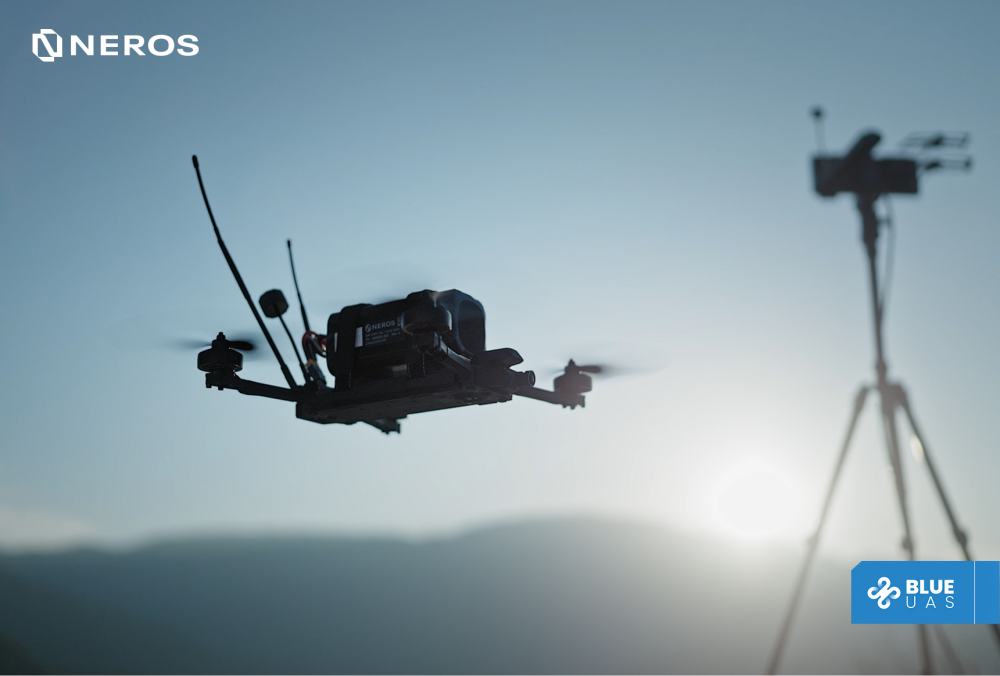
American startup Neros Technologies is focused on developing next-generation UAVs. In March, the company signed a contract under the “International Drone Coalition” to deliver 6,000 FPV kamikaze drones to Ukraine within six months—reportedly the largest delivery from any US drone producer to date. Its key products include the Archer FPV attack drone, the Crossbow electronic warfare ground station, and the Longbow long-range control station. In March, Neros raised $35 million in funding from Sequoia Capital, Interlagos, D3, and Keller Rinaudo Cliffton.
STRIDAR is an American company specialising in scalable robotic demining systems that enable the safe and efficient disposal of explosive ordnance. Its modular unmanned ground vehicles (UGVs) are purpose-built to support logistics, clearance, and mobility operations across military, civilian, and commercial sectors. The company has not publicly disclosed any information about investor funding.

Reading now
1
Ukrainian SkyFall’s drone wins at Pentagon’s Drone Dominance selection
2
Black Forest Systems raises $400,000. Here’s what drones the startup is building
3
Sting interceptor by Wild Hornets downs costly Russian Granat-4 reconnaissance drone
4
UForce unveils Bucha middle-strike drone with a 200 km range
5
The F10 drone becomes the second Ukrainian finalist in the Pentagon’s Drone Dominance Program
By submitting this form, you give Defender Media consent to the processing of personal data.
Надсилаючи цю форму, ви надаєте Defender Media згоду на обробку персональних даних.

Latest news
1
DPA to diversify drone and ammunition orders among multiple suppliers
2
‘Ukrainska bavovna’ and Czech company Pavetra Aerospace to produce Shuhay UAV through joint venture
3
59th Assault Brigade downs Russian Ka-52 helicopter with General Cherry OPTIX FPV drone
4
Tencore develops evacuation module for TerMIT UGV
5