March 13, 2026
Defender speaks with the co-founder of one of Ukraine’s most promising defence tech startups, which has already raised nearly $4 million

The Ukrainian startup Buntar Aerospace develops reconnaissance drones and software for them. Last week, the project was named one of the three winners of the DOU Awards in the “Most Promising Project in the Defence Tech Sector” category. To date, the project has secured nearly $4 million in investments and plans to close a new, even larger funding round in 2025. Defender spoke with Buntar Aerospace co-founder Bohdan Sas about last year’s breakthrough in Ukrainian defence tech, the industry’s key challenges, the company’s product lineup, sales funnel, and plans for the near future.
It was a breakthrough — the market took a huge step forward. There were multiple times more new projects, investments, and collaborations between startups. We now have some quite mature companies in the sector. Additionally, more opportunities for international cooperation have emerged. For instance, the UK Ministry of Defence has granted our companies access to several of its tenders.
These observations are backed by research data. A year and a half ago, when we were just launching Buntar Aerospace, securing even a million dollars in investment for a Ukrainian defence tech project seemed like a dream. There were no more than ten relevant venture funds worldwide, and even they hadn’t yet raised capital for their funds. But now, there are dozens—possibly even a hundred—active pre-seed investors who are seriously considering Ukrainian startups.
I don’t really want to talk about this, but the reality is that “busification” has become a serious issue for defence startups. The Territorial Recruitment Centers (TRCs) are cleverly manipulating the laws. At one point, everyone suddenly found themselves on a wanted list—even those who had updated their records on time and passed the military medical commission. While most defence startups have the option to reserve employees from mobilization, this often gets blocked by bureaucratic hurdles and arbitrary decisions.
To get an exemption, you need to update your records. But to update your records, you have to visit the TCC. And if you step into the TCC and they haven’t met their conscription quota, the usual “Soviet-style” moral pressure begins. When a recruitment officer starts swearing at a reserved engineer, telling him his life is worthless and that, with or without an exemption, he’ll end up at the front anyway—some people break. And once they end up in a distribution center, there’s no way to get them out.
Unfortunately, this happens, and I don’t want to stay silent about it. I believe there are solutions if people stop turning a blind eye. Of course, mobilization is necessary—I know what’s happening on the front lines. I frequently visit frontline units, and my co-founder at Buntar Aerospace, Ivan Kaunov, enlisted at the start of the full-scale war and is still serving today.

But right now, mobilization feels more like lawlessness. Just a week before this interview, another one of our employees was mobilized, bringing the total to five. These specialists are extremely difficult to replace because we set a very high bar for expertise. And it’s not just us — colleagues from other companies in the industry regularly call me, asking if I can help in any way. But I’m in the same situation myself.
Small adjustments won’t solve anything. The only way forward is through radical changes. Right now, there is no real protection from the TCCs, which is why they operate in a state of total lawlessness. We have two ongoing court cases for our employees, but what’s the point if one of them has already been through three combat rotations? He’s a soldier now—there’s no going back. The system needs a complete overhaul.
When an employee is placed on a “special reserve” list and officially exempted, they should be fully protected and able to work without disruption. But the process of updating one’s exemption status is a nightmare. The moment you enter a TCC, there’s a 90% chance you won’t walk out—even if you have a full set of documents from an employer recognized as critical infrastructure. They simply don’t care.
The first thing I’d change is this system. Employees of critical infrastructure companies should be able to update their records without such risks. Right now, no document offers any guarantees. There’s a very high probability you’ll be conscripted in the least humane way possible.
Of course, there’s another side to this issue. The number of so-called critical infrastructure companies has exploded. About 90% of these exemptions were issued by regional military administrations—to random entities like “Taxi Services of Khmelnytskyi” or the “Traveling Circus of Cherkasy.” But defence companies are designated critical by the Ministry of Defence or the Ministry of Strategic Industries. That means the project is genuinely important for national security, doesn’t it? We didn’t get our status through a vote in some regional council.
There are people in the government who could influence this. They just need to say outright that the TCCs shouldn’t be operating this way. But right now, everyone is silent—no one wants to take on the political burden of addressing this problem.
There’s another big one—many people, including some of our international partners, actually believe the war is winding down. A third of them ask us, “Well, the war is almost over, so what are your future plans? Maybe you should pivot from military drones to dual-use technology?”
Come on. This war will last for decades — at least, that’s my gut feeling. It will go through different phases, with varying levels of intensity, but it will drag on. We’ve been in a state of war since at least 2014, and emotionally, since 1991. And I don’t see how that could change anytime soon. Honestly, I’d consider it a positive outcome if this conflict doesn’t escalate into World War III.
Last year accounted for most of our project’s lifetime, and we went through everything imaginable. We secured nearly $4 million in investment. We built our first team — but we moved too slowly, so we had to restructure. Then came intense R&D, working on multiple projects at the same time. Eventually, we realized we had taken on too much. The next step was refocusing on the most effective projects. That’s where we are now.
In numbers: we developed 12 types of UAVs. That’s a lot. Normally, it takes about a year to develop just one — but we built more than ten. In the end, we took the best features from each model and created our flagship drone: the Buntar-3.

Over the past year, we’ve significantly improved our global outreach. Now, Buntar Aerospace is recognized not just in Ukraine but also across Europe, the UK, and the Middle East. These regions believe in our project and are already anticipating deliveries. That’s a great feeling.
From the start, our primary product was Buntar, a VTOL reconnaissance drone. But in combat, the ideal solution is a kill chain, a system that not only detects a target but eliminates it as well. This isn’t something a single operator with one drone can achieve. It requires multiple components: an operational strike drone, a tactical strike drone, a swarm of drones, and so on.
The market lacked effective solutions for every element of this system, which made us want to develop everything at once. We saw gaps in different areas and felt strongly tempted to fill them all.
However, we soon realized that spreading ourselves too thin was becoming a major issue. We lacked focus. So, we made the tough decision to offload certain aspects to outsourcing. This included elements of the navigation system, swarm management (which we’re now planning to develop in partnership with Swarmer), and other technologies.
Yes, we secured additional funding commitments, bringing our total investment to nearly $4 million. We’ve invested in R&D, manufacturing, and our team.
A lesser-known fact is that last year, we executed three small M&A deals. Essentially, we integrated three teams into Buntar Aerospace — along with their products.
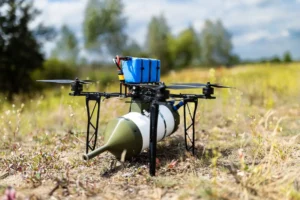
The first team specialized in communications and autopilot systems. The second focused on strike drones. The third developed a small reconnaissance drone, which eventually evolved into Skyhopper, now our most widely produced product.
Yes. Additionally, we’ve developed Buntar Copilot, a software solution that we spun off into a separate division last year. We don’t market it as a standalone product since we don’t sell it separately.
There are also a few other exciting developments that we haven’t publicly announced yet, but we’ll share them closer to release. However, our flagship product is Buntar-3 — everything else revolves around it.
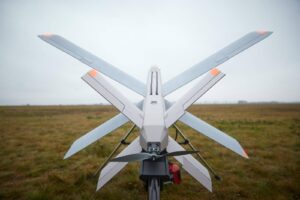
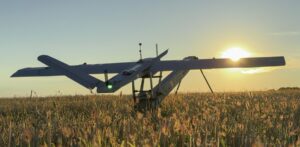
Buntar-3 is a high-end VTOL reconnaissance drone—a true engineering masterpiece. Every single component in it delivers best-in-class performance.
We’ve integrated the best technologies available: top-tier wing design, aerodynamics, battery efficiency, motor performance, VTOL capabilities, and autopilot system. One of our partners put it best—we’re building a “boutique-class” drone. It won’t be mass-produced in huge numbers, but when it comes to high-precision reconnaissance for critical missions, Buntar-3 is the drone you can rely on.

This drone, equipped with a top-tier camera, can stay airborne for at least four hours. We’re constantly experimenting with communication systems and navigation to refine its capabilities. I might be overhyping our product, but honestly, we’re thrilled with what we’ve built.
Now it’s time to deploy Buntar-3 in combat zones and begin international sales. These two parallel tracks are our main focus for the year.
Yes, but on a limited scale. We sold some Skyhoppers, some Buntars, and even a bit of software, but it wasn’t a large volume. This year, we’re fully focused on selling Buntar-3, with a goal of delivering around 100 units in both Ukraine and foreign markets.
Selling military drones isn’t like selling traditional tech — it’s a hands-on, field-based process. We’ve built a sales team and several flight units that accompany us to the front lines, where we carry out real combat missions with Skyhopper and Buntar-3 in the presence of potential buyers.
My co-founder, Ivan Kaunov, is an active-duty military officer. He has extensive experience with reconnaissance UAVs from various countries and understands firsthand what makes the best drone for modern warfare. That’s how we’ve been able to design the world’s best reconnaissance UAV, right here in Ukraine.
That said, active military service comes with responsibilities — his priority is executing combat missions. Naturally, he doesn’t have time for product demonstrations or sales. That’s where the rest of the team steps in.

That’s why I have to gain this experience myself and essentially live in the East. Meanwhile, Ivan is focused on finding international clients and building relationships abroad. I try to support him as much as possible. Plus, we have a great team that can handle most tasks independently.
The Skyhopper costs $6,500, and the ground station is $7,000. Previously, our minimum order was two drones and one ground station, totalling $20,000. Now, we’re trying to increase the average check by offering larger packages.
Buntar-3, depending on the configuration, ranges from $250,000 to $400,000 per system. The base package includes three drones and one ground station, with additional options depending on the buyer’s needs and budget. Customers can choose different communication systems, cameras, and batteries. Essentially, we offer two versions. The high-end version, as I mentioned before, is an engineering masterpiece—completely free of Chinese components.
Yes, they specifically requested it, and we can deliver it. Of course, this makes the product more expensive. However, considering that direct competitors of the Buntar-3 are priced up to $750,000, even our premium version remains highly competitive in terms of cost.
No, I was referring specifically to Buntar-3. Skyhopper is already selling at a fairly high volume. These are two completely different markets. Skyhopper is a reconnaissance drone that provides data only after returning to base. Such drones are much cheaper and serve specific types of missions.
For example, say I need to scout an area in the morning that I plan to target in the evening. The Skyhopper flies out, returns with the data, and we proceed accordingly.

When a real-time broadcast from a long distance is needed, more advanced drones like Buntar-3 are used, especially in areas with active electronic warfare and air defence, such as the Pokrovsk direction.
Here, we need to differentiate between the basic and top-tier configurations. The lower-cost version works with traditional artillery within a 40 km radius. It has a sectoral antenna, providing a 50 km range and 3-3.5 hours of flight time. Its primary purpose is to detect targets for artillery and adjust fire. Simple and reliable, with some savings on the battery and other components.
The reconnaissance UAVs currently used by the Armed Forces of Ukraine perform the same task, but they suffer from connection issues, unstable images, and rapid battery drain. You have to land one drone and launch another. The advantage of Buntar-3 is that we can operate multiple drones at the same time, make accurate calculations considering the wind, and ensure a stable connection. Because with current drones — I’m not naming them — they might run out of battery before reaching their destination, and then you’re left searching for them for hours in a dangerous area.

Buntar-3 is a new generation drone, which I call a “smart aircraft.” It calculates the time to return based on factors like wind, battery discharge curve, altitude, descent time, and more. When it signals that it will return in 20 minutes, we launch a second drone. We then swap out the battery for the first one, and it’s ready to go again. So, in reality, Buntar doesn’t just provide 3-4-5 hours in the air — it enables 24/7 reconnaissance.
Yes. The more expensive version is effectively a class of internal combustion engine drones. We can offer over 100 km of range and several hours of operation in areas with intense combat. I believe we’ll be able to demonstrate its capabilities in combat scenarios by April.
This is no longer a product for regular artillery, but for MRLS, multiple rocket launchers, and HIMARS. And I think our drone will surprise the enemy because, compared to internal combustion engine drones, it has a completely different thermal signature. On radar, they won’t be able to distinguish Buntar-3 from a large bird and certainly won’t recognize it as an internal combustion engine drone because Buntar doesn’t heat up that much. As a result, there’s a lower chance of air defense targeting it. Combined with MRLS, this drone will allow us to strike “high-value” targets, like S-400 systems.

It’s worth mentioning that Buntar-3 operates completely without GPS. On the battlefield, quality GPS is often unavailable, so from the very beginning, we sought ways to work without it. Half of the team said it wouldn’t work, but the other half insisted we could figure something out. Now, we can fly entirely without GPS — take off, land, and fly. We’re now finalizing everything in the fuselage, and it will be a masterpiece.
I wouldn’t call them competitors; they’re market colleagues with whom we actively collaborate and exchange experiences. In my opinion, apart from us, there are four serious manufacturers of reconnaissance drones in Ukraine. For example, Skyeton. Everything else outside the top five consists of small drones like Skyhopper or imports. Overall, there are over 80 UAV manufacturers in Ukraine.
It’s a complicated issue — right now, there’s more chaos than order. For me, it’s still a quest. Some people buy through logistics commands, some with their own budgets, and some with partner/volunteer funds. That’s why we diversify our risk by selling through various channels to different units. Things change every week — someone gets fired, someone is reassigned, and we need to renegotiate.
It’s a bit of a mess, which gives me a headache, but at the same time, it’s good because there are different sales channels and no single centralized one. If there was just one sales channel, it would create enormous corruption risks, and communication would be much harder because the responsible body would have an endless line.
We have 35 people now. Last year, we had some fluctuations, but now we’ve stabilized.
We don’t have many open public vacancies, but we always seek talent. Recently, my partner and I were discussing what the ideal ‘rebel’ (which is the meaning of the word ‘buntar’ in Ukrainian) profile looks like. We realized there are three criteria: competence, honesty, and the desire to achieve a common goal. Those are the people we look for. “Not our” people filter out quickly. But “our” people stay long-term and get immense satisfaction from building a next-generation defense company.
We are always happy to have avionics engineers, radio communication specialists, and production workers. Right now, we’re also looking for an SMM manager. We want to communicate our many achievements to the world.
We plan to break even in the first half of this year, no later than the second quarter. After that, we will most likely raise a new round of funding, probably in the third quarter. The investments will go towards scaling up. We will need to significantly increase our working capital, which means we’ll need a round of $3-5 million.
We’ll see. It might not be a venture investment, but rather a strategic partnership. We’ll be looking at two parameters — money and the partner’s capabilities.
Right now, we know exactly who we want to work with and where we want to go, as well as what we need for that. I’m specifically talking about an international partner who, besides money, can help with technology and business development. Among these partners are companies with extensive experience in the defense market, who have clients in dozens of different countries, including NATO members. And we understand how to access international contracts through them.

By submitting this form, you give Defender Media consent to the processing of personal data.
Надсилаючи цю форму, ви надаєте Defender Media згоду на обробку персональних даних.