Speaking or listening: how to choose your format of participation at events for defence startups and beyond
Liuka Lobarieva, COO of Calibrated, tells how startups can get the most out of events

In late May, Tech PR School and Calibrated hosted Defence Tech Comms Bootcamp 2.0 — a five-day online training designed for founders and CEOs of defence-tech startups, as well as PR professionals, communications specialists, and grant-writers working within the defence technology sector. During the bootcamp, Calibrated’s Chief Operating Officer and co-founder, Liuka Lobarieva, delivered a lecture on how startups can maximise their benefits from event participation. At the request of Defender Media, she distilled the main points of her lecture into a column.
Participating in industry conferences or exhibitions is one of the best tools for building a company’s public image. For startups, it’s an opportunity to showcase themselves to their target audience, attract new partners, present their developments to investors, expand their network, and more. There are many ways to get involved — from being an attendee to sponsoring an event. In this column, I will explain why each format of participation has its own advantages, and what those advantages are.
Speaking: the most resonant way to make your mark
This participation format is also the most budget-friendly if you’re an invited speaker, as organisers often cover accommodation and travel. However, this is only feasible if you’re a recognised expert in the field or have a breakthrough innovation that organisers deem valuable to the audience.
Delivering a conference talk offers numerous advantages. Since the number of speakers at any event is limited, being selected gives you a rare chance to stand out. You’re competing for attendees’ attention with only a few parallel sessions, and you have the opportunity to convey key messages to a highly targeted audience. Moreover, media representatives attend talks and panels, making it easier to start conversations with them afterwards.
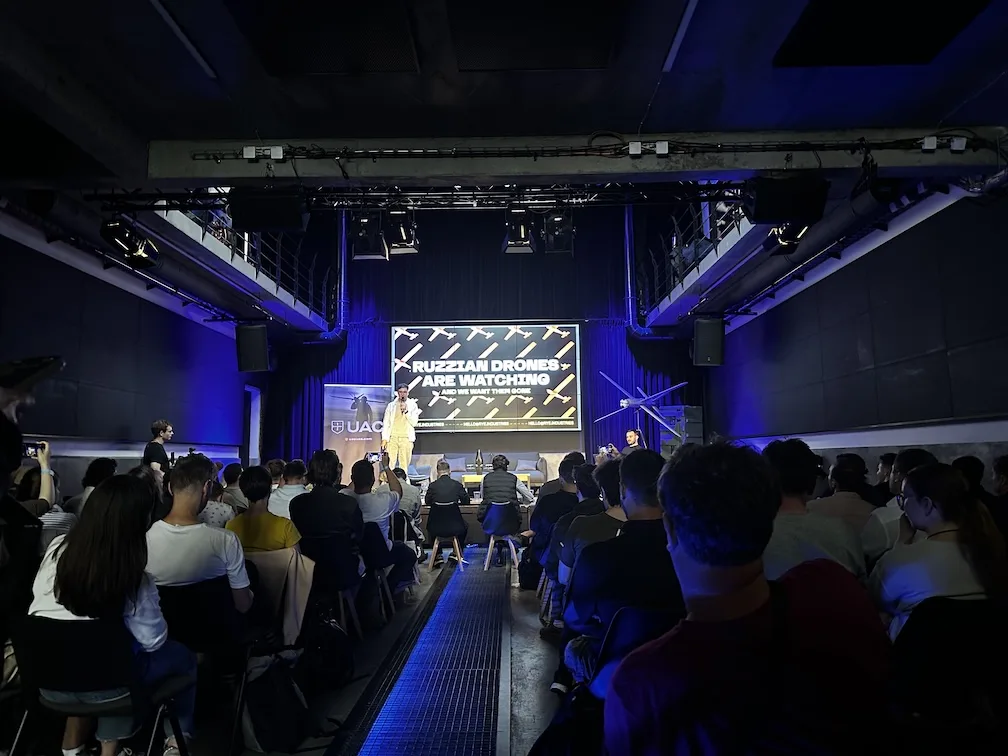
But speaking engagement also comes with its own nuances. Major conferences receive hundreds of speaker applications each year, and standing out when you’re the owner of a relatively unknown company can be quite difficult. You need to have an established expert reputation, often previous speaking experience, a compelling and current topic, and persuasive case studies or evidence showing why your insights would benefit a large audience. A strong personal brand and thought-leadership presence are also invaluable. However, if the topic isn’t interesting or the speaker is poorly prepared, the session could do more harm than good.
Pros of speaking at events:
- Direct contact with your target audience.
- Less competition for attention compared with, say, a stand at an exhibition.
- Opportunity to deliver your company’s core messages.
- Strengthening the speaker’s positioning as an expert in the niche.
- Chance to share your company’s experiences and case studies on stage.
- Attention from media, potential investors, partners, and users.
Things to keep in mind:
- If a speaker doesn’t pay to speak, competition for stage time is much higher, and paid slots at large conferences can often be unaffordable for startups.
- Poor preparation or an off‑topic theme can harm your impression rather than enhance it.
- If you’re not used to public speaking and expect questions from the audience, it’s wise to undergo public speaking training. Such training helps convey key messages effectively and equips you to handle challenging questions confidently.
- If participating in a panel discussion, research the profiles of your fellow panellists in advance—this way you’ll know if you’re sharing the stage with competitors, or producers of complementary products, and more. Beware that some international conferences still include Russian speakers—such proximity on stage could reflect poorly on your company.
Attending as a participant
Arriving at a conference as a delegate is the simplest and most budget‑friendly option, which is often underestimated. In the field of defence tech, where excessive publicity may even be undesirable, being “in the audience” offers a chance to work precisely, without unnecessary noise. First, it is the best way to assess whether the event is worth paying for a stand or another participation option next year: does the declared audience match the real one, is networking well organised, how are competitors presenting themselves, and what promotional opportunities does the event offer?
Attending is an opportunity to observe, and also allows unlimited time for networking, since you are not tied to a stand or the time of your talk. Naturally, competition for the attention of partners and investors is also intense, as other attendees will want to speak with them too—but this can be helped by solid prior preparation and scheduled meetings.
Good, quality questions from the audience also draw attention. If you listen attentively and ask non‑superficial questions, this attracts the attention of the speaker and other attendees, each of whom could turn out to be your potential partner.
Pros:
- Budget‑friendly participation. Many exhibitions and conferences are completely free for delegates, and some offer discounted tickets for startups.
- Flexible networking.
- The opportunity to assess the event’s relevance, analyse trends, evaluate competitors, and choose the best format for participation next year.
- The chance to meet the organisers and establish a warm contact for potential future speaker pitches.
Things to keep in mind:
- You will be competing for the attention of investors and partners with hundreds, and sometimes thousands, of other participants.
- Proactivity is essential: the quantity and quality of new contacts you acquire depend entirely on your own efforts.
- To ensure the event is worthwhile, it’s important to prepare: identify contacts of interest on LinkedIn, reach out to them, and schedule meetings in advance. Additionally, keep an eye on announcements from the organisers, pay attention to side events, and utilise internal networking apps—these tools allow you to select sessions, stands, and attendees that align with your interests.
Event sponsorship
Whether sponsorship is effective depends on various factors. Organisers often offer different packages: from title sponsorship to sponsoring badges or side events.
Being a small sponsor at a large conference often doesn’t make sense: it’s still expensive, and the chances of your logo being noticed among hundreds of others on the event’s website are slim. If you’re not a large company that can brand half of the venue, it’s better to choose a more niche involvement. For example, become a sponsor of a side event or organise your own—this way, you’ll attract your target audience from among all the attendees. However, it’s important to understand that you’ll be competing with other side events, so the topic, format, and speakers must be genuinely valuable to the audience.
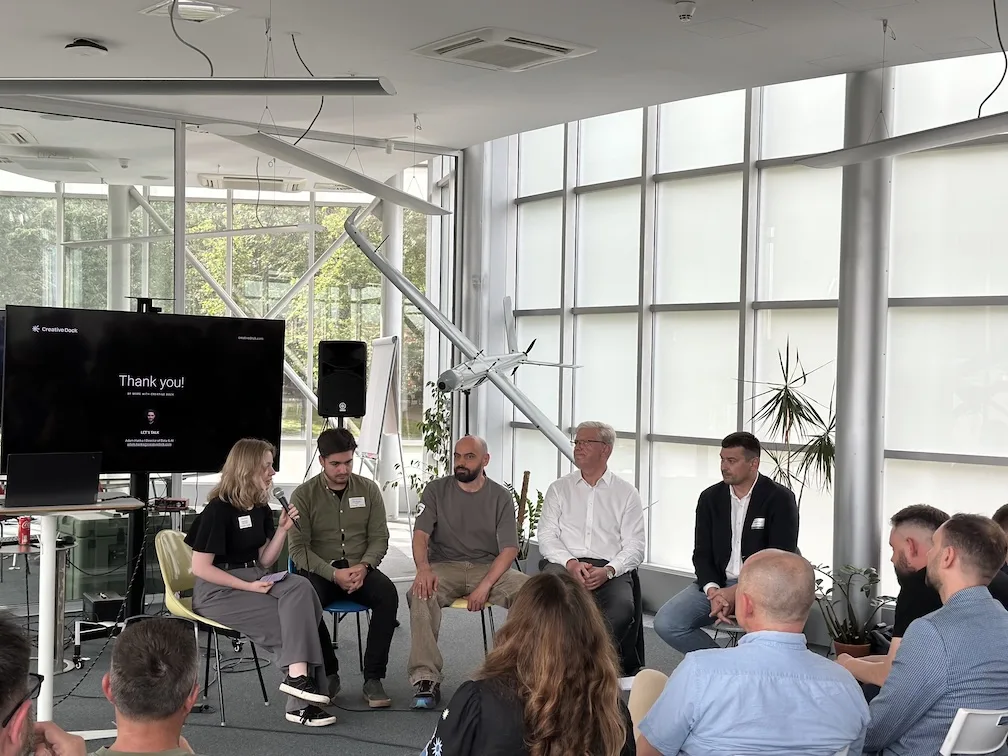
It’s important to immediately determine how you will measure the effectiveness of sponsorship: how sponsors are promoted, what is included in the promotional package, what your goals are, and which manifestations and results will be valuable to you. Instead of aiming for sponsorship at large conferences, consider focusing on local events that align with your target audience, such as boot camps, online events, etc.
Pros:
- Brand recognition
- Association with leadership positions in the niche
- Additional promotion from the organisers
Things to keep in mind:
- Sponsorship at large events can be costly and may not provide significant visibility if you’re just one of many sponsors.
- It doesn’t guarantee deep audience engagement.
- If you’re only listed as a sponsor on the website without direct contact points with the audience, measuring brand effectiveness can be challenging.
Participation in startup competitions or pitches
Such opportunities are often overlooked, despite being offered by many large international events. You don’t need a stand or a delegate ticket; simply register, pass the selection process, and gain the chance to present your developments to the audience. If your goal is to attract investor attention, this is spot on, as among dozens of startups, the focus will be on the 10–15 that pitch from the stage.
To choose the most relevant option, assess the composition of the jury. It’s preferable if they include military procurement officials, accelerators like NATO DIANA, or venture capitalists who have indicated interest in investing in defence or dual-use projects.
Often, the opportunity to apply for competitions or pitches opens later than registration for the main tracks and may not be immediately visible on the website—so stay alert.
Pros:
- Opportunity to pitch your startup to investors
- No additional financial investment required
Things to keep in mind:
- You need to prepare a strong pitch during the selection stage to stand out among other candidates.
- Invest time and effort into refining your presentation and honing your public speaking skills.
Participation with an exhibition Stand
Participating with an exhibition stand offers a prime opportunity to showcase your product from multiple perspectives. It facilitates direct engagement with an interested audience, allowing ample time for discussions, the inclusion of various team members at the stand, and the presentation of your product from both technical and business viewpoints.
However, exhibition stands come with substantial costs and significant competition. For large-scale exhibitions, meticulous planning and a dedicated budget are essential to ensure your stand stands out.
Pros:
- Close interaction with the audience.
- Plenty of room for creativity in stand design and communication with visitors.
- You have your own convenient location for meetings.
- Possibility to present your development in a pointed and individual way.
Things to keep in mind:
- Booths at major expos can cost tens of thousands of dollars.
- You will be competing for the attention of investors and customers with dozens of other companies, so you need to prepare and schedule meetings in advance.
- You need to prepare the team that will work at the stand well.
- If the stand is uninteresting or uncomfortable for visitors, the result will not be worth the money invested. For example, if the stand doesn’t stand out, there are no brochures or other handouts, the team is unprepared, and you won’t achieve tangible results.
It is also worth reminding you that any event you are invited to or have found yourself at should be checked. There have been cases where companies have received congratulations on their awards and alleged invitations to an event that turned out to be a scam to charge for participation. To avoid getting scammed, Google the event, look for reviews, the social media of the organisers, etc.
Given the specifics of the industry, you should also check who the final beneficiary is.

There is no single answer to which participation format to choose, just as there is no ‘right’ or ‘wrong’. Your decision should be based on your business goals and the current stage of your company’s development. If your goal is to build your brand through expertise, get ready to go on stage. If you have just started and the market, connections, and partners are important to you, high-quality networking is sometimes more effective than 15 minutes in front of a microphone. If you want to collect feedback from your target audience, a well-prepared stand will work. The key is to be where your company will be noticed by those who need you to grow.

Liuka Lobarieva
COO and co-founder of Calibrated agency, co-founder and ex-coordinator of Ukrainian PR Army
Reading now
1

Ukrainian SkyFall’s drone wins at Pentagon’s Drone Dominance selection
2

Black Forest Systems raises $400,000. Here’s what drones the startup is building
3

Sting interceptor by Wild Hornets downs costly Russian Granat-4 reconnaissance drone
4
UForce unveils Bucha middle-strike drone with a 200 km range
5
The F10 drone becomes the second Ukrainian finalist in the Pentagon’s Drone Dominance Program
By submitting this form, you give Defender Media consent to the processing of personal data.
Надсилаючи цю форму, ви надаєте Defender Media згоду на обробку персональних даних.

Latest insights
1
What defence manufacturers need to know about Defence City — insights from the UCDI’s Head of GR
2

“In a year, my unit destroyed over 3,000 aerial targets.” Maksym Zaichenko on the 3rd Army Corps air defence system
3

Intelligence dependence as a strategic vulnerability: From satellite constraints to autonomous analytical platforms
4

A full-cycle unmanned business: Drone Fight Club founder Vladyslav Plaksin on manufacturing, pilot training, and investment
5