October 11, 2026
In return, the British Government will provide classified technical data on missile components
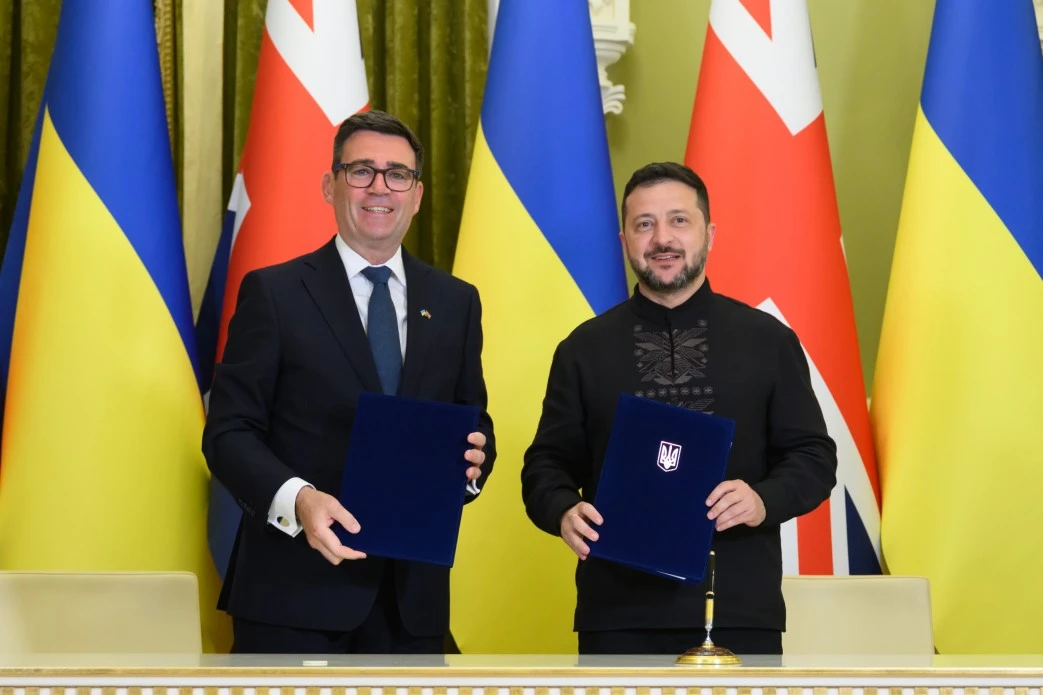
Ukraine and the United Kingdom have signed an agreement on cooperation regarding the military application of artificial intelligence. The document was signed by Ukrainian President Volodymyr Zelenskyy and UK Prime Minister Andy Burnham in Kyiv on 24 August.
Under the agreement, the UK becomes the initial international partner granted access to Ukraine’s Avengers AI Labs platform. The system leverages data streams from thousands of daylight and infrared sensors deployed across the battlefield in Ukraine, aggregating intelligence on tanks, artillery, air defence assets, infantry, alongside strike and reconnaissance UAVs.
The partnership establishes joint workflows between British and Ukrainian engineers, scientists, technology firms, and military specialists focused on defence and national security priorities. Target development areas include force protection technologies for military bases, airfields, rail infrastructure, energy facilities, and critical installations. The parties will also collaborate on developing low-power AI microchips tailored for next-generation unmanned, robotic, and autonomous platforms.
Additionally, the UK will support Ukraine by leveraging British academic institutions, research facilities, technology vendors, and its broader artificial intelligence ecosystem.
Separately, on 24 August, the British Government announced it had authorized defence contractor MBDA to share classified technical data regarding British components of the SCALP long-range cruise missile with Ukraine. The measure aims to facilitate the establishment of domestic missile assembly lines within Ukraine.
According to Reuters, the Avengers Labs repository holds approximately 5 million annotated battlefield frames, a substantial portion of which originates from Ukraine’s DELTA situational awareness and battlefield management system. Machine learning models trained on this dataset currently power automated target recognition (ATR): the system processes over 100,000 drone video feeds monthly, detecting nearly 70% of enemy targets in real time.


By submitting this form, you give Defender Media consent to the processing of personal data.
Надсилаючи цю форму, ви надаєте Defender Media згоду на обробку персональних даних.