Dorozvidka #18: Interviews with Darkstar and General Chereshnya, all about the Bulava, and news from the MoD and Bell Helicopters
A weekly digest of the most interesting publications and the news that flew under the radar of Defender Media

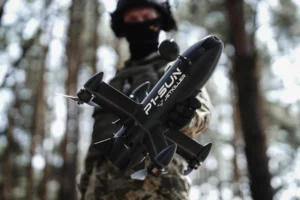
Photo credit: Bulava drone from DeViRo
Last week saw structural changes in the Cabinet of Ministers and significant personnel reshuffles at the Ministry of Defence. Ukrainian media published compelling interviews with Ragnar Sass, co-founder of the venture fund Darkstar, and Yaroslav Hryshyn, co-founder of drone manufacturer General Chereshnya. Meanwhile, the media project “Donbas Realities” released an in-depth feature on Ukraine’s loitering munition “Bulava”, developed by the company DeViRo.
In addition, President Volodymyr Zelensky visited a drone interceptor production facility and shared his expectations with manufacturers. The Minister of Economy also announced the entry of the US company Bell Helicopters into the Ukrainian market. Full details in Dorozvidka #18.
Highlights from Ragnar Sass’s interview
Ragnar Sass, co-founder of the Darkstar fund, gave an in-depth interview to the DOU portal. Darkstar recently announced plans to invest €25 million in defence tech start-ups. The fund’s portfolio already includes two Ukrainian companies – Farsight Vision and Deftak. Sass said the fund plans to close deals with at least five more projects by the end of the year.
“After a year and a half of market analysis, I’ve concluded that the most promising companies – those with real, battle-tested products and the best teams – come from Ukraine. Especially in the fields of drones, communications, and EW tools,” said the investor.
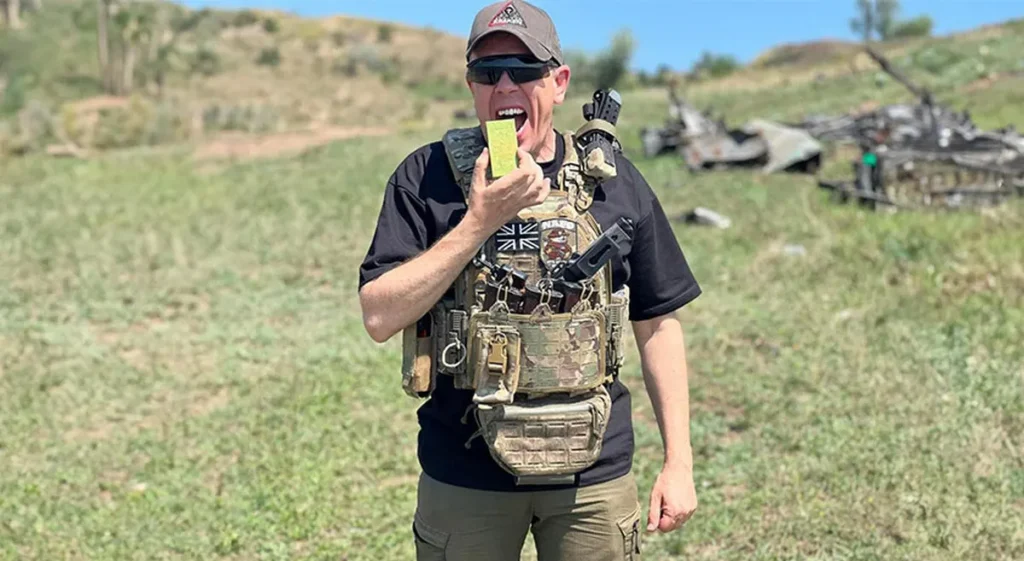
According to him, Ukraine has the potential to produce at least four or five defence tech unicorns in the next 5–10 years. Sass believes at least one or two of those will be in Darkstar’s portfolio.
He also discussed the role of IT in Ukrainian and European defence tech, the importance of arms exports, and why European companies are opening offices in Ukraine.
Key Points from the interview with General Chereshnya’s co-founder, Yaroslav Hryshyn
The Ukrainian FPV drone manufacturer General Chereshnya earned UAH 1.5 billion in revenue in the first half of 2025, according to co-founder Yaroslav Hryshyn in an interview with Forbes. That’s twice as much as the company earned in all of 2024. He attributes the growth to a rise in government contracts.
General Chereshnya expects to reach UAH 7 billion in revenue by the end of 2025. The company currently produces 50,000 drones per month and is working on developing a drone capable of intercepting Shahed UAVs.
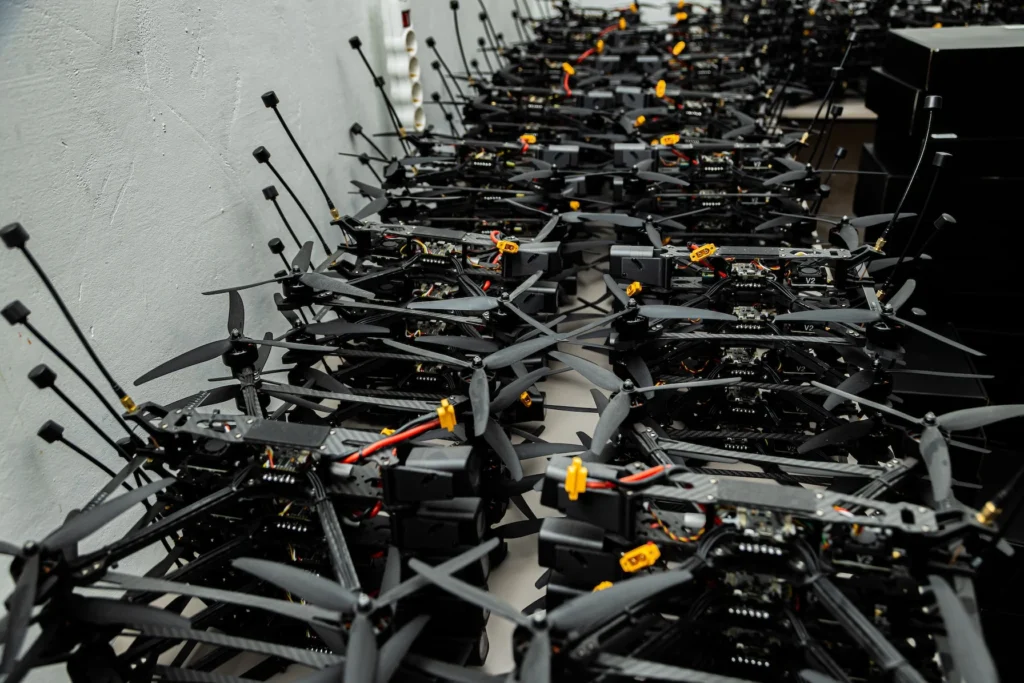
Hryshyn discussed how the company is scaling, why it needs investment, and whether it is ready for M&A. He also responded to allegations made against the company in a July episode of the investigative programme “Nashi Groshi”.
Everything about Ukraine’s Bulava middle-strike drone
Radio Liberty’s “Donbas Realities” project published an in-depth article on Bulava, Ukraine’s analogue to the Russian Lancet, developed by DeViRo.
The article explores why Ukraine took so long to develop its own middle-strike drone, what makes Bulava unique, and what it needs to truly become a game-changer on the battlefield.
The piece includes comments from “Serzh Marko” (Oleksandr Karpiuk), a serviceman with the UAV battalion of the 59th Assault Brigade under the Ukrainian Defence Forces’ UAV Command.

Karpiuk’s crews tested a prototype of the Bulava in spring 2025. He sees its most significant advantage in the large warhead, which allows it to target tanks. He also highlights its advanced target acquisition system, which enables strikes on well-camouflaged enemy equipment.
American Bell Helicopters plans to manufacture in Ukraine
US-based Bell Helicopters plans to invest in the Ukrainian industry and launch helicopter production within Ukraine, announced Minister of Economy Oleksii Sobolev. He noted that the government is prepared to support the initiative through investment attraction tools.
Bell Helicopters manufactures civil and military helicopters and unmanned aerial systems. In Ukraine, it is expected to focus primarily on defence-related products.
Zelensky on drone interceptors
On 25 July, President Volodymyr Zelensky announced that he had visited a facility producing interceptors for Shahed drones. “The task set for manufacturers is clear – Ukraine must be capable of deploying at least 1,000 interceptors daily,” he said. The President added that the government is ensuring drone contracts and working with partners to prevent funding shortages.
Zelensky noted that four companies are currently producing interceptors, with more to follow: “There will be at least ten manufacturers,” he stated.
He also said that $6 billion is needed for drone interceptor production alone. In total, $25 billion should be allocated annually to produce missiles, various drones, and EW systems.
Personnel and structural changes at the Ministry of Defence
Last week, key organisational changes took place in the Ukrainian government. On 21 July, the Cabinet dissolved the Ministry for Strategic Industries and transferred its functions to the Ministry of Defence.
Defence Minister Denys Shmyhal also appointed six deputy ministers. The First Deputy Minister is now Lieutenant General Ivan Havryliuk, who held the same role until April 2025. The new deputies include:
- Serhii Boiev: Former Deputy Minister for Eurointegration at the Ministry for Strategic Industries, and previously First Deputy Minister of Defence.
- Hanna Hvozdiar: Director of the Serhiy Prytula Charity Foundation from 2020 to 2023; Deputy Head of the Ministry for Strategic Industries from September 2023.
- Oksana Ferchuk: Deputy Minister for Digital Development.
- Colonel Volodymyr Zaverukha: 22 years of military and defence sector experience.
- Major Yurii Myronenko: Former commander of a UAV unit at the onset of the full-scale invasion; became Deputy Minister at the Ministry of Digital Transformation in 2024.
Kateryna Chornohorenko, previously responsible for digitalisation at the Defence Ministry, stepped down.
Laser simulator for grenade launcher operators
The Ministry of Defence has approved the use of a domestic laser simulator system to train RPG-7 grenade launcher operators. These simulators are a modern tool for preparing grenade launcher teams.
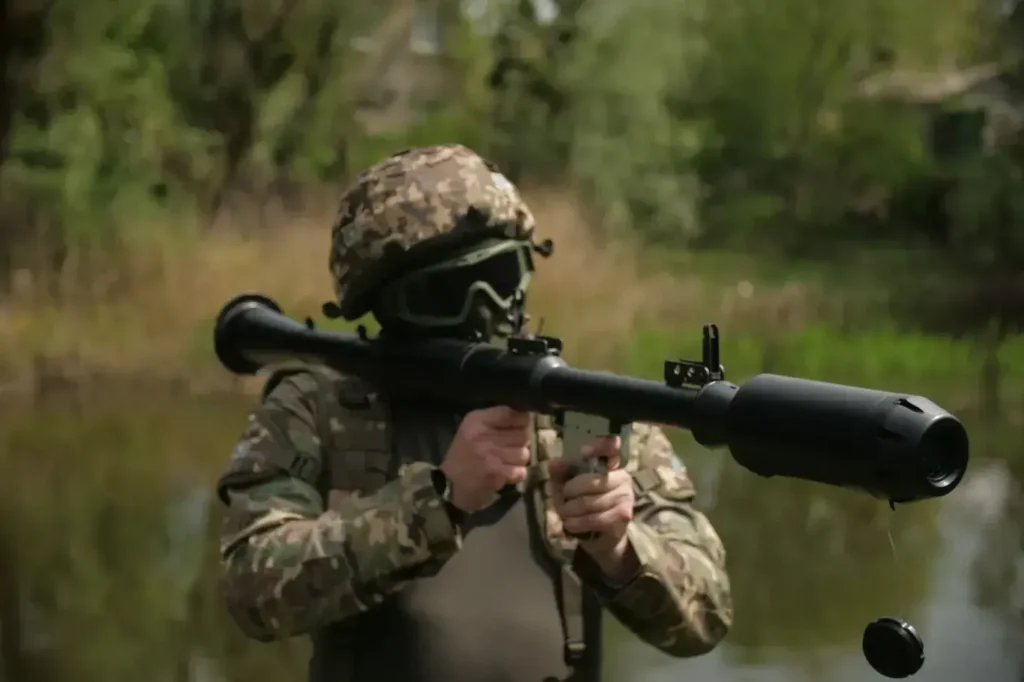
The device mimics an RPG-7 round and is mounted on the launcher. It replicates engagement distances equivalent to actual RPG-7 fire. The simulator allows users to train on targeting, firing, and following safety protocols. It also features simulated blast effects from the backblast.
The system is compatible with other training tools, making it suitable for integration into comprehensive training solutions.
Reading now
1
SkyFall officially unveils Thor Hammer mid-strike and announces 1,000+ km version
2

260+ vacancies in Ukrainian defence technology at BlueBird Tech, Sine Engineering, Buntar Aerospace and more
3
British-Ukrainian Occam Industries raises €3.8m. The funds will go towards scaling drone autonomy software
4
Terra Drone acquires 50% of Ukrainian Kurin Technologies for $3.5 million
5

Autonomous interceptor drones need radars to work. Why is there still a lack of them
By submitting this form, you give Defender Media consent to the processing of personal data.
Надсилаючи цю форму, ви надаєте Defender Media згоду на обробку персональних даних.

Latest news
1
Acoustic sensor developer Zvook raises investment from new Czech fund managed by DEPO Ventures
2

Denmark to hold first-ever Danish Defense Tech Week in four cities: what to expect
3
Forbes: Airlogix plans to raise $100m at a $2bn valuation
4
Tencore launches an ecosystem to bring together UGVs and components from several manufacturers
5