Black Mirror #50: high-speed interceptor, machine-gun UGV and other new developments in Russian miltech
Overview of new developments in Russia’s military-industrial complex in the second week of March
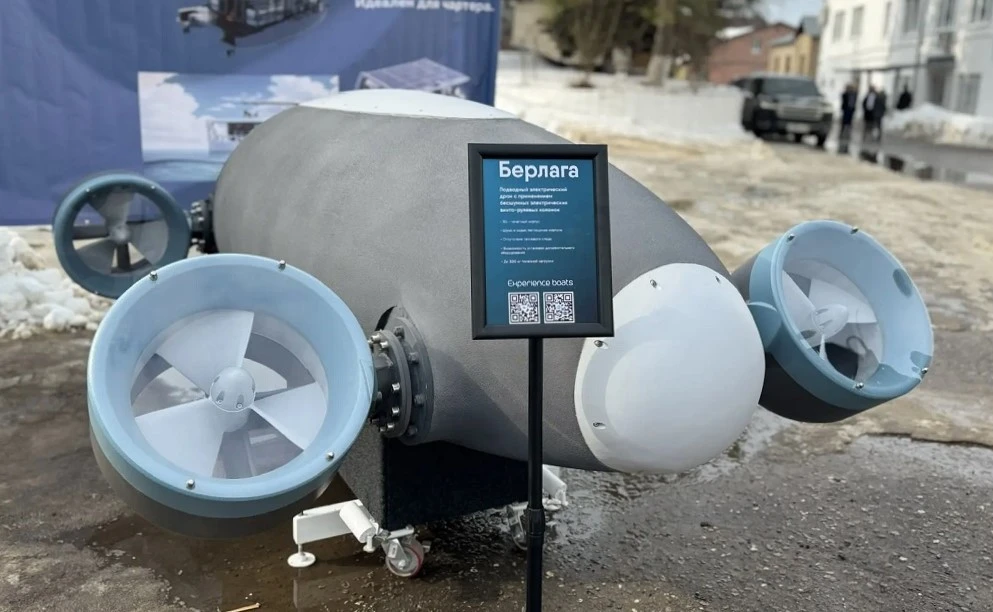
Over the past week, Russian sources have released relatively limited information on new military developments. Most reports focused on iterative modifications of established systems (such as the ‘Ovod’ drone series) or supplementary modules for the ‘Kurier’ UGV. Notable highlights of the week include the ‘Berlaga’ maritime drone and a prototype interceptor UAV. Further details are provided in this latest issue of Black Mirror.
Defender Media compiles this weekly digest of Russian military technology advancements to ensure Ukrainian service members and engineers remain informed of emerging battlefield challenges.
Drone interceptor with a top speed of up to 300 km/h
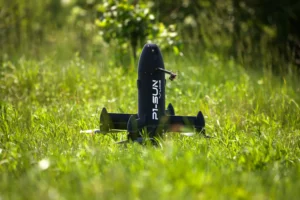
A high-speed drone interceptor, reportedly capable of reaching velocities of up to 300 km/h, has been developed under the project name ‘Sobachka’. According to the developers, target acquisition and interception are managed via artificial intelligence.
Interception is executed through kinetic impact. The drone’s operational ceiling is cited at 3 km, though its endurance figures remain classified. The system has reportedly undergone range trials but is yet to receive a formal patent.
Water drone ‘Berlaga’ presented in Kostroma
Russian developers have unveiled the ‘Berlaga’ unmanned surface vehicle (USV), presenting the system to presidential aide Nikolai Patrushev. The platform is designed for pipeline inspections, search-and-rescue operations, and the operational survey of rivers, lakes, and other natural sites.
The drone features a monolithic hull produced via 3D printing and is powered by electric motors manufactured in-house by the company ‘Glubokie Ozyora’. The developers claim the craft is low-observable, silent, and leaves no thermal signature.
Assault ground drone ‘Uran-3’ with mine trawl and machine gun
Russian forces have commenced testing of a new UGV, the ‘Uran-3’, intended for assault and combat engineering units. This tracked, remotely operated platform is designed to clear lanes through minefields and neutralise anti-personnel mines. The system has been integrated with a combat module armed with a heavy machine gun, intended to provide suppressive fire for assault groups and ‘self-defence’ against aerial threats.
To date, Russian media have not released authentic images of the UGV, with existing reports relying on AI-generated illustrations. The platform is likely an evolution of the ‘Uran-6’ engineering system.
‘Rostekh’ announces a new long-range loitering munition
The state corporation ‘Rostekh’ has announced plans to develop a new long-range loitering munition. The company has withheld technical specifications and visual representations of the weapon.
According to the manufacturer, the drone is equipped with an internal combustion engine and features a delta-wing configuration. It reportedly combines high speed with manoeuvrability, employing various flight profiles to circumvent air-defence zones, and is designed for deep-strike missions.
Tests of a new acoustic detection system
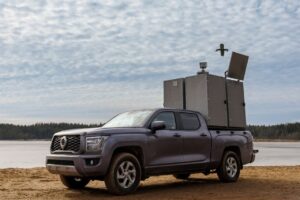
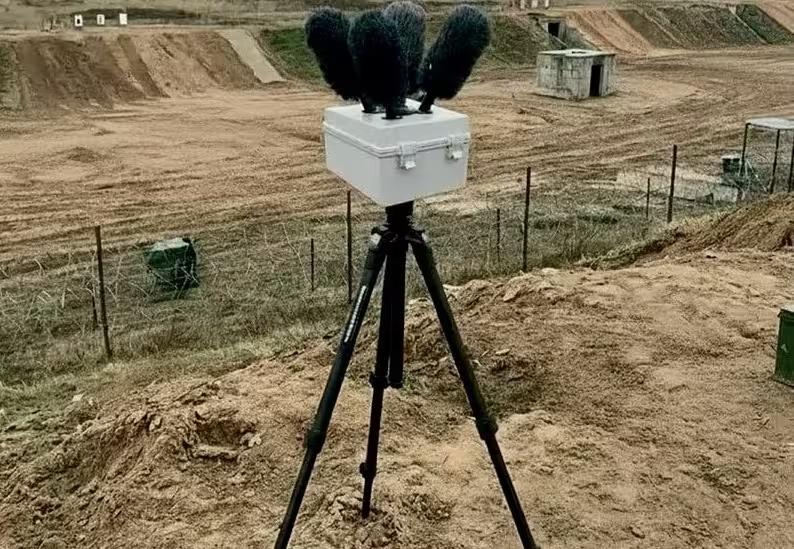
Field trials for the ‘Skaner 2.0’ acoustic detection system are scheduled for May 2026. Developed by the Belarusian firm InnoTekh Solutions, the system has completed range testing and is recommended for serial production.
‘Skaner’ can operate autonomously or in conjunction with other sensors and is specifically designed to identify low-flying targets. The system currently detects drones powered by internal combustion engines as well as multirotor UAVs with electric motors. The developers claim it is also capable of detecting objects operating in radio-silence mode.
Booster stage of the R-500 missile displayed at the exhibition in Saratov
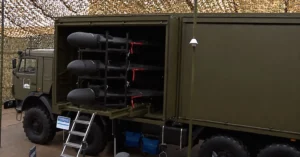
A booster stage from an R-500 (9M728) cruise missile, part of the ‘Iskander-K’ system, has been placed on display at a museum in Saratov. This component provides the missile’s initial launch acceleration, enabling it to transition to extremely low altitudes to evade air-defence radar.
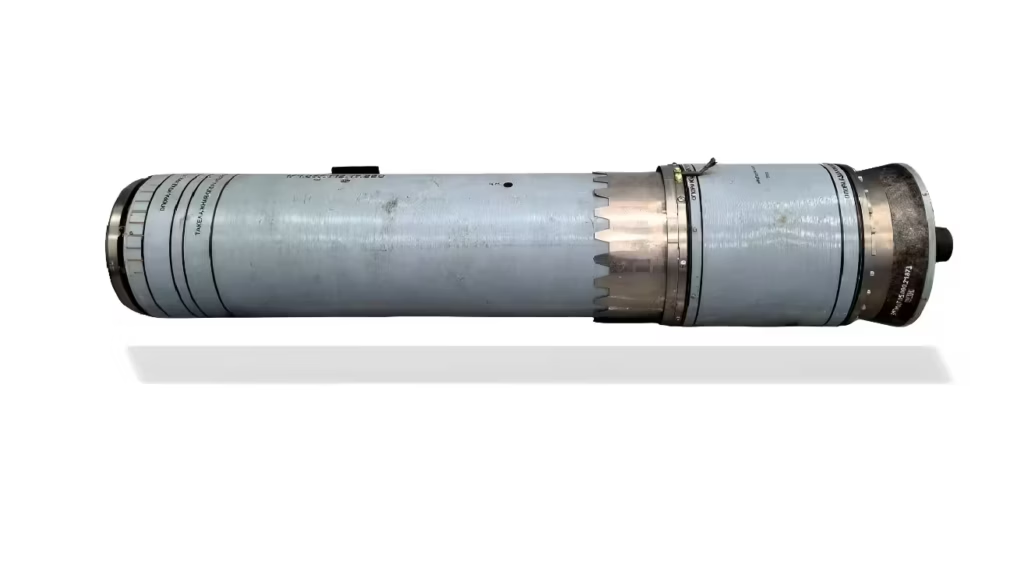
The solid-fuel booster ejects the missile from its launch canister and provides initial velocity. The missile features a diameter of 530 mm and a range of up to 500 km (with some claims reaching 800 km). It carries a payload weighing between 480 and 700 kg, including high-explosive fragmentation, cluster, bunker-busting, and thermobaric warheads.
‘Svod’ and ‘Dovod’ from the ‘Ovod’ drone family
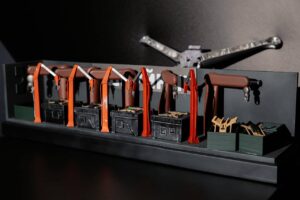
Russian forces are currently conducting combat evaluations of ‘Svod’ drones. The system integrates machine-vision technology with artificial intelligence. A member of the ‘Ovod’ drone family, it is capable of locking onto targets at ranges of up to 2 km, reaching speeds of 140 km/h, and operating via autopilot with provisions for operator intervention.
Another variant in the series is the ‘Dovod’ logistics model, which also utilises a navigation module based on machine vision. The developers state the drone identifies up to 300 terrain features to serve as navigational reference markers in lieu of GPS. Military observers suggest the most likely configuration is a 15-inch frame with a payload capacity of 5–20 kg, suitable for both logistical and strike roles.
‘Kurier’ UGV gains the ability to shoot down drones
The Russian ‘Kurier’ UGV has received a further modification, now equipped with a PKT machine gun for counter-UAV roles. Command and control are maintained via radio link, with the operator utilising live video feeds from onboard sensors to adjust fire.
The PKT machine gun is mounted on a stabilised platform, enabling precision fire against aerial targets even while the vehicle is in motion. The tracked chassis ensures mobility across rugged terrain, while the 6 kW electric motor facilitates speeds of up to 35 km/h.
Reading now
1
SkyFall officially unveils Thor Hammer mid-strike and announces 1,000+ km version
2

260+ vacancies in Ukrainian defence technology at BlueBird Tech, Sine Engineering, Buntar Aerospace and more
3
British-Ukrainian Occam Industries raises €3.8m. The funds will go towards scaling drone autonomy software
4
Terra Drone acquires 50% of Ukrainian Kurin Technologies for $3.5 million
5

Autonomous interceptor drones need radars to work. Why is there still a lack of them
By submitting this form, you give Defender Media consent to the processing of personal data.
Надсилаючи цю форму, ви надаєте Defender Media згоду на обробку персональних даних.

Latest news
1

Denmark to hold first-ever Danish Defense Tech Week in four cities: what to expect
2
Forbes: Airlogix plans to raise $100m at a $2bn valuation
3
Tencore launches an ecosystem to bring together UGVs and components from several manufacturers
4

Defense companies may see staff deferrals cut from 100% to 85%
5