Sting interceptor by Wild Hornets downs costly Russian Granat-4 reconnaissance drone
The intercepted UAV can climb to 4 km and is estimated to cost approximately $200,000

Sting interceptor
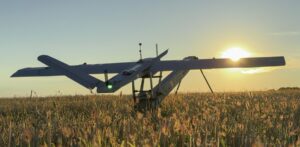
Operators from the 1129th Anti-Aircraft Missile Regiment have downed a Russian Granat-4 reconnaissance drone equipped with laser target designation. This engagement reportedly marks the first confirmed destruction of this specific UAV type.
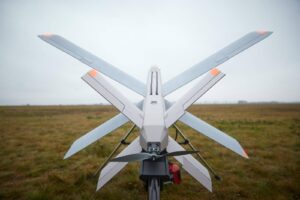
The Sting interceptor is among the pioneering Ukrainian drones developed by Wild Hornets specifically for engaging high-speed aerial threats, such as ‘Shahed’ drones. The platform can reach speeds exceeding 300 km/h, operate at altitudes above 3 km, and features an automated terminal guidance system to enhance strike precision. According to the developers, the Sting maintains a mission success rate of 80–90%.
While the Granat-4 reconnaissance drone has been in service since the 2010s, its latest modifications have established it as one of the more formidable systems in the theatre of operations. The drone boasts an endurance of up to six hours and an operational ceiling of approximately 4 km. It is equipped with daytime, night-vision, and thermal imaging sensors, and is integrated to provide target designation for precision-guided munitions, such as the ‘Krasnopol’.
Open-source intelligence (OSINT) indicates that the Granat-4 relies heavily on foreign electronic components. This dependence complicates the fulfilment of state contracts under current sanctions, leading to significant delays in serial production. The unit cost of the drone is estimated at around $200,000.
More about Russian military developments can be found in Defender Media’s weekly digest ‘Black Mirror’.
Reading now
1

Ukrainian SkyFall’s drone wins at Pentagon’s Drone Dominance selection
2
Black Forest Systems raises $400,000. Here’s what drones the startup is building
3
Sting interceptor by Wild Hornets downs costly Russian Granat-4 reconnaissance drone
4
UForce unveils Bucha middle-strike drone with a 200 km range
5
The F10 drone becomes the second Ukrainian finalist in the Pentagon’s Drone Dominance Program
By submitting this form, you give Defender Media consent to the processing of personal data.
Надсилаючи цю форму, ви надаєте Defender Media згоду на обробку персональних даних.

Latest news
1
DPA to diversify drone and ammunition orders among multiple suppliers
2
‘Ukrainska bavovna’ and Czech company Pavetra Aerospace to produce Shuhay UAV through joint venture
3
59th Assault Brigade downs Russian Ka-52 helicopter with General Cherry OPTIX FPV drone
4
Tencore develops evacuation module for TerMIT UGV
5