Black Mirror #49: the cruise missile Izdeliye-30, drone interceptors and other new Russian miltech
Overview of new developments in Russia’s military-industrial complex in the first week of March
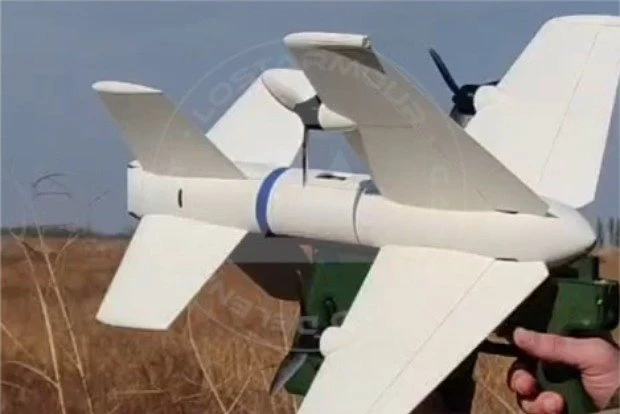
Russian forces have begun using the Izdeliye-30 cruise missile and the Yolka interceptor drones equipped with an AI module. The enemy has also unveiled a range of new unmanned systems for air and sea operations.
More details are in the latest issue of Black Mirror. Defender Media compiles this weekly digest of new Russian military technologies to help Ukrainian soldiers and engineers prepare for the challenges ahead.
Russians deploy Izdeliye-30 cruise missile
Russian forces utilised the Izdeliye-30 subsonic cruise missile to strike a residential building in Kharkiv. This missile previously surfaced on the War&Sanctions portal by Ukrainian Defence Intelligence. It is claimed that the missile has an operational range of at least 1,500 km and carries an 800 kg warhead. The system was developed as a simplified and more cost-effective analogue to the Kh-101 cruise missile.
Based on markings and design features, the munition has been identified as a development of OKB Zvezda. Certain technical solutions are unified with other products from this developer and the wider corporation. Specifically, the installed pyrotechnic valve of the pneumatic system is identical to components of the Kh-35U missile, while the aviation ejection unit is similar to the AKU-5M systems used for Kh-101, Kh-55, and Kh-555 missiles.
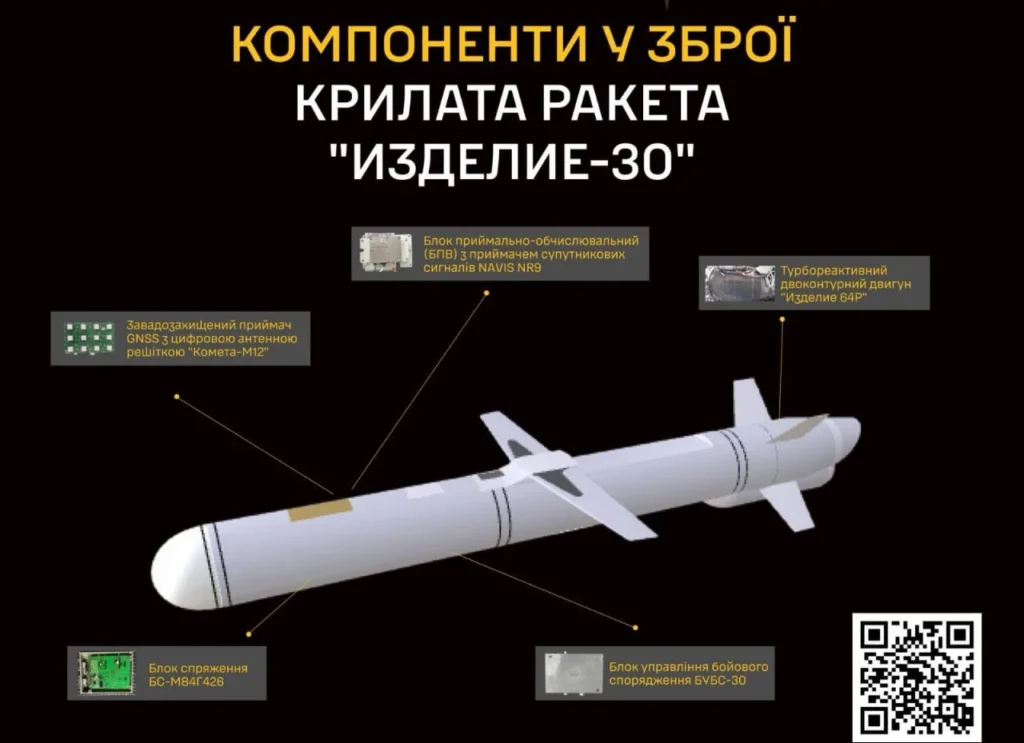
The satellite navigation suite — possibly for the first time in the adversary’s cruise missile inventory — consists of a combination of products from two different Russian firms: the Kometa-m12 jam-resistant satellite receiver with a digital antenna array produced by VNIIR-Progress, and a receiving-computing unit from KB Navis. The Izdeliye-30 is intended for deployment from Tu-95MS and Tu-160 strategic bombers.
FPV interceptor Bulavka
Russian developers have introduced the Bulavka FPV interceptor, designed to destroy unmanned aerial vehicles through kinetic impact. The device lacks an explosive warhead and can carry a payload of up to 200 grams. The product has successfully completed comprehensive testing.
It is claimed that the drone can reach speeds of up to 270 km/h to intercept moving targets. The UAV can be equipped with advanced sensors and cameras for target tracking, while its compact dimensions facilitate rapid deployment.
Portable anti-drone system Yolka
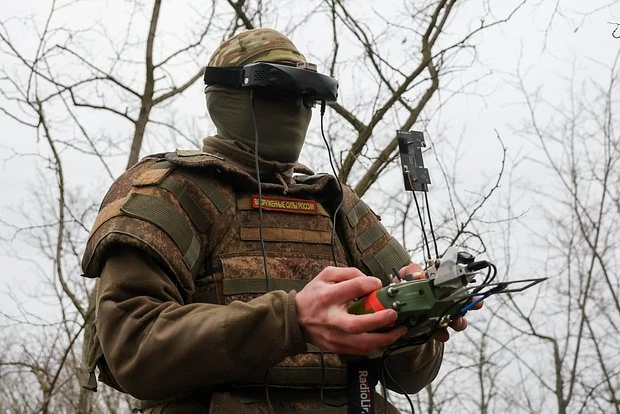
The Yolka drone interceptor has entered operational use in the combat zone. According to Russian sources, “Yolka” is equipped with an AI module capable of recognising targets at ranges of up to 3 km. The system automatically calculates a drone’s flight trajectory and selects the optimal interception route.
It can engage from any vector — head-on, flank, or in pursuit — providing a flexible air-defence solution. The device weighs 1.3 kg, reaches speeds of 230 km/h, does not require communication channels, and is resistant to electronic warfare (EW).
Anti-drone system Radon-O
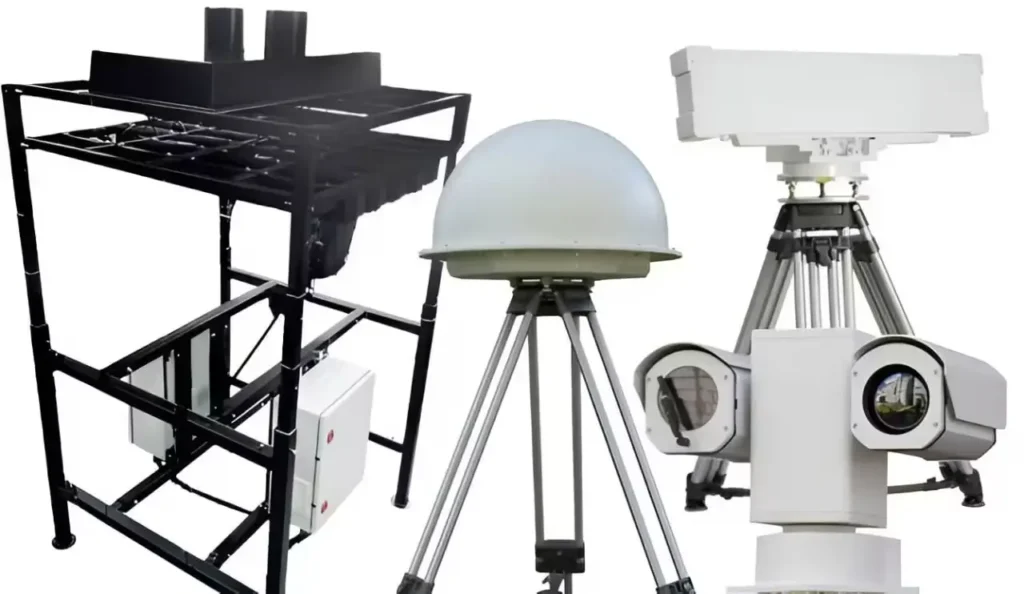
“Rostec” presented the Radon-O anti-drone complex, designed to counter commercial quadcopters and more sophisticated UAVs capable of frequency hopping. Reports indicate that tests confirmed its effectiveness at industrial facilities and in transport and energy infrastructure.
The system includes the Bug radar station, the Terney-M radio module, the Neman optoelectronic system, and the Dvina-50 subsystem for jamming drone control channels. All components are synchronised via the Don system.
Air defence system Pantsir-M installed on a small missile ship
The small missile ship “Burya” successfully tested the naval variant of the Pantsir-M surface-to-air missile system. The system can engage aerial targets, including guided missiles, using a single combat module that integrates both artillery and missile armament.
The complex features radar, optoelectronic, and artillery systems unified within a single control module. Tests confirmed the system’s ability to engage high-speed, highly manoeuvrable targets.
Strike drone family Ragnarek
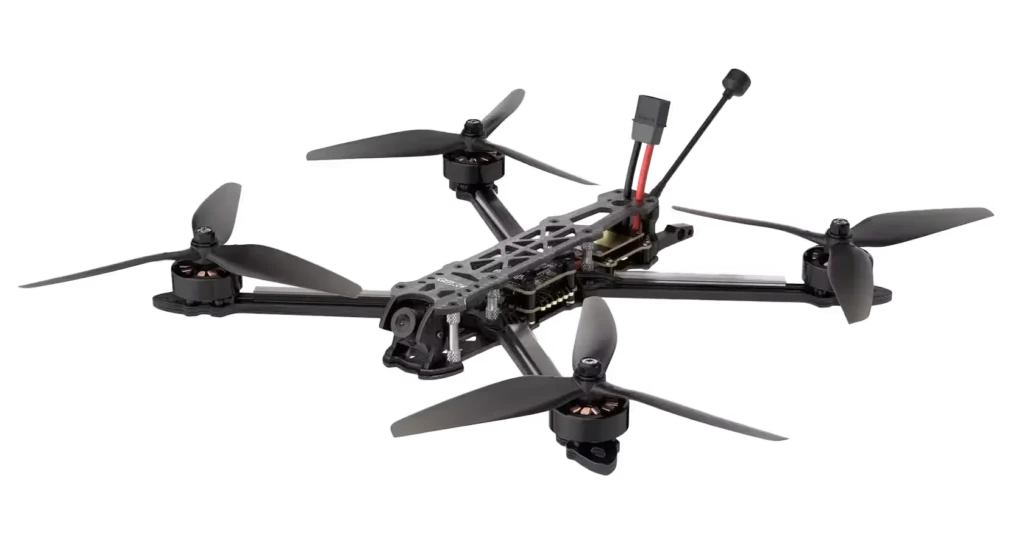
The Russian company Alkor Tactical presented the Ragnarek family of FPV strike drones, featuring fibre-optic control and a range of up to 50 km. The drones are produced in two configurations: hexacopters for increased payload capacity and stability, and 15-inch platforms for mobility and low-profile operations.
The fibre-optic link ensures secure data transmission and eliminates EW interference. Each model supports redundant control and video channels, automatically switching to backups if a signal is lost.
Quadrocopter Svarog 5T
Russian sources announced the creation of the Svarog 5T, a purported analogue to the Mavic 3T reconnaissance drone. The UAV is equipped with a thermal imager and integrates with the Inkubator 2.0–3.0 system, which extends control range and provides EW protection.
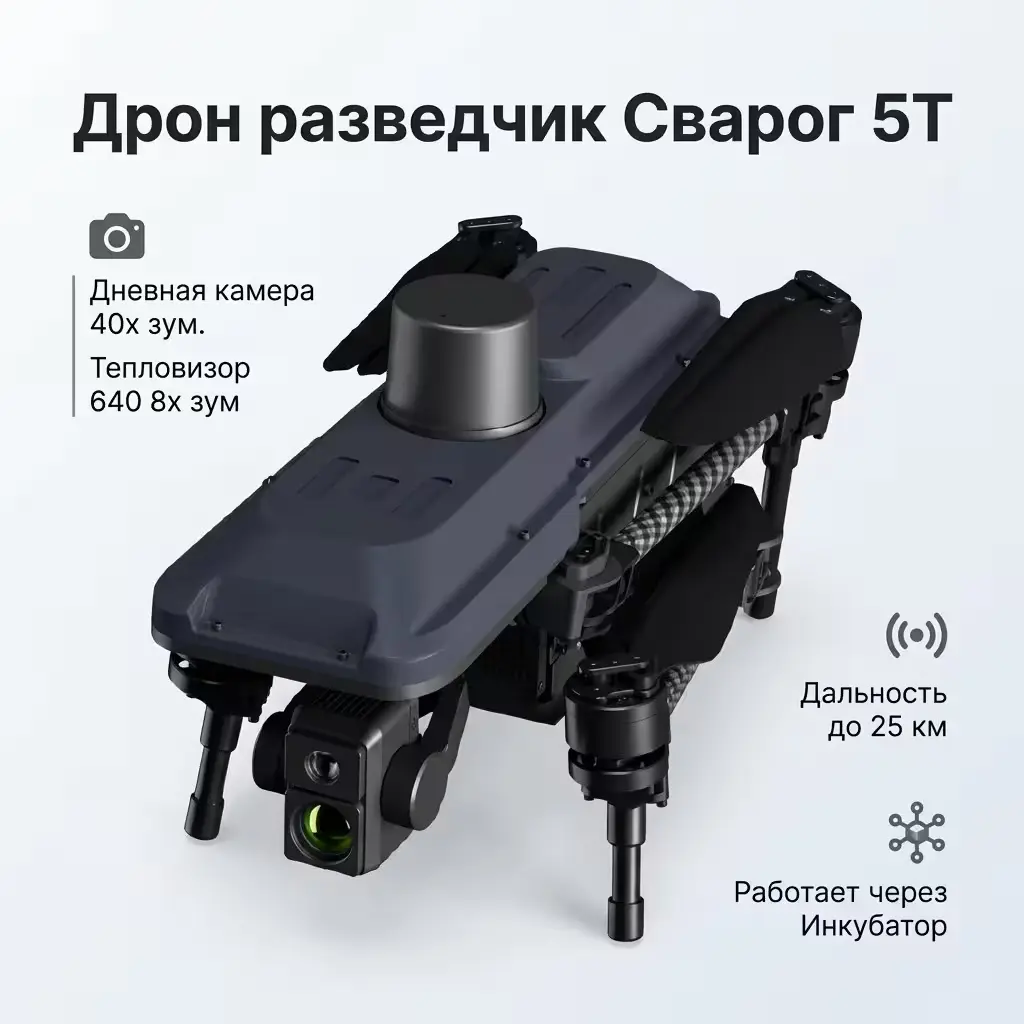
The drone’s range reaches 25 km, featuring 40× optical zoom and precise positioning via GNSS, Optical Flow, and TOF. It can operate without GPS by detecting signals and localising objects in complex environments. The system allows for concealed control from cover at distances of 45–60 metres.
Heavy amphibious drone
A concept for a heavy amphibious drone with a high-wing configuration has been patented in Russia. It is designed to carry up to 700 kg of cargo over distances of up to 2,200 km, operating from both water and land. The device is intended for autonomous logistics, monitoring, and search-and-rescue operations.
The design includes a boat-type fuselage, retractable landing gear, and pylon-mounted floats for aquatic stability. The drone is powered by a single propeller engine, reaches speeds of 185 km/h, and has an endurance of up to 11 hours. It performs autonomous navigation without GPS/GLONASS.
Reading now
1
SkyFall officially unveils Thor Hammer mid-strike and announces 1,000+ km version
2
Pentagon to hold Drone Dominance trials for bomber drones, with UFORCE, Gurzuf Defence, Grim Tech and others taking part
3

Terra Drone acquires 50% of Ukrainian Kurin Technologies for $3.5 million
4
British-Ukrainian Occam Industries raises €3.8m. The funds will go towards scaling drone autonomy software
5

Frontline Robotics CBDO Mykyta Rozhkov: Ukraine and Norway are working on an autonomous system to protect maritime infrastructure
By submitting this form, you give Defender Media consent to the processing of personal data.
Надсилаючи цю форму, ви надаєте Defender Media згоду на обробку персональних даних.

Latest news
1

Nataliia Mykolska to become VP of Growth and Affairs at Sine Engineering
2
Black Mirror #79: What’s inside Geran-4, unmanned tanks, balloon barrages and more of a new russian miltech
3

6,000 lives saved by replacing people with robots. “Makar” on the ground strike drone unit NC13 and its role in Operation Vivaldi
4
M-Fly and Dwarf Engineering announce partnership: what it involves
5