Stark transforms its Ukrainian office: How the priorities are changing and what engineers are working on
Defender Media discussed the company’s news with STARK Ukraine’s Chief Operating Officer, Maksym Cherkis
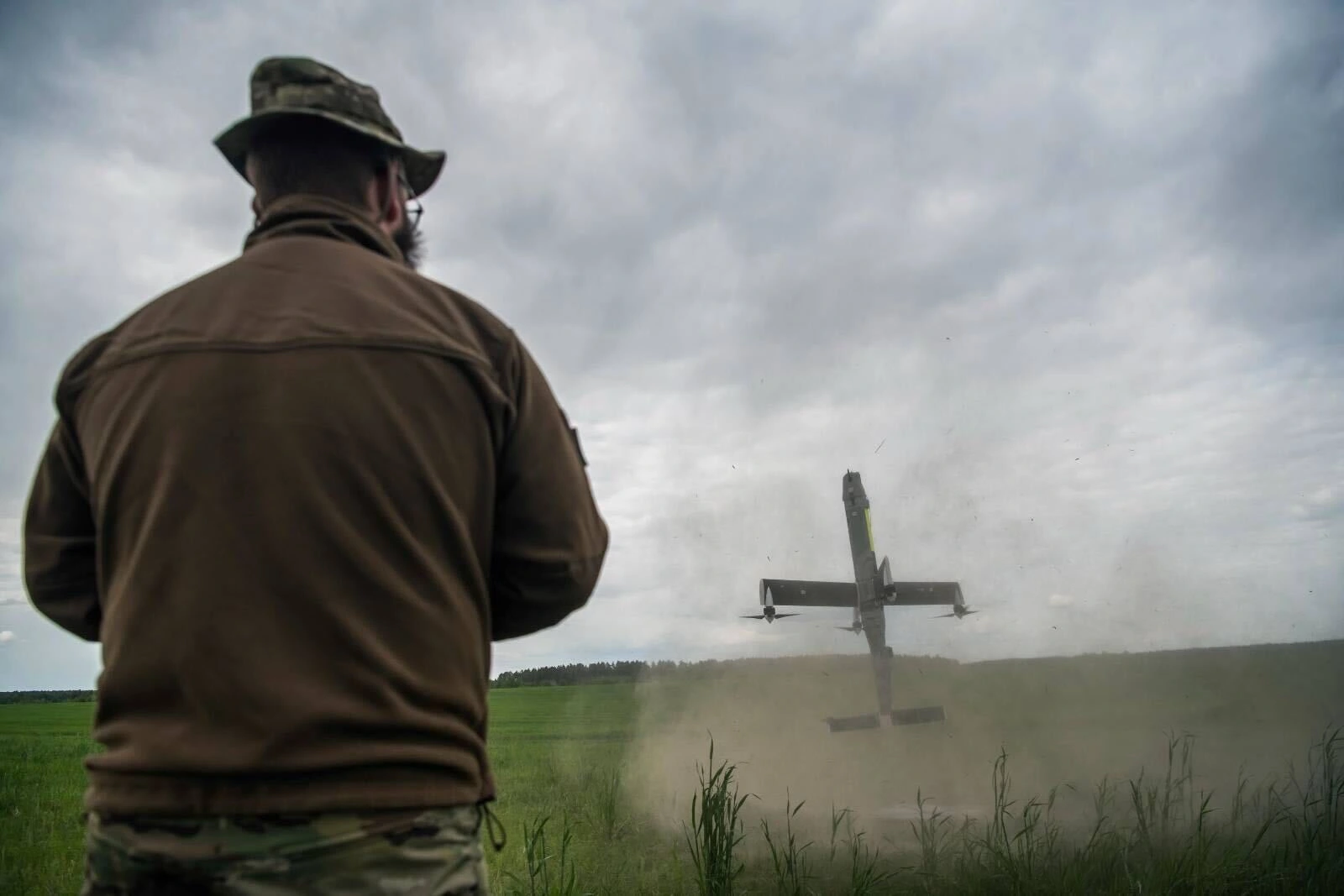
Photo: Stark
German drone manufacturer Stark is opening an R&D centre in Ukraine, which is designed to employ more than 200 specialists. COO of Stark Ukraine, Maksym Cherkis, explains that this will allow local engineers to improve drones themselves and offer solutions to the head office. Thanks to this, Virtus, the company’s flagship strike drone, will receive updates faster.
Defender Media asked Cherkis what improvements Ukrainian engineers are currently working on, when the R&D centre will open, and what is known about the localisation of production.
How the tasks of the Ukrainian office will change
The German startup Stark appeared in 2024 – one of its angel investors was Florian Seibel, who also heads Quantum Systems. Initially, the startup worked in Ukraine through the Defence Builder accelerator, consulting on how to get tested by the military and how to get feedback from them.
However, having its own representative office helps to gather this feedback more quickly and communicate more closely with the military. That is why it was established in 2024.
Initially, the Ukrainian office`s task was to test drones sent from Germany, gather feedback from the military, and pass it on to the head office. The tests are conducted both in simulations and in real conditions, depending on what is being tested. For example, for many iterative tests of certain characteristics, it is more expedient to spend time preparing a simulation. This is because the tests can take a long time, and the UAVs can break down.
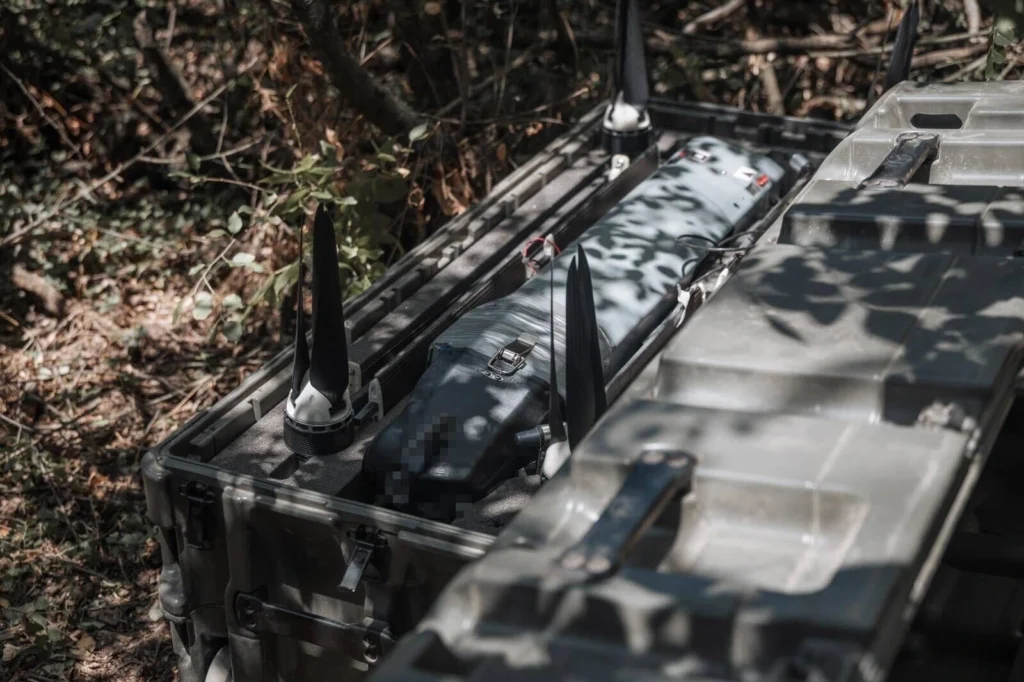
COO Stark Ukraine explains that, on the one hand, access to the military accelerates innovation. On the other hand, the process is protracted because the Ukrainian office only formulates technical specifications and cannot offer solutions. For example, it took three months from receiving the first revision to combat applications. Therefore, an R&D centre is now being established in Ukraine.
After the transformation, local engineers will be able to test drones with the military, formulate hypotheses, test them here, and technically improve the drone. “After that, we return the solutions that are worth implementing to Germany. They formalise and implement them not as a prototype, but as a serial product,” says Cherkis.
The transformation process into an R&D centre is still ongoing. It is planned to be completed by the end of 2026.
What Stark and its Ukrainian office are working on
Only one Stark product is currently operating in Ukraine – the Virtus vertical take-off strike drone. It can carry 5 kg of combat payload and fly up to 130 km. The drone has radio-protected communication, is resistant to electronic warfare, and has AI on board.
The company does not disclose how many drones have been supplied to the Armed Forces of Ukraine, the value of the contracts, or the cost of the drone itself. Drones are supplied to the Armed Forces free of charge at the company’s expense.
The Ukrainian team is currently working on the drone’s resistance to electronic warfare. “There are different approaches: related to software, hardware, and design,” explains Cherkis.

What is known about manufacturing localisation
Stark previously announced plans to develop local production. This will be necessary when European facilities are no longer able to meet demand.
At the same time, the company is aware of the risks associated with shelling of enterprises and a shortage of personnel in deftech. One of the advantages highlighted for candidates is the opportunity to work with technologies that are not available to Ukrainian companies. However, no examples of such technologies are given.
Stark is also interested in joint ventures with Ukrainian manufacturers, says Cherkis. Several local companies have recently opened such ventures, including Airlogix, TAF Industries, Remtecnology, and Tencore.
However, according to Cherkis, Stark needs to become more mature to achieve this. “It is important for a startup to maintain a certain degree of chaos, because this does not hinder innovation,” he says. “But ultimately, it needs to finalise its structure and implement processes that may impose restrictions on the development of innovation, but help the company become more sustainable.”
Stark products not yet available in Ukraine
In addition to Virtus, the manufacturer is developing the Vanta marine drone and Minerva software. The software was developed to control unmanned systems on land, in the air, and at sea.
According to the manufacturer’s website, Minerva assists users with automated target prioritisation and enables swarm missions. The new version of Virtus that the Ukrainian office is expecting will already support this software.
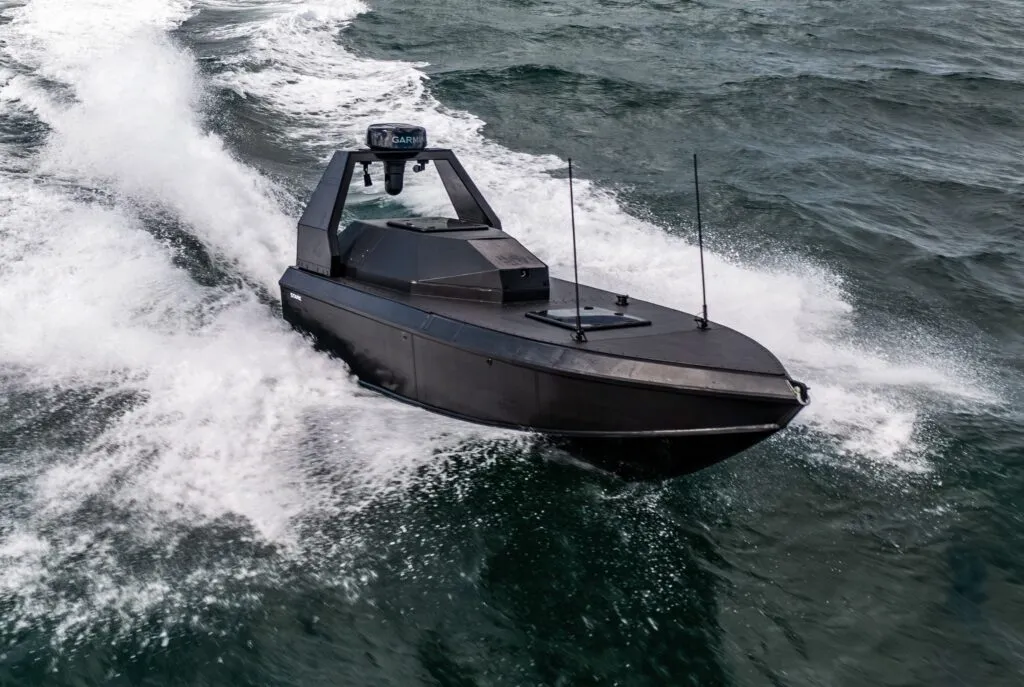
The surface drone is not yet available in Ukraine. Last year, unmanned vessels were presented for the first time at the NATO REPMUS training, undergoing weeks of testing and training. Its range is 910 nautical miles (1,685 kilometres), and its maximum speed is 45 knots (83.34 kilometres per hour). It can carry a payload of 200 kilograms.
Reading now
1
SkyFall officially unveils Thor Hammer mid-strike and announces 1,000+ km version
2
260+ vacancies in Ukrainian defence technology at BlueBird Tech, Sine Engineering, Buntar Aerospace and more
3
British-Ukrainian Occam Industries raises €3.8m. The funds will go towards scaling drone autonomy software
4
Terra Drone acquires 50% of Ukrainian Kurin Technologies for $3.5 million
5

Autonomous interceptor drones need radars to work. Why is there still a lack of them
By submitting this form, you give Defender Media consent to the processing of personal data.
Надсилаючи цю форму, ви надаєте Defender Media згоду на обробку персональних даних.

Latest news
1
Phantom Defense acquires net-launcher developer KARAKURT to integrate its technology into own ecosystem
2
Acoustic sensor developer Zvook raises investment from new Czech fund managed by DEPO Ventures
3
Denmark to hold first-ever Danish Defense Tech Week in four cities: what to expect
4
Forbes: Airlogix plans to raise $100m at a $2bn valuation
5