Skyeton integrates radiation sensor into Raybird
The system has undergone testing in the Chornobyl Exclusion Zone
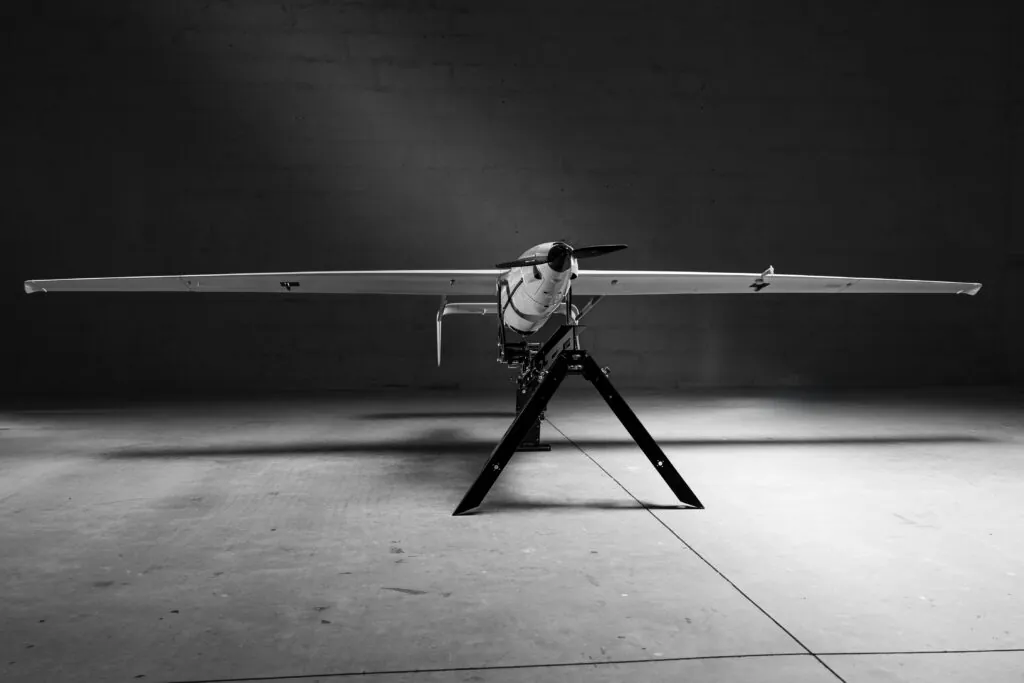
Raybird UAV. Manufacturer's photo
Skyeton has integrated a radiation monitoring module into its Raybird unmanned aerial system (UAS), the company announced.
The radiation module comprises a gamma-ray sensor that enables real-time measurement and data transmission. It is integrated directly into the fuselage without altering the platform’s aerodynamics or requiring external mounts. Radiation level data is displayed within the ground control station (GCS) interface alongside standard flight telemetry.
The system has completed operational trials in the Chornobyl Exclusion Zone. According to the test results, it can conduct large-area radiation reconnaissance, pinpoint locations with elevated radiation levels, and maintain stable data transmission during extended sorties under varying temperature conditions.
Raybird is a small tactical unmanned aerial system designed for long-endurance ISR and ISTAR missions. In the internal combustion engine configuration, it has an endurance of over 28 hours, a range exceeding 2,500 km, and an operating ceiling of up to 5,500 metres. The communications range exceeds 220 km and can be extended through SATCOM integration. The system’s deployment time is up to 25 minutes, with an operating temperature range of –35°C to +55°C.
Earlier, Defender Media reported on a hydrogen fuel electric engine version of the Raybird.
Reading now
1
SkyFall officially unveils Thor Hammer mid-strike and announces 1,000+ km version
2

260+ vacancies in Ukrainian defence technology at BlueBird Tech, Sine Engineering, Buntar Aerospace and more
3
British-Ukrainian Occam Industries raises €3.8m. The funds will go towards scaling drone autonomy software
4
Terra Drone acquires 50% of Ukrainian Kurin Technologies for $3.5 million
5

Autonomous interceptor drones need radars to work. Why is there still a lack of them
By submitting this form, you give Defender Media consent to the processing of personal data.
Надсилаючи цю форму, ви надаєте Defender Media згоду на обробку персональних даних.

Latest news
1
Phantom Defense acquires net-launcher developer KARAKURT to integrate its technology into its UAVs
2

Acoustic sensor developer Zvook raises investment from new Czech fund managed by DEPO Ventures
3

Denmark to hold first-ever Danish Defense Tech Week in four cities: what to expect
4
Forbes: Airlogix plans to raise $100m at a $2bn valuation
5