Black Mirror #46: Stratospheric platform, new interceptor drones, and other Russian miltech innovations
A review of Russian military technology developments in the second week of February

Last week, Russian forces continued showcasing new weaponry at international exhibitions, this time at the World Defense Show in Saudi Arabia, while also exploring ways to replace satellite communications and improve vehicle protection against Ukrainian drones. This and other developments from the Russian defence industry are covered in this weekly overview by Defender Media.
Remote weapon station Ballista RCWS
At the World Defense Show 2026, Russian forces showcased the Ballista RCWS remotely operated weapon station, designed to modernise the armament of armoured vehicles. The system is engineered to enhance the lethality of 30 mm cannons by integrating them with advanced digital fire-control systems.
Ballista features stabilised sighting systems and can be fitted with an automatic 30 mm cannon, boosting firepower without necessitating modifications to the vehicle’s chassis or hull. The module is compatible with various existing combat platforms and supports both autonomous and semi-automatic engagement modes.
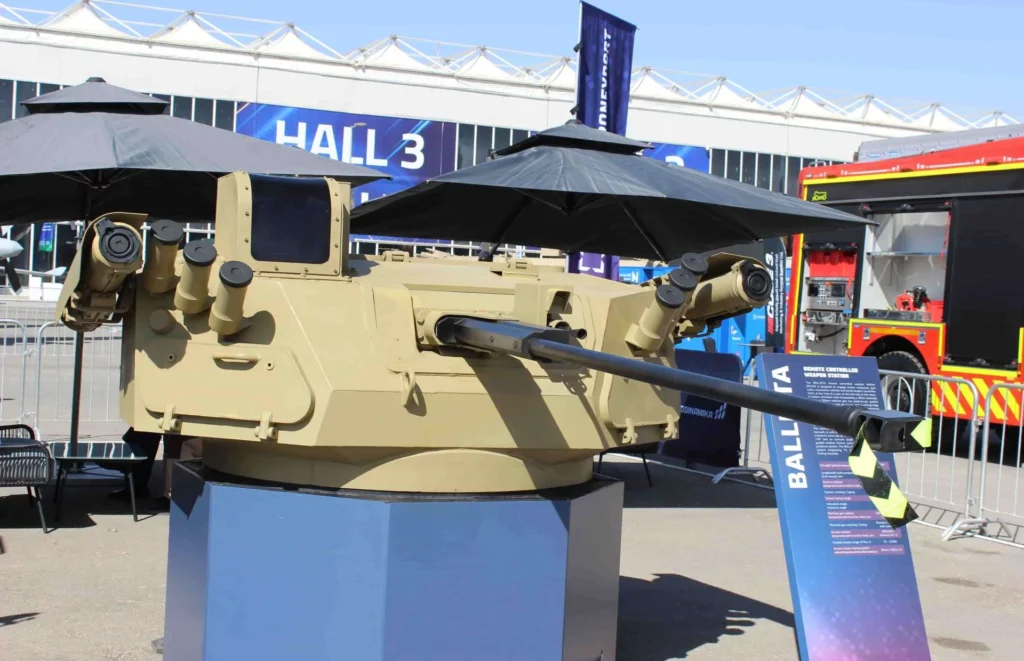
While specific performance metrics — such as weight, effective range, and rate of fire — have not been officially released, the product is marketed as a modular upgrade for multiple classes of armoured vehicles.
Artillery command system Planshet-A
Russia also debuted the Planshet-A artillery command system at the World Defense Show 2026, integrated onto an Atlet-4×4 chassis. The system is designed to execute fire missions within a 30-second window and provide seamless coordination between artillery units.
Planshet-A serves as a comprehensive command-and-control (C2) solution for artillery and missile systems, synchronising digital communication, positioning data, and automated targeting to ensure a rapid response. The system aims to increase the operational efficiency of networked automated artillery units.
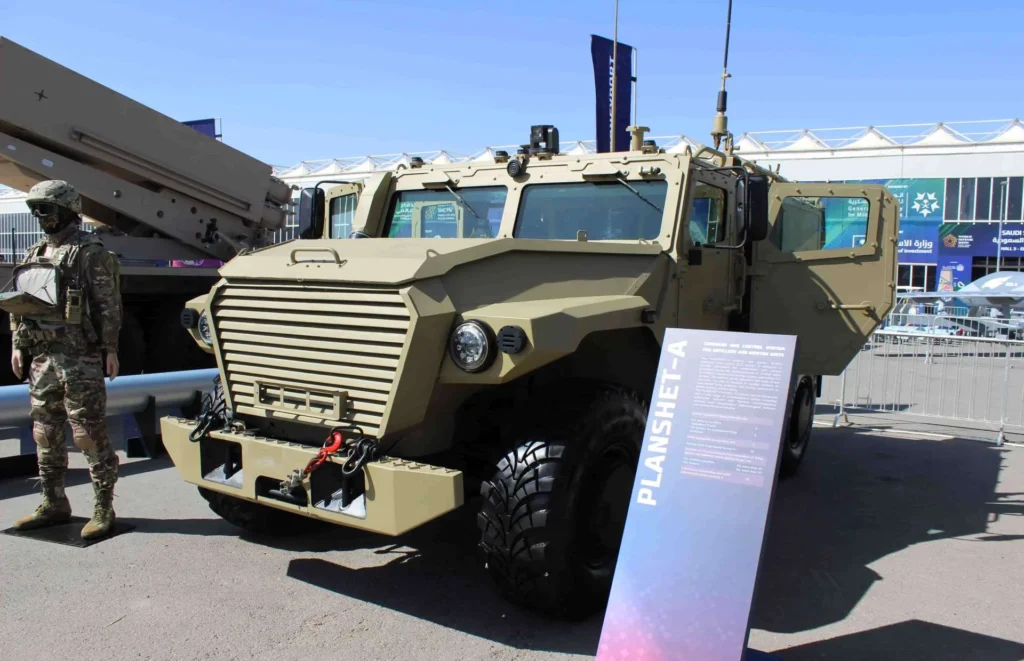
The system facilitates the collection, processing, and relay of fire tasks based on 30-second mission profiles. According to the manufacturer, Planshet-A is fully compatible with legacy equipment and remains operational in environments with high electronic warfare activity.
Stratospheric platform Barrazh-1
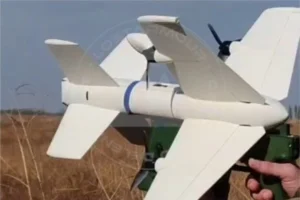
Russia has successfully launched the Barrazh-1 stratospheric unmanned platform, which is capable of lifting a 100 kg payload to an altitude of 20 km.
The Barrazh-1 employs a pneumatic ballast system for altitude adjustment and can maintain its station or manoeuvre using atmospheric currents. This enables long-endurance flights in the stratosphere without the requirement for constant engine thrust.

The platform is positioned as a viable alternative to Low Earth Orbit (LEO) satellite constellations, specifically for deploying 5G relays at altitudes of up to 20 km to provide coverage in regions lacking ground-based infrastructure. Developers claim that Barrazh-1 offers a more cost-effective and practical solution for wide-area telecommunications and internet connectivity.
Molniya equipped with anti-personnel mines
The Russian Molniya multi-role UAV has been adapted to carry and deploy anti-personnel mines.
The drone is equipped with a dedicated camera to monitor the mining operation and features dual payload bays. Each bay can carry 3 kg of ordnance, allowing the craft to deploy up to 24 small anti-personnel mines and approximately 50–60 spikes.
Radar Station Rodnik 3D
The Rodnik 3D radar station has completed trials, confirming its technical specifications under contested conditions. This three-coordinate system, developed by KB Radar, is capable of the automated detection and tracking of low-altitude, low-observable UAVs with a radar cross-section (RCS) as small as 0.001 m². Confirmed detection ranges include:
- Up to 20 km for small and low-signature targets (e.g., FPV drones, small UAVs).
- Up to 60 km for larger aerial targets.
Rodnik 3D provides precise data on azimuth, range, elevation, heading, speed, and altitude, with optimised scanning sectors of up to 45°. The system features automated target classification and high resistance to both active and passive jamming. The use of masts up to 30 m high ensures effective surveillance over forested and complex terrain.
Drone defence on the Kurier UGV
Russian sources report the installation of experimental kinetic counter-drone systems on the Kurier unmanned ground vehicle. The device utilises rotating steel cables around the perimeter of the platform to physically intercept or disable approaching FPV drones.
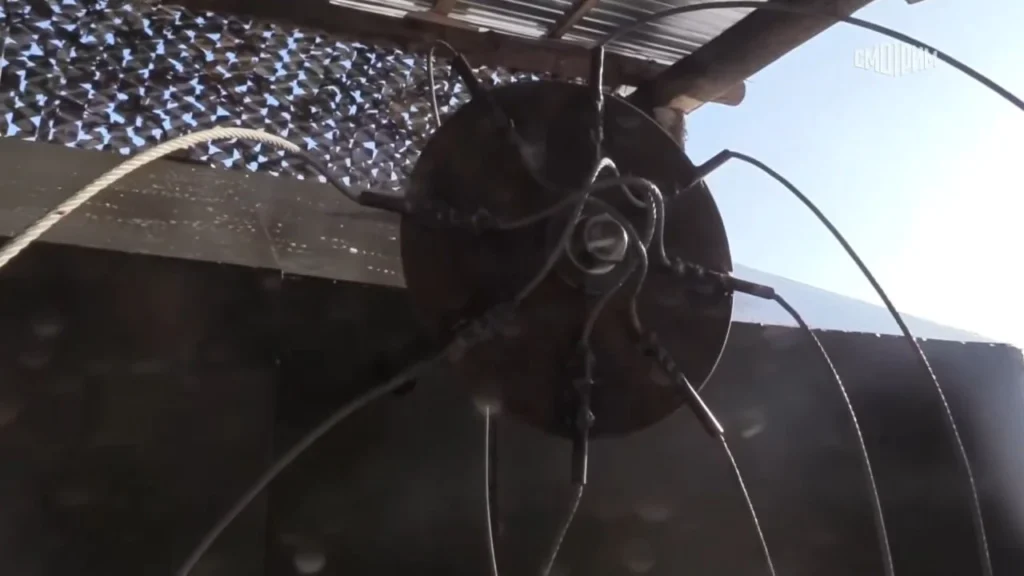
Driven by a dedicated motor, the multi-disc cable assembly creates a physical barrier designed to obstruct drones from multiple angles of approach. Field tests indicate the system is intended to protect uncrewed platforms and vehicles from kamikaze drone strikes.
Short-range interceptor drone Shershen
Testing has reportedly concluded for the new Shershen interceptor drones, designed to provide close-in protection for heavy flamethrower systems (TOS) and high-value assets.
The platform is available in two configurations:
- A compact variant for engaging targets at ranges of up to 50 m.
- A larger model capable of intercepting targets at distances up to 200 m.
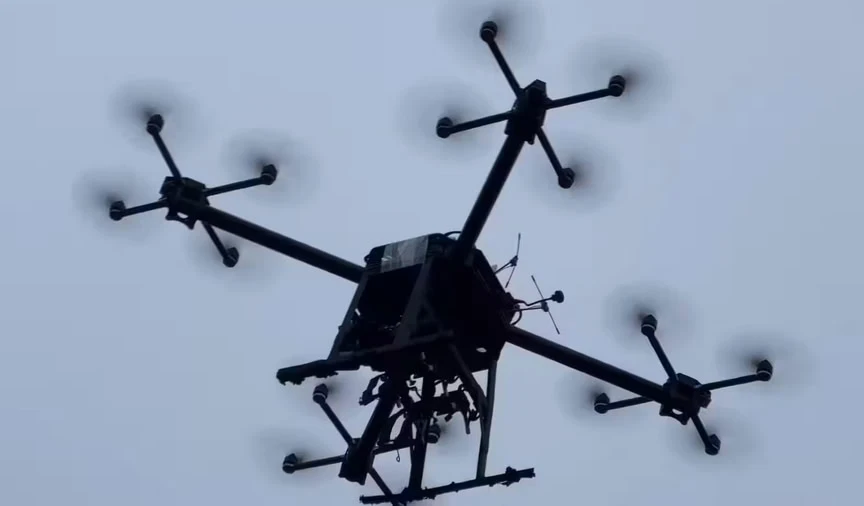
Shershen is equipped with high-resolution day, thermal, and night-vision optics. It can be integrated directly onto a TOS launcher, offering 360° situational awareness. The interceptor operates via kinetic impact, disabling propellers or triggering the contact fuzes of enemy FPV drones prematurely.
Anti-drone system Molot
The Russian firm NOVA LABS is developing the Molot interceptor system. The latest man-portable version can engage UAVs at altitudes of up to 2 km and intercept targets travelling at speeds of up to 200 km/h.
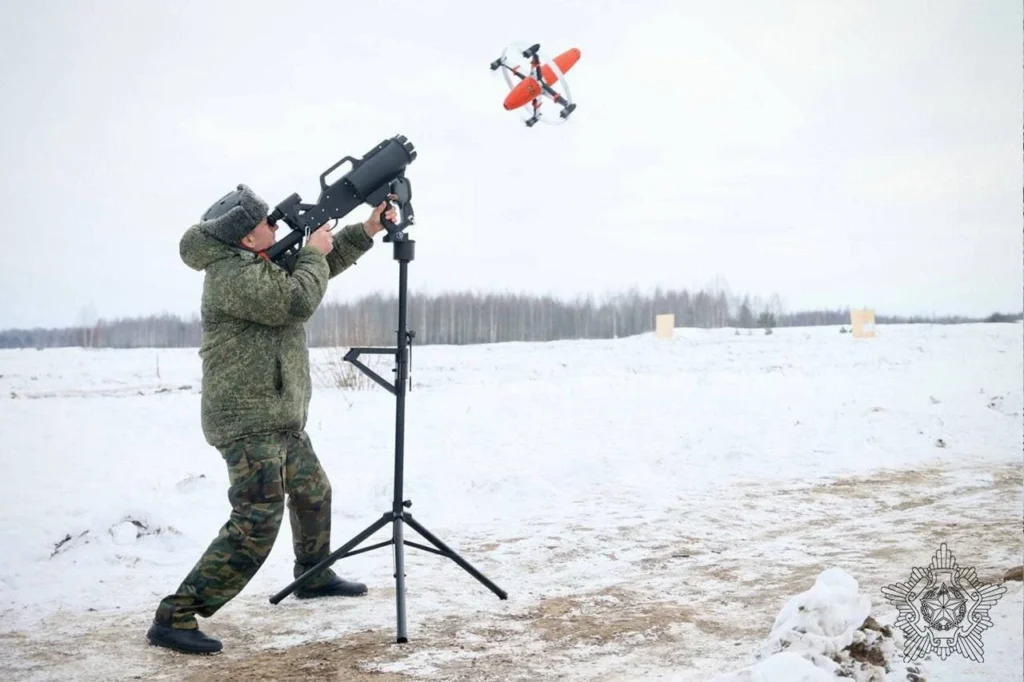
The interceptor features a thermal imaging seeker and a warhead mass of approximately 3.5 kg. A stationary version is also under development, using radio-command or laser guidance to achieve extended engagement ranges.
ERA-GLONASS and civilian UAV regulation
The Russian government has mandated that civilian drones be integrated with the ERA-GLONASS system starting from 1 March 2026. Under these regulations, every UAV must broadcast its identification code, category, real-time coordinates, altitude, and other telemetry data.
Operators will be required to install compatible modems and pay a recurring service fee. Manufacturers must now integrate these modules into new models or offer certified hardware upgrades for existing fleets, creating a new sector for UAV hardware and software. Notably, civilian drone flights remain prohibited across Russia.
UAV Aeroskop-120: fixed-wing security drone
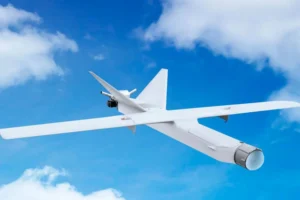
The Aeroskop company has unveiled the Aeroskop-120 fixed-wing UAV, designed for the surveillance of critical infrastructure such as refineries, pipelines, and power grids.
According to the manufacturer, the UAV reaches a maximum speed of 307 km/h with a cruising speed of approximately 200 km/h. It boasts an operational range of 100 km and a flight endurance of 60 minutes, facilitating long-range patrol missions.
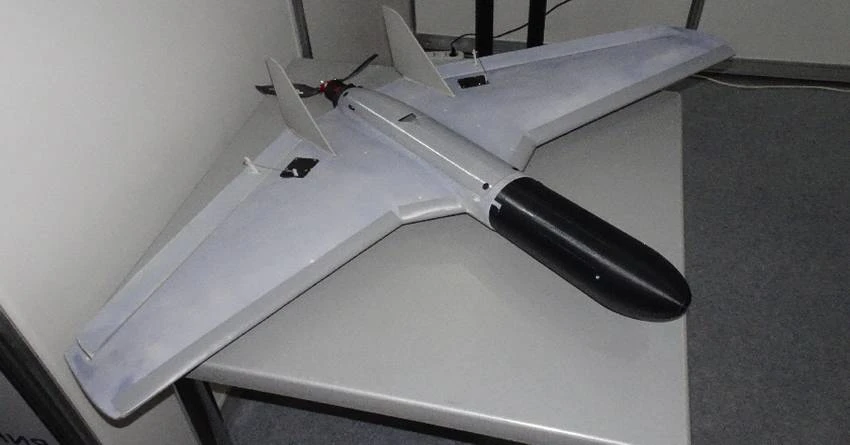
The drone is deployed via the Aeroskop-KP34 universal catapult, which can launch platforms weighing up to 15 kg. Command and control are managed by the “Aeroskop-VS2” ground station, featuring an 80 W output that supports dual-frequency operation.
Reading now
1

Ukrainian SkyFall’s drone wins at Pentagon’s Drone Dominance selection
2
Black Forest Systems raises $400,000. Here’s what drones the startup is building
3
Sting interceptor by Wild Hornets downs costly Russian Granat-4 reconnaissance drone
4
UForce unveils Bucha middle-strike drone with a 200 km range
5
The F10 drone becomes the second Ukrainian finalist in the Pentagon’s Drone Dominance Program
By submitting this form, you give Defender Media consent to the processing of personal data.
Надсилаючи цю форму, ви надаєте Defender Media згоду на обробку персональних даних.

Latest news
1

DPA to diversify drone and ammunition orders among multiple suppliers
2
‘Ukrainska bavovna’ and Czech company Pavetra Aerospace to produce Shuhay UAV through joint venture
3
59th Assault Brigade downs Russian Ka-52 helicopter with General Cherry OPTIX FPV drone
4
Tencore develops evacuation module for TerMIT UGV
5